Nakamichi BX-300 3-Head Cassette Deck (1986) - Black
This seller has not set a shipping cost for Lithuania. Please contact them to ask about shipping.

Our users rate Reverb
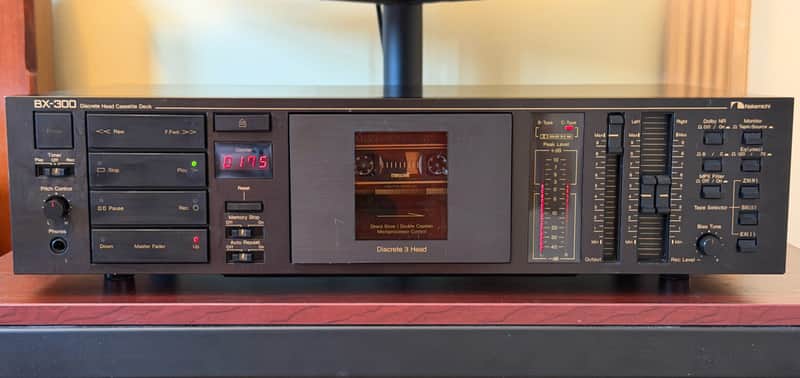
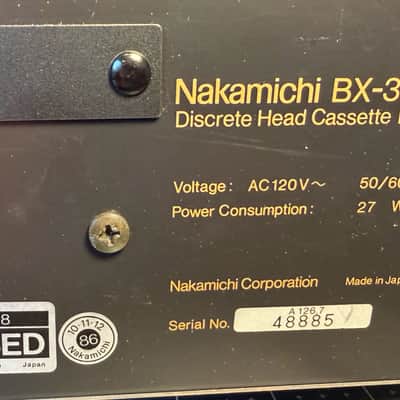
I am offering a Nakamichi BX-300 (Serial # 48885) 3-Head dual-capstan cassette deck from around 1986. Nakamichi is known for building some of the best cassette decks ever made. They are sought after by collectors and tape enthusiasts due to their reliability and sound quality. The BX-300 was Nakamichi's entry-level 3-head deck in the early to mid-1980's. It is a solid basic deck with mechanical components that trickled down from Nakamichi's higher-end models.
What separates Nakamichi decks from other similar 3-head decks is the following:
- Physically Separate Playback, Record, and Erase Heads
- Individual Azimuth and Head Height Adjustments for Playback and Record Heads
- Individual Record Level Adjustments by Tape Type
- Individual Tape Bias Adjustments by Tape Type
As with Nakamichi's higher-end models, these features are present on the BX-300. This is a very basic deck. What it lacks in fancy features (such as auto tape type sensing or auto tape calibration), it more than makes up for in sound quality. It can produce excellent recordings even on commonly available Type I tape, such as a TDK D.
I purchased this deck in non-working condition as a spare-time repair project. It has received a cleaning, belt service, mechanical adjustment, and testing. I chose this deck as a repair candidate because I liked the styling and that it is mechanically similar to my CR-7A. The diagnosing, servicing, and calibration of this deck served as a training tool to gain experience. It prepared me to tackle a more challenging restoration project. This deck is one of the two BX-300s I worked on, and I am excited to pass it on to a new owner. Although more complex than my previous restorations, I am impressed with the build quality and serviceability of this deck.
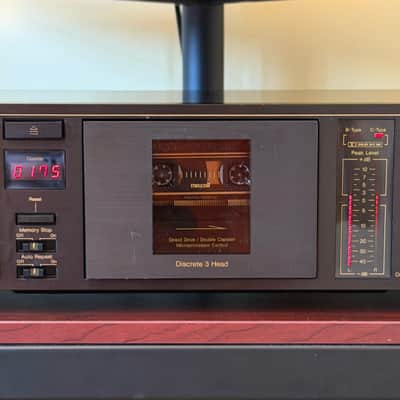
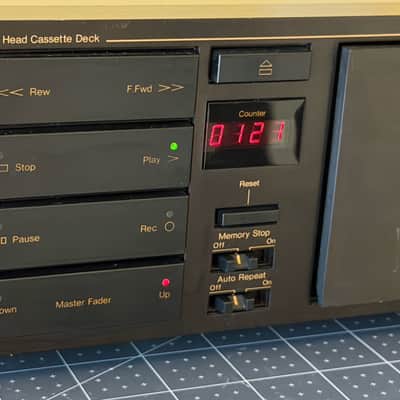
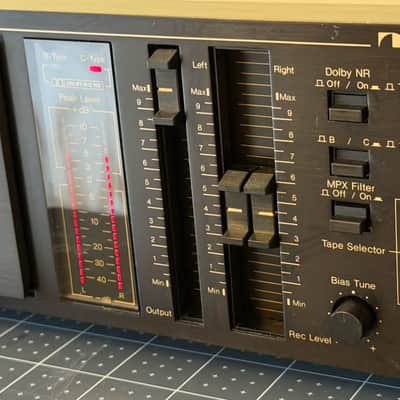
It has an attractive brushed aluminium black front panel and basic red LED indicators. The tape counter is digital, and the record level meters are a large, easy-to-read array of LEDs. All displays are bright, and no segments are missing. This deck features a mechanical tape door that feels solid and opens softly. Output volume and record levels are controlled by sliders that operate smoothly and are free of static. Push buttons control the tape type, bias, noise reduction, and MPX filter features. Tape type and bias must be set manually and correctly for the tape being used to achieve proper sound reproduction. Two knobs are also present to fine-tune the tape bias during recording and to adjust the tape speed if needed. All controls function properly and feel smooth.
Dimensions: ( Width: 17”, Height:3-15/16”, Depth: 9-14/16”, Weight: 13 lbs )
Physical Condition
This cassette deck is nearly 40 years old and is being sold as described.
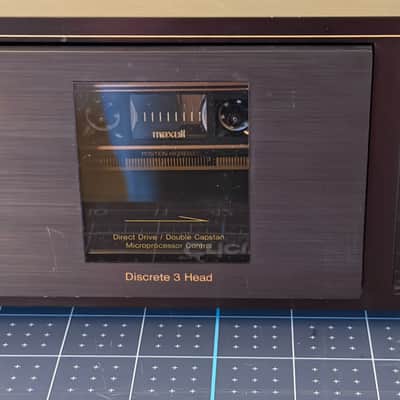
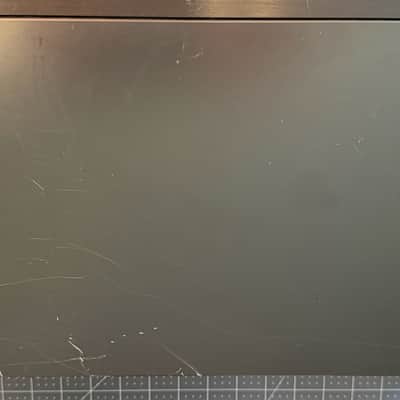
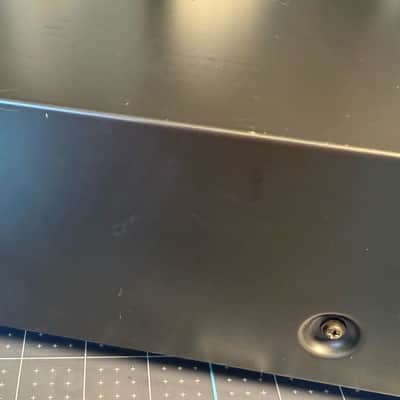
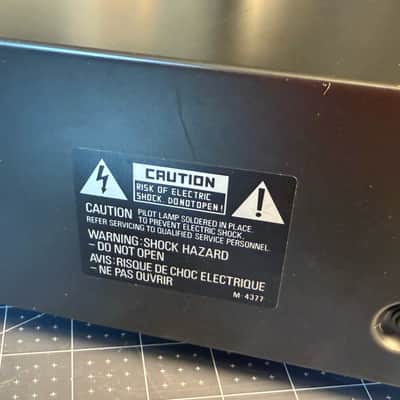
The front panel is in very good condition as defined by Reverb. It has some scratches, nicks, and imperfections. The front panel has patina, which appears to have settled into the anodized aluminum. I was afraid to get too aggressive with cleaning it. I did not want to damage the silkscreen printing. The label for the POWER button is faded. The outer case has some scratches, which are documented in the attached images. I have decided not refinish the case, leaving that task to the next owner if they wish to carry out a full restoration. The cap for the tape speed control knob was missing when I purchased it. I have replaced it with a similar cap from a Nakamichi MR-1 professional deck. The adjustment position indicator on the replacement cap is red instead of tan, so it doesn't match the bias control knob. I chose not to repaint the index marker, leaving it up to the next owner to decide. I like the red better and would likely paint the indicator on the bias adjustment versus painting the speed control tan.
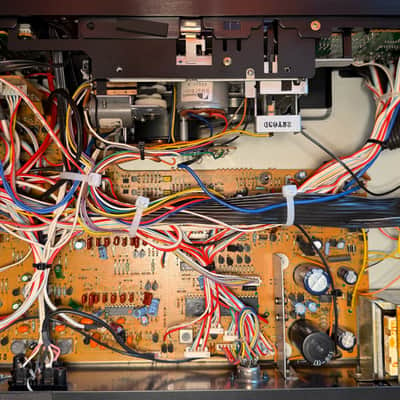
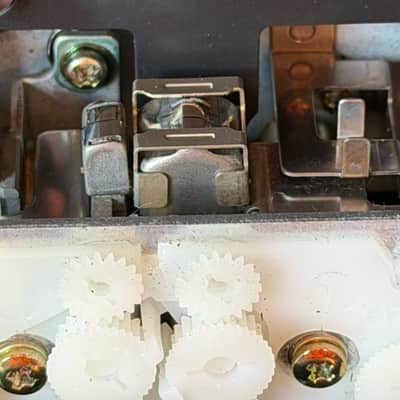
I had to cut the original factory zip ties to remove the tape transport for servicing. The zip ties on the tape transport also had to be cut for servicing. All have been replaced as best as I can, and the wiring is tidy.
The following items have been serviced:
- Main Drive Belt (replaced with a new one)
- Idler Tire (replaced with new)
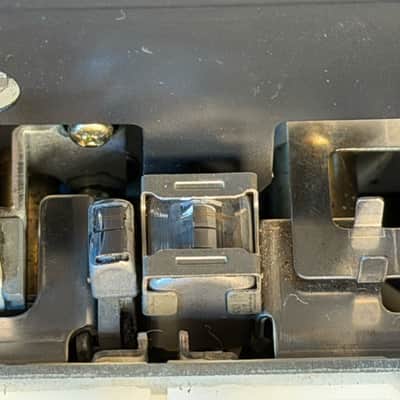
- Tape Transport Cleaned
- Flywheel and Capstan Cleaned and Lubricated
- Pinch Rollers Cleaned
- Heads De-magnetized
- Power Supply Health Verified
- Tape Speed Set
- Azimuth and Head Height Adjusted
- Playback and Record Levels Adjusted
- Tape Bias Levels Adjusted
- Replacement Tape Speed Adjustment Cap Fitted (MR-1 cap from eBay)
All basic functions have been tested and are working properly. Fast Forward and Rewind are smooth and quiet. Playback and Record engage quietly and smoothly. The tape speed, azimuth, and head height have been adjusted to the best of my ability, given the test equipment I own. I have made numerous test recordings from high-quality source material and am pleased with the sound reproduction. Setting the bias and sensitivity for each tape does make a difference in sound quality. The brand and type of tape used, and the tape bias settings, have a huge impact on the quality of recordings and playback.
Recommended Tapes
- TDK D (Type I)
- Maxell UD XL-II (Type II)
- Sony UX (Type II)
- TDK SA (Type II)
- Maxell MX (Type IV)
- TDK MA (Type IV)
Recommended Tapes (with Reservations)
These tapes can be biased with the front panel controls, but it's right on the limit
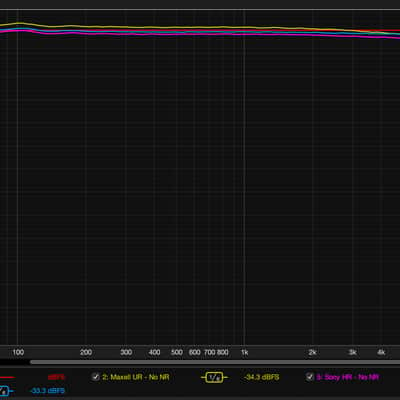
- Maxell UR (Type I)
- Sony HF ( Type I)
- Maxell US-II (Type II)
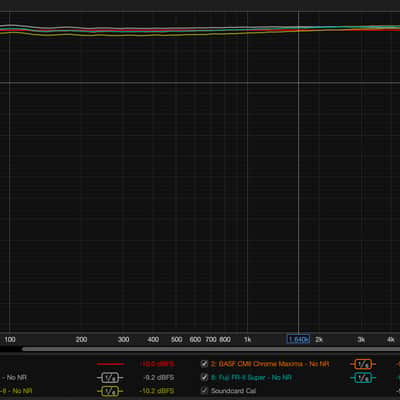
- Fuji FR-II Super (Type II)
Not Recommended
I have the following tapes in my collection and was unable to bias any of them with the front controls. They will record and playback music just fine, but their response won't be flat.
- BASF CM-II Chrome Maxima (Type II)
- Denon HD8 (Type II)
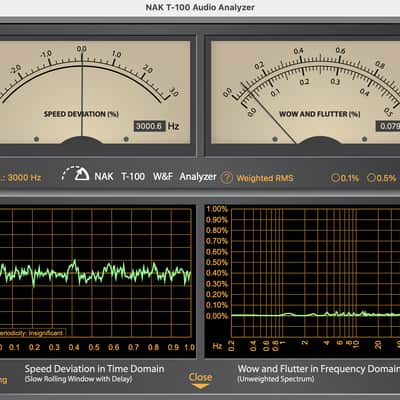
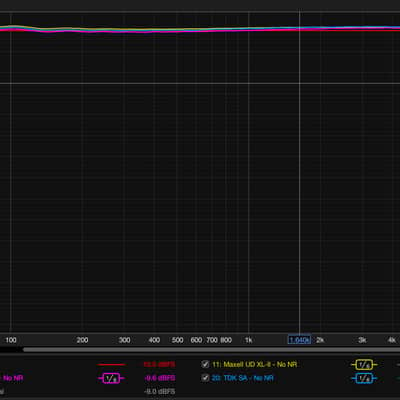
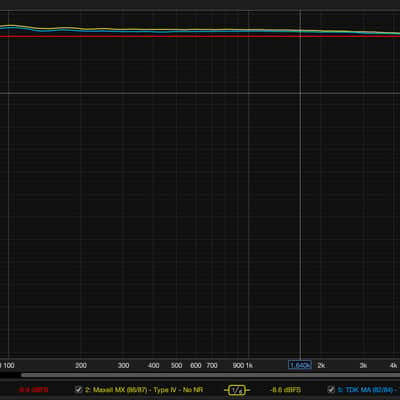
I have included some measurement charts in this ad. I have done my best to document this deck's capabilities using new-old-stock tapes. The deck's performance will vary depending on the tape used and the Bias, Record Level, and Noise Reduction settings. My test gear is not a professionally calibrated rig, so the charts are a general indication of what to expect.
I will include a reprint of the BX-300 Owner’s Manual, Service Manual, and copies of the measurements I have made with various tape brands and types.
Main Features
- 3-Heads ( physically separate 1 playback - 1 record - 1 erase )
- Dual Capstan
- Direct Drive Capstan Motor
- Center Tape Door
- Dolby B, C Noise Reduction
- User Adjustable Bias
- User Adjustable Tape Speed
- Manual Selection for Type I, II, and IV tape
- Manual Selection for Tape Bias 70us or 120us
- Digital Tape Counter
- 20 - Segment Red LED Level Meter
- Output Headphone Jack ( with Level Control )
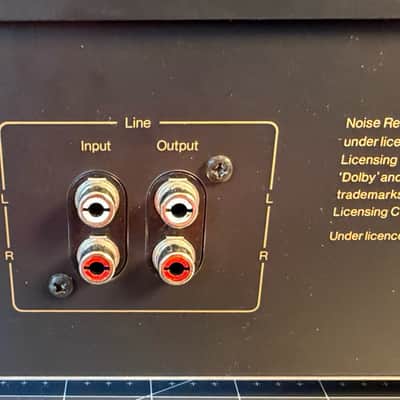
- Line Out Jack ( with Variable Output Level Control)
Manufacturers’ Specs ( in 1986 )
- 20 Hz – 20 000 Hz ±3 dB (with Type VI, II, and some I tapes at -20 dB)
- Wow & Flutter - 0.048% WRMS (I was able to measure 0.070% with my test gear)
- Signal to Noise Ratio - 70dB ( Dolby C )
- Signal to Noise Ratio - 64dB ( Dolby B )
This item is sold As-Described
This item is sold As-Described and cannot be returned unless it arrives in a condition different from how it was described or photographed. Items must be returned in original, as-shipped condition with all original packaging.Learn More.
| Listed | 4 months ago |
|---|---|
| Condition | Very Good (Used) Very Good items may show a few slight marks or scratches but are fully functional and in overall great shape.Learn more |
| Brand | |
| Model |
|
| Finish |
|
| Categories | |
| Year |
|
| Made In |
|
Product safety information may be available here.

