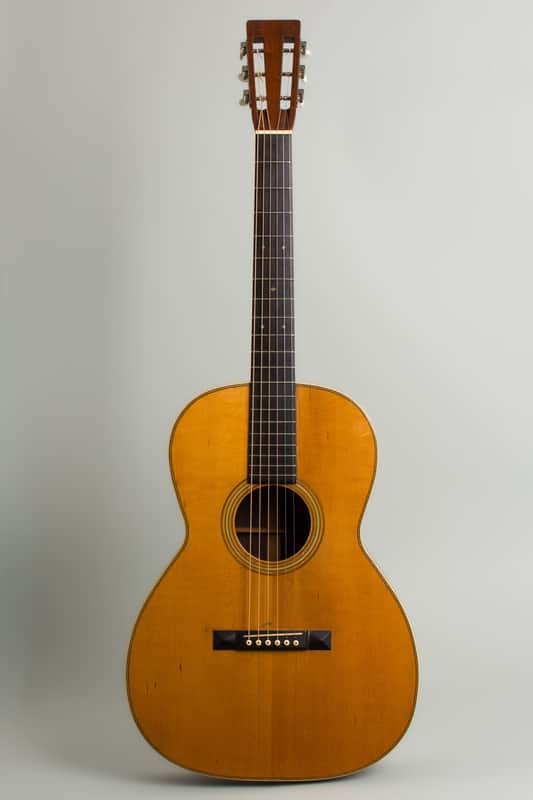
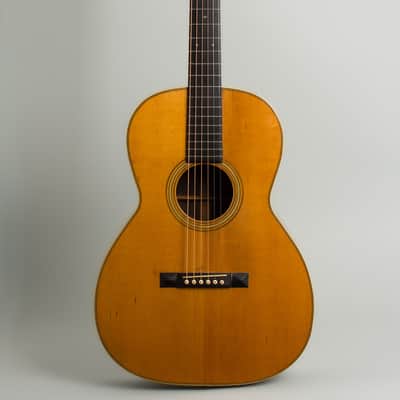
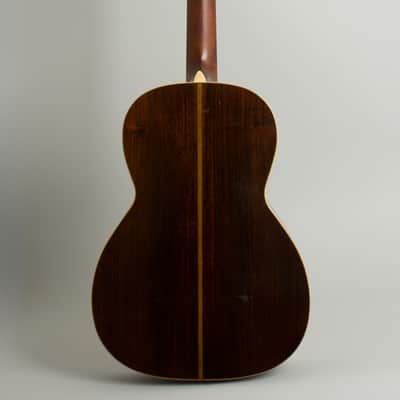
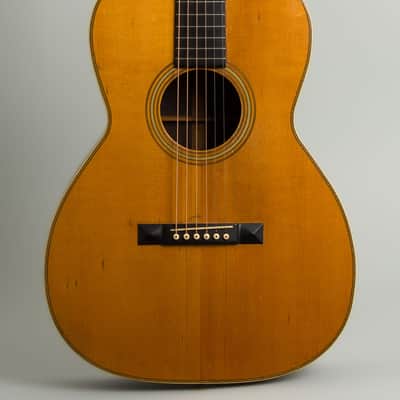
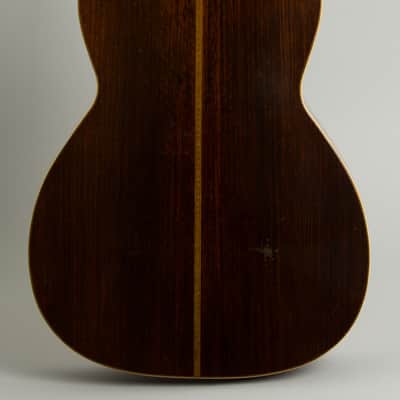
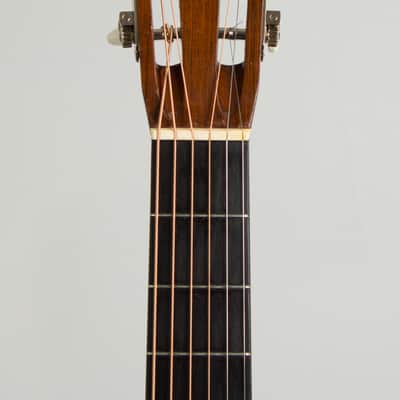
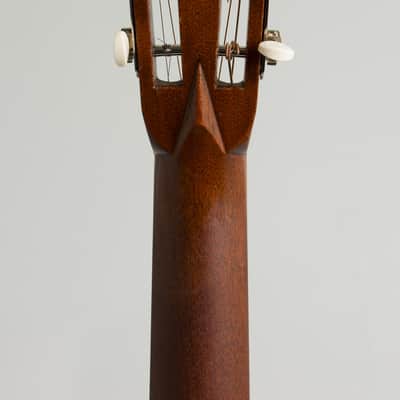
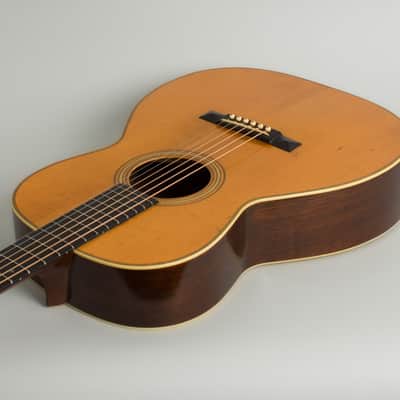
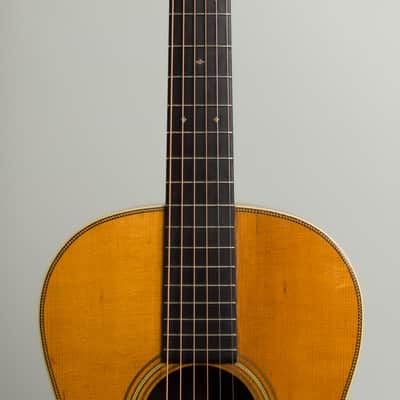
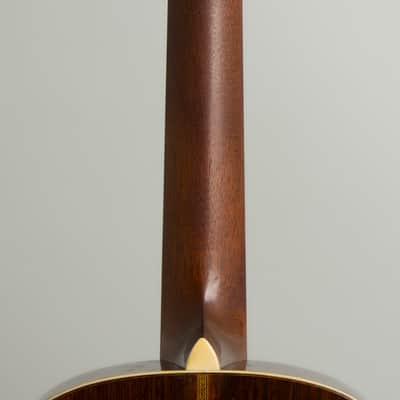
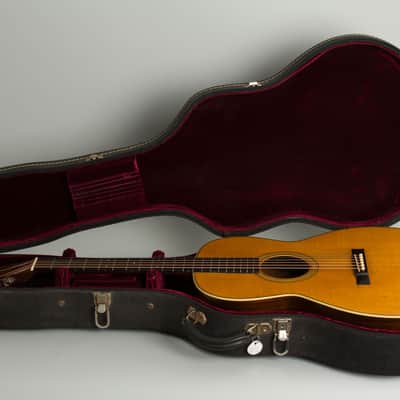
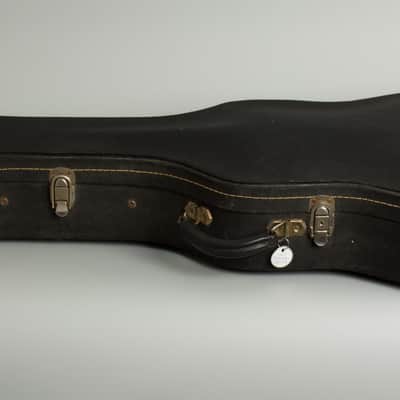
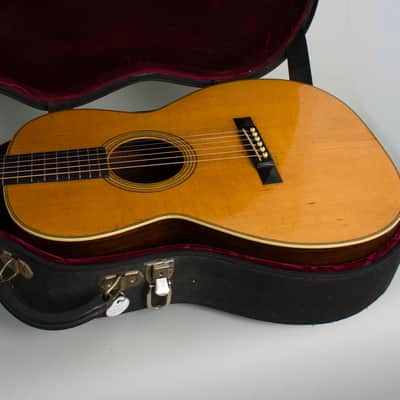
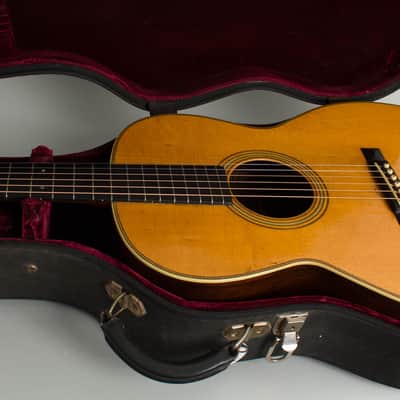
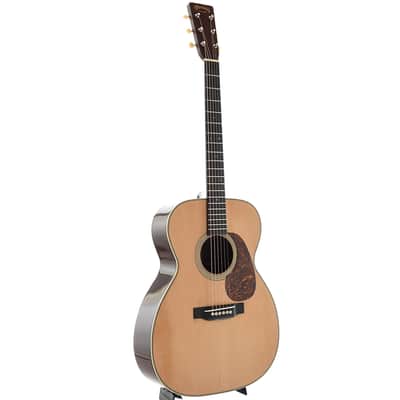
C. F. Martin 000-28 Flat Top Acoustic Guitar (1929), ser. #39331, black hard shell case.
Il venditore non ha impostato il costo di spedizione per Canada. Per favore contatta e chiedigli il costo della spedizione.
PrezzoC$52,582.12
+ spedizione
Pubblicato:3 mesi fa
Visualizzazioni:879
Salvataggi:39
Offerte:1

Brooklyn, NY, Stati Uniti
C. F. Martin 000-28 Model Flat Top Acoustic Guitar (1929), made in Nazareth, PA, serial # 39331, natural lacquer finish, Brazilian rosewood back and sides, Apalachian spruce top, mahogany neck with ebony fingerboard, black hard shell case.
If your fretted tastes run to 12-fret flat tops, then this 1929 000-28 is about as close to the perfect guitar as has ever been made. This was Martin's largest standard body size at the time, and while it was not the most expensive instrument they offered all models above it were built with pearl trim that raised the price point without necessarily making for a better playing or sounding guitar. The style 28 is bordered with the wood marquetry that has gone down in Martin legend as "herringbone", a defining part of the company mystique.
It was also by this point a solidly steel-string guitar, which was a then-recent development. Through the 1920s the Martin company gradually transitioned their line away from the traditional gut stringing, but up into the latter years of the decade many of the more expensive Brazilian rosewood guitars were still built in the older gut-strung pattern unless specifically ordered for steel. It was not until 1928 that the 000-28 was finally officially listed as a steel-string guitar, though a number had been already built that way.
In 1929 the 000-28 had a list price of $85; while that seems like a trifle today, to many at the time it represented a considerable investment. Still, it was a real bargain in a professional quality instrument; at the time even a plain professional tenor banjo would run at least $100, and a Gibson L-5 archtop was $275!
The 15" wide 000-28 is a huge sounding guitar then and now, powerful but retaining plenty of definition even when played hard. This helped make it a popular choice for period vaudeville and early "hillbilly" entertainers, since it offered a lot of bang for the buck. As evidence of this, 1929 was the peak production year for the model, with all of 82 being built. The next year the sales dropped to practically nothing, and only 2 were shipped as the depression set in and a guitar this expensive often simply sat in dealer's cases.
Simultaneously the 1929 introduction of the OM-28 with its shortened body and 14-fret neck spelled the end for this "standard" 12-fret model. The new "Orchestra Model" pattern ushered in the era of the modern flat top; by 1934 the "old" 12-fret 000-28 was completely replaced by the 14-fret version for many decades to come. Total production of steel-string 12 fret 000-28s cannot be calculated exactly (Martin sales records do not specify the stringing) but between 1925 and 1934 only 267 examples of the model were sold in total, so by any standard this is a very rare guitar.
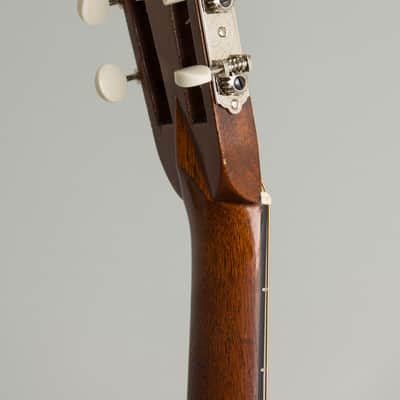
This particular 000-28 was built in late 1929 just as the stock market was crashing; it has wear and repair but overall has survived the years well, showing some typical signs of use but remaining a nicely original guitar. The back and sides are beautiful straight-grained Brazilian rosewood with a but of cross-grain figure. The Appalachian spruce top is bordered with celluloid around that now-mythical Herringbone wooden trim, the back has celluloid trim and a zig-zag wooden backstrip and the soundhole multiple rings of wood and celluloid. The mahogany neck has an unbound ebony fingerboard with five small pearl notched diamond inlays and the original bar frets. The neck has a wider 1 13/16" nut typical of the 1920s and a fairly shallow rounded soft "V" profile. The tuners are reproductions of the original Waverly strips.
With the light, scalloped early steel-string braced top on the 15 1/4" wide featherweight 12-fret body this is simply a wonderful instrument, with a spectacular sound for any style of play. It responds well to anything from gentle fingerpicking to vigorous flatpicking. This would be the ultimate instruments for a truly authentic 1920s-style fiddle band, but really excels in just about any playing style. A couple of years back we sold this guitar's sister, the sequentially numbered 000-28 # 39332 which was equally lovely but somewhat more worn in. This is simply a wonderful find in a 12-fret large-body, steel-string rosewood Martin now past its 95th birthday.
Overall length is 39 3/4 in. (101 cm.), 15 1/4 in. (38.7 cm.) wide at lower bout, and 4 1/16 in. (10.3 cm.) in depth at side, taken at the end block. Scale length is 25 1/2 in. (648 mm.). Width of nut is 1 13/16 in. (46 mm.).
Overall this is a solidly well-preserved guitar with typical wear for its age and common repairs to keep it playing into another century. The very thin original lacquer finish is unaltered and shows numerous dings, dents, and scrapes overall, with typical pickwear on the top. This is mostly below the plane of the strings in the region around the fingerboard and below and beneath the soundhole. The top finish remains original with just a few tiny touch ups around repairs. There are a couple of deep case lid dings to the upper top that have had a little fill added. The back of the neck is worn down to the wood over much of its length resulting in a very comfortable playing surface; there are some shallow dings and dents mostly worn smooth again.
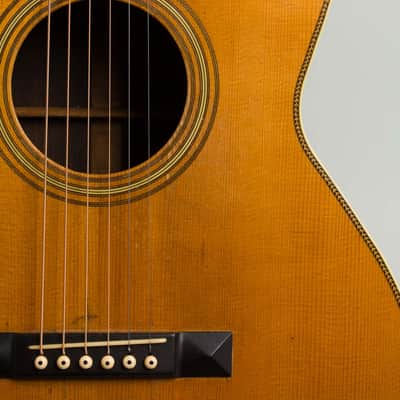
There are some old grain splits to the top. One runs along each side of the fingerboard extension, solidly sealed and cleated. There are several running down the top between bridge and base of the guitar and another between the bridge and soundhole under the D string. At the base of this crack along the front edge of the bridge there is some evidence of spruce pulled up when the bridge lifted long ago. All of these are sealed but visible with some minimal touchup. There are no cracks in the rosewood back and sides.
The ebony pyramid bridge is well done reproduction (it looks like a T.J. to us) set up with a short bone saddle not the 1920s long-saddle pattern. There is some scarring around the perimeter from the removal of the original, with the one small spruce pull glued up off the forward edge. The original small maple bridgeplate still fully intact, the original light scalloped braces are all intact and unaltered with several having been reglued (the top transverse brace on bass side and the first two back braces).
The neck has been reset, with some marking around the heel. A small ebony shim was added under fingerboard. The bar frets appear original; they have been raised at certain spots and show some wear in the first position. The bone nut appear s original as well. The engraved-plate tuners are reproductions of the originals, a bit shiny but fitted with no disturbance the headstock.
This is a truly very fine guitar, quite powerful-sounding and extremely articulate even when pushed. We rarely find steel-string 000 s
If your fretted tastes run to 12-fret flat tops, then this 1929 000-28 is about as close to the perfect guitar as has ever been made. This was Martin's largest standard body size at the time, and while it was not the most expensive instrument they offered all models above it were built with pearl trim that raised the price point without necessarily making for a better playing or sounding guitar. The style 28 is bordered with the wood marquetry that has gone down in Martin legend as "herringbone", a defining part of the company mystique.
It was also by this point a solidly steel-string guitar, which was a then-recent development. Through the 1920s the Martin company gradually transitioned their line away from the traditional gut stringing, but up into the latter years of the decade many of the more expensive Brazilian rosewood guitars were still built in the older gut-strung pattern unless specifically ordered for steel. It was not until 1928 that the 000-28 was finally officially listed as a steel-string guitar, though a number had been already built that way.
In 1929 the 000-28 had a list price of $85; while that seems like a trifle today, to many at the time it represented a considerable investment. Still, it was a real bargain in a professional quality instrument; at the time even a plain professional tenor banjo would run at least $100, and a Gibson L-5 archtop was $275!
The 15" wide 000-28 is a huge sounding guitar then and now, powerful but retaining plenty of definition even when played hard. This helped make it a popular choice for period vaudeville and early "hillbilly" entertainers, since it offered a lot of bang for the buck. As evidence of this, 1929 was the peak production year for the model, with all of 82 being built. The next year the sales dropped to practically nothing, and only 2 were shipped as the depression set in and a guitar this expensive often simply sat in dealer's cases.
Simultaneously the 1929 introduction of the OM-28 with its shortened body and 14-fret neck spelled the end for this "standard" 12-fret model. The new "Orchestra Model" pattern ushered in the era of the modern flat top; by 1934 the "old" 12-fret 000-28 was completely replaced by the 14-fret version for many decades to come. Total production of steel-string 12 fret 000-28s cannot be calculated exactly (Martin sales records do not specify the stringing) but between 1925 and 1934 only 267 examples of the model were sold in total, so by any standard this is a very rare guitar.
This particular 000-28 was built in late 1929 just as the stock market was crashing; it has wear and repair but overall has survived the years well, showing some typical signs of use but remaining a nicely original guitar. The back and sides are beautiful straight-grained Brazilian rosewood with a but of cross-grain figure. The Appalachian spruce top is bordered with celluloid around that now-mythical Herringbone wooden trim, the back has celluloid trim and a zig-zag wooden backstrip and the soundhole multiple rings of wood and celluloid. The mahogany neck has an unbound ebony fingerboard with five small pearl notched diamond inlays and the original bar frets. The neck has a wider 1 13/16" nut typical of the 1920s and a fairly shallow rounded soft "V" profile. The tuners are reproductions of the original Waverly strips.
With the light, scalloped early steel-string braced top on the 15 1/4" wide featherweight 12-fret body this is simply a wonderful instrument, with a spectacular sound for any style of play. It responds well to anything from gentle fingerpicking to vigorous flatpicking. This would be the ultimate instruments for a truly authentic 1920s-style fiddle band, but really excels in just about any playing style. A couple of years back we sold this guitar's sister, the sequentially numbered 000-28 # 39332 which was equally lovely but somewhat more worn in. This is simply a wonderful find in a 12-fret large-body, steel-string rosewood Martin now past its 95th birthday.
Overall length is 39 3/4 in. (101 cm.), 15 1/4 in. (38.7 cm.) wide at lower bout, and 4 1/16 in. (10.3 cm.) in depth at side, taken at the end block. Scale length is 25 1/2 in. (648 mm.). Width of nut is 1 13/16 in. (46 mm.).
Overall this is a solidly well-preserved guitar with typical wear for its age and common repairs to keep it playing into another century. The very thin original lacquer finish is unaltered and shows numerous dings, dents, and scrapes overall, with typical pickwear on the top. This is mostly below the plane of the strings in the region around the fingerboard and below and beneath the soundhole. The top finish remains original with just a few tiny touch ups around repairs. There are a couple of deep case lid dings to the upper top that have had a little fill added. The back of the neck is worn down to the wood over much of its length resulting in a very comfortable playing surface; there are some shallow dings and dents mostly worn smooth again.
There are some old grain splits to the top. One runs along each side of the fingerboard extension, solidly sealed and cleated. There are several running down the top between bridge and base of the guitar and another between the bridge and soundhole under the D string. At the base of this crack along the front edge of the bridge there is some evidence of spruce pulled up when the bridge lifted long ago. All of these are sealed but visible with some minimal touchup. There are no cracks in the rosewood back and sides.
The ebony pyramid bridge is well done reproduction (it looks like a T.J. to us) set up with a short bone saddle not the 1920s long-saddle pattern. There is some scarring around the perimeter from the removal of the original, with the one small spruce pull glued up off the forward edge. The original small maple bridgeplate still fully intact, the original light scalloped braces are all intact and unaltered with several having been reglued (the top transverse brace on bass side and the first two back braces).
The neck has been reset, with some marking around the heel. A small ebony shim was added under fingerboard. The bar frets appear original; they have been raised at certain spots and show some wear in the first position. The bone nut appear s original as well. The engraved-plate tuners are reproductions of the originals, a bit shiny but fitted with no disturbance the headstock.
This is a truly very fine guitar, quite powerful-sounding and extremely articulate even when pushed. We rarely find steel-string 000 s
| Pubblicato | 3 mesi fa |
|---|---|
| Condizione | Molto buono (Usato) Gli articoli "Molto buoni" possono mostrare qualche piccolo segno o graffio ma sono pienamente funzionali e in buone condizioni generali.Scopri di più |
| Marchio | |
| Modello |
|
| Finish |
|
| Categorie | |
| Anno |
|
| Ritiro |
|
| Serie | |
| Famiglia modello | |
| Tipo di corda |
|
| Destrimani/Mancini |
|
| Numero di corde |
|
| Materiale manico della chitarra |
|
| Forma body |
|
| Materiale parte posteriore |
|
| Materiale parti laterali |
|
| Stile finish |
|
| Materiale parte anteriore |
|
| Materiale tastiera |
|
| Famiglia colore |
|
| Preamplificatore attivo |
|
| Numero di tasti |
|
Le informazioni sulla sicurezza del prodotto sono disponibili qui.

Protezione di Reverb
Resi semplici, transazioni sicure, assistenza di persone in carne e ossa
Scopri di più