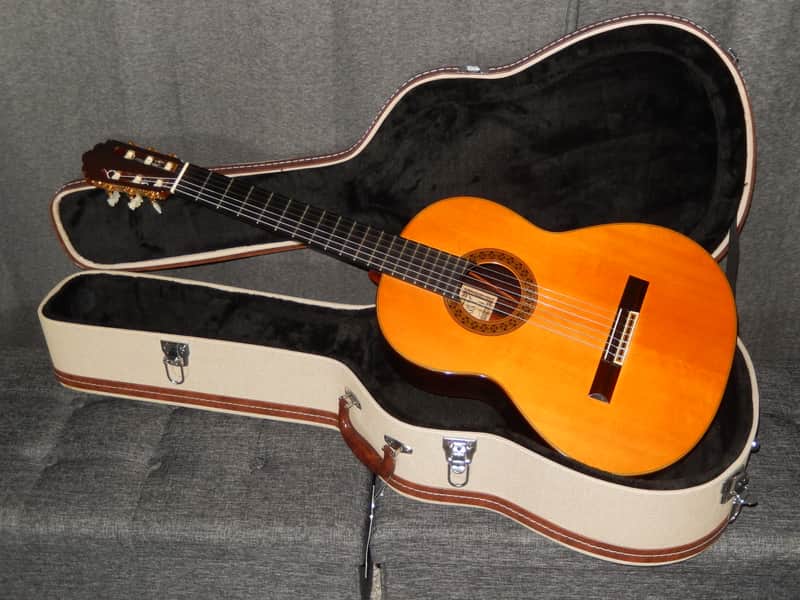
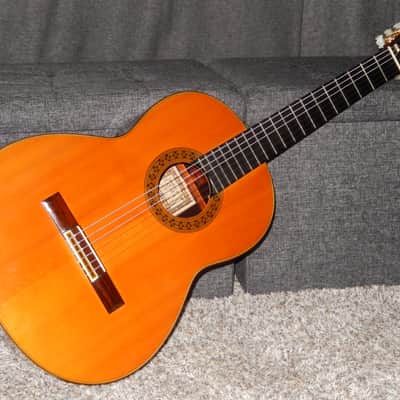
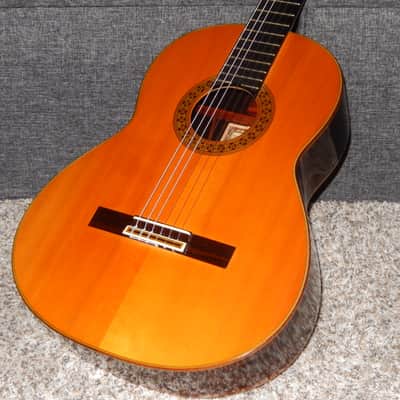
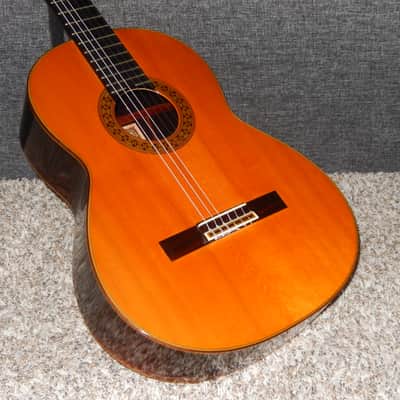
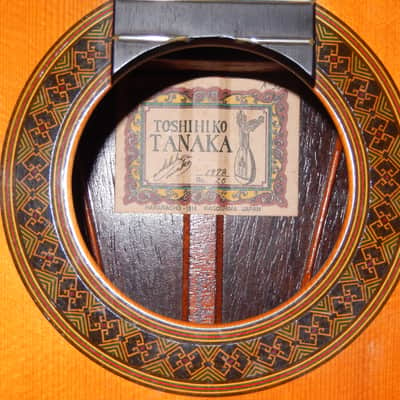
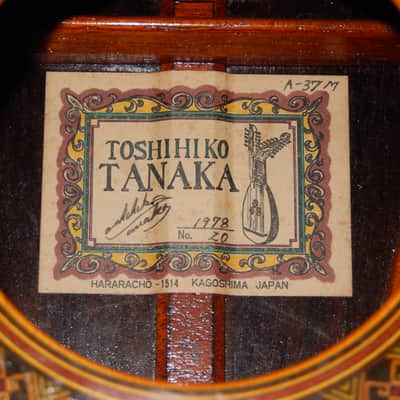
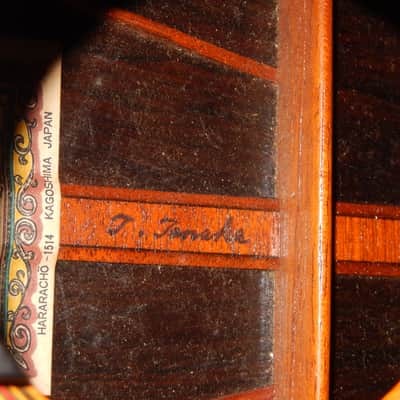
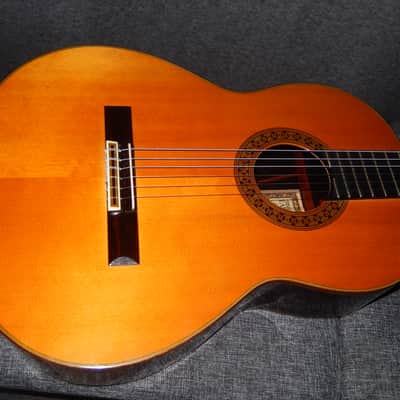
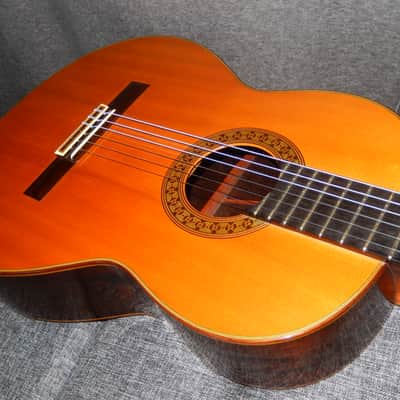
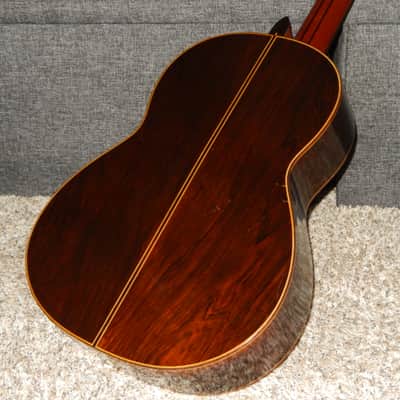
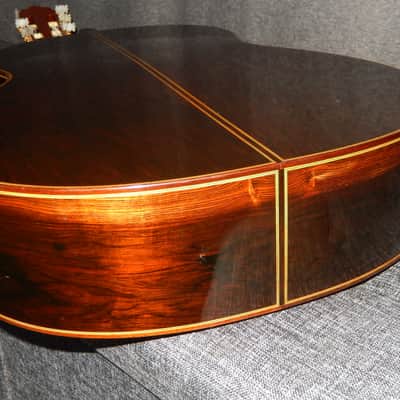
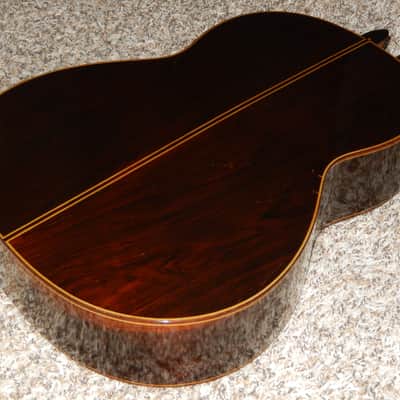
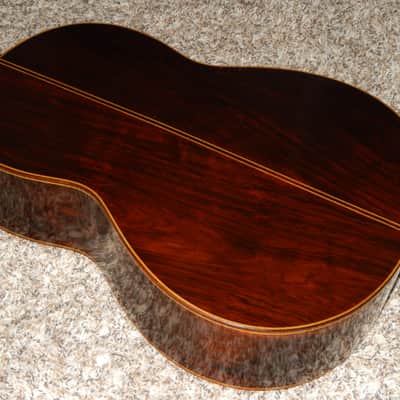
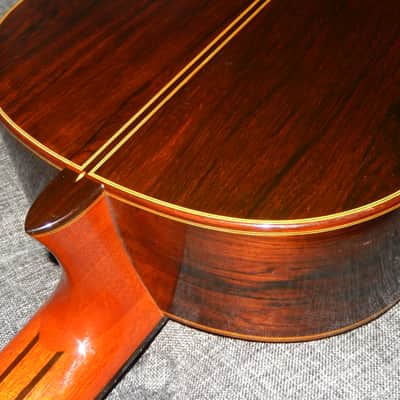
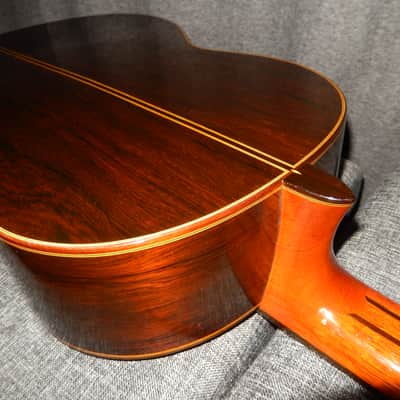
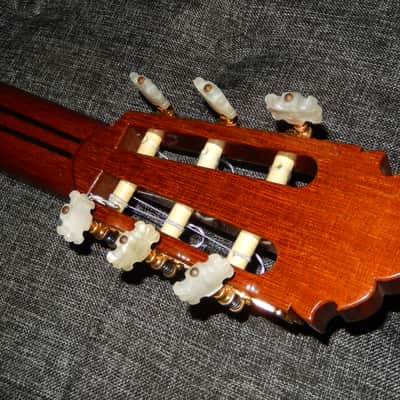
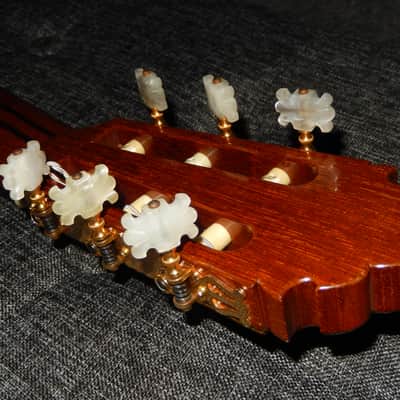
TOSHIHIKO TANAKA 20 1978 - PEDRO MALDONADO CLASS CLASSICAL/FLAMENCO CONCERT GUITAR - CEDAR/BRAZILIAN ROSEWOOD
This seller has not set a shipping cost for Malta. Please contact them to ask about shipping.


Our users rate Reverb
YOU ARE LOOKING AT A WORLD CLASS INSTRUMENT PRICED AT THE BARGAIN LEVEL. CURRENTLY BRAND NEW GUITARS OF THIS CLASS MADE BY JAPANESE LUTHIERS USING OLD GROWTH FIGURED BRAZILIAN ROSEWOOD ARE PRICED MINIMUM $18000USD. DISCONTINUED IN 2025 YAMAHA GC70 WAS PRICED AT THAT LEVEL.
Toshihiko Tanaka 20 1978
This guitar was made in 1978 by Toshihiko Tanaka. Until the discovery of this guitar I had never found any information about this luthier. It is highly unlikely that you will find any. If you listen carefully, his guitar will tell you all you need to know.
Priced 200 000 yen in 1978 it was an expensive instrument. Made from the same grade materials Yamaha GC20 and Masaru Kohno 20 were priced the same. In 1978 Yamaha’s highest model GC30A and Kohno’s No30 were both priced 300 000 yen. Besides Masaru Kohno and Sakazo Nakade very few luthiers were able to sell their top models for more than 300 000 yen. For many other Japanese luthiers 200 000 yen was the maximum they could get for their highest models. Thet truth is that these less prominent makers had to deliver much more the same price. So had Toshihiko Tanaka.
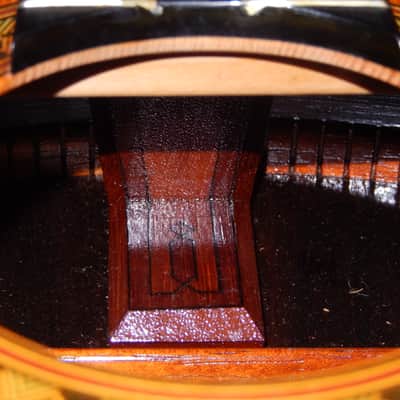
As you will find looking closer at this in this guitar, Toshihiko was patient enough working on even the tiniest details. He also incorporated his own bracing system for the back and soundboard. Soundboard’s bracing pattern below the sound hole is a combination of 12 braces, but it is not a typical “lattice” pattern.
As of today, if you wanted to order similar class brand new guitar made by Japanese luthier with figured Brazilian Rosewood b/s it would cost you minimum $15000. If you would like to place the same order with a Japanese elite luthier, the price would be at $18000 level.
This terrific instrument certainly deserves the title of Grand Concert Guitar. Although it was made as classical guitar, its tonality meets all the criteria of Master level “Flamenca Negra” guitar. It has its uniquely beautiful tonality, with moderately deep, full of overtones yet rather focused basses; sweet, glassy and brilliantly crisp trebles; all notes well balanced, with high level of note clarity and separation and relatively long sustain. If played softer it turns into a very lyrical instrument. However, when the ‘rasquedos” are played the basses become raspy and the trebles somewhat metallic. What might be important to flamenco players, this guitar can be set with very low action, hard to find among most flamenco guitars.
If you decide to use this guitar for traditional flamenco, you can install golpe plate that I will leave in inside the case. If you don’t know how to do it, don’t even try. It will be better for you to find an experienced guitar technician who can do the installation.
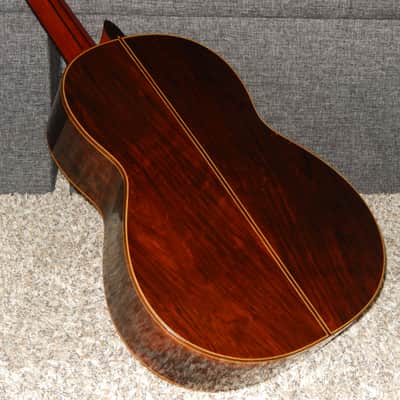
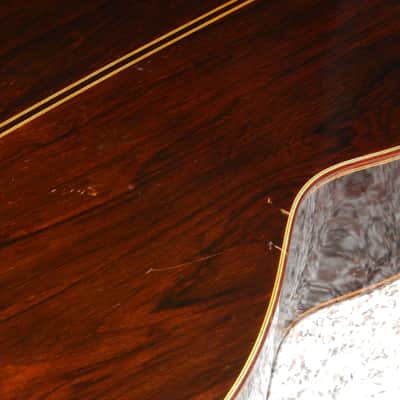
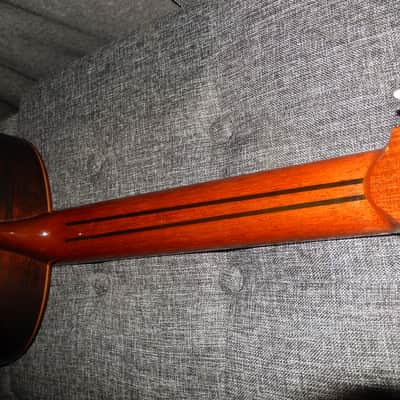
Although the body of this guitar bears several minor cosmetic flaws (few light scratches on the soundboard near the rosette, few conspicuous scratches on the back and sides, few ultra-light scratches on the back of the neck etc.) the overall condition of this guitar can be described as “excellent for its age”. Although a “frightened mind” can imagine existence of the cracks between side panels and the center strip at the bottom, there is really nothing there, except for the proof that this guitar survived nearly 50 years in very good condition.
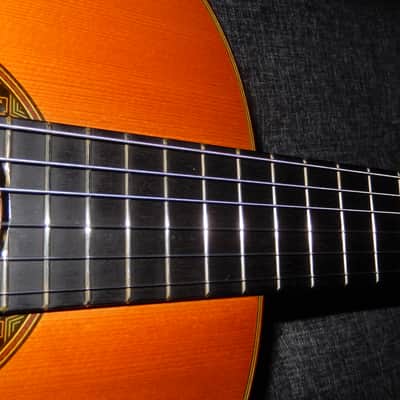
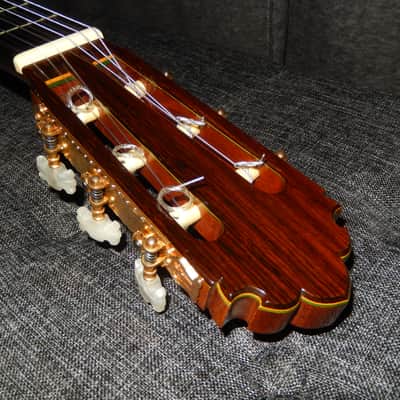
Very importantly its neck is straight, neck/body angle allows for very low action, while fingerboard and frets remain in “excellent” condition. Original tuners work well but get tighter under the tension of strings. Their replacement is not necessary, but you can decide otherwise.
Should any of described above imperfections bother you, you can simply turn to American luthiers and with some luck you may get similar class instrument for below $25000.
Specifications:
Top: Very High-Grade Solid Cedar/cashew varnish
Back & Sides: Solid Brazilian Rosewood/ cashew varnish
Neck: Mahogany with double Ebony reinforcement
Fingerboard: Ebony
Scale: 658 mm
Nut width: 51.00 mm
Strings: Savarez Cantiga Premium Alliance Tension Forte set 510 AJP
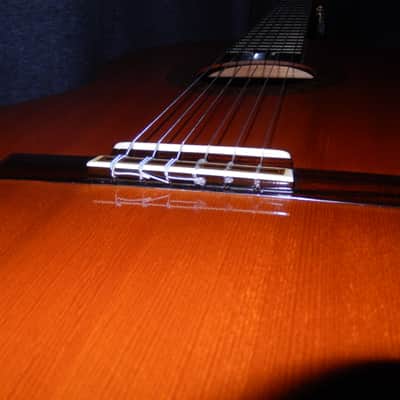
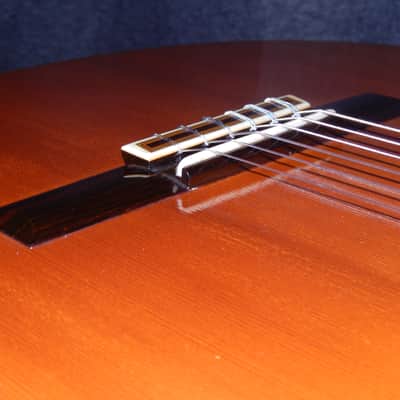
Currently the action is set to 2.20 mm under E6 and 2.20 mm under E1, with still extra room on the saddle. Second saddle sets the action at 3.50 mm under E6 and 3.00 mm under E1.
The guitar will be shipped in a brand new hard shell case.
THE ONLY PURPOSE OF THIS CASE IS TO PROTECT THE GUITAR DURING SHIPMENT. I WILL NOT PROVIDE ITS DETAILED DESCRIPTION OR MAKE ADDITIONAL PICTURES, NOR I WILL ACCEPT ANY COMPLAINTS. IF YOU DON’T LIKE THIS CASE YOU WILL NEED TO BUY A DIFFERENT ONE.
WHEN YOU BUY ANY GUITAR, YOU MUST ANTICIPATE TAKING IT TO YOUR LOCAL GUITAR SHOP FOR FINAL ADJUSTMENTS CALLED “SETUP”. DEPENIDNG ON YOUR PLAYING TECHNIQUE, THIS SETUP ON USED GUITARS MAY INCLUDE NEW CUSTOM-MADE NUT AND SADDLE. IF YOU HEAR STRING BUZZ IT DOESN’T MEAN THAT THE GUITAR IS DEFECTIVE. IF YOU PLAY HARD ENOUGH ALL BASS STRINGS WILL BUZZ OVER THE FRETS, UNLESS THEY ARE SUSPENDED VERY FAR FROM THE FINGERBOARD. UNLESS YOU PLAY QUITE GENTLY, YOU CAN’T HAVE LOW ACTION AND NO BUZZES. KEEP IN MIND THAT CELLO-LIKE BASSES ON HIGH GRADE CLASSICAL GUITARS HAVE THEIR NATURAL “BUZZ”.
When contemporary Japanese luthiers are using 40+ years old soundboards to make “all solid woods” guitar it is priced at least $5000USD. Guitars with artificially aged (“baked”) soundboards are priced at least $4500USD. Solid top models with 40+ years old soundboards are priced at least $3500USD. American, Australian and European luthiers usually charge 50% more.
It is a matter of basic education (not beliefs) to realize that 40+ years old soundboard of this guitar alone is worth $2500USD.
Real Value of Japanese Vintage Guitars
The key to understand value of vintage Japanese guitars is to acknowledge galloping price inflation (devaluation of Japanese yen) during 1960s & 1970s. This inflation slowed down in the 1980s.
During 1960s and most of 1970s model numbers of Japanese guitars were strictly interconnected with their prices in Japanese yen. By the early 1980s and during following decades model numbers were no longer strictly associated with their prices. Some Japanese guitar makers introduced model names instead of model numbers. Others were still using model numbers with the addition of letters and/or other symbols.
It is then important to understand that two Yamaha GC10 guitars made 10 years apart are two instruments of totally different class. The same applies to any other Japanese maker/brand.
The logical way to estimate the true class of any given Japanese made instrument is to compare its price with the average annual salary of wage workers in Japanese private sectors. This salary was: 450 600 yen in 1965 - 825 900 yen in 1970 - 1 868 300 yen in 1975 - 2 689 000 yen in 1980 - 3 163 000 yen in 1985 - 3 761 000 yen in 1990 - 4 107 000 yen in 1995 - 4 082 000 yen in 2000.
Any guitar priced 100 000 yen in 1970 (labelled as No10 or No100) would be priced 200 000 yen in 1975 (relabeled to No20, No200 or 2000), 300 000 yen in 1977 (labelled as No3, No30 or 3000) and 500 000 yen by 1985 (labelled as No50 or 5000).
Starting in 1977 Masaru Kohno introduced his new models No40 priced 400 000 yen and No50 priced 500 000 yen. By early 1980s Kohno started using model names instead of numbers and was steadily raising their prices without changing model labeling. His very top model 50 became model “Special”, and a decade later it became model “Maestro”. Naturally, all other Japanese guitar makers were doing similar pricing (labelling) upgrades.
Knowing all of that, you can bet that Masaru Kohno No50 made in 1982 is practically the same grade instrument as Kohno No20 made in 1972, or Kohno no 30 made in 1975.
In early 1970s the lowest Ryoji Matsuoka (all plywood) model was 10, followed by (solid top) models 15, 20, 25, 30, 40, 50, 60, 80 and (all solid woods) models 100 and 150. Models 50, 60 and 80 were made with non-solid figured Brazilian Rosewood (double) back and sides and top model 150 was the only one made with solid figured Brazilian Rosewood b/s.
In 1980 the lowest Matsuoka model was (all plywood) 20, followed by (solid top) models 30,40,50, 60 and all solid woods models 80,100,150 and 200. By 1990 the lowest Matsuoka model was M40 and the highest was M300. By 2010 the lowest Matsuoka model was M50 and the top model was M270.
You can bet that Ryoji Matsuoka model 50 from 1980 is of the same grade as model M100 from 2000, model 100 from 1980 is of the same grade as model M150 from 2000, model 150 from 1980 is of the same grade as M200 from 2000 and model 200 from 1980 is of the same grade as model M300 from 2000.
It is important to mention that if modern era luthiers are using 40+ years old woods to make an “all solid” wood classical guitar, its price is minimum $8000.
All vintage guitars made with Brazilian Rosewood are especially precious, including those made straight grain varieties and those with non-solid b/s.
Because response and tonal properties of Spruce soundboards are improving over time, long seasoned Spruces are far more precious than long seasoned Cedars.
It is not very difficult to find out what are current prices of such guitars made by world’s leading luthiers.
| Listed | 7 months ago |
|---|---|
| Condition | Very Good (Used) Very Good items may show a few slight marks or scratches but are fully functional and in overall great shape.Learn more |
| Brand |
|
| Model |
|
| Finish |
|
| Categories | |
| Year |
|
| Made In |
|
| Body Shape |
|
Product safety information may be available here.

