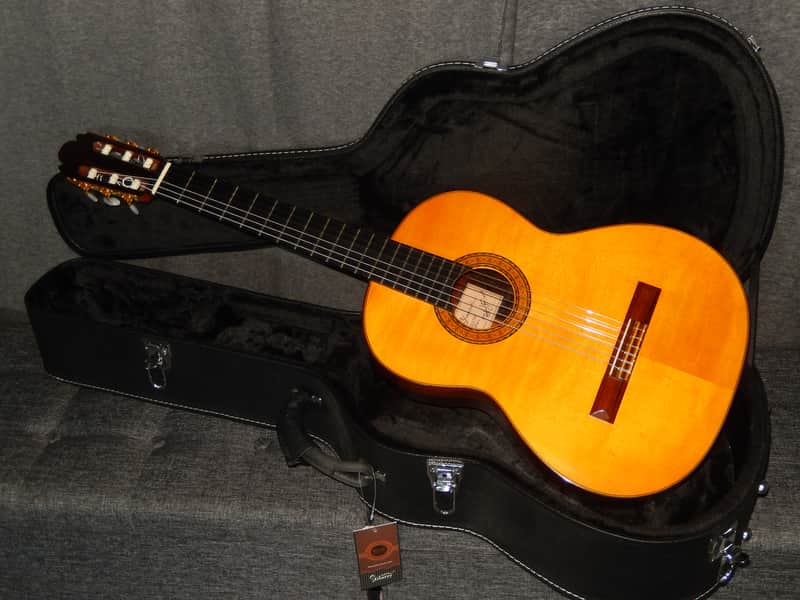
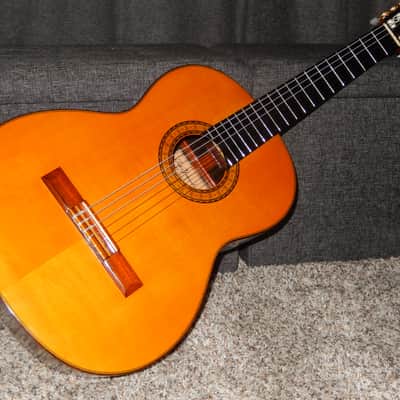
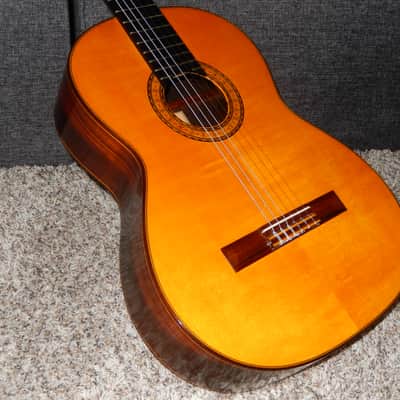
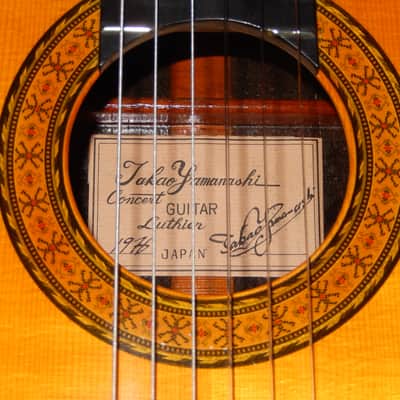
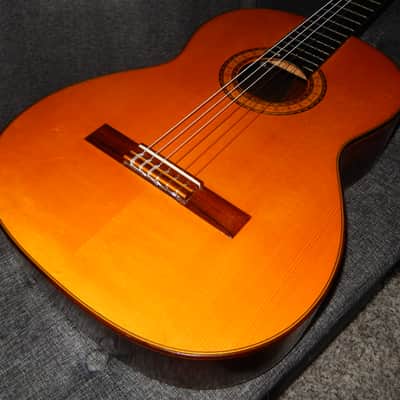
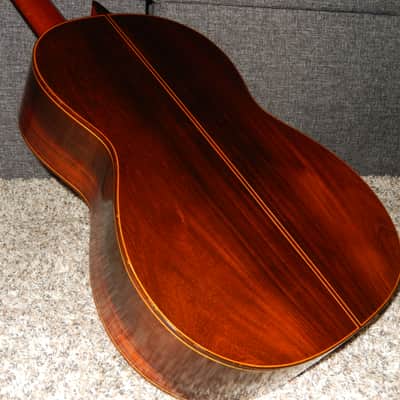
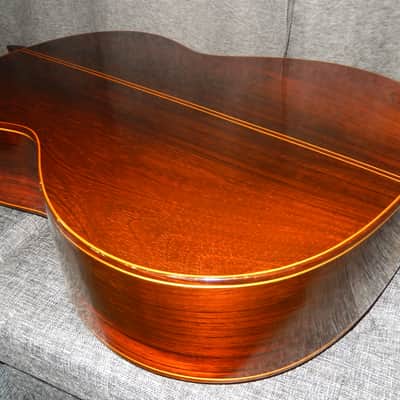
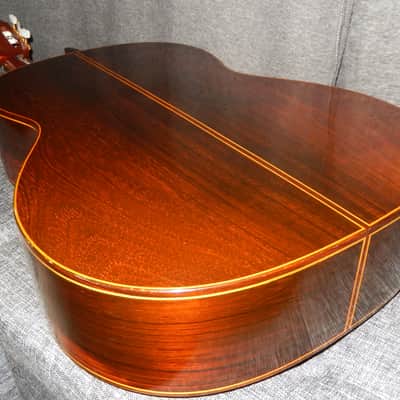
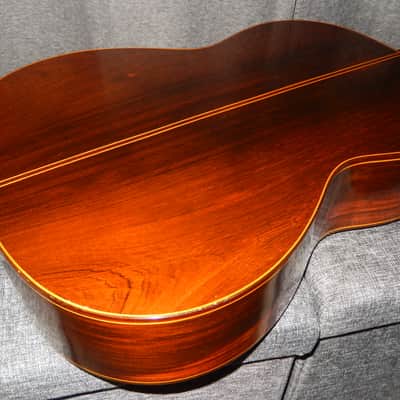
TAKAO YAMANASHI CUSTOM 1976 - PAULINO BERNABE "IMPERIAL" CLASS CLASSICAL CONCERT GUITAR - SPRUCE/BRAZILIAN ROSEWOOD
This seller has not set a shipping cost for Luxembourg. Please contact them to ask about shipping.


Our users rate Reverb
YOU ARE LOOKING AT A WORLD CLASS INSTRUMENT PRICED AT THE BARGAIN LEVEL. CURRENTLY BRAND NEW GUITARS OF THIS CLASS MADE BY JAPANESE LUTHIERS USING OLD GROWTH FIGURED BRAZILIAN ROSEWOOD ARE PRICED MINIMUM $18000USD. DISCONTINUED IN 2025 YAMAHA GC70 WAS PRICED AT THAT LEVEL.
This truly magical instrument was made in 1976 by Takao Yamanashi. At that time Takao was one of highly regarded older generation luthiers in Japan. Takao started his career in 1950s as apprentice at Rokutaro Nakade’s workshop and in mid 1960s opened his independent workshop. He was working all by himself, making a very limited number of very high-grade guitars, many by special order. He wasn’t using model numbers but only unit numbers, while some of his custom made guitars had no number at all. Takao was one of the few Japanese luthiers of that era who could price their guitars at the same level as Masaru Kohno. In fact, some of Takao’s special-order guitars were priced higher than top Kohno models. The guitar you are looking at was priced 300 000 yen in 1976, the same as Kohno’s top of the line model No30.
This instrument represents the highest imaginable grade not only among Japanese made guitars, but world best ones. The same class instruments currently made in Japan (with tops made from very long aged finest grade Spruces, backs and sides made from very long aged finest grade Brazilian Rosewood b/s) are priced minimum $18000USD (e.g. Yamaha GC70). The prices for the same class instruments made by famous European luthiers have no clear limit.
In terms of tonality this instrument decisively surpasses all Masaru Kohno models and many other high end Japanese made guitars of that era. In terms of volume, it represents the same class as the top Yamaha models GC30A and GC30B, yet it sounds sweeter and more magical and feels much softer to play.
This guitar’s tonality closely resembles Paulino Bernabe’s high end models and can easily challenge Paulino's model "Imperial". It is very responsive, powerful yet also very lyrical and with a great level of transparency when chords or arpeggios are played. It produces sweet, round yet super clear treble notes; deep, colorful and resonating and basses; all very well balanced, with superb note separation and very extended sustain. I am sure that many experienced players will agree that it sounds “heavenly”.
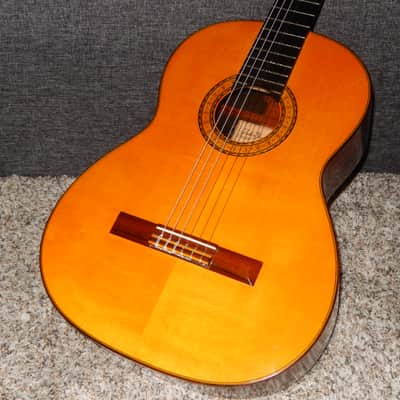
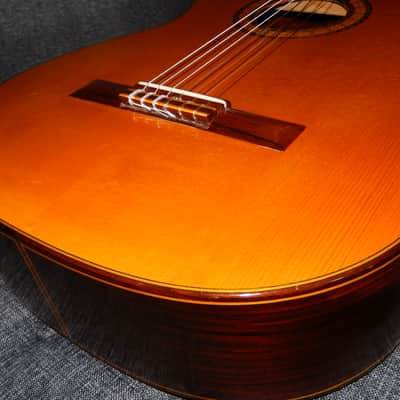
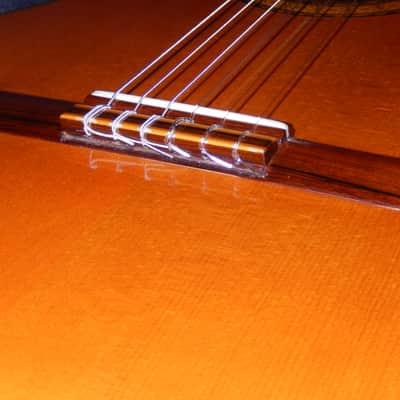
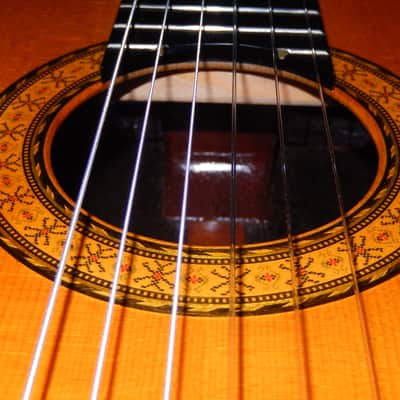
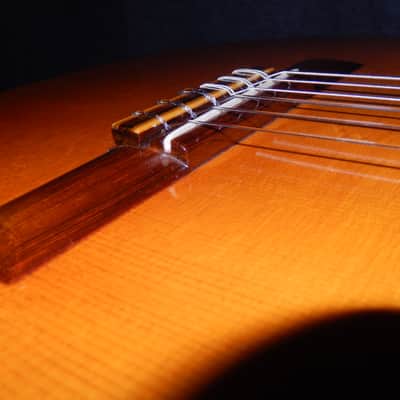
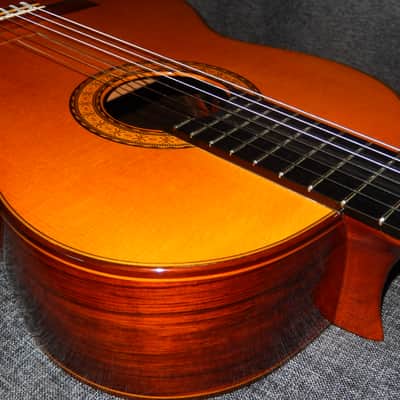
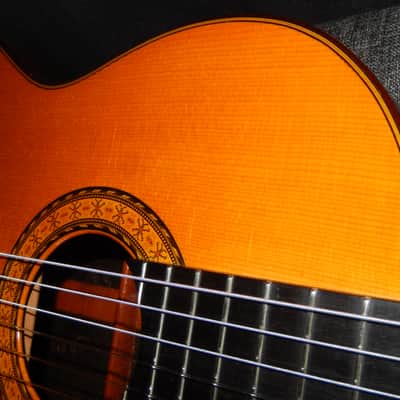
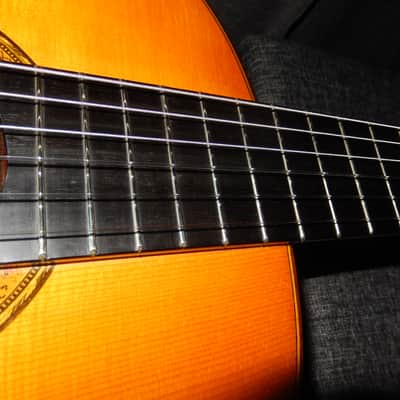
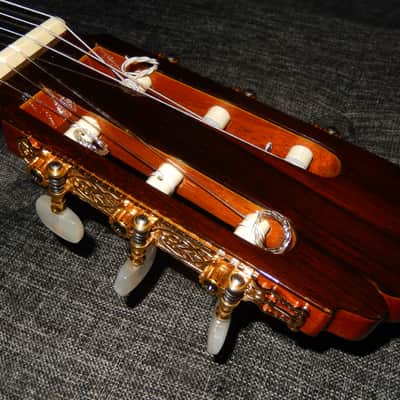
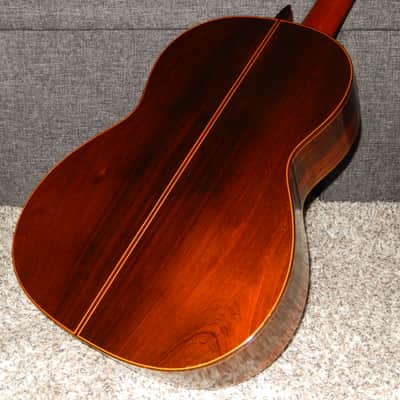
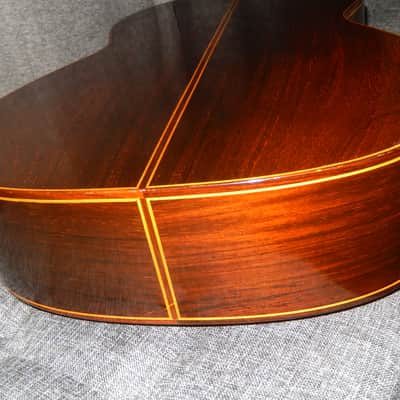
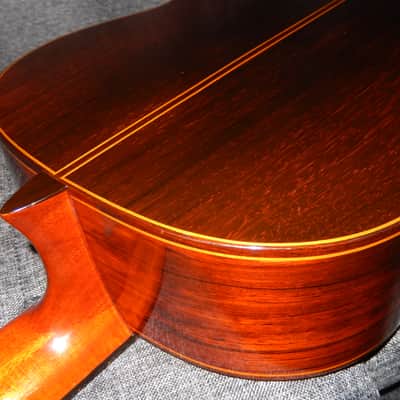
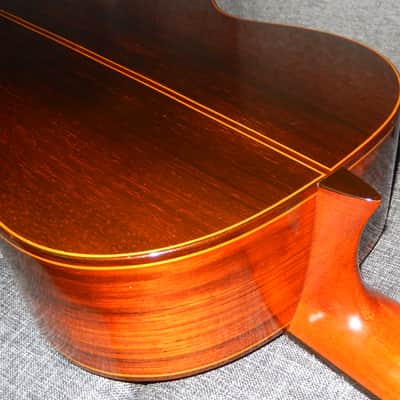
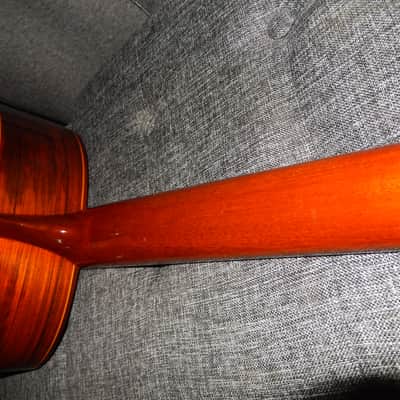
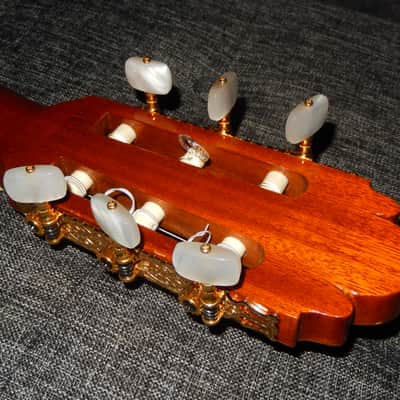
Its overall condition can be described as “practically mint” considering its age. Even though its top bears few very light scratches (most located below E1 string and hardly visible even from a close distance), are there are a couple of very light attritions on the back of the neck, this guitar looks and smells as if it has never been played before. It doesn’t have any structural flaws, its neck is straight, fingerboard and frets don’t show any sign of use. The original tuners work smoothly, except for the G3 roller clicking when used in reverse. It doesn’t bother me at all, and it doesn’t justify a replacement. Should you decide otherwise, it won’t be a problem because Gotoh tuning machines with 39mm roller spacing are readily available on the market.
Specifications:
Top: High Grade Solid “Bear claw” Yezo Spruce/Cashew varnish
Back & Sides: High Grade Solid Figured Brazilian Rosewood/ Cashew varnish
Neck: Mahogany
Fingerboard: High Grade Ebony
Bridge: Brazilian Rosewood
Scale: 662 mm
Nut width: 51.50 mm
Strings: Felipe Conde Concert Nylon Low Tension
Action is set to 3.80 mm under E6 and 3.30 mm under E1, with practically no extra room on the saddle.
Guitar will be shipped in a used original hard shell case in decent condition.
THE ONLY PURPOSE OF THIS CASE IS TO PROTECT THE GUITAR DURING SHIPMENT. I WILL NOT PROVIDE ITS DETAILED DESCRIPTION OR MAKE ADDITIONAL PICTURES, NOR I WILL ACCEPT ANY COMPLAINTS. IF YOU DON’T LIKE THIS CASE YOU WILL NEED TO BUY A DIFFERENT ONE.
WHEN YOU BUY ANY GUITAR, YOU MUST ANTICIPATE TAKING IT TO YOUR LOCAL GUITAR SHOP FOR FINAL ADJUSTMENTS CALLED “SETUP”. DEPENIDNG ON YOUR PLAYING TECHNIQUE, THIS SETUP ON USED GUITARS MAY INCLUDE NEW CUSTOM-MADE NUT AND SADDLE. IF YOU HEAR STRING BUZZ IT DOESN’T MEAN THAT GUITAR IS DEFECTIVE. IF YOU PLAY HARD ENOUGH ALL BASS STRINGS WILL BUZZ OVER THE FRETS, UNLESS THEY ARE SUSPENDED VERY FAR FROM THE FINGERBOARD. UNLESS YOU PLAY QUITE GENTLY, YOU CAN’T HAVE LOW ACTION AND NO BUZZES. KEEP IN MIND THAT CELLO-LIKE BASSES ON HIGH GRADE CLASSICAL GUITARS HAVE THEIR NATURAL “BUZZ”.
Real Value of Japanese Vintage Guitars
The key to understand value of vintage Japanese guitars is to acknowledge galloping price inflation throughout the late 1960s and 1970s with its peak of 25% in 1974.
During 1960s and most of 1970s model numbers of Japanese guitars were strictly connected with their prices in Japanese yen.
The same class guitar sold in 1970 for 100 000 yen (labelled as model 10), would be sold for 150 000 yen in 1972 (labelled as model 15), 200 000 yen in 1974 (labelled as model 20) and 300 000 yen in 1978 (labelled as model 30). Therefore, you shouldn’t be surprised that two Yamaha GC10 guitars made 10 years apart are two instruments of totally different class. The same rule applies to all guitar models made by all other Japanese makers.
Japanese inflation slowed down in the 1980s. By the early 1980s and during following decades model numbers were no longer strictly associated with their prices. Some Japanese guitar makers introduced model names instead of model numbers. For several economic reasons, since 1980s Japanese made guitars were becoming more and more expensive, while their exports slowing down. Today (2025) Japanese highest end classical guitar models are priced at $20000 level.
| Listed | 7 months ago |
|---|---|
| Condition | Excellent (Used) Excellent items are almost entirely free from blemishes and other visual defects and have been played or used with the utmost care.Learn more |
| Brand |
|
| Model |
|
| Finish |
|
| Categories | |
| Year |
|
| Made In |
|
| Body Shape |
|
Product safety information may be available here.

