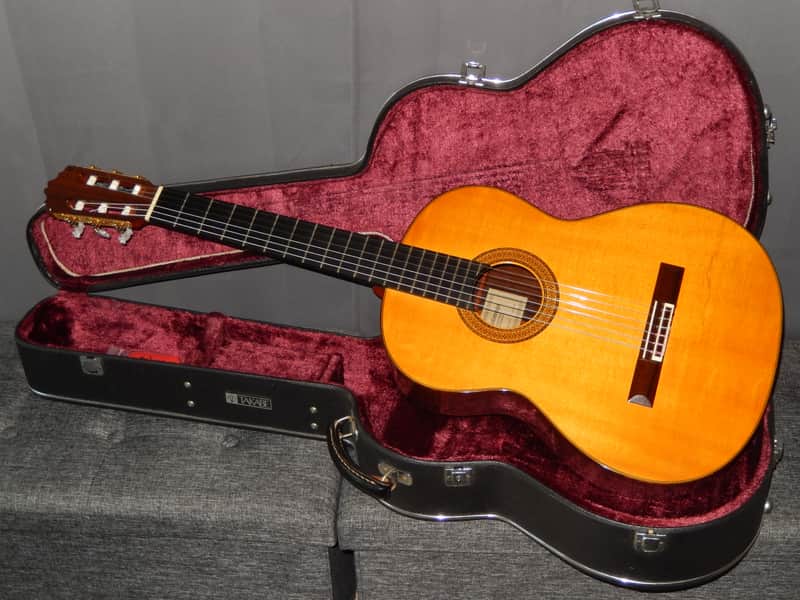
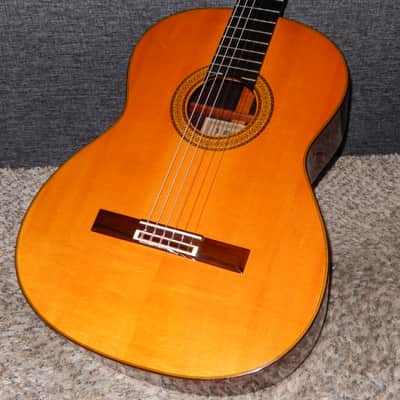
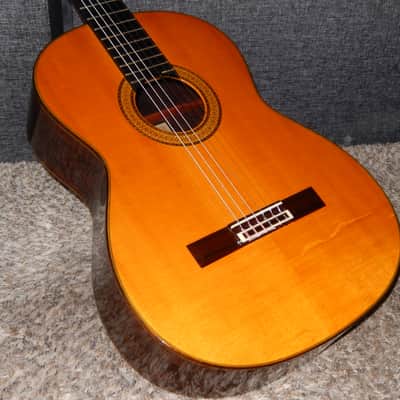
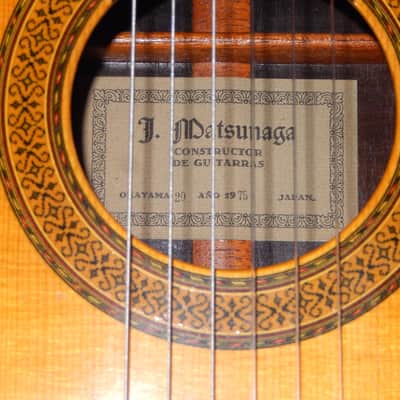
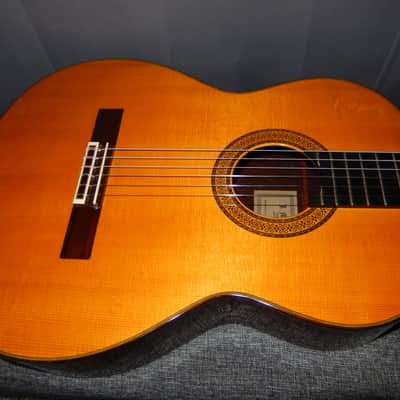
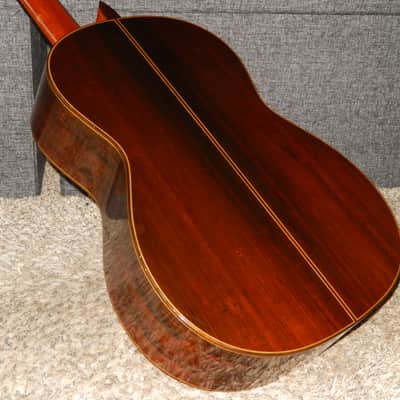
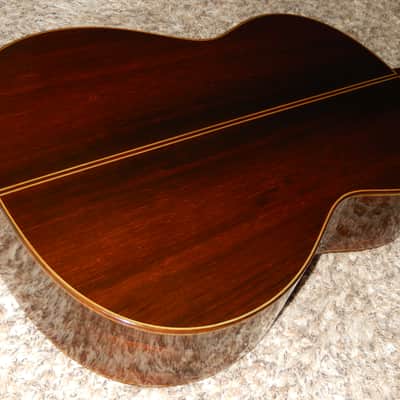
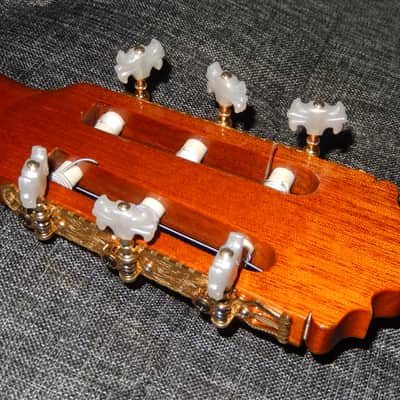
RARITY - JIN-ICHIRO MATSUNAGA 20 1975 - YAMAHA GC70 CLASS CLASSICAL CONCERT GUITAR - SPRUCE/BRAZILIAN ROSEWOOD
This seller has not set a shipping cost for Ireland. Please contact them to ask about shipping.


Our users rate Reverb
YOU ARE LOOKING AT A WORLD CLASS INSTRUMENT PRICED AT THE BARGAIN LEVEL. JAPANESE MADE BRAND NEW GUITARS OF THE SAME CLASS MADE WITH FIGURED OLD GROWTH BRAZILIAN ROSEWOOD ARE PRICED MINIMUM $18000USD. DISCONTINUED IN 2025 YAMAHA GC70 WAS PRICED AT THAT LEVEL.
While searching internet you won’t find much information about this luthier. Because his guitars are truly very hard to find, logical conclusion is that he was working mostly by himself. My findings suggest that he started making guitars in early 1960s and continued until 1990s. It is unknown if he was a former associate of any world-famous Japanese luthier. Yet until today, his guitars are very highly regarded not only in Japan but also in Americas, Europe and Australia. Based on my observations of his serial number system, I am sure that Jin-Ichiro was making no more than 25 guitars per year.
His guitars are the best proof of how great luthier he really was. As it was true with many other less prominent Japanese luthiers, who had no strong ties with international importers, Jin-ichiro had to price his terrific instruments at much lower level if compared with similar grade guitars made by Japanese elite luthiers (Masaru Kohno, Sakazo & Toshihiko Nakade, Mitsuru and Hiroshi Tamura, Yamaha etc.).
Guitar you are looking at was priced 200 000 yen in 1975. If exactly the same grade guitar was made by world famous Japanese luthier, it would be priced 300 000 yen.
In 1975 all 200 000 yen Japanese made classical guitars were made with solid (usually figured) Brazilian Rosewood b/s. for many makers these were top of the line models. Only elite luthiers (like Masaru Kohno, Sakazo Nakade, Mitsuru Tamura, Yamaha) had their 300 000 yen models in 1975.
Less prominent luthiers had to accept far lower prices for their equally great instruments. In 1975 it was quite easy to find in Japan a very high grade instrument made with solid figured BR b/s priced 150 000 yen (e.g. Ryoji Matsuoka No150, Kazuo Yairi YC150, Yukinobu Chai No15, Hiroshi Tamura P150).
During 1970s Japanese inflation was at 20% level, reached 25% in 1974 and slowly subsided to 9% in 1980. That is why in just few years prices of most of these (made in 1975) guitars had gone up by 50% on average. Since 1977 top of the line models made by elite luthiers were priced 500 000 yen and reached 800 000 yen level by 1985.
In 1982 very few 200 000 yen models (e.g. Ryoji Matsuoka No200, Takamine 20) were still made with solid Brazilian Rosewood b/s. Kazuo Yairi was the only “crazy” manufacturer to sell such guitars for 150 000 yen (models YC150, H15, T15). However, his “custom shop” models were already priced no less than 200 000 yen.
If made in 1980, guitar you are looking at, would be labeled as No30 and priced 300 000 yen.
As of today, French polished classical guitars made by Japanese elite luthiers with solid Latin America or African Rosewood b/s are priced minimum 1200 000 yen. If they are made from long seasoned woods the price is surely higher. Priced $9,999USD, Yamaha GC82 is a great example. Yamaha GC82 or similarly priced Kohno Maestro guitars are not the highest priced Japanese models at all. Yamaha GC70 is priced $18000USD. Custom made instruments are being priced $20000USD, which is still below what leading European luthiers charge for their very top models.
This truly magnificent instrument offers immense volume and super response combined with very romantic tonality, deep cello-like basses, strong piano-like trebles. Despite its super volume all notes are super clear and very well separated. The only tradeoff for this volume is moderate sustain.
If you take this Jin-ichiro Matsunaga No20 guitar to any high-end US guitar store you will not find equally great “hand made in Spain” one for less than $10000USD.
If you believe that any currently made in Japan guitar sold in USA for $2000USD is something more than student grade instrument, you better have some savings.
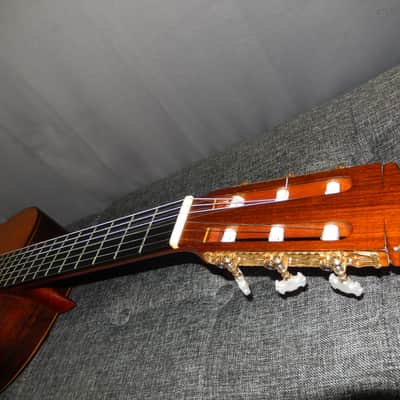
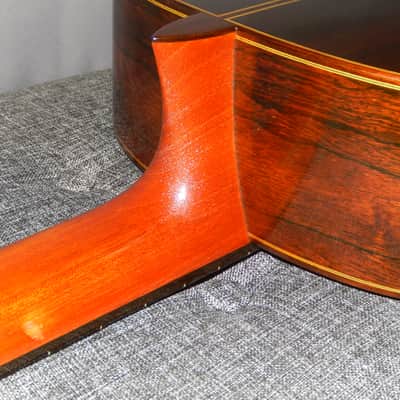
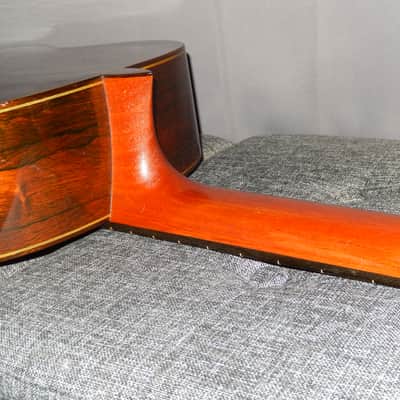
The overall condition of this guitar can be described as “excellent for its age” with very minor signs of use but several cosmetic imperfections. While its body bears only few minor dents, scratches and rubbing marks, the most conspicuous imperfections are located on the neck. These include 2 dents (with one relatively large although rather shallow), some very light abrasions and roughness of the finish concentrated at the base of the neck. It seems that finish in this area dried and slightly wrinkled. I have repolished traces of mild roughness along the neck making it feel smooth.
Very importantly the neck is straight, while fingerboard and frets still in very good condition.
None of its imperfections will prevent you from playing this instrument and enjoying its gorgeous sound. You can go to a local luthier and have all these cosmetic issues removed or diminished. What you certainly won't be able do achieve, is to find the same class brand new guitar for less than $15000USD.
SPECIFICATIONS:
Top: Finest Grade (“Bear Claw”) Solid Yezo Spruce/original asymmetrical bracing system based on 5 braces fan/shellac
Back & sides: Solid figured Brazilian Rosewood/shellac
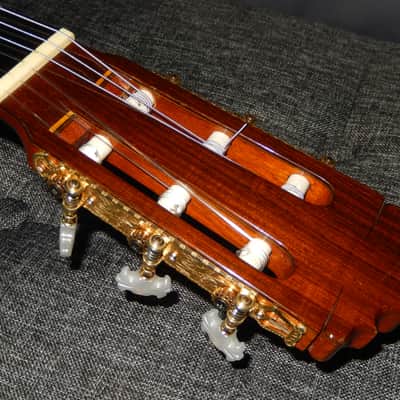
Neck: Honduras Mahogany
Fingerboard: Ebony
String Length: 660mm
Nut width: 52 mm
Guitar’s action is set to 3.90mm under E6 and 3.00mm under E1, with no extra room on the saddle (on the E6 string side).
The guitar will be shipped in a used Takabe hard shell case in very good condition.
THE ONLY PURPOSE OF THIS CASE IS TO PROTECT THE GUITAR DURING SHIPMENT. I WILL NOT PROVIDE ITS DETAILED DESCRIPTION OR MAKE ADDITIONAL PICTURES, NOR I WILL ACCEPT ANY COMPLAINTS. IF YOU DON’T LIKE THIS CASE YOU WILL NEED TO BUY A DIFFERENT ONE.
WHEN YOU BUY ANY GUITAR, YOU MUST ANTICIPATE TAKING IT TO YOUR LOCAL GUITAR SHOP FOR FINAL ADJUSTMENTS CALLED “SETUP”. DEPENIDNG ON YOUR PLAYING TECHNIQUE, THIS SETUP ON USED GUITARS MAY INCLUDE NEW CUSTOM-MADE NUT AND SADDLE. IF YOU HEAR STRING BUZZ IT DOESN’T MEAN THAT GUITAR IS DEFECTIVE. IF YOU PLAY HARD ENOUGH ALL BASS STRINGS WILL BUZZ OVER THE FRETS, UNLESS THEY ARE SUSPENDED VERY FAR FROM THE FINGERBOARD. UNLESS YOU PLAY QUITE GENTLY, YOU CAN’T HAVE LOW ACTION AND NO BUZZES. KEEP IN MIND THAT CELLO-LIKE BASSES ON HIGH GRADE CLASSICAL GUITARS HAVE THEIR NATURAL “BUZZ”.
Real Value of Japanese Vintage Guitars
The key to understand value of vintage Japanese guitars is to acknowledge galloping price inflation throughout the late 1960s and 1970s with its peak of 25% in 1974.
During 1960s and most of 1970s model numbers of Japanese guitars were strictly connected with their prices in Japanese yen.
The same class guitar sold in 1970 for 100 000 yen (labelled as model 10), would be sold for 150 000 yen in 1972 (labelled as model 15), 200 000 yen in 1974 (labelled as model 20) and 300 000 yen in 1978 (labelled as model 30). Therefore, you shouldn’t be surprised that two Yamaha GC10 guitars made 10 years apart are two instruments of totally different class. The same rule applies to all guitar models made by all other Japanese makers.
Japanese inflation slowed down in the 1980s. By the early 1980s and during following decades model numbers were no longer strictly associated with their prices. Some Japanese guitar makers introduced model names instead of model numbers. For several economic reasons, since 1980s Japanese made guitars were becoming more and more expensive, while their exports slowing down. Today (2025) Japanese high end classical guitar models are priced at $20000USD level.
| Listed | 6 months ago |
|---|---|
| Condition | Excellent (Used) Excellent items are almost entirely free from blemishes and other visual defects and have been played or used with the utmost care.Learn more |
| Brand |
|
| Model |
|
| Finish |
|
| Categories | |
| Year |
|
| Made In |
|
| Body Shape |
|
Product safety information may be available here.

