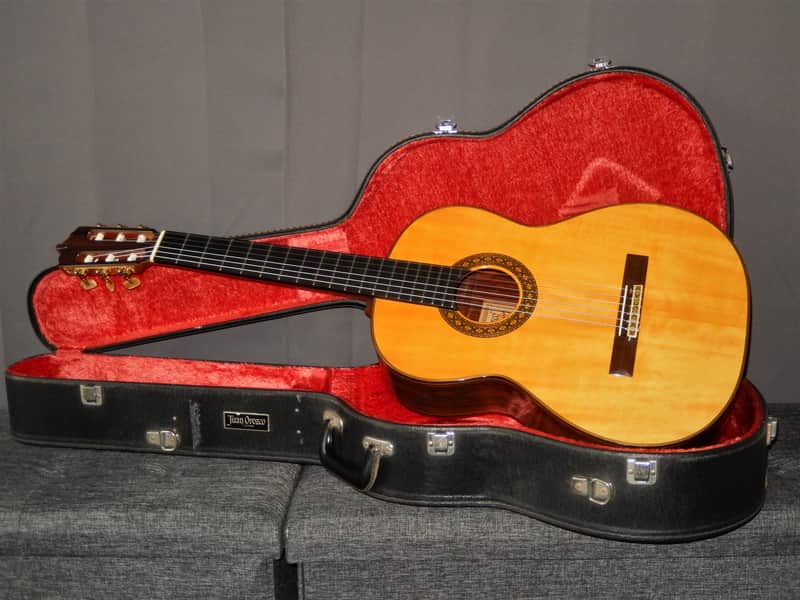
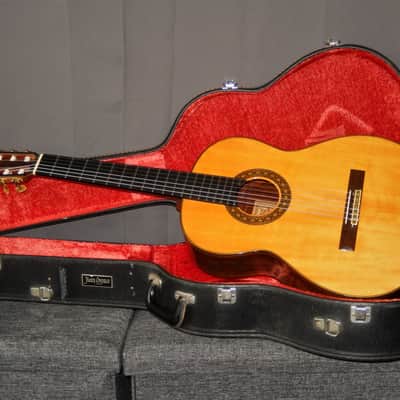
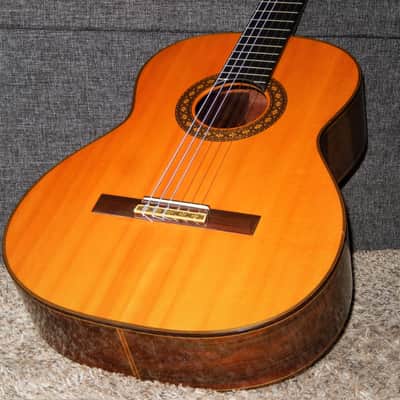
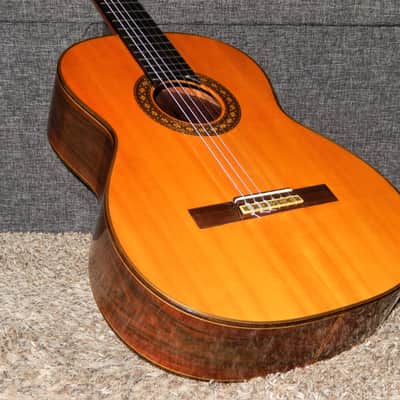
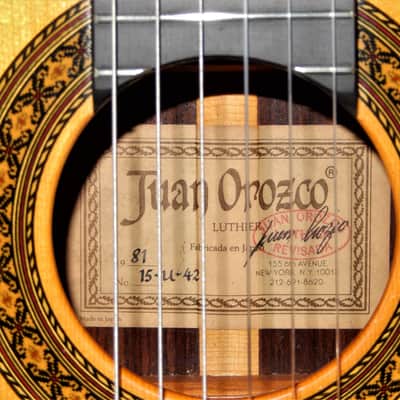
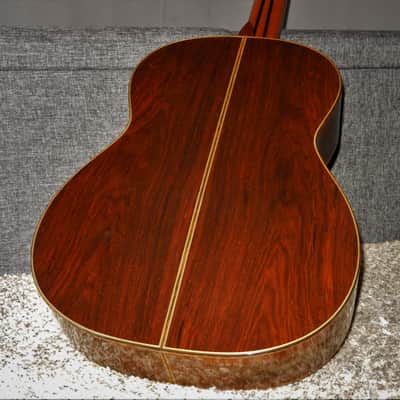
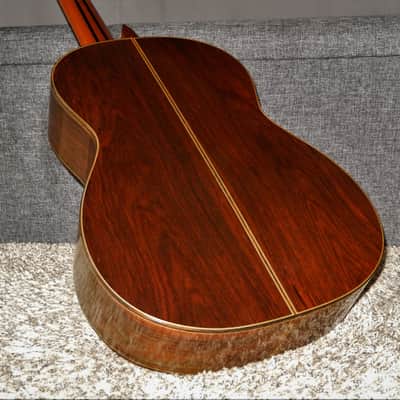
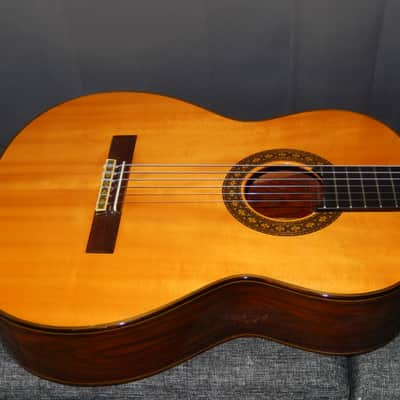
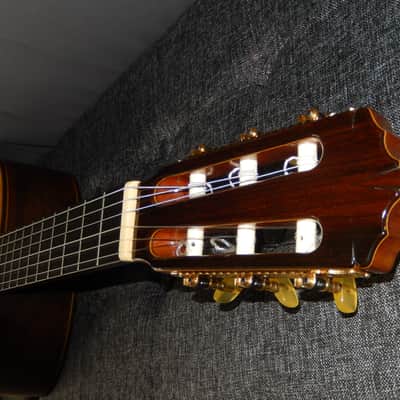
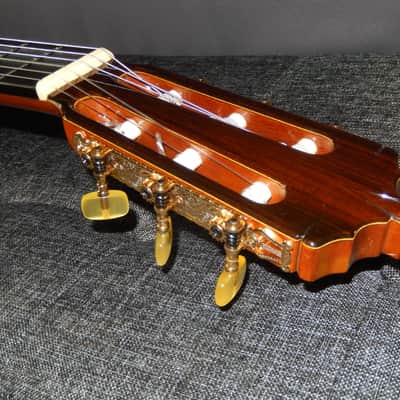
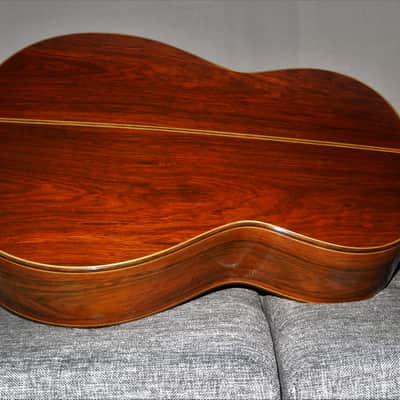
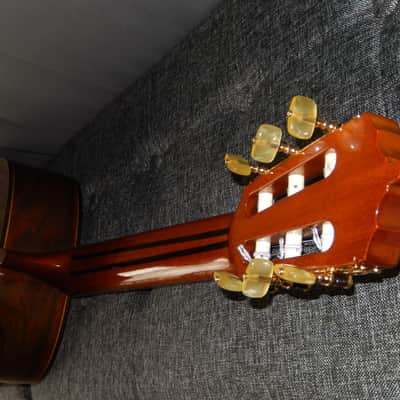
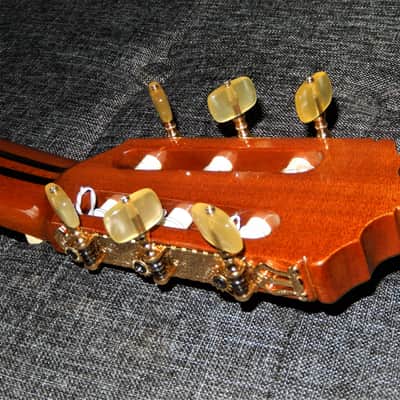
RARITY - JUAN OROZCO 15U42 1981 - WORLD CLASS CLASSICAL CONCERT GUITAR - SPRUCE/BRAZILIAN ROSEWOOD
This seller has not set a shipping cost for Hungary. Please contact them to ask about shipping.

Our users rate Reverb
YOU ARE LOOKING AT A WORLD CLASS INSTRUMENT PRICED AT THE BARGAIN LEVEL. CURRENTLY MADE IN JAPAN BRAND NEW GUITARS OF THIS CLASS MADE WITH FIGURED OLD GROWTH BRAZILIAN ROSEWOOD ARE PRICED MINIMUM $18000USD. DISCONTINUED IN 2025 YAMAHA GC70 WAS PRICED AT THAT LEVEL.
THIS GUITAR WAS A PART OF JUAN'S PERSONAL GUITAR COLLECTION UNTIL HIS PASSING IN FEBRUARY 2020. I WAS FORTUNATE TO PURCHASE IT DIRECTLY FROM JUAN'S SON IN JANUARY 2021.
Guitar you are looking at was made in 1981 by Hoshino Gakki. It was the top of the line model, made the same way as Masaru Kohno guitars. This guitar represents the same class as Masaru Kohno model "Professional J" sold in the early 1980s at 100% higher price.
If you decide to search the internet you will find some info describing Juan Orozco’s story and achievements. You will also find several reviews describing the quality of his guitars, sold in many countries. I have summarized this available info into a brief chapter.
Juan Orozco III (born on April 14th, 1937, and died February 15th, 2020) was a Spanish luthier and guitar impresario who lived in New York from 1965 to 1995, where he had a famous guitar shop at 56th Street (in the vicinity of Carnegie Hall). This address was actually the third location of Juan’s guitar shop. Since 1960s his shop was moved twice to new locations. Juan was also known as the maker of Aranjuez guitar strings and guitar cases. He was also known as organizer of guitar concerts. He befriended many other luthiers and guitar virtuosos.
Juan was the third generation in family of guitar makers. Juan’s father (Juan Orozco II) built guitars in Spain, Uruguay and Brazil and his son was also actively involved in these workshops.
Between 1969 and 1983 Juan Orozco closely cooperated with several famous Japanese luthiers (Ryoji Matsuoka, Hiroshi Tamura, Sadao Yairi, Masaru Kohno, Masaki Sakurai, Takamine Gakki and Hoshino Gakki. (Gakki in Japanese means Musical Instruments Company).
In 1970s the main business for Hoshino Gakki were Tama Drums and Ibanez electric guitars. Hoshino co. however also had a team of highly skilled luthiers making high grade classical guitars for other brands/luthiers. Among the others, Hoshino co. was making Aria guitars, Masaki Sakurai and Masaru Kohno guitars. Juan Orozco was able to order guitars with his own design headstock and rosettes but made following Masaru Kohno blueprints. His models made by Hoshino Gakki were #8, #10 and #15.
This was nothing unusual within the network of Japanese musical instrument makers of that era, that more prominent luthiers or Gakkis (especially those with strong ties to international importers) were simply hiring small scale makers to produce their brand instruments. There was nothing inappropriate or unethical about that. All guitar Japanese makers obeyed strict code of ethics and strict quality standards. If one of famous Japanese luthiers hired another shop to produce certain models later sold with his labels, these instruments had to be made exactly the same way and represent exactly the same quality as guitars made by his own workshop.
Beyond any doubt it is a fine instrument, representing the same level as Masaru Kohno guitars. It offers impressive volume, great response, deep and rich basses, strong round trebles, yet sweet & lyrical tonality, all notes well balanced and greatly enhanced by very extended sustain. With its superb note clarity and separation, it also offers great feel of transparency. Even though it already sounds gorgeous I bet that its full tonal potential is still be revealed.
My assumption is based on the fact, that this guitar looks like new. Only close inspection reveals couple minute cosmetic imperfections over its entire body. This proves to me that this guitar hasn’t been played for many years (if played at all).
Specifications:
Top: Very Tight Grain Solid Yezo Spruce/Cashew lacquer
Back & Sides: Highest Grade Solid Figured Brazilian Rosewood/Cashew lacquer
Neck: Mahogany with double Ebony reinforcement
Fingerboard: Ebony
Scale: 650 mm
Nut width: 52 mm
Its action is set to 3.70 mm under E6 and 3.20 mm under E1, with practically no extra room on E6 side of the saddle and just little extra room on the E1 side.
This guitar will be shipped in the original hard-shell case in still very good condition.
THE ONLY PURPOSE OF THIS CASE IS TO PROTECT THE GUITAR DURING SHIPMENT. I WILL NOT PROVIDE ITS DETAILED DESCRIPTION OR MAKE ADDITIONAL PICTURES, NOR I WILL ACCEPT ANY COMPLAINTS. IF YOU DON’T LIKE THIS CASE YOU WILL NEED TO BUY A DIFFERENT ONE.
WHEN YOU BUY ANY GUITAR, YOU MUST ANTICIPATE TAKING IT TO YOUR LOCAL GUITAR SHOP FOR FINAL ADJUSTMENTS CALLED “SETUP”. DEPENIDNG ON YOUR PLAYING TECHNIQUE, THIS SETUP ON USED GUITARS MAY INCLUDE NEW CUSTOM-MADE NUT AND SADDLE. IF YOU HEAR STRING BUZZ IT DOESN’T MEAN THAT GUITAR IS DEFECTIVE. IF YOU PLAY HARD ENOUGH ALL BASS STRINGS WILL BUZZ OVER THE FRETS, UNLESS THEY ARE SUSPENDED VERY FAR FROM THE FINGERBOARD. UNLESS YOU PLAY QUITE GENTLY, YOU CAN’T HAVE LOW ACTION AND NO BUZZES. KEEP IN MIND THAT CELLO-LIKE BASSES ON HIGH GRADE CLASSICAL GUITARS HAVE THEIR NATURAL “BUZZ”.
Real Value of Japanese Vintage Guitars
The key to understand value of vintage Japanese guitars is to acknowledge galloping price inflation throughout the late 1960s and 1970s with its peak of 25% in 1974.
During 1960s and most of 1970s model numbers of Japanese guitars were strictly connected with their prices in Japanese yen.
The same class guitar sold in 1970 for 100 000 yen (labelled as model 10), would be sold for 150 000 yen in 1972 (labelled as model 15), 200 000 yen in 1974 (labelled as model 20) and 300 000 yen in 1978 (labelled as model 30). Therefore, you shouldn’t be surprised that two Yamaha GC10 guitars made 10 years apart are two instruments of totally different class. The same rule applies to all guitar models made by all other Japanese makers.
Japanese inflation slowed down in the 1980s. By the early 1980s and during following decades model numbers were no longer strictly associated with their prices. Some Japanese guitar makers introduced model names instead of model numbers. For several economic reasons, since 1980s Japanese made guitars were becoming more and more expensive, while their exports slowing down. Today (2025) Japanese high end classical guitar models are priced at $20000USD level.
| Listed | 6 months ago |
|---|---|
| Condition | Excellent (Used) Excellent items are almost entirely free from blemishes and other visual defects and have been played or used with the utmost care.Learn more |
| Brand | |
| Model |
|
| Finish |
|
| Categories | |
| Year |
|
| Made In |
|
| Body Shape |
|
Product safety information may be available here.

