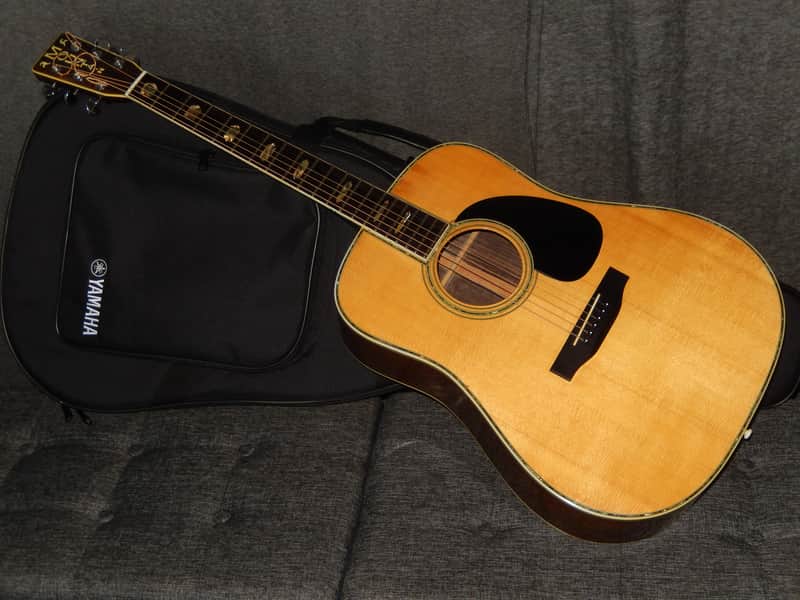
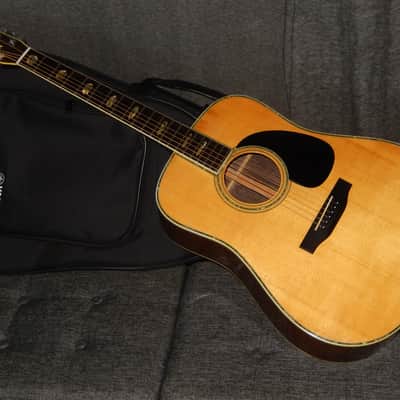
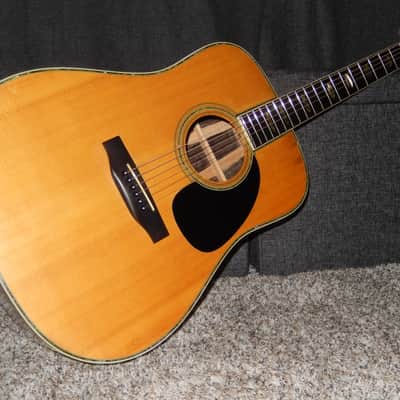
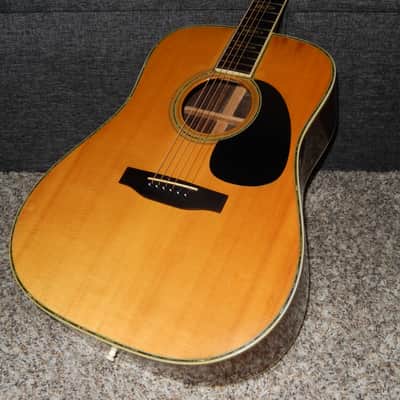
MADE IN JAPAN 1977 - C.F. MOUNTAIN W500D - SUPERB - MARTIN D45 STYLE - ACOUSTIC GUITAR
This seller has not set a shipping cost for Brazil. Please contact them to ask about shipping.


Our users rate Reverb
C.F. Mountain W500D 1977
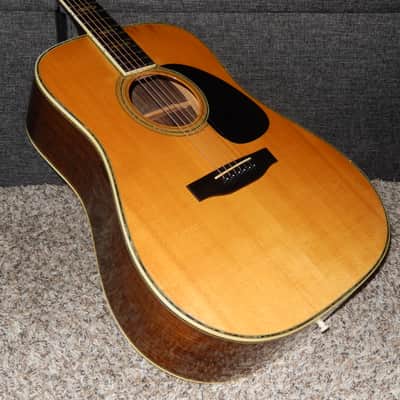
This terrific guitar was made around the year 1977 being the very top model within C.F.Mountain acoustic guitars lineup, distributed by Weston Music Co. and made by Hayashi Gakki under personal supervision of Master Luthier Yasuo Momose.
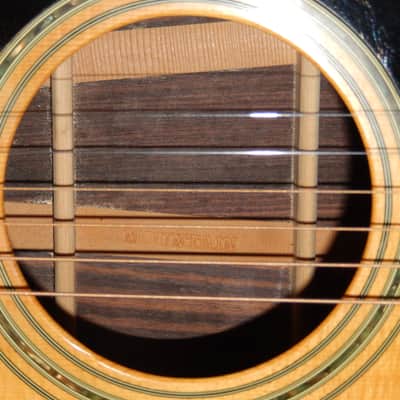
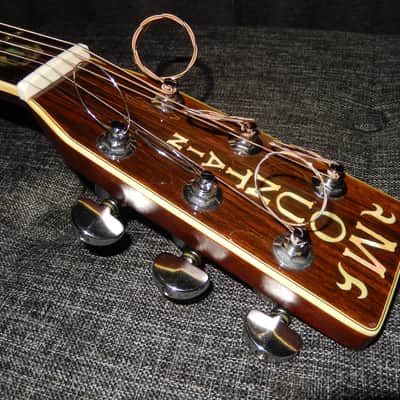
Hayashi Gakki’s luthiers were making a whole variety of steel string acoustic guitars later sold under different brand names including Mountain Rider, Canyon & Pearl (just to name a few). All these instruments were handmade under the supervision of Master Luthier Mr. Yasuo Momose. Mountain guitars appeared on the market in 1975 and were discontinued soon after Momose’s departure in late 1977. Since 1977 Momose introduced new truss rods design with access to them “hidden” behind sound hole brace. Models made in 1975-1976 had “regular” truss rods with access right underneath the edge of the sound hole. With this Momose’s design the sound hole edges were better protected from accidental damage during truss rod adjustment.
By late 1977 Yasuo started his own (soon to become famous) Headway guitars workshop. Headway guitars are made until today and are very highly regarded (and priced) wherever they are distributed. Mr. Momose in Japan has the same high status as Terry Nakamoto (long time headmaster luthier at Yamaha’s Custom Shop). You can read the short chapter about Mr. Momose presented below the posting.
The guitar you are looking at, although inspired by Martin blueprints, is more of Momose’s own creation. Soon after you start playing this guitar, you’ll know why Yasuo Momose, and his Headway guitars are so highly regarded in Japan, Europe, Australia, and Asia.
As of today, Japanese factory made solid top guitars of similar construction and looks are priced at $3000 level. However, in terms of volume and tonality they stand no chance against a 50 year old vintage guitar. Only guitars made with 50 years old woods could do that (after being frequently played for at least a couple of years). This will be rather difficult to order such a guitar, because woods seasoned for so long are very hard to find. Guitars made in Japan with (only) 20 years old tops are priced at $4500 level. A similar class solid top guitar made by a well-established individual American luthier, can easily cost you 50% more. If you'd like to add solid back and sides made with 20 years old Indian Rosewood the price may very well double. If, however, you wanted to go "all the way" and have old growth Brazilian Rosewood b/s you need to be prepared for the price at $25000 level.
NONE OF THESE GUITARS WILL SOUND MUCH BETTER (IF BETTER AT ALL) THAN THE ONE YOU ARE LOOKING AT RIGHT NOW!
This guitar surely deserves “Grand Concert” title. It offers immense volume and superb response. Its sound is deep yet ultra-rich. Basses are deep, rich with overtones but relatively “clean” at the same time. Trebles are steely yet sweet and colorful at the same time. All notes are clear and super well separated. When chords and arpeggios are played guitar releases plenty of overtones and harmonies. All notes are magnified by very impressive sustain.
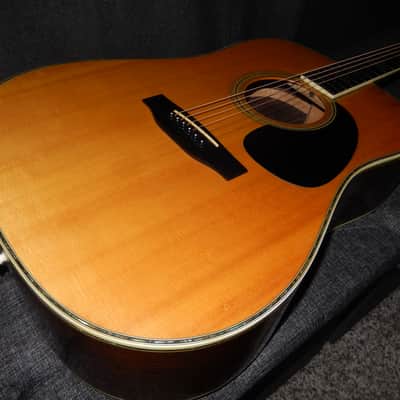
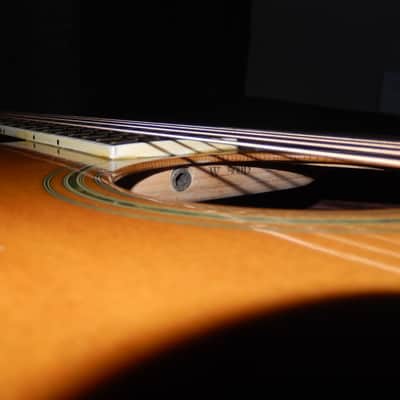
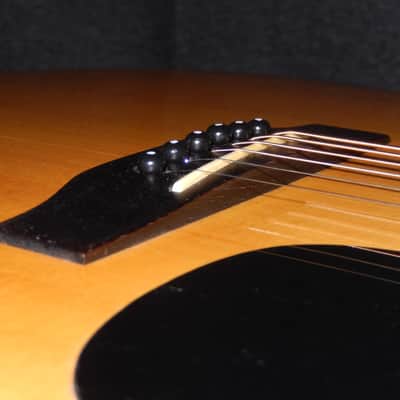
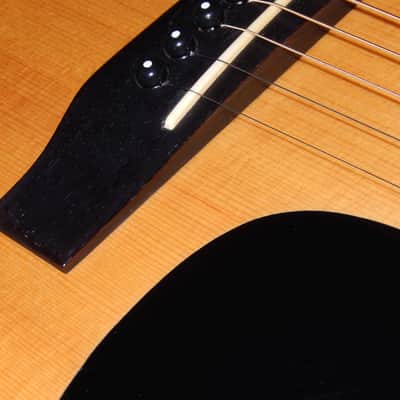
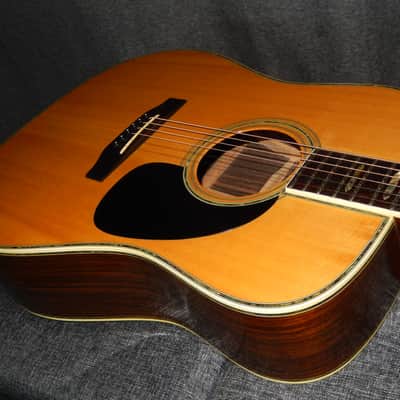
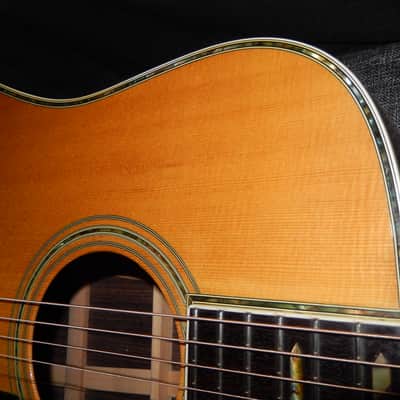
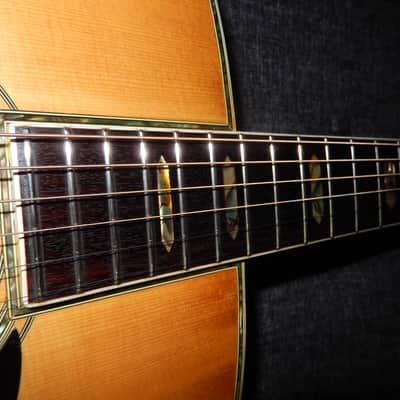
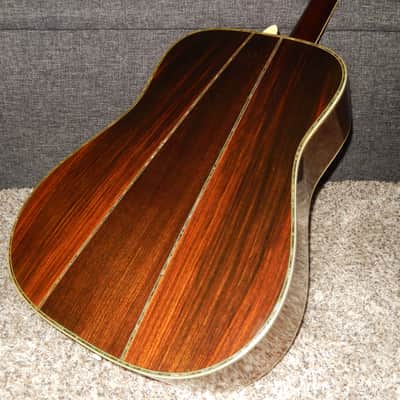
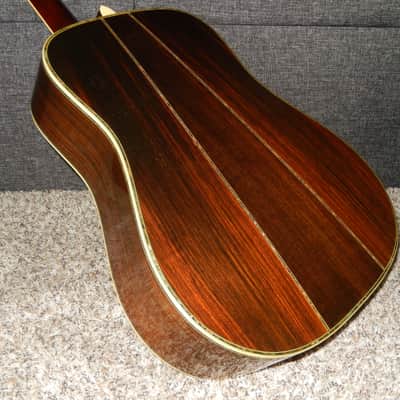
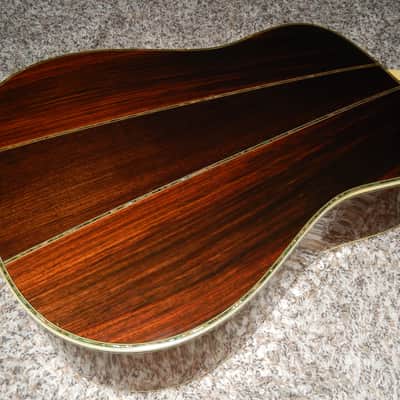
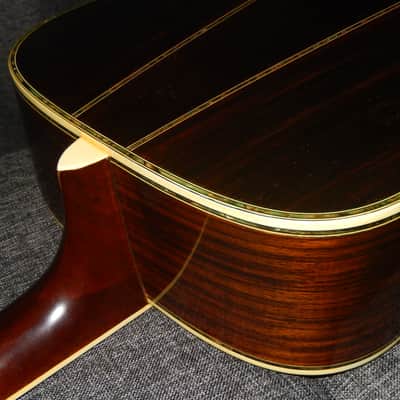
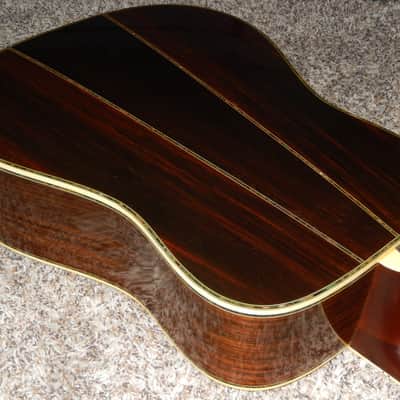
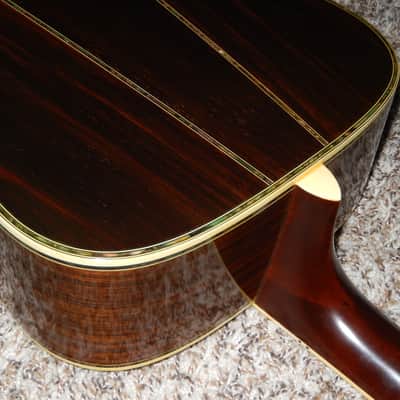
Despite its age, this C.F. Mountain W500D guitar survived in excellent condition overall. One could even say “near mint” condition. In fact, it doesn’t show signs of any intensive use. Very likely it was played only occasionally and mostly stored in a safe place. Besides a few tiny marks within the finish on its top, the body of this fine instrument is free from any conspicuous cosmetic flaws. It sure doesn’t have any structural flaws. Visible from a close distance darker line on the soundboard between the bridge and pick guard, is a part of natural grain pattern, not a crack.
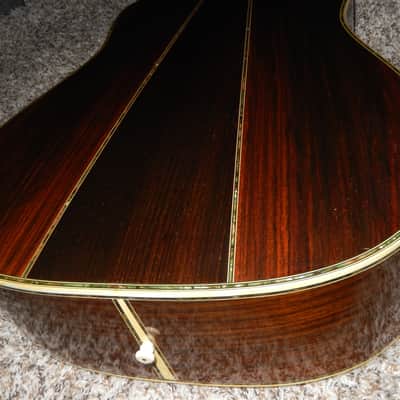
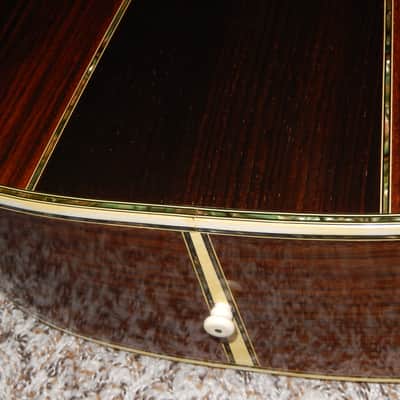
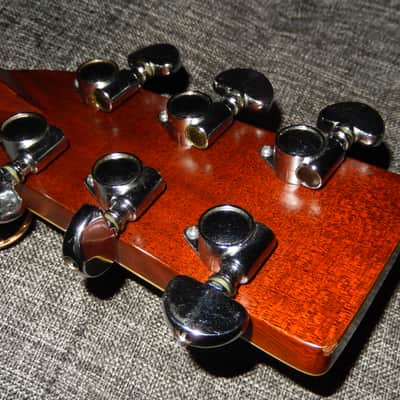
“Miraculously” its bindings are almost as white as they were originally, while its original Grover tuning keys look like new and work fine. What is normal on such old guitars is that we can feel the edges of the (made of hard plastic) white wedge-shaped center piece placed between the side plates at the bottom of the guitar (where the end pin is mounted). In some places we can also feel the edges of side plates where they meet the purfling. It all doesn’t mean that guitar is about to disintegrate. It only means that guitar was made a several decades ago.
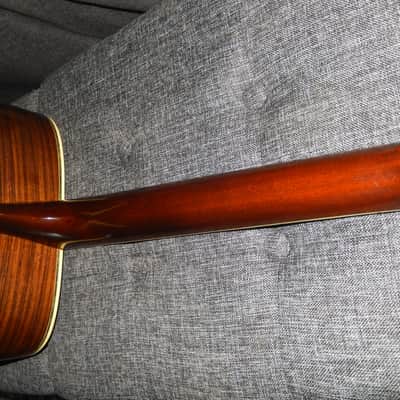
Very importantly its neck is straight, fingerboard and frets are all in excellent shape.
Specifications:
Top: Solid Spruce/ Martin style bracing with non-scalloped braces/ thin coat of lacquer
Back & Sides: 3-piece “non-solid” Brazilian Rosewood/urethane
Fingerboard: Ebonized Rosewood
Neck: Mahogany
Scale 645 mm
Width at Nut: 43 mm
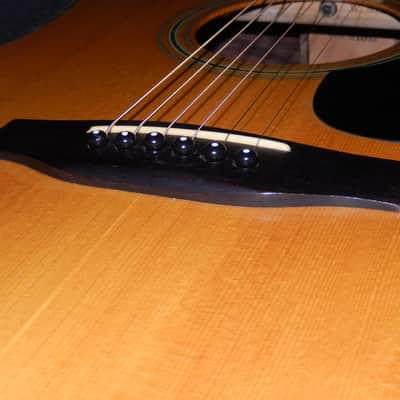
Its action is set to about 2.50 mm under E6 and 2.00 mm under E1 with very little extra room on the saddle.
This guitar will be shipped in a brand new Yamaha soft-shell case.
IF YOU BUY ANY GUITAR, YOU MUST ANTICIPATE TAKING IT TO YOUR LOCAL GUITAR SHOP FOR FINAL ADJUSTMENTS CALLED “SETUP”. STRING BUZZ DOESN’T MEAN THAT GUITAR IS DEFECTIVE.
My posted for sale guitars are stored in climate-controlled vault already packed into shipping boxes, with loosen strings. Because the strings are loosened, they don’t pull the neck or soundboard, and the neck may relax (straighten more) and the soundboard flatten a bit, which may result with the string action being lower than my it was with my original settings and lead to buzzes and/or dead notes after guitar arrives to you. Such a change in neck curvature can also happen just because of vibrations during the shipment and/or temperature fluctuations. Therefore, you must be ready to make final action adjustment yourself and or have it done by professional. All that really needs to be done is the simple neck adjustment by using the truss rod (turning the truss rod counterclockwise will relief the neck and strings will move away from the frets).
THAT IS WHY TRUSS RODS ARE INSTALLED IN THE NECKS OF ACOUSTIC GUITARS!!!
YES, I KNOW THAT “C.F. MOUNTAIN” SOUNDS FAMILIAR TO YOU. BUT IF YOU ARE OPEN MINDED AND NOT AFRAID TO STEP INTO UNKNOWN, YOU WILL BE GEATLY REWARDED. YOU SHOULD LOOK AT THESE MUCH BETTER SOUNDING JAPANESE MADE VINTAGE DREADNOUGHT GUITARS:
Made (for domestic market) by the same Hayashi Gakki Rider R500D 1976 sounds decisively better than (made for export) Mountain W500D 1977.
Yamaki YW800 1977 was priced 60% higher and sounds 2 times better than C.F. Mountain W500D 1977
All these guitars sound decisively better than C.F. Mountain W500D 1977:
Yasuo Momose and Headway Guitars Story
Before starting his own workshop, Mr. Momose was already famous for making very fine acoustic guitars at Hayashi Gakki. Being helped by his business partner Mr. Yatsuka (current CEO of Deviser company, a distributor of Headway guitars) Momose started making Headway guitars in 1977. His guitars rather quickly won great popularity not only in Japan, but also many other countries. Although their construction was based on Martin blueprints, these guitars had their own unique characteristics and soon became a sensation. It seemed that Headway guitars were on the straight path to be highly regarded all over the world. Sadly, in 1983 their workshop and warehouse were destroyed by 2 fires. Mr. Momose lost most of his own design tools, forms, jigs and machinery, as well as lots of materials that were waiting for production. After this huge loss, the company was unable to restart production of acoustic guitars. Instead, they concentrated on making electric guitars, in 1980s branded as Riverhead and 1990s as Bacchus. They were also making many OEM electric guitars for other leading Japanese brands. However, during all these years guitar players kept asking about Headway acoustics. Thanks to contacts with guitar enthusiasts running acoustic guitar forums, Mr. Momose knew that because of their greatness and limited numbers, his Headway guitars became highly sought by players and collectors, even gaining in value. Knowing that and having recovered financially, in 1999 the company was able to re-start production of their steel string acoustics. As of today, Headway acoustics are distributed all over Asia, in Australia and Europe. You can easily find their website, see their models and prices.
Real Value of Japanese Vintage Guitars
The key to understand value of vintage Japanese guitars is to acknowledge galloping price inflation throughout the late 1960s and 1970s with its peak of 25% in 1974.
During 1960s and most of 1970s model numbers of Japanese guitars were strictly connected with their prices in Japanese yen.
The same class guitar sold in 1970 for 100 000 yen (labelled as model 10), would be sold for 150 000 yen in 1972 (labelled as model 15), 200 000 yen in 1974 (labelled as model 20) and 300 000 yen in 1978 (labelled as model 30). Therefore, you shouldn’t be surprised that two Yamaha GC10 guitars made 10 years apart are two instruments of totally different class. The same rule applies to all guitar models made by all other Japanese makers.
Japanese inflation slowed down in the 1980s. By the early 1980s and during following decades model numbers were no longer strictly associated with their prices. Some Japanese guitar makers introduced model names instead of model numbers. For several economic reasons, since 1980s Japanese made guitars were becoming more and more expensive, while their exports slowing down. Today (2025) Japanese high end classical guitar models are priced at $20000USD level.
This item is sold As-Described
This item is sold As-Described and cannot be returned unless it arrives in a condition different from how it was described or photographed. Items must be returned in original, as-shipped condition with all original packaging.Learn More.
| Listed | 8 months ago |
|---|---|
| Condition | Excellent (Used) Excellent items are almost entirely free from blemishes and other visual defects and have been played or used with the utmost care.Learn more |
| Brand | |
| Model |
|
| Finish |
|
| Categories | |
| Year |
|
| Made In |
|
| Body Shape |
|
Product safety information may be available here.

