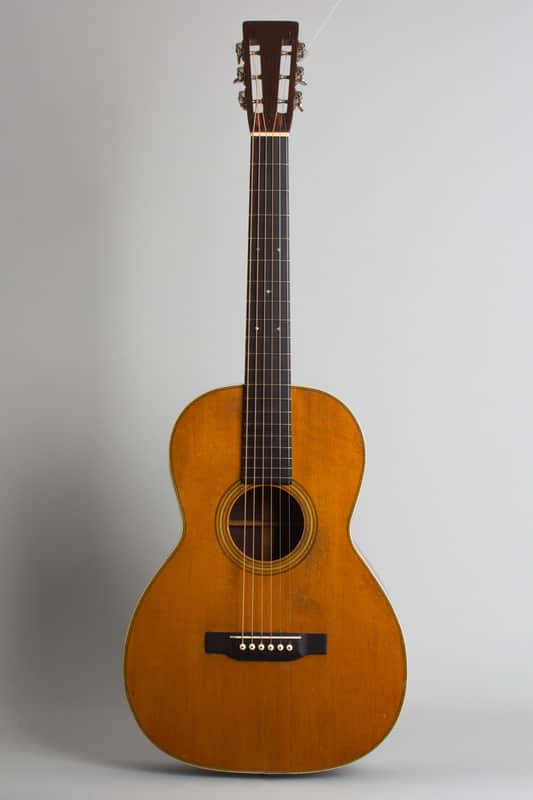
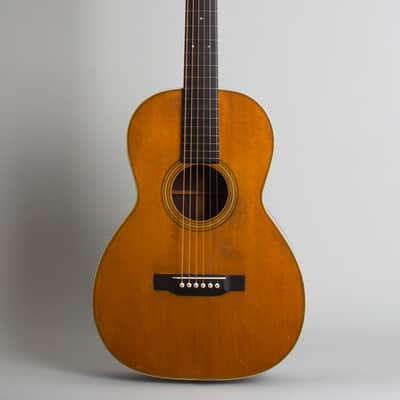
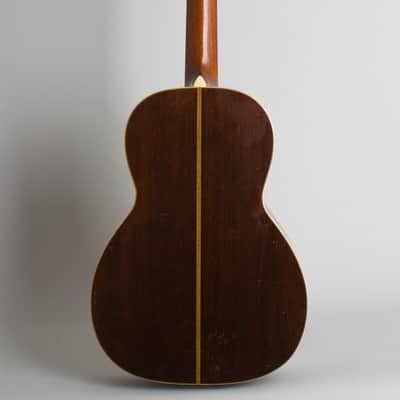
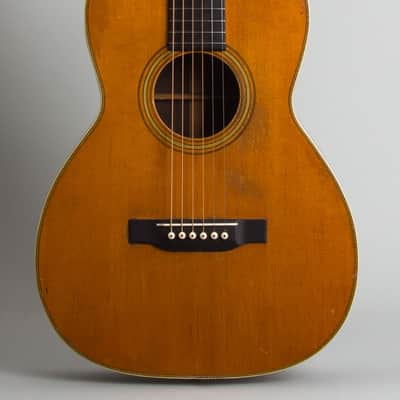
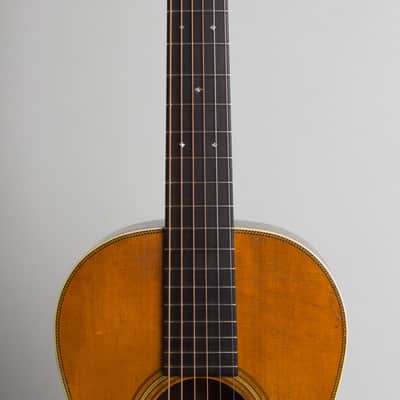
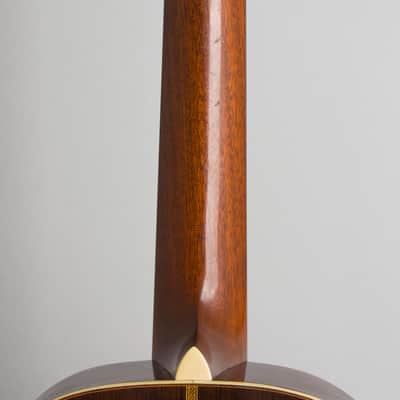
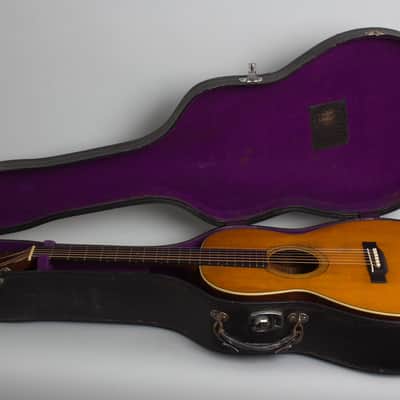
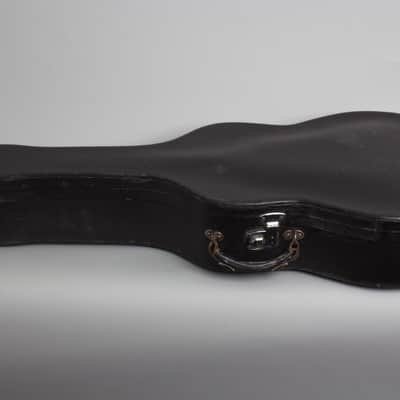
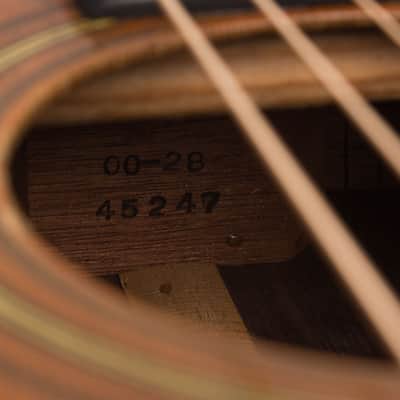
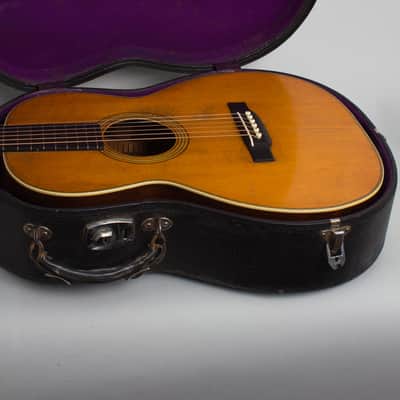

C. F. Martin 00-28 Flat Top Acoustic Guitar (1930), ser. #45247, black tolex hard shell case.
This seller has not set a shipping cost for Lithuania. Please contact them to ask about shipping.
Price€33,896.26
+ Shipping
Listed:7 days ago
Views:671
Saves:40
Offers:0

Brooklyn, NY, United States

Rare Find
These don't show up often
Our users rate Reverb
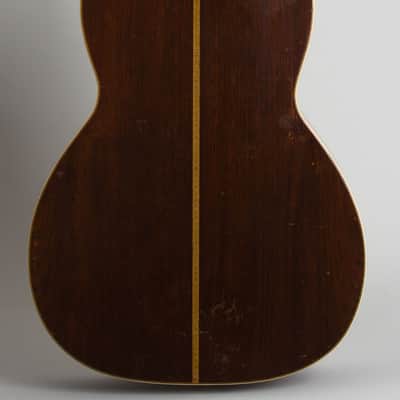
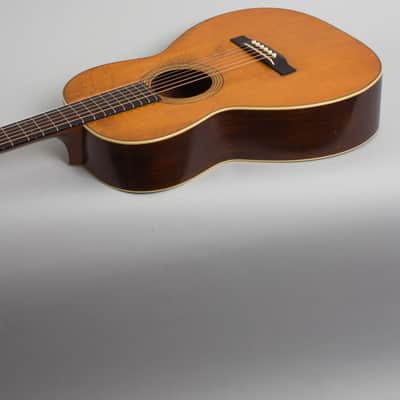
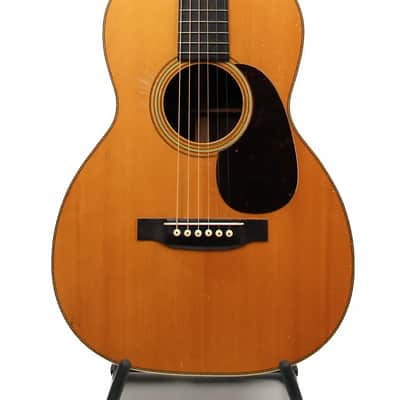
C. F. Martin 00-28 Model Flat Top Acoustic Guitar (1930), made in Nazareth, PA, serial # 45247, natural lacquer finish, Brazilian rosewood back and sides, spruce top; mahogany neck with ebony fingerboard, black tolex hard shell case.
This guitar is a well-played but lovely 95 year old 00-sized Brazilian rosewood Martin with a lot of soul, a fantastic sounding and playing guitar from a distinct transitional moment in Martin history. The 12-fret, steel string Martins of the late 1920s and very early 1930s are some of our very favorite guitars, from any period. For a few years right at this time -- just before altering nearly all their designs to the 14-fret neck "Orchestra Model" pattern -- Martin crafted a relatively small number of these traditional long-body flat-tops intended for steel strings instead of the gut used previously. The build is very light and the scalloped bracing extremely graceful and delicate compared to what was to come in the ensuing decades.
This Model 00-28 had its serial number stamped in the very last days of 1930; December 23, to be exact! Style 28 -- the company's standard rosewood model -- was cataloged as a gut strung guitar until 1927, when most of the line finally bowed to the reality that the steel-string flat top was the new normal. The other features remained pretty much as they had since the 19th century, with a slotted headstock over the wide ebony fingerboard on the neck which joins the body at the 12th fret. These guitars were the final evolution of the original 1800s Martin patterns before the "modern" 14-fret design became the standard just a few years later. This 1930 guitar has the then new larger ebony "belly: bridge, a feature just added around April 1930 to allow a larger gluing area to help resist the increased tension.
This 00-28 is a relatively rare model with all of 16 shipped in 1930, with a large lot of 55 (including this one) the next year after which this "old fashioned" style quickly dropped out of favor. The traditional 12-fret body was supplanted within a few years on nearly all Martins by the new 14-fret Orchestra Model design, leaving only a few models to carry it on. A paltry 15 more were made after 1931 in dribs and drabs before the 00-28 disappeared from the line.
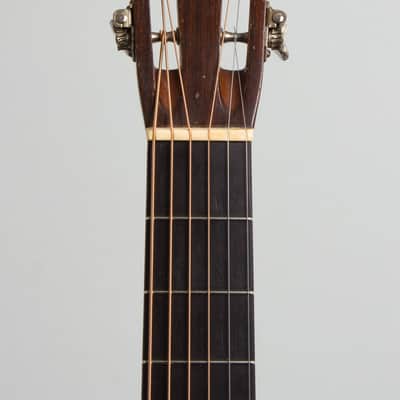
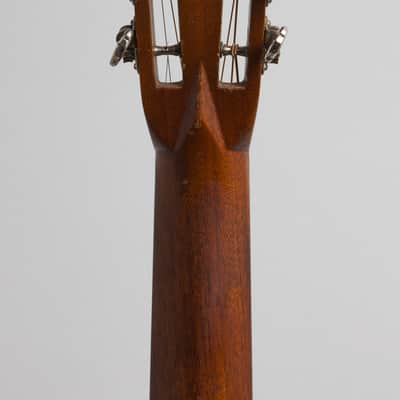
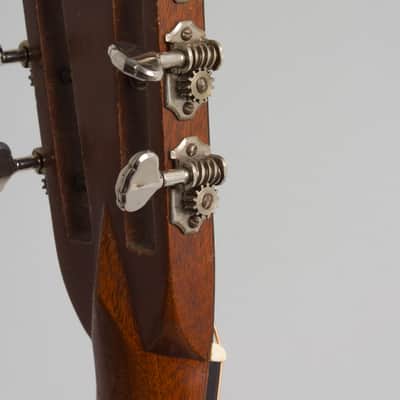
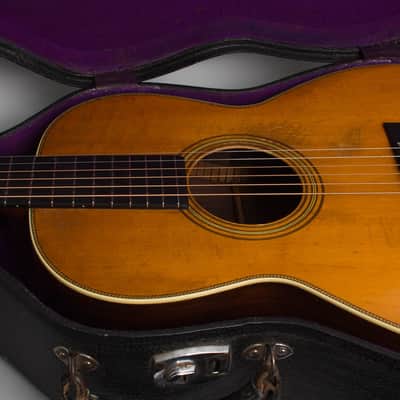
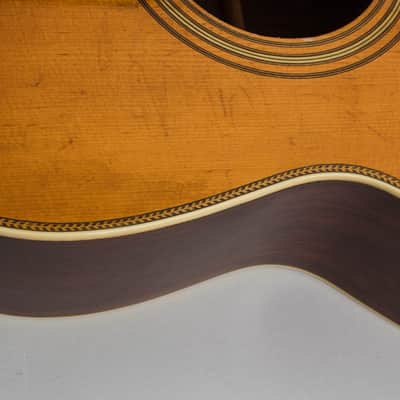
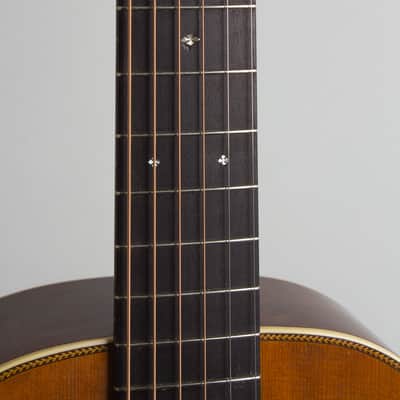
Martin's preference for straight-grained rosewood is reflected in the beautifully bookmatched tight and straight pattern to the back and sides on this one. The very tight grained spruce top features herringbone trim around the edge with celluloid outer binding and a multi-ply soundhole ring. The unbound ebony fingerboard has beautiful small notched diamond pearl inlay. The original tuners are the VERY earliest nickel Grover individual machines; this is the oldest Martin we have ever seen so equipped. These have a slightly different rivet structure retaining the gear and noticeably concave shaft; they are likely among the VERY first individual guitar tuners ever made!
Overall, this is a truly superb steel-string 12 fret Martin, a fantastic piece of history and a real treat to play either fingerstyle or "plectrum" as it would have been termed back when this was a new guitar. In any application it is a featherweight tone machine, a delightful instrument with a voice belying its (by modern standards) small size.
Overall length is 38 3/8 in. (97.5 cm.), 14 1/4 in. (36.2 cm.) wide at lower bout, and 4 in. (10.2 cm.) in depth at side, taken at the end block. Scale length is 24 3/4 in. (629 mm.). Width of nut is 1 13/16 in. (46 mm.).
This 95 year old Martin remains in excellent playing condition, showing a decent amount of general wear and some typical repair but nothing that diminishes either its history or playability. Much of the work was recently done by Willi Henkes in Germany, one of the world's most trusted restorers of the finest vintage Martins.
The original very thin lacquer finish has wear overall with noticeable micro-checking, most heavily to the top. When held in the light at certain angles there is some darkening visible to some areas; the surface patina in some areas suggests some very light over finish was added in spots to the original lacquer, but UV light examination does not confirm this. There is a fair amount of strum wear on the top, as usual much of it around the soundhole, particularly the lower edge. The area below the fingerboard extension has some noticeable pick strikes; the area above the strings has smaller areas of pick wear as well. There are a couple of deeper case bites along bass side of lower bout on the top
The original finish on the rest of the instrument shows light checking and a collection of dings, dents and scrapes but no large areas of concentrated wear. The back has a few small moisture wear spots but no larger areas of deep belt buckle wear. The very thin lacquer is worn through to the wood in the much of lower positions on the back of the neck, extending a bit farther down along the spine.
There are a number of well-repaired cracks to the top, all sealed without added finish work so largely visible. The longest is a spruce grain split to the top that runs from end of rosette all the way to the bottom of the guitar just underneath the high E string. This has been glued along its entire length and cleated from the bridgeplate to the endblock. The center seam previously had separated and has been resealed and cleated between bridgeplate and endblock. Two parallel grain splits to the top along both sides of the fingerboard extension have been previously glued, but not cleated; these did not extend as far as the soundhole. There are no back or side cracks.
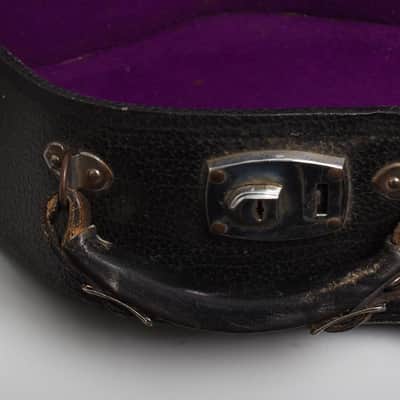
The ebony belly bridge is a correct reproduction made by T.J. Thompson. The original tiny maple bridgeplate is intact and all of the delicate top braces remain original, the X brace legs on the upper bout and lower bout on the treble side have been reglued. The majority of the back braces appear to have been reglued as well. The neck has been neatly reset and refretted with correct Martin style bar frets, with the fingerboard neatly trued. The bone nut appears original. The original rare first-generation Grover tuners are intact and functional, though looser in feel than modern equivalents. This is simply a delightful instrument to play or to hear, a superb player with a rich and powerful sound. It resides in a period hard shell case, which is a loose fit but may well be original. This is a rare and special guitar, carrying some history of heavy use but a splendid survivor of what many consider Martin's very best era. Very Good + Condition.
This guitar is a well-played but lovely 95 year old 00-sized Brazilian rosewood Martin with a lot of soul, a fantastic sounding and playing guitar from a distinct transitional moment in Martin history. The 12-fret, steel string Martins of the late 1920s and very early 1930s are some of our very favorite guitars, from any period. For a few years right at this time -- just before altering nearly all their designs to the 14-fret neck "Orchestra Model" pattern -- Martin crafted a relatively small number of these traditional long-body flat-tops intended for steel strings instead of the gut used previously. The build is very light and the scalloped bracing extremely graceful and delicate compared to what was to come in the ensuing decades.
This Model 00-28 had its serial number stamped in the very last days of 1930; December 23, to be exact! Style 28 -- the company's standard rosewood model -- was cataloged as a gut strung guitar until 1927, when most of the line finally bowed to the reality that the steel-string flat top was the new normal. The other features remained pretty much as they had since the 19th century, with a slotted headstock over the wide ebony fingerboard on the neck which joins the body at the 12th fret. These guitars were the final evolution of the original 1800s Martin patterns before the "modern" 14-fret design became the standard just a few years later. This 1930 guitar has the then new larger ebony "belly: bridge, a feature just added around April 1930 to allow a larger gluing area to help resist the increased tension.
This 00-28 is a relatively rare model with all of 16 shipped in 1930, with a large lot of 55 (including this one) the next year after which this "old fashioned" style quickly dropped out of favor. The traditional 12-fret body was supplanted within a few years on nearly all Martins by the new 14-fret Orchestra Model design, leaving only a few models to carry it on. A paltry 15 more were made after 1931 in dribs and drabs before the 00-28 disappeared from the line.
Martin's preference for straight-grained rosewood is reflected in the beautifully bookmatched tight and straight pattern to the back and sides on this one. The very tight grained spruce top features herringbone trim around the edge with celluloid outer binding and a multi-ply soundhole ring. The unbound ebony fingerboard has beautiful small notched diamond pearl inlay. The original tuners are the VERY earliest nickel Grover individual machines; this is the oldest Martin we have ever seen so equipped. These have a slightly different rivet structure retaining the gear and noticeably concave shaft; they are likely among the VERY first individual guitar tuners ever made!
Overall, this is a truly superb steel-string 12 fret Martin, a fantastic piece of history and a real treat to play either fingerstyle or "plectrum" as it would have been termed back when this was a new guitar. In any application it is a featherweight tone machine, a delightful instrument with a voice belying its (by modern standards) small size.
Overall length is 38 3/8 in. (97.5 cm.), 14 1/4 in. (36.2 cm.) wide at lower bout, and 4 in. (10.2 cm.) in depth at side, taken at the end block. Scale length is 24 3/4 in. (629 mm.). Width of nut is 1 13/16 in. (46 mm.).
This 95 year old Martin remains in excellent playing condition, showing a decent amount of general wear and some typical repair but nothing that diminishes either its history or playability. Much of the work was recently done by Willi Henkes in Germany, one of the world's most trusted restorers of the finest vintage Martins.
The original very thin lacquer finish has wear overall with noticeable micro-checking, most heavily to the top. When held in the light at certain angles there is some darkening visible to some areas; the surface patina in some areas suggests some very light over finish was added in spots to the original lacquer, but UV light examination does not confirm this. There is a fair amount of strum wear on the top, as usual much of it around the soundhole, particularly the lower edge. The area below the fingerboard extension has some noticeable pick strikes; the area above the strings has smaller areas of pick wear as well. There are a couple of deeper case bites along bass side of lower bout on the top
The original finish on the rest of the instrument shows light checking and a collection of dings, dents and scrapes but no large areas of concentrated wear. The back has a few small moisture wear spots but no larger areas of deep belt buckle wear. The very thin lacquer is worn through to the wood in the much of lower positions on the back of the neck, extending a bit farther down along the spine.
There are a number of well-repaired cracks to the top, all sealed without added finish work so largely visible. The longest is a spruce grain split to the top that runs from end of rosette all the way to the bottom of the guitar just underneath the high E string. This has been glued along its entire length and cleated from the bridgeplate to the endblock. The center seam previously had separated and has been resealed and cleated between bridgeplate and endblock. Two parallel grain splits to the top along both sides of the fingerboard extension have been previously glued, but not cleated; these did not extend as far as the soundhole. There are no back or side cracks.
The ebony belly bridge is a correct reproduction made by T.J. Thompson. The original tiny maple bridgeplate is intact and all of the delicate top braces remain original, the X brace legs on the upper bout and lower bout on the treble side have been reglued. The majority of the back braces appear to have been reglued as well. The neck has been neatly reset and refretted with correct Martin style bar frets, with the fingerboard neatly trued. The bone nut appears original. The original rare first-generation Grover tuners are intact and functional, though looser in feel than modern equivalents. This is simply a delightful instrument to play or to hear, a superb player with a rich and powerful sound. It resides in a period hard shell case, which is a loose fit but may well be original. This is a rare and special guitar, carrying some history of heavy use but a splendid survivor of what many consider Martin's very best era. Very Good + Condition.
| Listed | 7 days ago |
|---|---|
| Condition | Very Good (Used) Very Good items may show a few slight marks or scratches but are fully functional and in overall great shape.Learn more |
| Brand | |
| Model |
|
| Finish |
|
| Categories | |
| Year |
|
| Pickup |
|
| Series | |
| String Type |
|
| Right / Left Handed |
|
| Number of Strings |
|
| Neck Material |
|
| Back Material |
|
| Sides Material |
|
| Model Family | |
| Finish Style |
|
| Top Material |
|
| Body Shape |
|
| Fretboard Material |
|
| Color Family |
|
| Active Preamp |
|
| Number of Frets |
|
Product safety information may be available here.

