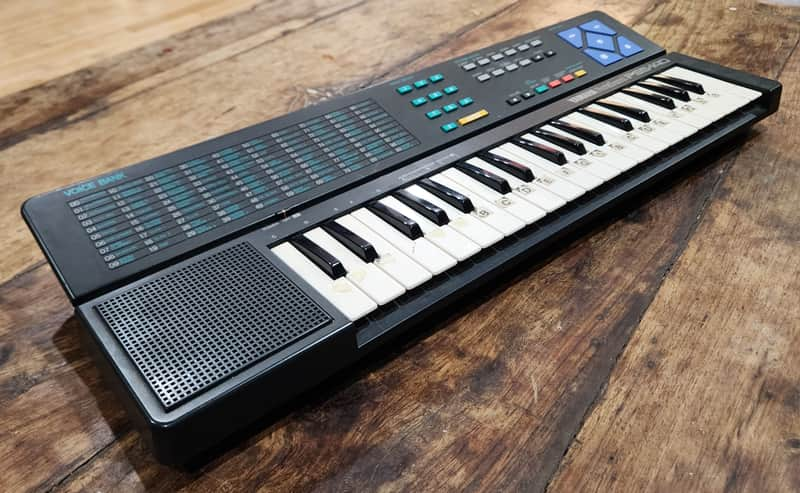
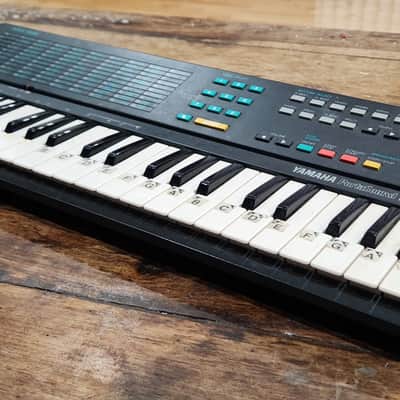
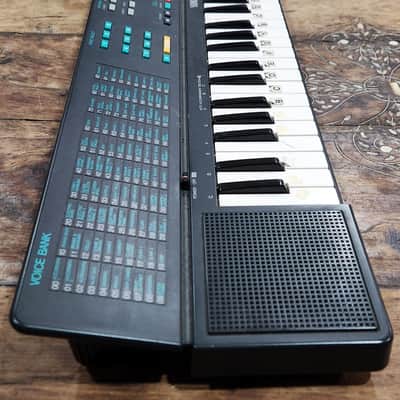
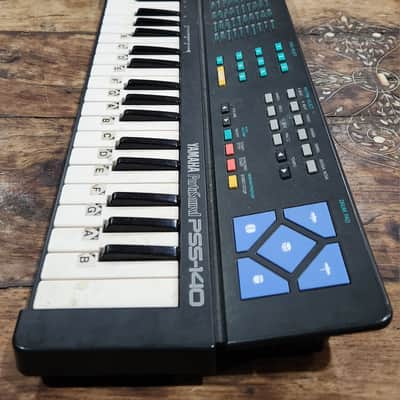
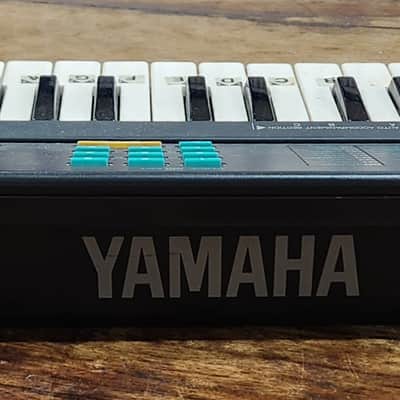
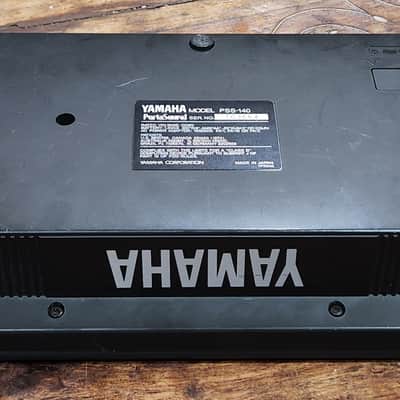
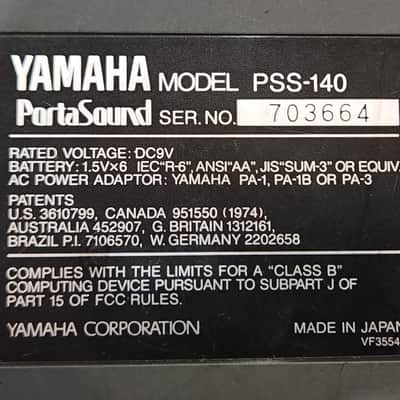
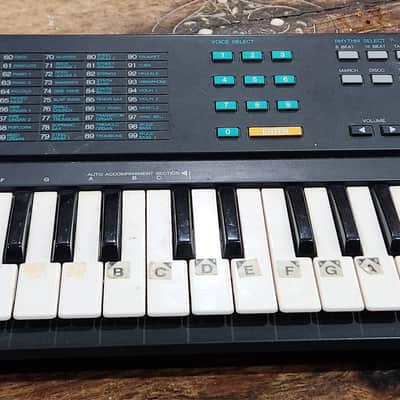
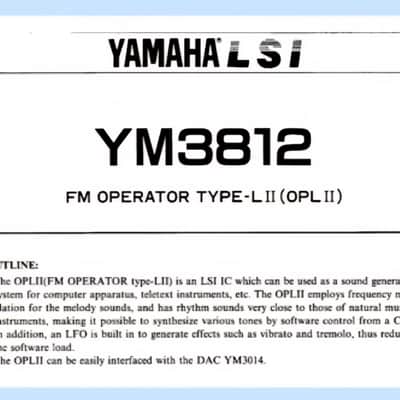
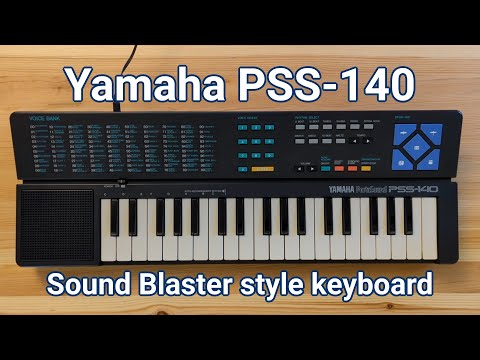
Yamaha PortaSound PSS-140 Synthesizer (YM3812 Chip!) 1988 Japan


Rare Find
These don't show up often
Our users rate Reverb
Read through for shipping info. We ship internationally by a courier at heavily reduced rates.
See store for more cool finds.
Scroll down for video.
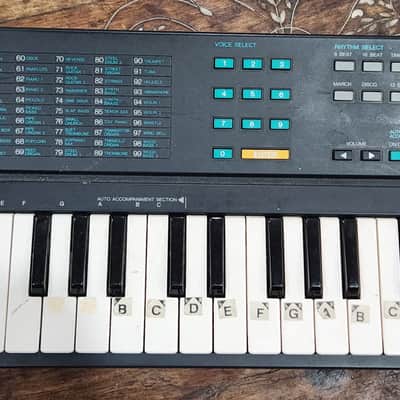
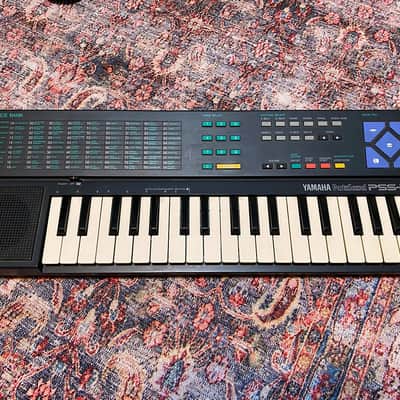
Here is a vintage Yamaha PSS-140 portable synth with a YM3812 chip! Super fun. Lots of useable sounds. It's in great shape and working perfectly. It has removeable note indicator stickers on it. Runs on 9 volt adapter or batteries (not included).
Yamaha PSS-140 (FM keyboard with nice grainy lo-fi synth sounds & accompaniment)
This Yamaha PortaSound from 1988 is basically yet another small 2 operator FM keyboard with 100 preset sounds. It is nothing exceptionally great, but features some nice FM synthesizer timbres those can be e.g. nice for tekkno and turn very grainy by reduced bit resolution when the digital volume control is set low. The 10 OBS preset rhythms are made from classic, very electronic sounding FM percussion those can be also played through the 5 rubber drumpads. There is also a single finger accompaniment.
Main Features:
37 midsize keys
polyphony 6 notes (only 2 with accompaniment)
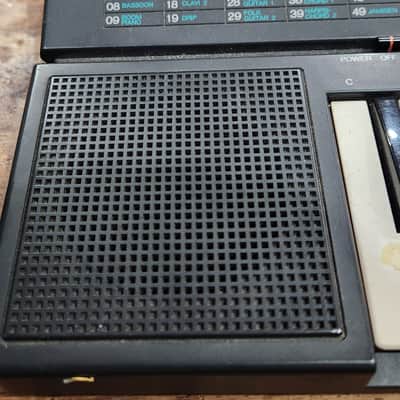
built-in thin sounding speaker
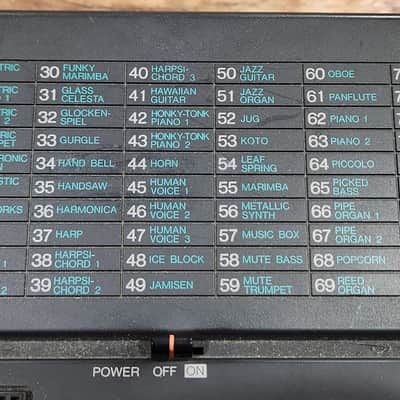
100 preset sounds (ordered alphabetically, selected through {"0".."9"} cipher buttons + "enter")
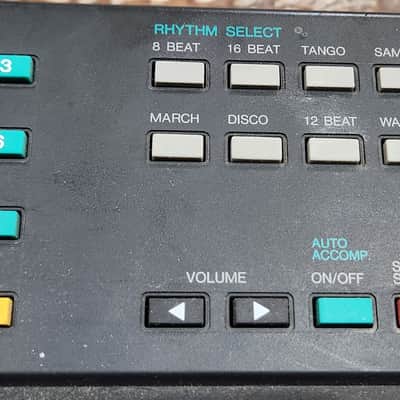
10 OBS preset rhythms {8 beat, 16 beat, tango, samba, swing, bossa nova, march, disco, 12 beat, waltz}
tempo +/- buttons (16 steps)
volume +/- buttons (11 steps, reduce bit resolution badly)
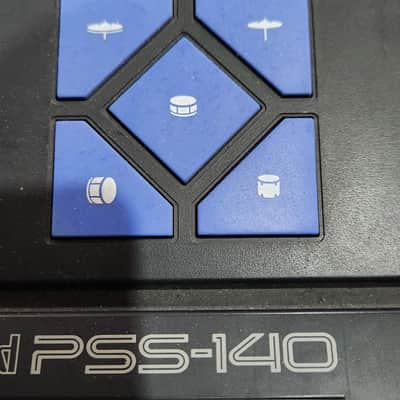
5 rubber drumpads
5 percussion sounds {closed cymbal, open cymbal, conga, snare, base} of classic electronic FM style
single finger chord (manual chord mode with rhythm off)
sound generator based on 2 operator FM
demo button (mellow pop music loop, cycles through many sounds & rhythms)
jacks for AC- adapter and sound output.
Although the case design of the Yamaha PSS-140 resembles much the PSS-80 and the wonderful PSS-100, it has a very different sound style due to different technology (FM instead of squarewave). A special sound feature of the PSS-140 is the digital volume control, which steals bits from the DAC resolution and thus makes the timbres very grainy when set low, and it does this without shorting their envelope duration, because it keeps all timbres audible on the lowest available volume level instead of muting it. Much like an analogue volume knob, this control also works with held notes and doesn't interfere the sound in any way (beside some quiet pop noises), thus it makes also a good realtime sound effect. (I haven't examined the hardware yet.)
The 100 preset sounds of this instrument resemble much the Fujitone 6A sounds (see there). Although they are only plain 2 operator FM timbres (without sophisticated envelope tricks like mandolin ring or sirens), the sound bank features beside semi- natural instrument imitations also many nice synth effects including odd wahwah stuff with rastered timbre sweeps and a lot of zipper noise (e.g. "hand bell", "wind bell", "fireworks") and metallic spring noises (e.g. "leaf spring", "handsaw"). There are also e.g. nice brass and organ timbres on this thing. Remarkable is e.g. the "small church", which is a bizarre cross of pipe and Hammond organ with a buzzy and sonorous bass range (resembling multipulse squarewave). Unlike more professional FM instruments, there are neither sustain or vibrato buttons nor synthesizer controls, but many preset sounds include built-in vibrato or sustain effects. A bit confusing is that the sound names are in alphabetical order instead of sorted by topics, and strange is also that you need to press an "enter" button to select sounds, despite the 2 digit numbers would be sufficient enough to unambiguously select any of the 100 presets.
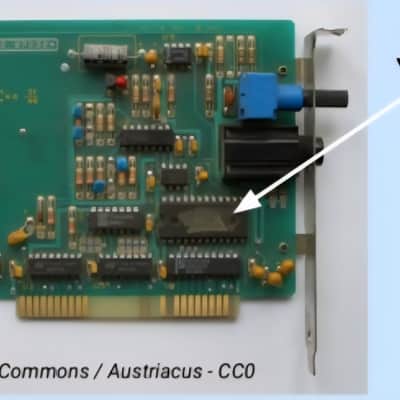
The percussion has the typical electronic FM timbre known from the OPL3 "MIDI synth" of early PC soundcards. I discovered that with empty batteries the base drum (normally a percussive and thin pop noise) fails and produces a long hum and then stays mute until the instrument is switched off. Possibly this reveals that the FM sound chip contains some semi- analogue envelope circuitry at least for its percussion.
The 10 preset rhythms are pretty generic and also the single finger accompaniments are nothing special, beside that their bass and chord timbres change among different rhythms (brass, e-piano etc.). With rhythm off, there is a manual single finger chord mode which timbre also depends on the currently selected (but not started) rhythm. The OBS rhythm buttons can be also used as a realtime sound control since they respond pretty fast and even change the timbre of currently held chord notes. In opposite to this, during rhythm it takes always until the end of the current pattern before a rhythm change takes effect, which limits here the use of these OBS buttons for live play tricks.
Other instruments with similar case shape but different sound hardware (great multipulse squarewave timbres) are the Yamaha PSS-80 and the wonderful PSS-100.
Overseas buyers contact us with your address for an accurate shipping quote.
Items are packed properly and shipped within twenty four hours.
This item is sold As-Described
This item is sold As-Described and cannot be returned unless it arrives in a condition different from how it was described or photographed. Items must be returned in original, as-shipped condition with all original packaging.Learn More.
| Listed | a month ago |
|---|---|
| Condition | Very Good (Used) Very Good items may show a few slight marks or scratches but are fully functional and in overall great shape.Learn more |
| Brand | |
| Model |
|
| Finish |
|
| Categories | |
| Year |
|
| Made In |
|
| Keyboard Action |
|
| Key Size |
|
| Number of Keys |
|
| Analog / Digital |
|
| Polyphony |
|
Product safety information may be available here.

