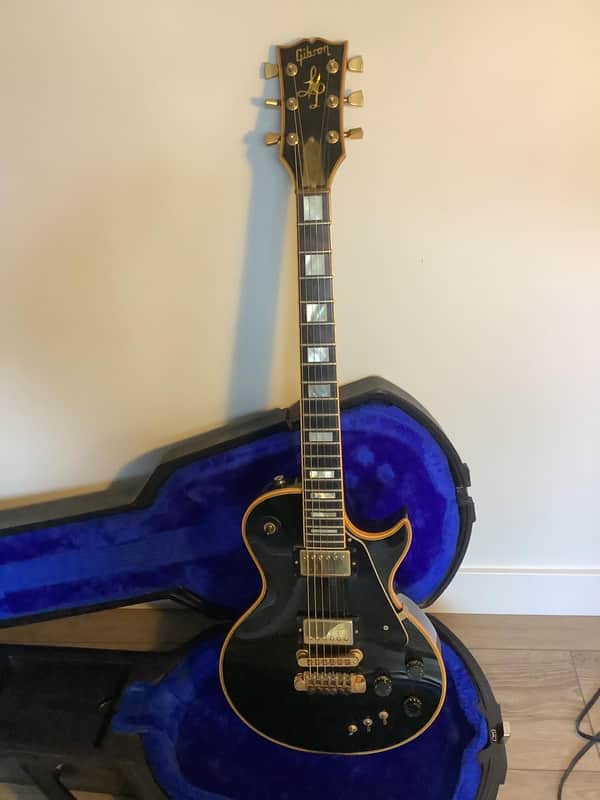
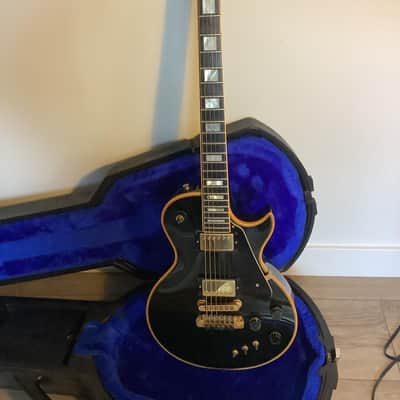
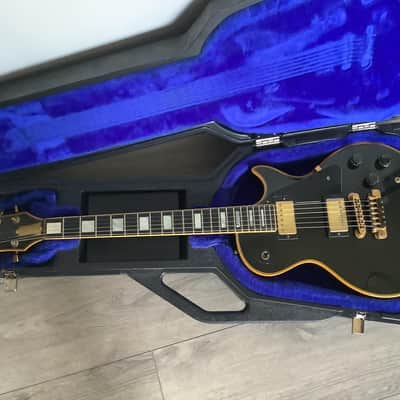
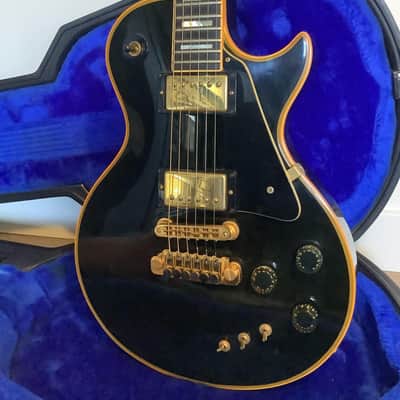
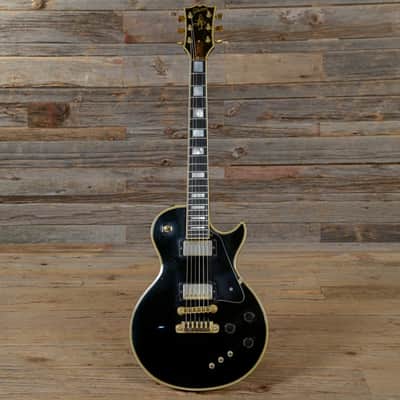
Gibson Les Paul Artist 1979 - 1981 - Ebony

Free Shipping
from kimberley, Canada


Rare Find
These don't show up often
Our users rate Reverb
One of the most interesting and short-lived Les Paul models in Gibson's Norlin era was the Les Paul Artist model (sometimes also referred to as the "Les Paul Active"). The prototypes of the Les Paul Artist were developed in 1978, which used a circuit of active electronics originally developed for Gibson's RD Artist model.In the late 70's, synthesizers were the rage, and Norlin surmised that a relationship with the famous synthesizer manufacturer, Moog, would aid Gibson at gaining market share for its guitars. MOOG synthesizers were manufactured and marketed by Norlin Industries Inc. beginning in approximately 1977 by way of an agreement with Dr. Moog. Subsequently the MOOG trademarks were assigned to Norlin.
The Les Paul Artist actually has two circuit boards which are installed under a large control plate on the back of the Les Paul Artist model (see photos). There is also a separate control plate for the 9 volt battery placement. Because of the size of the circuit boards, a large amount of wood had to be removed from the back of the Les Paul. Despite this removal of wood, the Les Paul Artists are heavy guitars. The two Artists featured in the photos accompanying this article are 10 lbs. 5 oz. And 10 lbs. 2 oz., respectively.
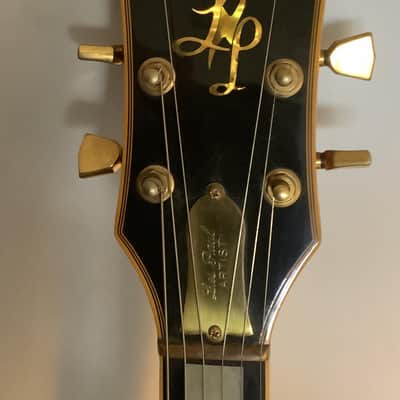
he Les Paul Artist is a handsome guitar with some very unique features besides the Moog circuit board and active electronics. All Artists were made in Nashville. The Artist has a unique peghead logo with the letters "LP" in script style, a gold truss rod cover with the "Les Paul Artist" inscription, brass nut, TP-6 fine tuning tailpiece,gold hardware, two potted gold plated Gibson Humbucking pickups, five piece laminated maple neck with volute, a bass, treble, and one master volume pot, brass nut, new design "scarfed" cutaway back, black speed knobs, gold jack plate, Nashville bridge, block fingerboard inlays, multi-ply binding on the top of the body, neck, and peghead, and three mini-toggle switches for compression, expansion, and brightness. The tone controls are active, with a notch in the midway ("0") position. With the tone controls at this mid-point, the sound of the Artist is close to a traditional Les Paul tone. The tone controls below this mid position (selections numbered 1-5) or above mid position (also numbered 1-5) actively "cut" or "boost" the tone, respectively. The active circuitry is enabled (and battery drain occurs) when a cord is plugged into the guitar's phone jack.
This item is sold As-Described
This item is sold As-Described and cannot be returned unless it arrives in a condition different from how it was described or photographed. Items must be returned in original, as-shipped condition with all original packaging.Learn More.
| Listed | a year ago |
|---|---|
| Condition | Excellent (Used) Excellent items are almost entirely free from blemishes and other visual defects and have been played or used with the utmost care.Learn more |
| Brand | |
| Model |
|
| Finish |
|
| Categories | |
| Year |
|
| Made In |
|
| Model Sub-Family | |
| Body Material |
|
| Neck Construction |
|
| Right / Left Handed |
|
| Number of Strings |
|
| Body Shape |
|
| Neck Material |
|
| Model Family | |
| Series | |
| Body Type |
|
| Bridge/Tailpiece Type |
|
| Pickup Configuration |
|
| Scale Length |
|
| Top Material |
|
| Fretboard Material |
|
| Color Family |
|
| Number of Frets |
|
Product safety information may be available here.