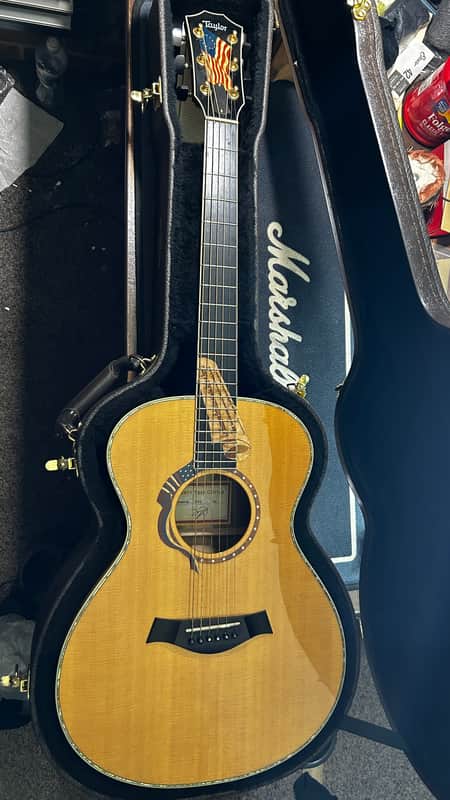
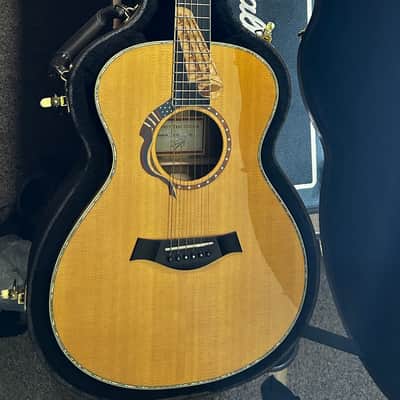
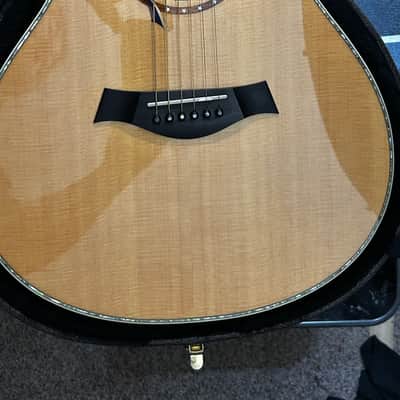
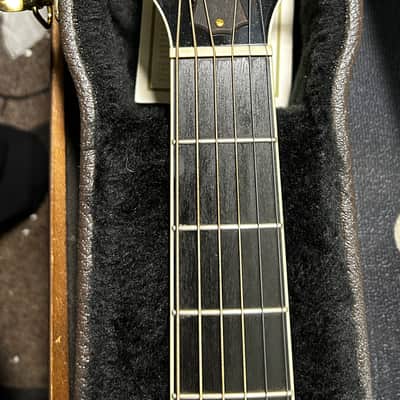
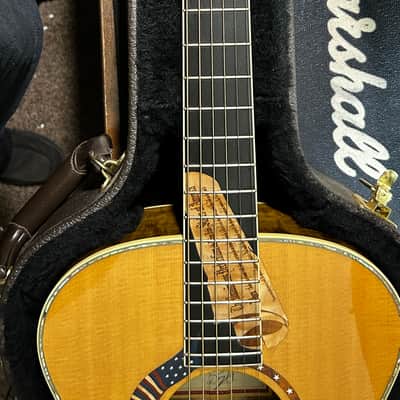
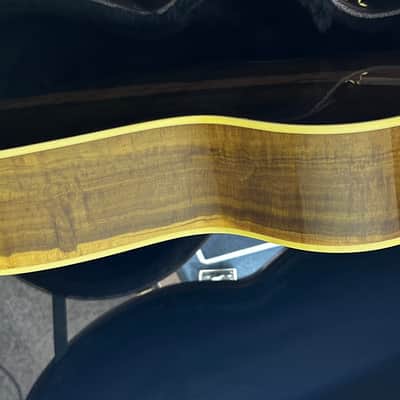
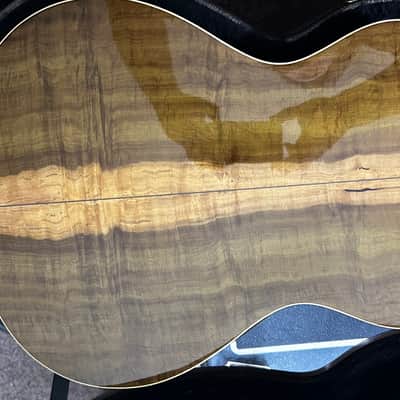
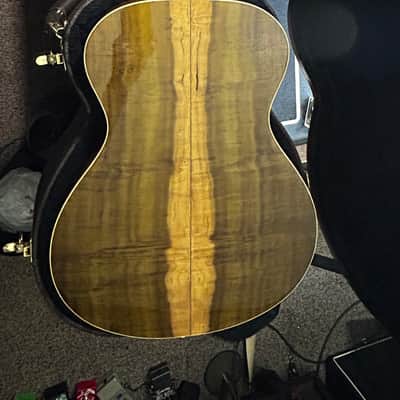
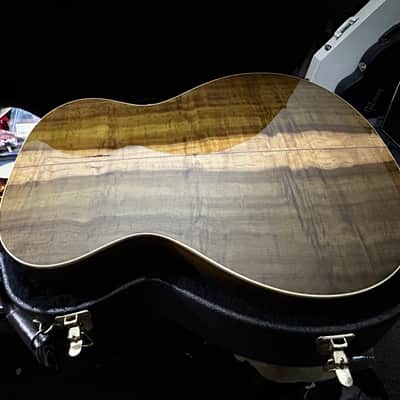
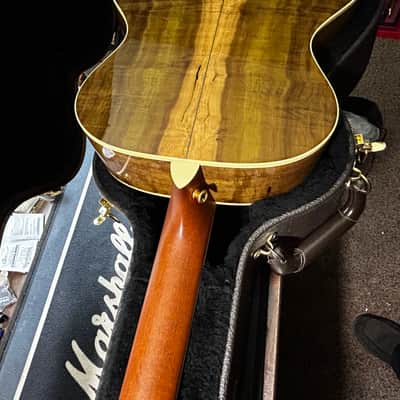
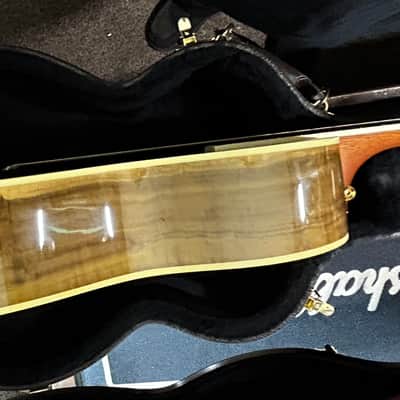
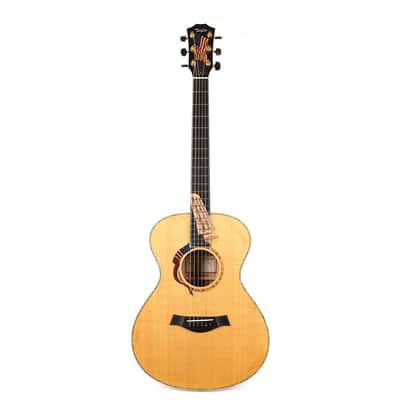
Taylor Liberty Tree Limited Edition 2002 - #251 of 400
This seller has not set a shipping cost for Luxembourg. Please contact them to ask about shipping.

Our users rate Reverb
Absolutely mint!
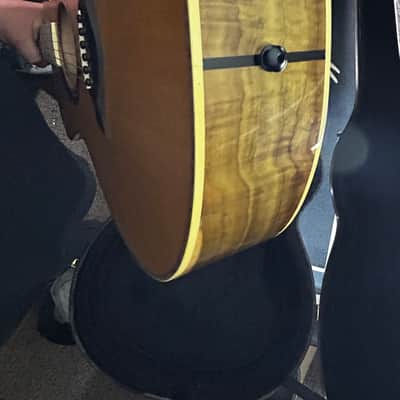
Unmolested. Never played.
Only taken out once a year for conditioning.
Own an actual piece of American history.
It is exactly as it came from the manufacturer.
#251 of 400 ever made.
Undoubtably the prettiest one on Reverb.
This was hand picked by myself out of 10 guitars I had access to at the time.
These guitars sold out in less than a month.
Now you get a chance to own a National artifact.
Full story here.
Musical Branches of American Independence: Taylor’s Liberty Tree GuitarsJUL 02, 2024BY: NICK KENNEDYThe Roots of Revolution
In the years leading up to the American Revolution, freedom-loving colonists and budding rebels gathered under the boughs of prominent trees that stood in central areas of towns and cities in all 13 original Colonies. There, they rallied around an insatiable desire for self-determination and plotted ways to challenge the perceived tyrannies of the British crown.
Those trees became known as Liberty Trees. In their shade, colonists made public speeches, sang protest songs and held political rallies.
The first was a large, graceful elm at the corner of what is now Essex and Washington Streets in Boston, Massachusetts. In 1765, a faction of revolution-minded tradespeople and artisans hung effigies from the elm in protest of taxes levied upon them by King George III. The Sons of Liberty – taking their namesake from a like-minded faction based in New York – believed colonists were being taxed unfairly, and without appropriate representation. Shortly after, a copper plate was affixed on the tree by unnamed parties, declaring it the “Tree of Liberty.”
Liberty Trees quickly became symbols of resistance far beyond the shores of North America. When the French Revolution erupted in 1789, revolutionaries started naming and planting their own liberty trees, a tradition that soon spread to Italy and Germany.
The Annapolis Liberty Tree
The last surviving American Liberty Tree would prove to be a massive tulip poplar that lived for 400 years on the grounds of St. John’s College in Annapolis, Maryland. It stood sentinel over many significant moments in the history of the town.
Samuel Chase and William Paca, two signers of the Declaration of Independence, held gatherings with fellow Sons of Liberty beneath its branches. The tree sheltered French troops under Lafayette and Rochambeau as they journeyed to assist George Washington’s army at the pivotal Battle of Yorktown. In 1783, it stood witness as Washington resigned his commission as commander of the Continental Army in the nearby state house. Union soldiers found respite under its limbs during the Civil War. Every year, 4th of July festivities, picnics and civic events were enjoyed under the revered tree’s foliage.
After sustaining fatal damage from Hurricane Floyd in 1999, the Maryland Liberty Tree was declared a safety hazard. It was 96 feet tall and 60 feet wide, and its trunk, measured four feet above ground, was 102 inches in diameter. A team of professional arborists and experts determined that traditional repair methods would not save the poplar. Having lived more than four centuries, It was removed in October of 1999.
Soon after, Emory Knode, a Taylor dealer at the Appalachian Bluegrass Shoppe in Baltimore, faxed an article from the local paper about the felling of the Liberty Tree to Bob Taylor. A lover of American history who bears reverence for the accomplishments of our forefathers, Taylor was fascinated and moved by the story of the Annapolis tree. However intrigued, he never thought he’d see, much less touch, the wood itself. All that was about to change.
“In May 2000,” Taylor recalls, “I get this frantic voice-mail message from a guy named Mark Mehnert, who says he’s the landscaper in Annapolis who had ‘rescued’ the Liberty Tree wood from the dump. He was keeping the wood in a climate-controlled section of the warehouse at his own expense. He wondered if I was interested in buying it, but he needed a response right away because he was going broke and needed a quick infusion of cash to pay off creditors. I called him back and said, ‘Yeah, I’m definitely interested.’”
In June 2000, Bob Taylor purchased roughly 30,000 pounds of the Annapolis Liberty Tree’s wood.
Crafting a Musical American Artifact
After more than a year of design and development, Taylor released 400 limited-edition Grand Concerts in 2002 (one for roughly every year of the guitar’s age), crafted with back and sides of solid cream-and-chocolate-hued figured tulip poplar from the iconic Annapolis tree, paired with an abalone-edged Sitka spruce top. Taylor’s Liberty Tree guitars are more than musical tributes to the enduring spirit of liberty and the people who fight to defend our shared freedoms; they’re bona fide relics of American history.
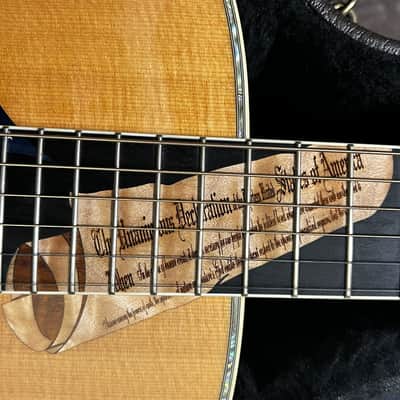
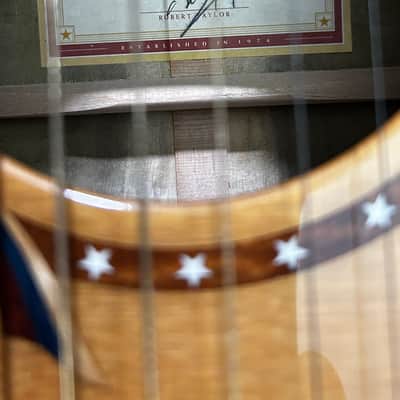
The visually striking inlay scheme was designed by Taylor inlay artist Pete Davies Jr., whose treatment stands out as an elegant showcase of patriotic iconography. A laser-etched maple inlay depicting the scrolled Declaration of Independence extends from the fretboard onto the soundboard. One half of the bloodwood and dyed-maple rosette features thirteen stars in a crescent, one for each of the original Colonies. The other half features an early battle pennant that flew during the Revolution. A depiction of the first post-Revolution American flag is inlaid in dyed maple on the peghead.
| Listed | a year ago |
|---|---|
| Condition | Mint (Used) Mint items are in essentially new original condition but have been opened or played.Learn more |
| Brand | |
| Model |
|
| Finish |
|
| Categories | |
| Year |
|
| Made In |
|
| Pickup |
|
| String Type |
|
| Right / Left Handed |
|
| Number of Strings |
|
| Neck Material |
|
| Back Material |
|
| Sides Material |
|
| Top Material |
|
| Body Shape |
|
| Fretboard Material |
|
| Color Family |
|
| Active Preamp |
|
| Number of Frets |
|
Product safety information may be available here.

