1954 RCA Television / Guitar amp conversion... functional art
New Price€1,835.03
+ Shipping
This listing has ended
See similar gear from other Reverb sellers
Listed:11 years ago
Views:13,964
Saves:149
Offers:1

Spokane, WA, United States
Our users rate Reverb
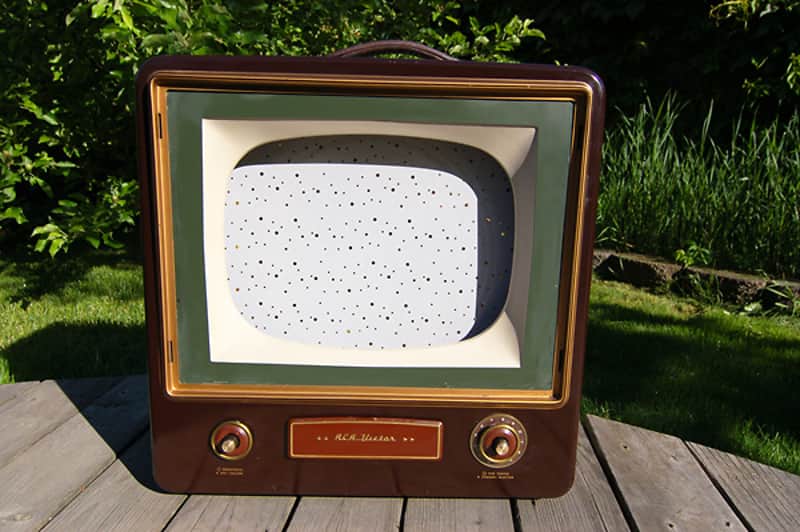
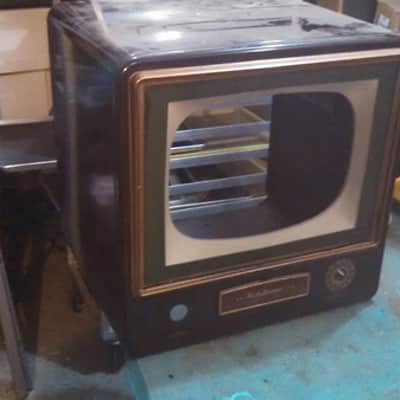
This is a 1954 RCA Victor television that I
picked up here in town... the audio worked, but the picture tube was
kaput, so for $50 I figured I could do something with it, and naturally
it sat in the shop for 2 years until I was inspired.
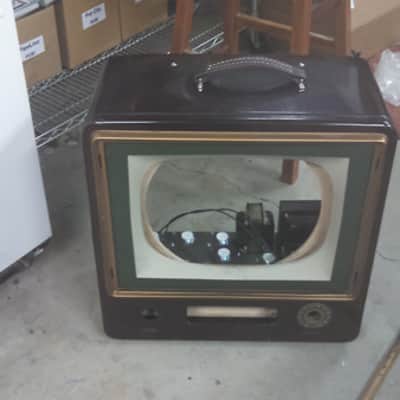
I did a custom build on an amp for a guy in Oroville, and I loved the circuit so much that I knew I wanted one for myself... and that TV was just sitting there, mocking my laziness... so I got out my Sawzall and taught it a lesson.
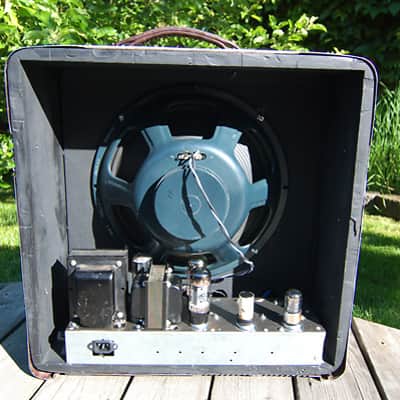
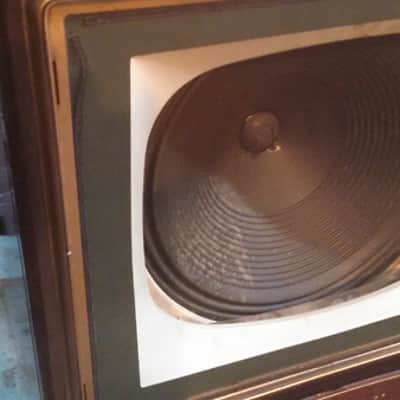
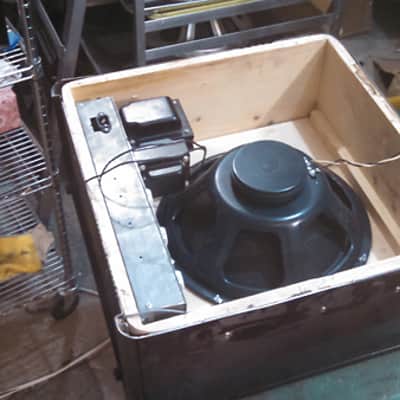
First I gutted it, then measured the inside dimensions and had John Mergili (if you need a cabinet, THIS IS THE GUY) make a pine insert with a baltic birch baffle, cut for a 15" speaker (I had recently acquired a mid-60's Jensen 15" C15N, 40W, that's what this amp is loaded with.)
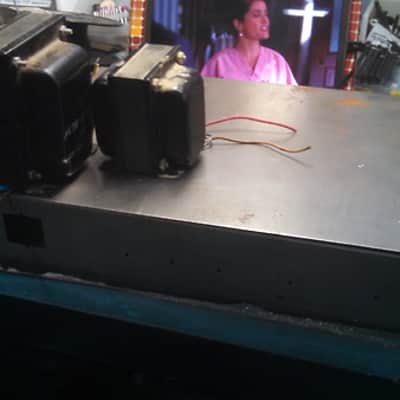
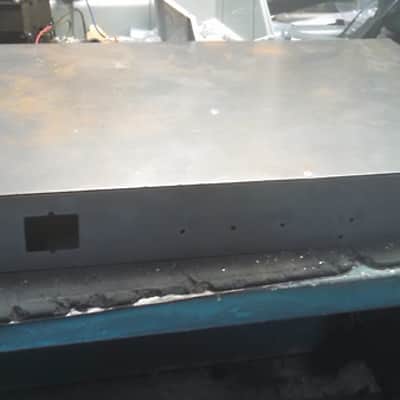
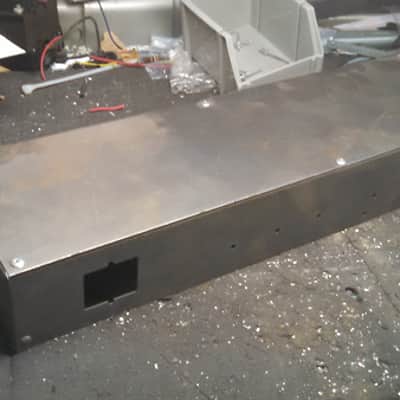
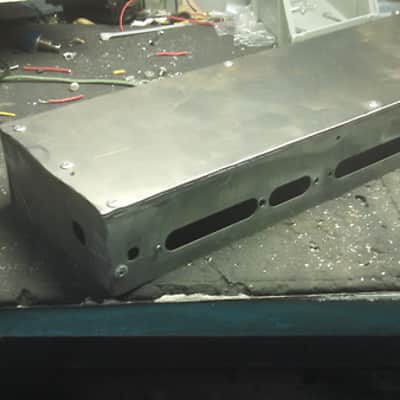
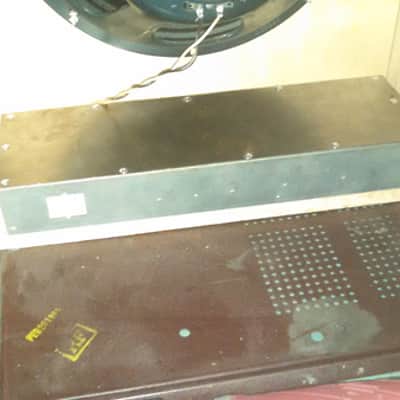
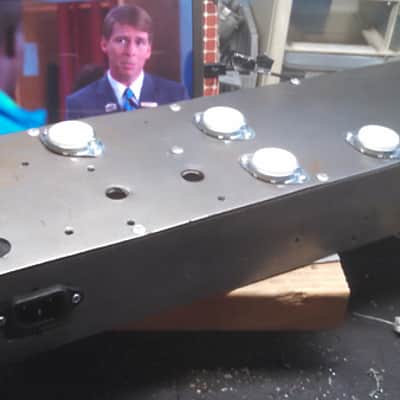
Then I chopped up the chassis (I used a modified Hammond A0-29, again out of an organ) to fit, re-skinned it with new sheet metal so I can a clean canvas for the component layout, designed the fiberboard layout for the circuit, dry-fit the tube sockets and transformers, built the fiberboard circuit, and did the final assembly on the chassis.
Then came the hard part... I had to cut down the metal cowling without screwing it all up... and I wanted to re-use as much of the original facade as possible, so I dry-fit the pine insert with the picture tube bezel in place. Then I marked it, cut the cowling, grinded and sanded until it was flush with the insert, then I used SS screws and finish washer to attach the cowling to the pine box, so that nothing would rattle. The other hard part was placement of the handle... it looks like it's off center, because it is - I got a long dowel, placed it underneath the amp along the long axis, and rolled it back and forth until I found the equilibrium point, and marked it - then I did the same thing for the short axis, and that marked the center of gravity... the transformers are large and heavy, and it would have been completely lopsided otherwise, but now when you lift it, it's perfectly balanced.
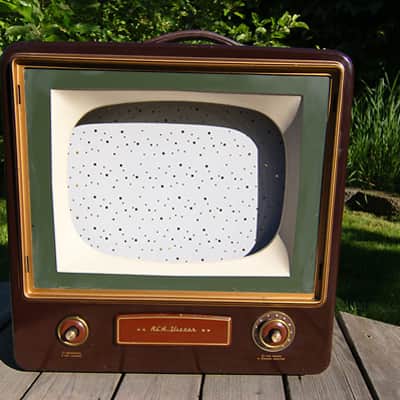
I also ended up painting the insert flat black - it just looks better from the rear, and from the front I was worried that there was too much contrast between the speaker and the surrounding baffle... especially because the wife and I picked out a really cool, but VERY sheer material for the grillecloth.. it's a cream color, with little shiny gold circles... I was on the fence about it, but she said "that's the one", and she was right, it really tied the room together.
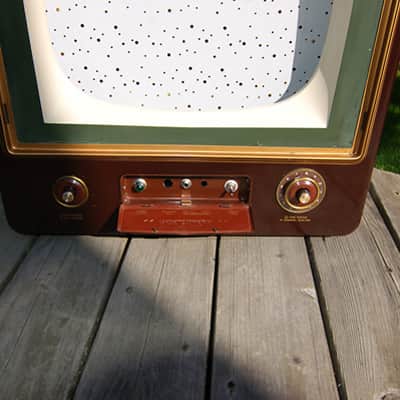
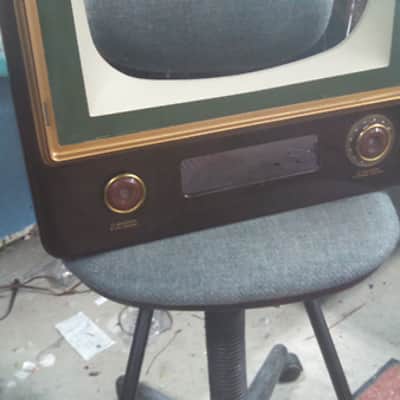
I also wanted to use the original knobs, but I had to make a compromise - I used the original OUTER knobs, and fixed them in place, but I ground then down very thin so they could serve as a panel on which I could mount the potentiometers. The I happened to have some new Marshall-style knobs, and they work pretty well. The left knob is the volume, and the right is the tone - however, since the 'Tone' knob is where the original channel selector would be, I dug up an 11-position detented pot - so as you change the tone, it feels like your changing channels lol.
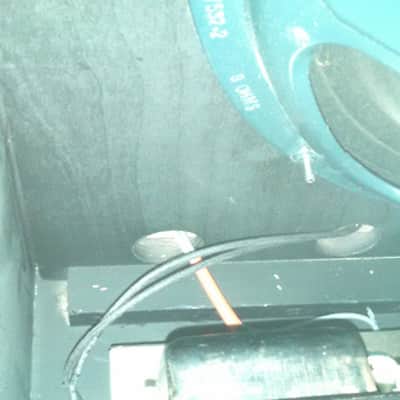
The little panel in the front (at the bottom, it says RCA Victor) flips down, that used to house the horizontal controls, etc - that's where I put the power switch, jewel light and input jack. One challenge was having the long wires necessary to mount the panel controls so far outside the chassis.. I had audio signal running alongside 120V AC, as well as 6.3V AC for the tube filaments. It took a little experimenting, but overall it's pretty quiet.
The circuit is based on a Masco ME-18 - that's the circuit I did the custom build on, and it sounded incredible.. apparently the Masco is the Holy Graile of harmonica amps, so I wasn't expecting it to sound great for guitar, but as Gary Yeoman said, 'there are no good harp amps - there's just good guitar amps that someone used for harmonica'... and looking at the Masco circuit, he's right - it's similar to an early 50's Fender Deluxe, in that is uses a single 6SJ7 for the preamp, a 6SC7 for the phase inverter... but the Masco specified two 6L6 power tubes, which makes it insanely loud compared to an old Deluxe. (Here's a tip - the Masco ME-18 is a great guitar amp, AND a great harp amp - for harp, use a 5Y3 rectifier tube as specified in the schematic, and for guitar use a 5U4, or maybe a GZ34 rectifier. All the difference in the world.)
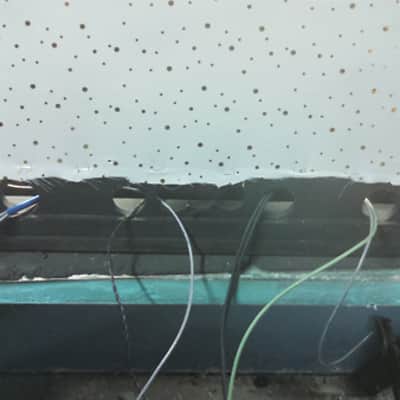
Anyhoo, this thing sounds incredible.. I was worried about it possible being too bassy (it's a 15, after all), so I originally left it completely open, but it's not - so I made a vented back panel for it.
This thing is handmade - there are a few minor cosmetic flaws, but structurally it's very sound.... and it sounds great. This is a genuine work of functional art - it's not for everyone. It's not a little kid's amp. This is for someone who appreciates design and classic tone.
I've gigged with this amp, with a band, outside, so it's got plenty of volume. Everything on this amp is solid, and it will work when it gets to you, but some things I can't warranty - for example, the power transformer is from the 50s... and it will probably work forever, it's very well made, but you really never know. Same thing with the tubes. Same thing with the noise floor - it's pretty darned quiet, but when you really wind it up, it makes noise... just like all my Fenders. That's just how it is.
It was an interesting engineering challenge, and it sounds really good, but I've already got another one to build, so it's time for this one to find a new home. Hit me up with any questions.
I did a custom build on an amp for a guy in Oroville, and I loved the circuit so much that I knew I wanted one for myself... and that TV was just sitting there, mocking my laziness... so I got out my Sawzall and taught it a lesson.
First I gutted it, then measured the inside dimensions and had John Mergili (if you need a cabinet, THIS IS THE GUY) make a pine insert with a baltic birch baffle, cut for a 15" speaker (I had recently acquired a mid-60's Jensen 15" C15N, 40W, that's what this amp is loaded with.)
Then I chopped up the chassis (I used a modified Hammond A0-29, again out of an organ) to fit, re-skinned it with new sheet metal so I can a clean canvas for the component layout, designed the fiberboard layout for the circuit, dry-fit the tube sockets and transformers, built the fiberboard circuit, and did the final assembly on the chassis.
Then came the hard part... I had to cut down the metal cowling without screwing it all up... and I wanted to re-use as much of the original facade as possible, so I dry-fit the pine insert with the picture tube bezel in place. Then I marked it, cut the cowling, grinded and sanded until it was flush with the insert, then I used SS screws and finish washer to attach the cowling to the pine box, so that nothing would rattle. The other hard part was placement of the handle... it looks like it's off center, because it is - I got a long dowel, placed it underneath the amp along the long axis, and rolled it back and forth until I found the equilibrium point, and marked it - then I did the same thing for the short axis, and that marked the center of gravity... the transformers are large and heavy, and it would have been completely lopsided otherwise, but now when you lift it, it's perfectly balanced.
I also ended up painting the insert flat black - it just looks better from the rear, and from the front I was worried that there was too much contrast between the speaker and the surrounding baffle... especially because the wife and I picked out a really cool, but VERY sheer material for the grillecloth.. it's a cream color, with little shiny gold circles... I was on the fence about it, but she said "that's the one", and she was right, it really tied the room together.
I also wanted to use the original knobs, but I had to make a compromise - I used the original OUTER knobs, and fixed them in place, but I ground then down very thin so they could serve as a panel on which I could mount the potentiometers. The I happened to have some new Marshall-style knobs, and they work pretty well. The left knob is the volume, and the right is the tone - however, since the 'Tone' knob is where the original channel selector would be, I dug up an 11-position detented pot - so as you change the tone, it feels like your changing channels lol.
The little panel in the front (at the bottom, it says RCA Victor) flips down, that used to house the horizontal controls, etc - that's where I put the power switch, jewel light and input jack. One challenge was having the long wires necessary to mount the panel controls so far outside the chassis.. I had audio signal running alongside 120V AC, as well as 6.3V AC for the tube filaments. It took a little experimenting, but overall it's pretty quiet.
The circuit is based on a Masco ME-18 - that's the circuit I did the custom build on, and it sounded incredible.. apparently the Masco is the Holy Graile of harmonica amps, so I wasn't expecting it to sound great for guitar, but as Gary Yeoman said, 'there are no good harp amps - there's just good guitar amps that someone used for harmonica'... and looking at the Masco circuit, he's right - it's similar to an early 50's Fender Deluxe, in that is uses a single 6SJ7 for the preamp, a 6SC7 for the phase inverter... but the Masco specified two 6L6 power tubes, which makes it insanely loud compared to an old Deluxe. (Here's a tip - the Masco ME-18 is a great guitar amp, AND a great harp amp - for harp, use a 5Y3 rectifier tube as specified in the schematic, and for guitar use a 5U4, or maybe a GZ34 rectifier. All the difference in the world.)
Anyhoo, this thing sounds incredible.. I was worried about it possible being too bassy (it's a 15, after all), so I originally left it completely open, but it's not - so I made a vented back panel for it.
This thing is handmade - there are a few minor cosmetic flaws, but structurally it's very sound.... and it sounds great. This is a genuine work of functional art - it's not for everyone. It's not a little kid's amp. This is for someone who appreciates design and classic tone.
I've gigged with this amp, with a band, outside, so it's got plenty of volume. Everything on this amp is solid, and it will work when it gets to you, but some things I can't warranty - for example, the power transformer is from the 50s... and it will probably work forever, it's very well made, but you really never know. Same thing with the tubes. Same thing with the noise floor - it's pretty darned quiet, but when you really wind it up, it makes noise... just like all my Fenders. That's just how it is.
It was an interesting engineering challenge, and it sounds really good, but I've already got another one to build, so it's time for this one to find a new home. Hit me up with any questions.
This item is sold As-Described
This item is sold As-Described and cannot be returned unless it arrives in a condition different from how it was described or photographed. Items must be returned in original, as-shipped condition with all original packaging.Learn More.
| Listed | 11 years ago |
|---|---|
| Condition | Good (Used) Good condition items function properly but may exhibit some wear and tear.Learn more |
| Brand | |
| Model |
|
| Finish |
|
| Year |
|
| Made In |
|
Product safety information may be available here.