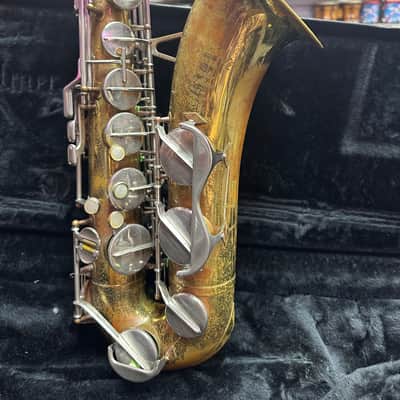
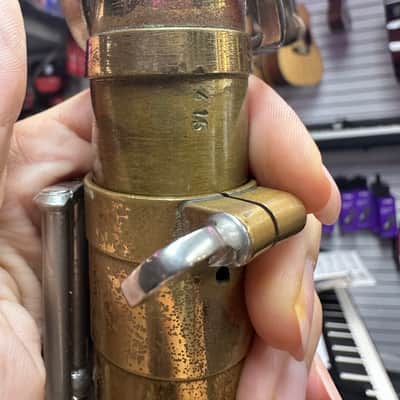
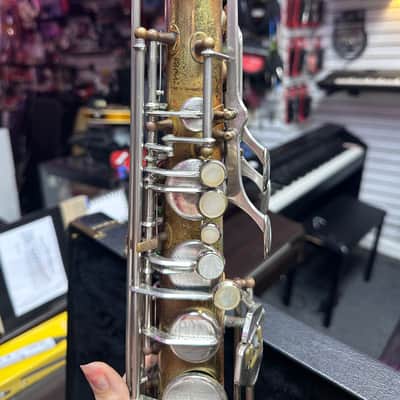
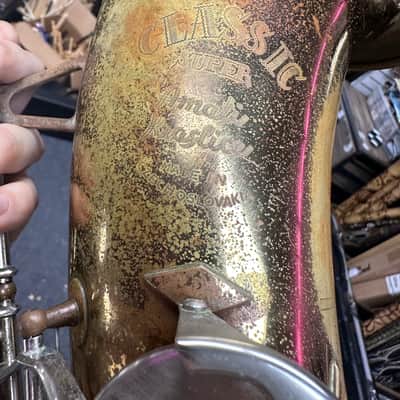
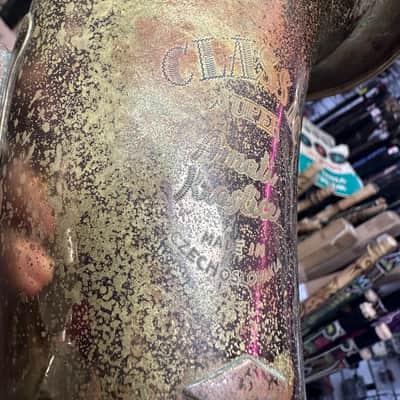
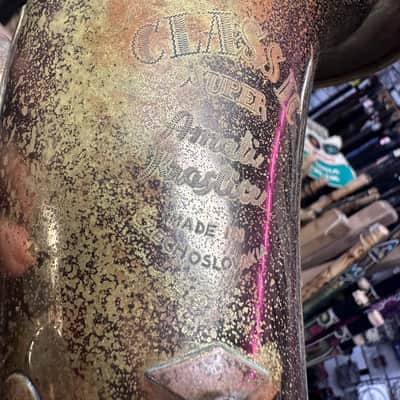
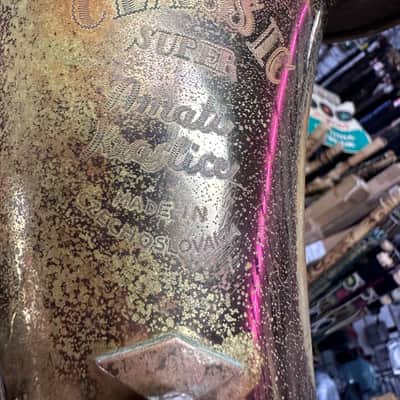
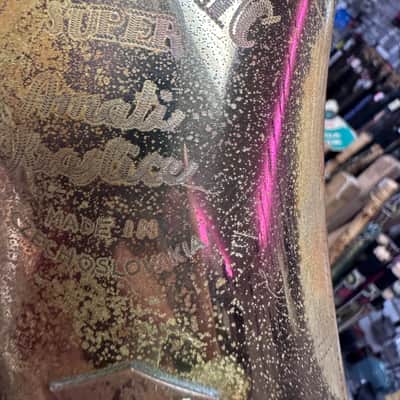
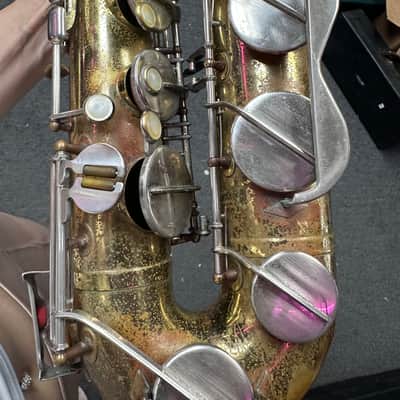
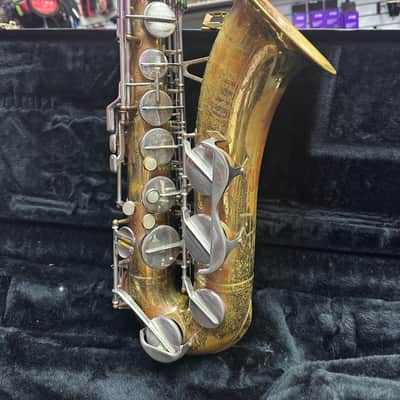
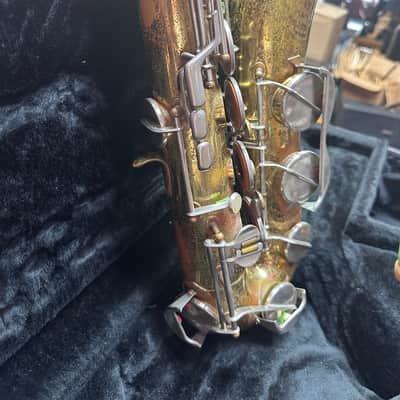
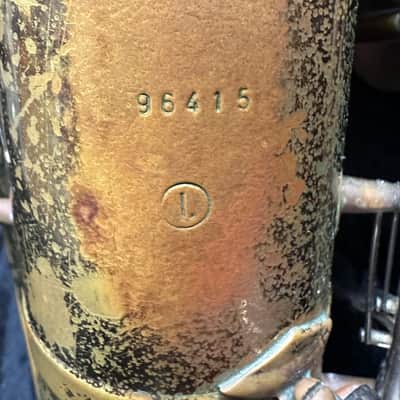
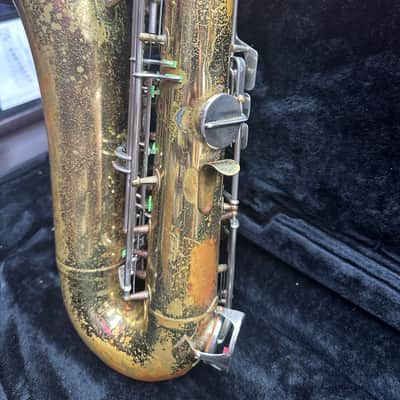
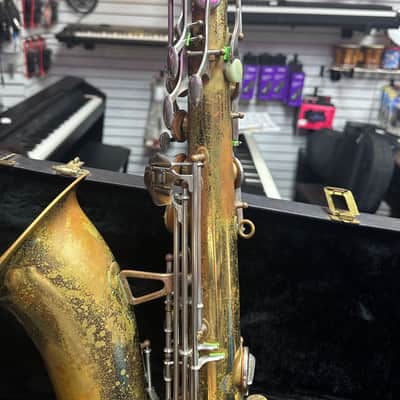
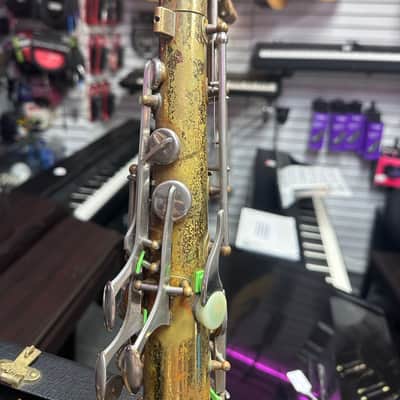
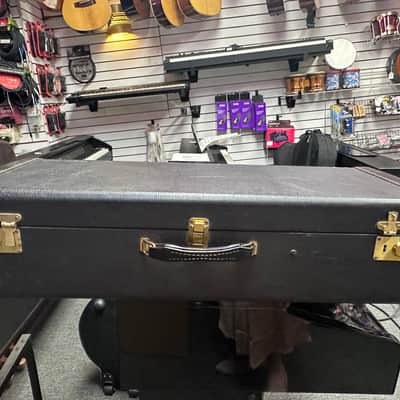
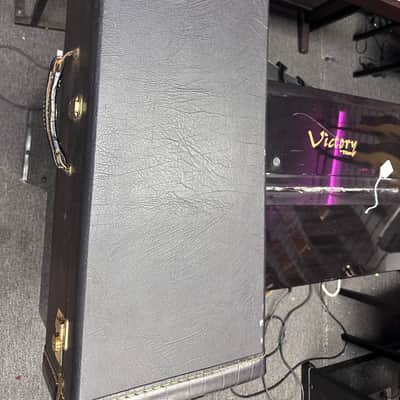
Classic Super Amati Kroglice Tenor Saxophone Made in Czechoslovakia / 96415 - L

Only 1 left
Grab it before it's gone

Our users rate Reverb
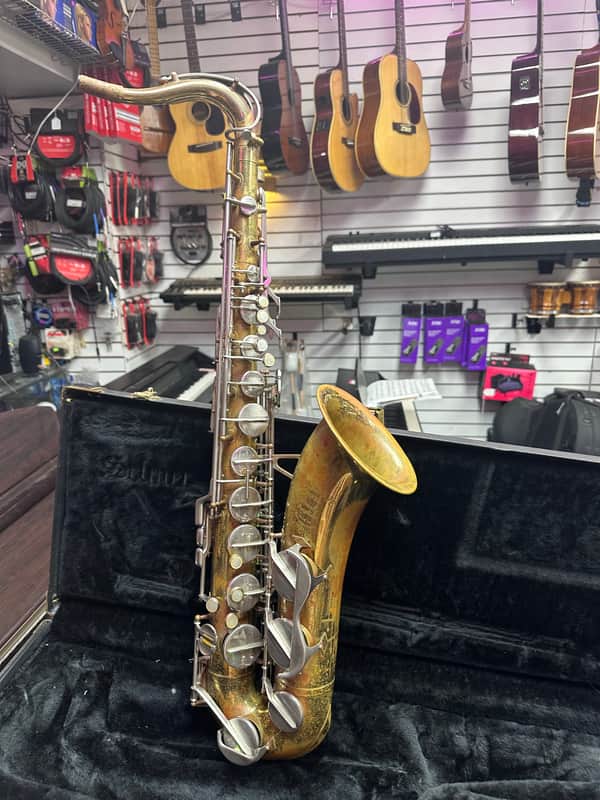
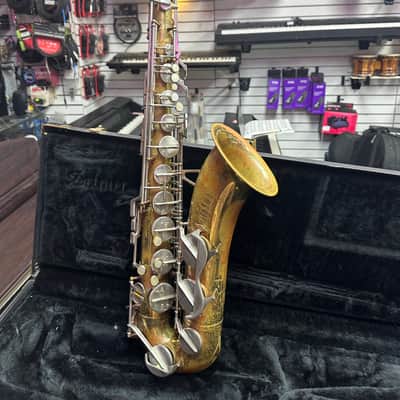
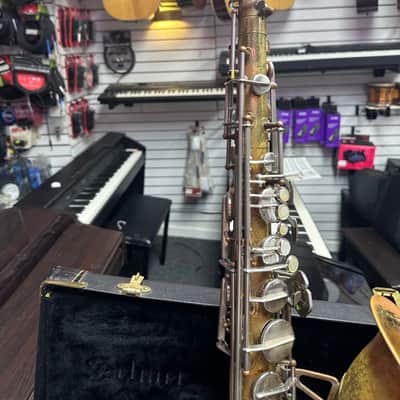
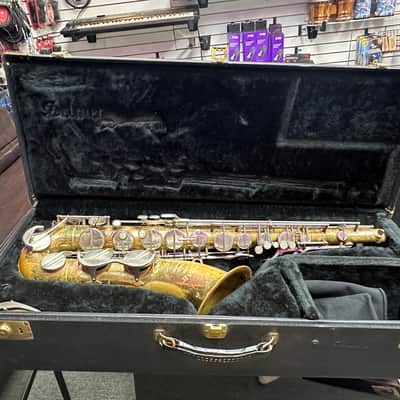
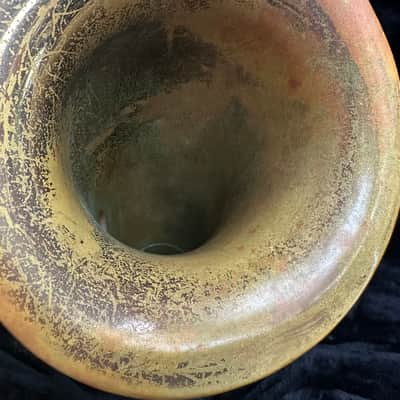
For sale this student model Amati Tenor Saxophone. Has scratches and dents but this is an old Amati, original, and it was used and loved. Looking for a new home in great playable condition.
Amati was a "nationalized" company that was made up of bits and pieces of other Czech (Markneukirchen) companies that were around pre-WWII.
* Amati Classic Super, this was/is student-quality and wholly made by Amati.
This is an older Sax, so the sound is much better are richer than the new ones made.
ABOUT AMATI :
WHO WE ARE
We are AMATI, a manufacturer of musical instruments, the history of which dates back to 1631. All instruments are made of quality materials with high craftsmanship. They excel in the beauty of sound, intonation balance, functional reliability, perfect workmanship and appearance. Each instrument passes through the hands of people whose lives have been connected with music for generations. The historical development of wind instruments is just as fascinating as, for example, the development of automobiles. Some instruments are still produced today in almost the same way as many years ago, some instruments have undergone a huge development.
AMATI tools successfully represent our country all over the world. We are very proud of the tradition and excellence with which we make our instruments. And all this without any compromises.
The production of AMATI wind instruments has its roots in Kraslice. Another brand we are introducing is V.F.Červený, which still benefits from the legacy of its brilliant founder, the Czech inventor Václav František Červený.
The town of Kraslice is a real cradle of musical instrument production in our country, because string instruments began to be produced here at the beginning of the 17th century.
The first historically confirmed musical instrument maker was Melchior Lorenz. In 1631 he was registered in the register as "ein Geigenmacher" (violin maker). The number of master violin makers was increasing, so that already in 1669 they had their own violin-making guild in Kraslice. In the 18th century, Kraslice musical instrument makers adapted to the heyday of orchestral music and, in addition to violins, also began to produce wind instruments. At first, they focused on wooden instruments, but brass instruments were soon added. As with string instruments, manufacturers mainly used raw materials from domestic sources.
The technical improvement of wind instruments at the beginning of the 19th century, in which the Kraslice instrument makers also participated, brought a previously unattainable ease of playing and the associated greater possibilities of playing virtuosity. This was then reflected in an increased interest in playing these instruments. At the same time, new ensembles of wind instruments began to emerge, and all this was reflected in the growing demand for wind instruments. The Kraslice producers quickly adapted to the requirements of the market and there was the largest expansion of production so far. The hitherto prevailing way of working, where many masters produced individual components and semi-finished products at home, from which only experienced toolmakers assembled finished products, was gradually replaced by factory production. At the same time, it was still assumed that a significant part of the production was destined for export: not only complete tools were exported, but also their individual components.
In September 1945, a cooperative of musical instrument manufacturers was established in Kraslice, and because the production of both wind and string musical instruments was supposed to be here, it was called "AMATI". In 1948, all production was nationalized and Kraslice gradually became a centre for the production of wind and percussion instruments. At that time, there was a lack of experts in music and instrumentation, so overall concentration and specialization was probably the only way out. The production then really grew and an apprenticeship school was opened to prepare the necessary young people and soon also a technical school - both of which continued the traditions of the former Vocational School of Music and Instrument Making. Gradually, the quality of the instruments produced improved, and as early as 1955 a comprehensive exhibition of the entire range of musical instruments was organized. From the beginning of the 1960s, exhibitions began to be held regularly so that domestic and foreign visitors could get acquainted with Kraslice products. Kraslice musical instruments also gradually penetrated world exhibitions and trade fairs.
After 1990, the state-owned company Amati was privatized and in October 1993 the limited liability company AMATI - Denak (Denak = Wind Instruments Kraslice) was founded. In 2021, due to the wasteful approach of its foreign owner, AMATI found itself on the verge of bankruptcy and was subject to insolvency proceedings. The new owner transformed the company into a production cooperative. At the same time, he invested over 100 million crowns in it to return it to its former prestige and world fame.
The tenor saxophone was invented in Belgium around 1840 by Adolphe Sax, a Belgian instrument maker, flautist, and clarinetist. Sax's goal was to create an instrument that combined the best qualities of woodwinds and brass instruments, and fill a missing range in military bands. He drew inspiration from the clarinet, flute, oboe, and ophicleide, and experimented with the bass clarinet. Sax's father, Charles Sax, was also an instrument maker who taught Adolphe how to build instruments and encouraged him to experiment.
The French government granted Sax a patent for the saxophone family on June 22, 1846, which divided the instruments into two groups of seven, ranging from soprano to contrabass. The tenor saxophone is a medium-sized, single-reed aerophone that is pitched in the key of B♭, meaning that when a note is played, the actual pitch that sounds is a major ninth lower.
The tenor saxophone is used in many contexts, including military and marching bands, concert bands, orchestras, jazz combos, and mixed saxophone ensembles. Players such as Ben Webster, Coleman Hawkins, and John Coltrane helped create the classic cool jazz sound of the 1930s, 1940s, and beyond, but the tenor saxophone is also used in pop, rock, funk, and classical music.
We are THE MUZIC STORE INC in Dobbs Ferry, New York
Westchester County and New York State legendary music shop. Family-owned and operated since 1982. The Muzic Store has proudly served Westchester County and beyond for over 40 years. Buy gear the way it was meant to be bought, from a store that's been there through it all and has the vibe to prove it. We're staffed with musicians and industry experts, people that live and breathe music gear. Our mission is to help you find the right gear for your project, that thing that will bring you the most joy out of what you do. We are an authorized dealer for almost every brand, we stock items the other stores don't, so do not miss the chance to check out our store and get something LEGENDARY!
Feel free to contact us if you have questions about one of our listings or if you need help finding the right piece of gear.
This item is sold As-Described
This item is sold As-Described and cannot be returned unless it arrives in a condition different from how it was described or photographed. Items must be returned in original, as-shipped condition with all original packaging.Learn More.
| Condition | Good (Used) Good condition items function properly but may exhibit some wear and tear.Learn more |
|---|---|
| Brand | |
| Model |
|
| Categories | |
| Made In |
|
Product safety information may be available here.

