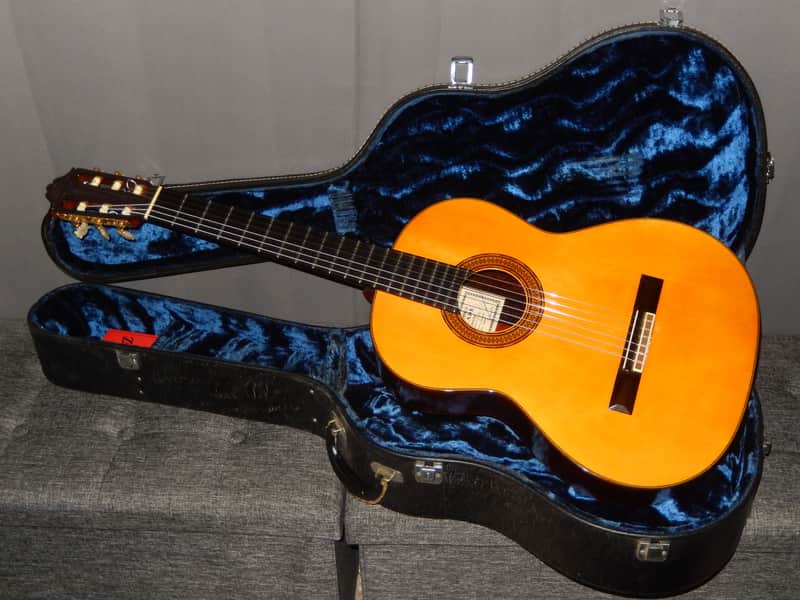
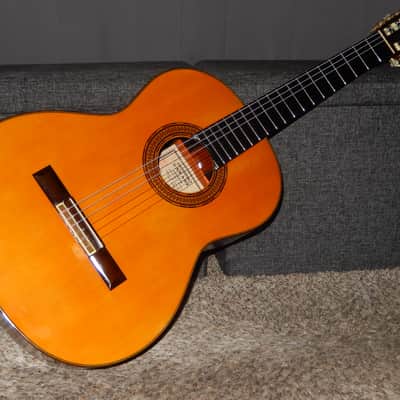
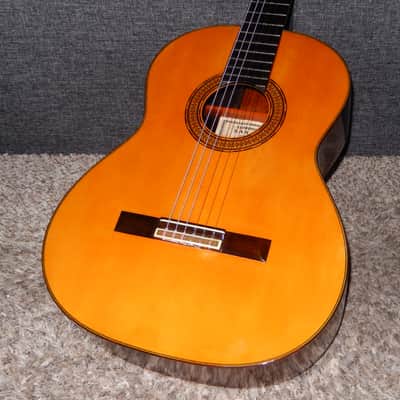
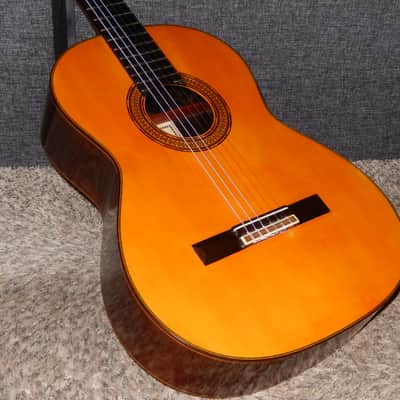
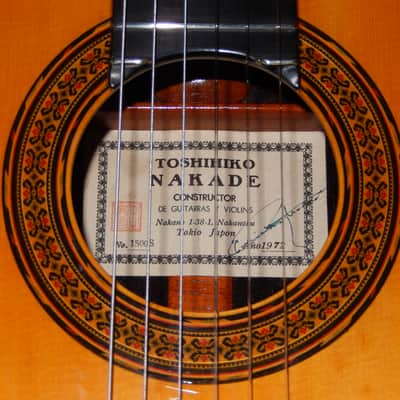
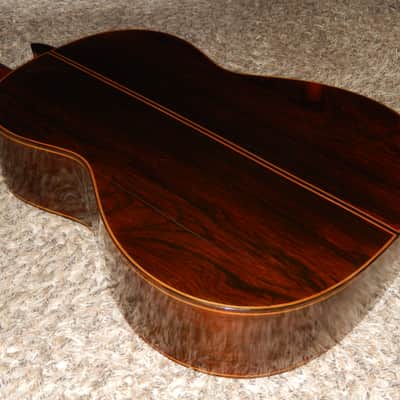
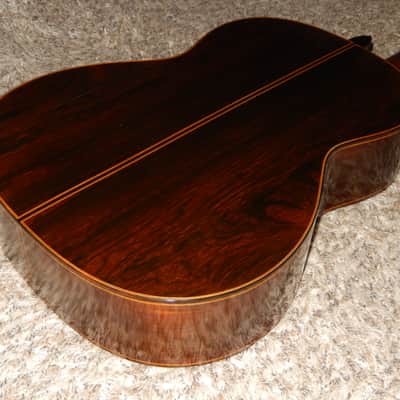
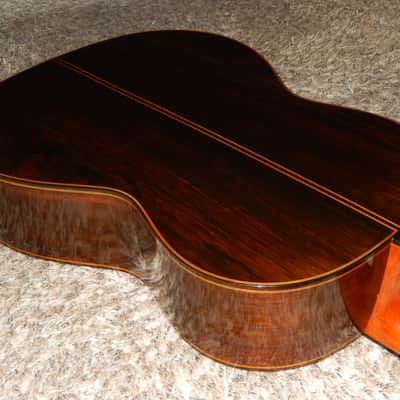
TOSHIHIKO NAKADE 1500S 1972 - HERNANDEZ y AGUADO CLASS CLASSICAL CONCERT GUITAR - SPRUCE/BRAZILIAN ROSEWOOD

YOU ARE LOOKING AT A WORLD CLASS INSTRUMENT PRICED AT THE BARGAIN LEVEL. CURRENTLY BRAND NEW GUITARS OF THIS CLASS MADE BY JAPANESE LUTHIERS USING OLD GROWTH FIGURED BRAZILIAN ROSEWOOD ARE PRICED MINIMUM $18000USD. DISCONTINUED IN 2025 YAMAHA GC70 WAS PRICED AT THAT LEVEL.
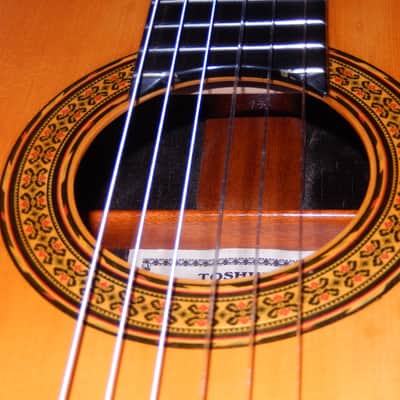
TOSHIHIKO NAKADE No.1500S 1972
This wonderful guitar was made in 1972 by Toshihiko Nakade, one of highest regarded Japanese luthiers and top elite member over last 2 decades. His father Sakazo Nakade has been crowned by Japanese experts as “The Father of Modern Japanese Lutherie”.
Besides being trained by their father, Toshihiko and Teruaki went to Spain in mid 1960s, and studied at famous Hernandez y Aguado workshop for few years before opening their own workshops. Toshihiko started his independent career in 1968.
In 1972 Toshihiko's model 1500S priced 150000 yen was his second from the top model (with model 2000S being the top one). By 1979 the same class guitar would be labelled as Master 30 and priced 300 000 yen. In 1972 only Masaru Kohno and Sakazo Nakade had 300000yen models. For several other elite makers 200000yen models were top of the line (e.g. Yamaha GC20D, Hiroshi Tamura P200) while for several other luthiers 150000yen was the maximum they could charge for their best models (like R. Matsuoka No150, Kazuo Yairi YC150). Today the same class brand new instrument would cost you at least $15000USD.
Toshihiko Nakade retired in July of 2021 (and passed away in 2023). In recent years his guitars were sold at very high prices, and nobody questions their greatness. In 2021 his lowest classical models were priced at $6000 level, model No100 priced at $10000 level, model Maestro priced around $12000 and model Aguado priced around $15000. The same class guitars made in Spain are priced at least 50% higher. Toshihiko's flamenco guitars were made in very limited numbers and were always highly priced.
This guitar offers everything that devoted player can ask for: terrific response & great volume, combined very lyrical, sweet, quite warm & moderately bright tonality, with superb note clarity and separation, clear piano-like trebles, deep and rich, cello-like basses, all well balanced and magnified by truly impressive sustain. This guitar is very hard to dislike.
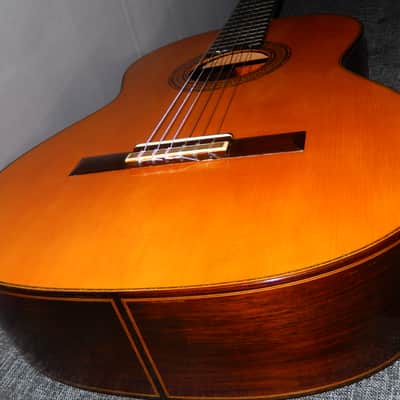
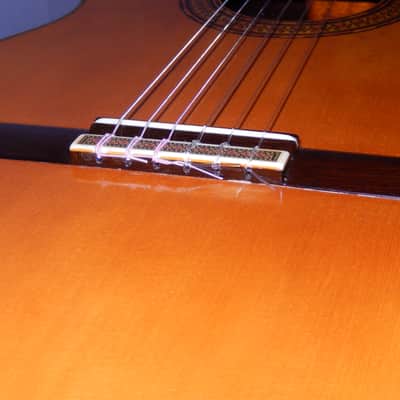
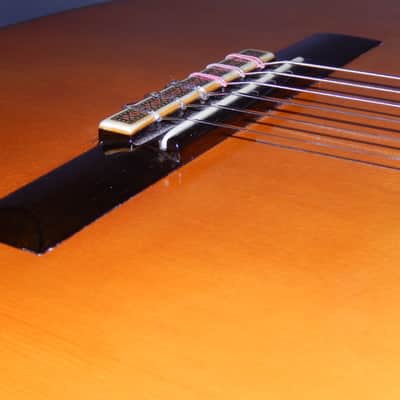
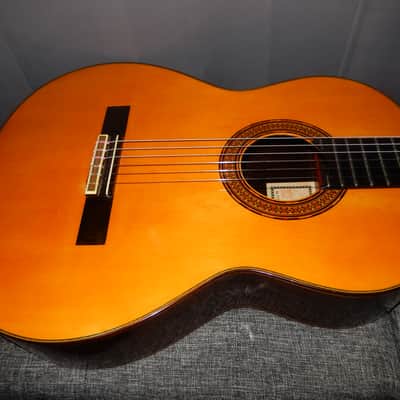
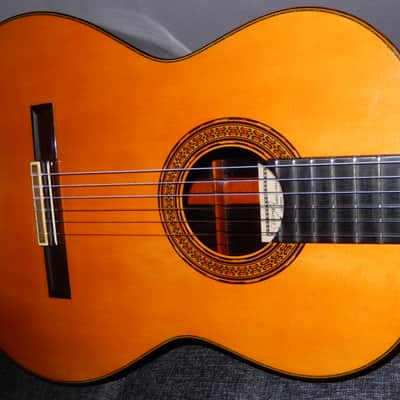
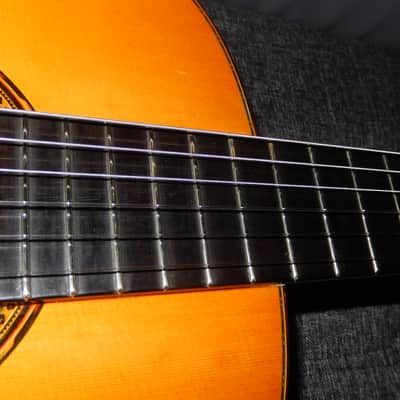
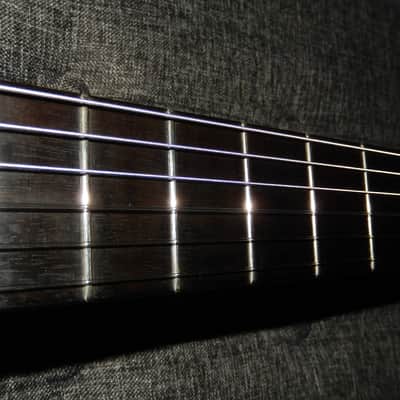
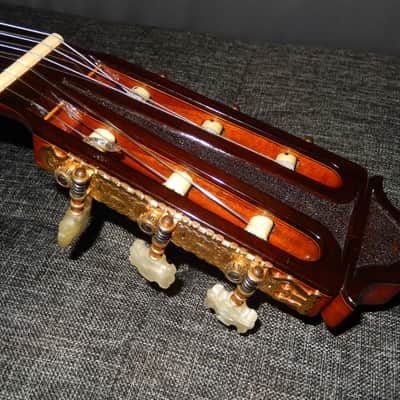
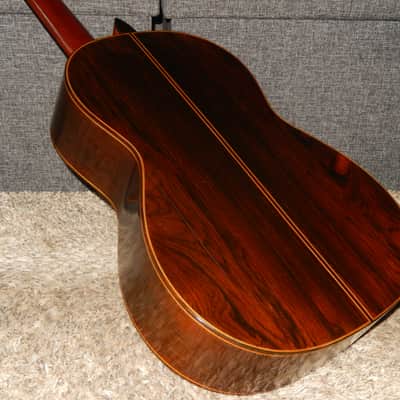
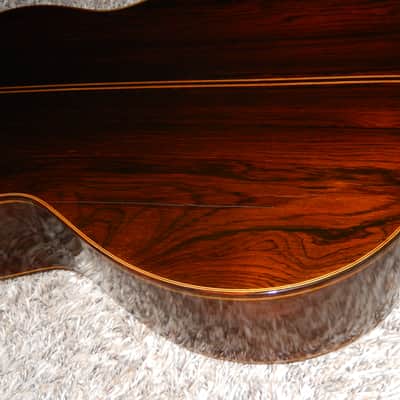
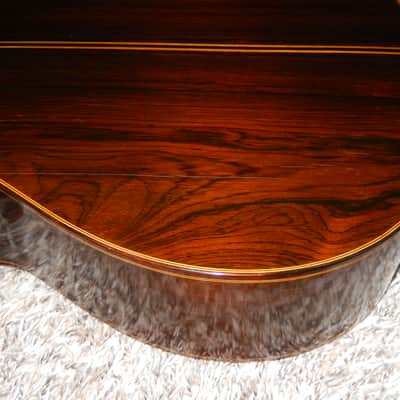
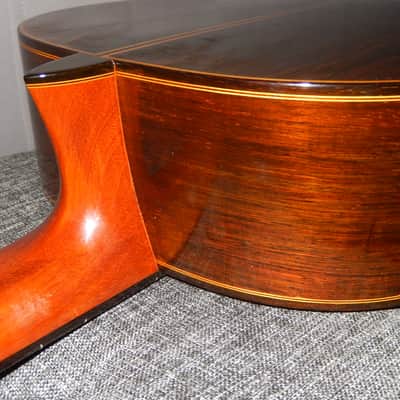
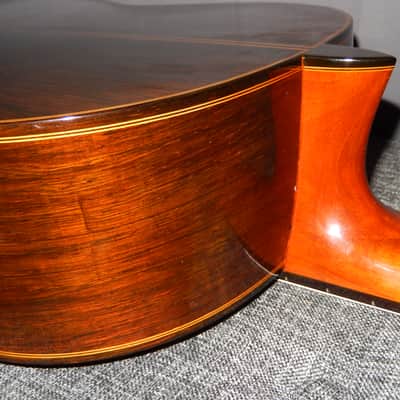
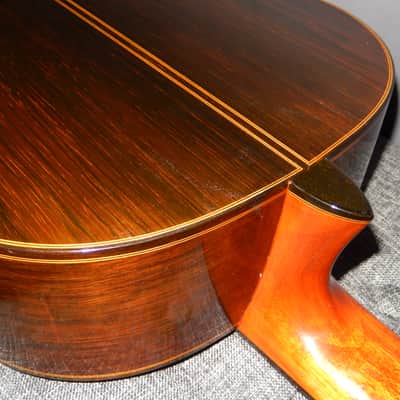
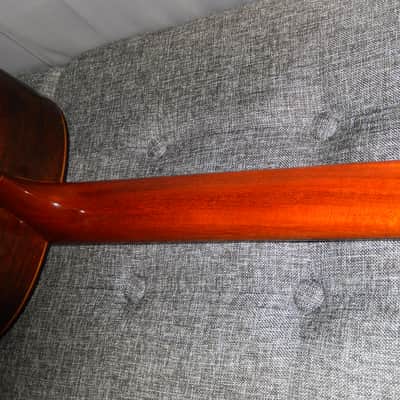
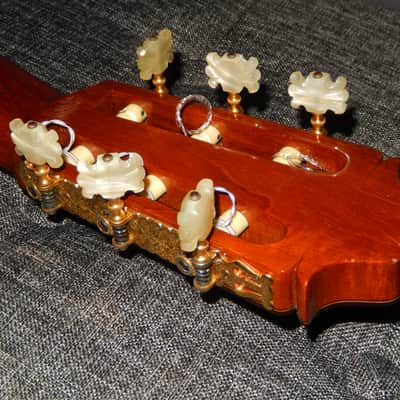
The overall condition of this guitar can be described as "very good for its age". Besides one string burn below the bridge and a few very minor marks within its shellac finish, the body of this guitar doesn't bear any conspicuous scratches or dents. It doesn’t have any structural flaws either. Its neck is straight, while fingerboard and frets remain in very good condition. Original tuners work fine.
What is visible from a close distance if looked at from certain angles is that original Frech Polish has aged enough to become “buttery”. It seems that previous owner(s) were trying to repolish its surfaces. Nevertheless, such shellac aging is very common on vintage guitars regardless of who was their maker.
What is not that obvious in regular light are a few crack lines on its back plates, with only one (few inches long) real crack. This crack has already been stabilized by the glue applied from the top and is also held firmly by the back braces. Because this is clear glue, if you put the flashlight on the outside, you will still see the light sipping through on the inside.
None of these (described above) imperfections affect the sound or playability of this gorgeous instrument.
If you are interested in high end classical guitars, you need to know that among all tone woods used in guitar making, French Polished (shellac coated) figured Brazilian Rosewood is the most prone to cracking. Because of its very compacted fiber structure, if exposed to dry air, the surface of BR can become flaky with its outer layer cracking first. Straight grain BR plates are more stable than figured BR plates. For stability of figured BR plates any other finish is better than French Polish. BR coated with Japanese cashew lacquers is far more resilient. If you insist on playing French Polished guitar with solid figured BR b/s you must keep it away from dry and/or hot air.
Specifications:
Top: Very Fine Solid Spruce/7 braces fan/shellac
Back & Sides: Solid Brazilian Rosewood/ shellac
Neck: Mahogany
Fingerboard: Ebony
Scale: 658 mm
Nut width: 51 mm
Strings Savarez Cristal Normal Tension
The action is set to 4.00 mm under E6 and 3.50 mm with practically no extra room on the saddle.
This guitar will be shipped in a used hard shell case.
THE ONLY PURPOSE OF THIS CASE IS TO PROTECT THE GUITAR DURING SHIPMENT. I WILL NOT PROVIDE ITS DETAILED DESCRIPTION OR MAKE ADDITIONAL PICTURES, NOR I WILL ACCEPT ANY COMPLAINTS. IF YOU DON’T LIKE THIS CASE YOU WILL NEED TO BUY A DIFFERENT ONE.
WHEN YOU BUY ANY GUITAR, YOU MUST ANTICIPATE TAKING IT TO YOUR LOCAL GUITAR SHOP FOR FINAL ADJUSTMENTS CALLED “SETUP”. DEPENIDNG ON YOUR PLAYING TECHNIQUE, THIS SETUP ON USED GUITARS MAY INCLUDE NEW CUSTOM MADE NUT AND SADLLE. IF YOU HEAR STRING BUZZ IT DOESN’T MEAN THAT GUITAR IS DEFECTIVE. IF YOU PLAY HARD ENOUGH ALL BASS STRINGS WILL BUZZ OVER THE FRETS, UNLESS THEY ARE SUSPENDED VERY FAR FROM THE FINGERBOARD. UNLESS YOU PLAY QUITE GENTLY, YOU CAN’T HAVE LOW ACTION AND NO BUZZES. KEEP IN MIND THAT CELLO-LIKE BASSES ON HIGH GRADE CLASSICAL GUITARS HAVE THEIR NATURAL “BUZZ”.
Nakade Family Luthiers
Sakazo Nakade together with his older brother Rokutaro apprenticed under Japanese Master Violin Luthier Mr. Kinpachi Miyamoto in 1930’s.
Miyamoto had a chance to examine and measure Andres Segovia's performance guitar while he performed in Tokyo in 1929. Their master never ventured into guitar making, but the apprentices Nakade brothers did. They also went to Spain to study guitar making from the Spanish masters. Nakade guitars are high quality instruments and have a big following in Japan. They were famous in the early 60's before Masaru Kohno got famous in the late 60's.
During 1960s both brothers were famous, and their guitars equally highly regarded in Japan. Both brothers were selling their guitars at the same price level as Masaru Kohno. I believe that Rokutaro passed away in mid1970’s. Sakazo continued his work until his death in 1993 (at the age of 87). In the late 1960’s/early 1970’s he was joined by his 2 sons Teruaki, Toshihiko and later by his youngest son Yukio. Rokutaro's son Osamu Nakade, also travelled to Spain in early 1960's and started his own workshop after his return to Japan in 1970. Sometime in the 1990s Osamu Nakade designed a guitar model with top, back and sides made from bamboo, sold at very high prices.
All Nakade luthiers were making very high-grade guitars and successfully competed with Masaru Kohno on Japanese market. Their workshops were never as huge undertakings as Kohno’s workshop hence their guitars were sold outside Japan in quite limited numbers. In fact, their guitars in many cases were of much higher grade than Kohno models sold for the same price.
Real Value of Japanese Vintage Guitars
The key to understand value of vintage Japanese guitars is to acknowledge galloping price inflation throughout the late 1960s and 1970s with its peak of 25% in 1974.
During 1960s and most of 1970s model numbers of Japanese guitars were strictly connected with their prices in Japanese yen.
The same class guitar sold in 1970 for 100 000 yen (labelled as model 10), would be sold for 150 000 yen in 1972 (labelled as model 15), 200 000 yen in 1974 (labelled as model 20) and 300 000 yen in 1978 (labelled as model 30). Therefore, you shouldn’t be surprised that two Yamaha GC10 guitars made 10 years apart are two instruments of totally different class. The same rule applies to all guitar models made by all other Japanese makers.
Japanese inflation slowed down in the 1980s. By the early 1980s and during following decades model numbers were no longer strictly associated with their prices. Some Japanese guitar makers introduced model names instead of model numbers. For several economic reasons, since 1980s Japanese made guitars were becoming more and more expensive, while their exports slowing down. Today (2025) Japanese high end classical guitar models are priced at $20000USD level.
Reverb Buyer Protection
Reverb has your back if your item is lost, damaged, or doesn't match its description. Simply report any issues within 7 days and we'll help you get a full refund.Learn more about Reverb Buyer Protection.
| Listed | 3 years ago |
|---|---|
| Condition | Very Good (Used) Very Good items may show a few slight marks or scratches but are fully functional and in overall great shape.Learn more |
| Brand | |
| Model |
|
| Finish |
|
| Categories | |
| Year |
|
| Made In |
|
| Body Shape |
|
Product safety information may be available here.

