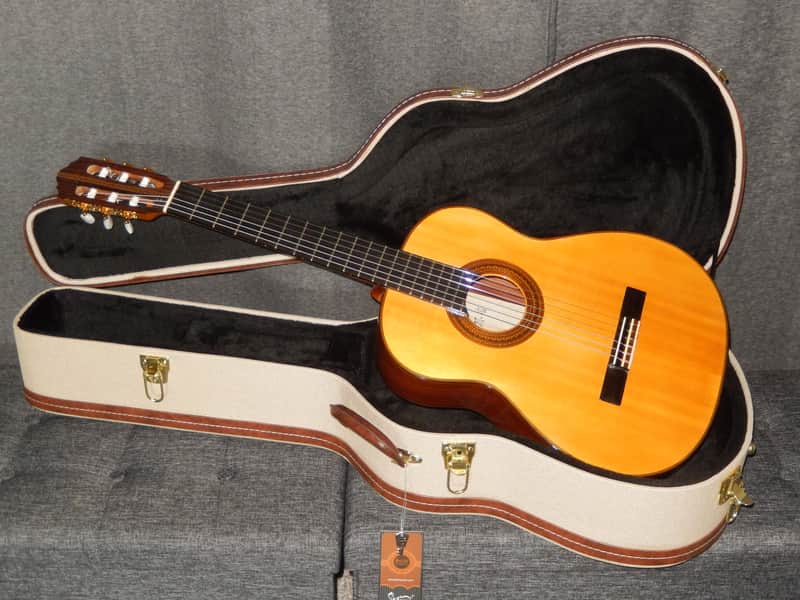
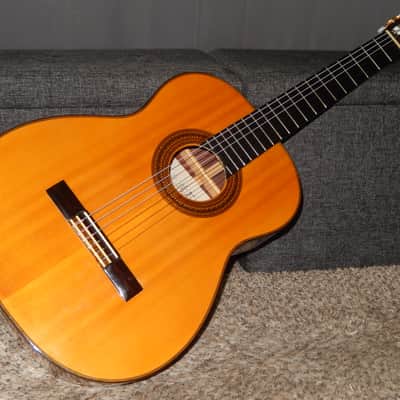
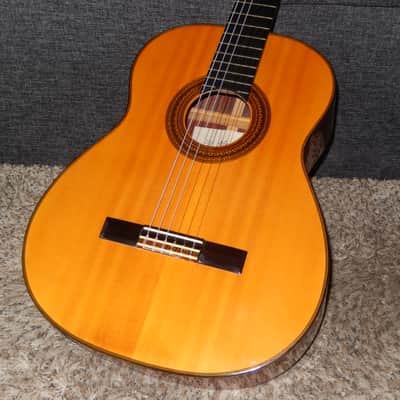
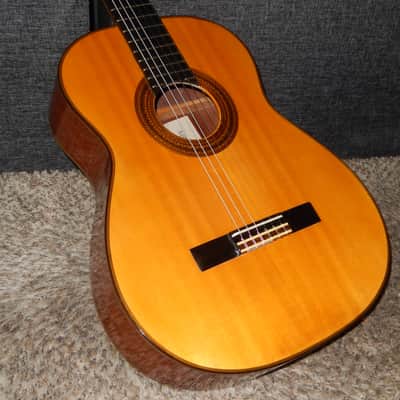
TADANAO KITAORI CUSTOM 1966 - ANTONIO TORRES CLASS CLASSICAL CONCERT GUITAR - SPRUCE/BRAZILIAN ROSEWOOD


YOU ARE LOOKING AT A WORLD CLASS INSTRUMENT PRICED AT THE BARGAIN LEVEL. CURRENTLY BRAND NEW GUITARS OF VERY SIMILAR CLASS MADE BY JAPANESE LUTHIERS USING OLD GROWTH BRAZILIAN ROSEWOOD ARE PRICED MINIMUM $15000USD. DISCONTINUED IN 2025 YAMAHA GC70 WAS PRICED $18000.
Tadanao Kitaori 1966
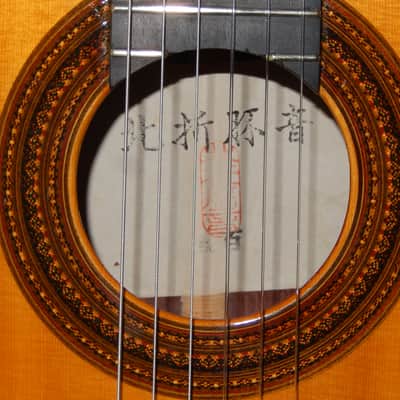
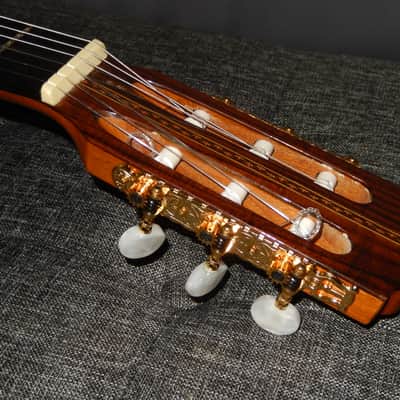
This terrific guitar was made by legendary Japanese luthier pioneer Tadanao Kitaori in 1966. The label says "Heine" Kitaori, with Kitaori being his family name. Because “Heine” can be translated to “embryo sound” or “core sound” it was possibly used as a nickname, while his original name was Tadanao. It is remembered in Japan that Tadanao was running a small manufacture located in Aichi Prefecture, Japan and his main products were acoustic guitars and arched top guitars. Classical guitars were usually sold under the name “Tadanao Kitaori” and most of them were made in the 1960s.
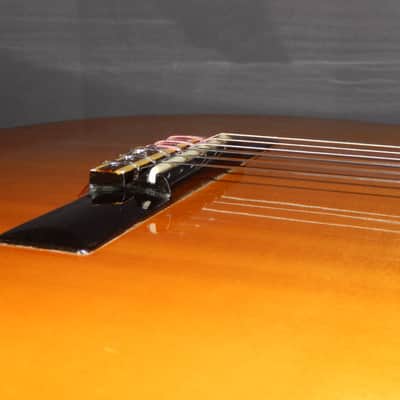
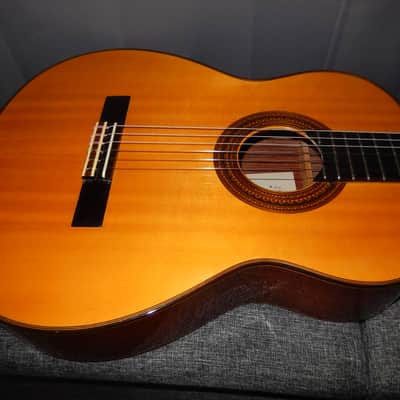
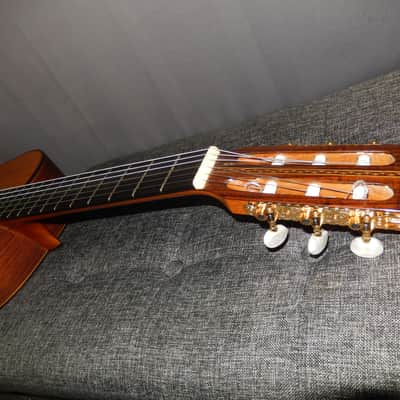
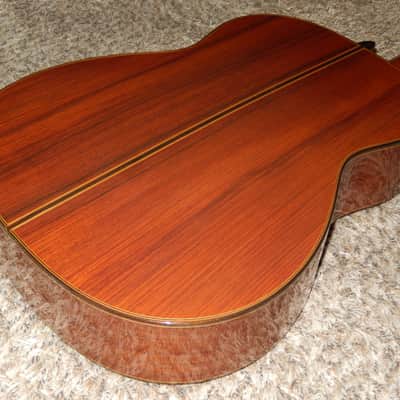
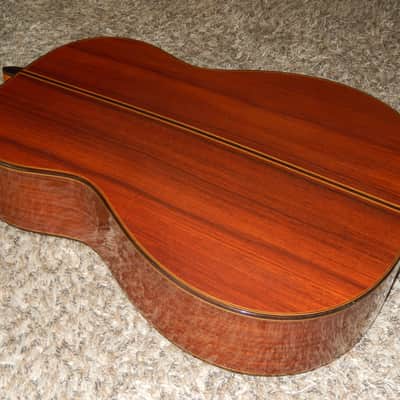
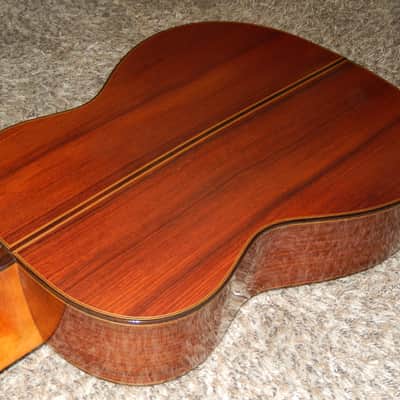
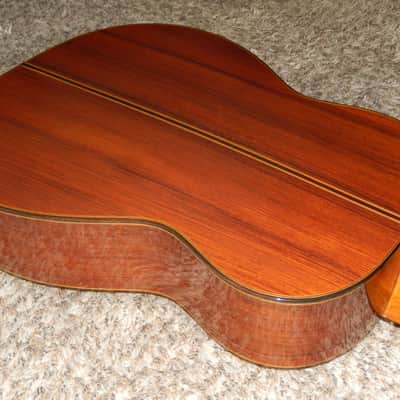
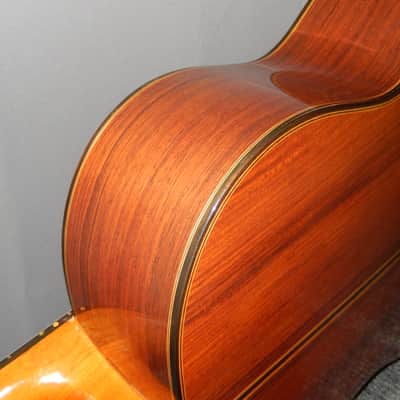
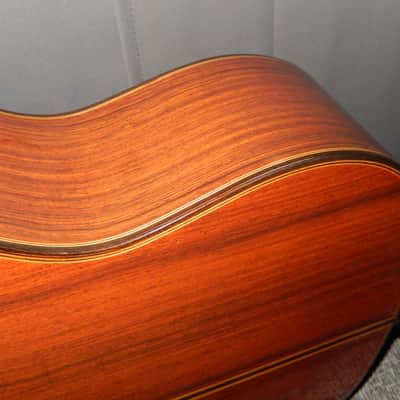
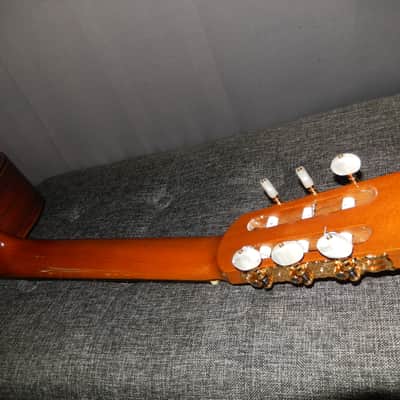
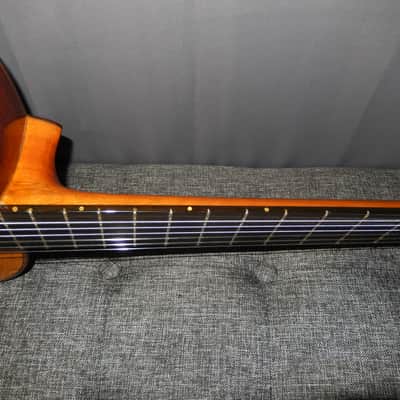
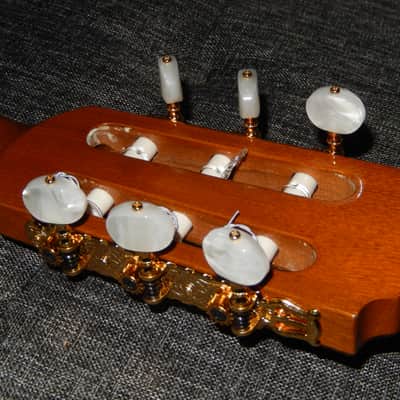
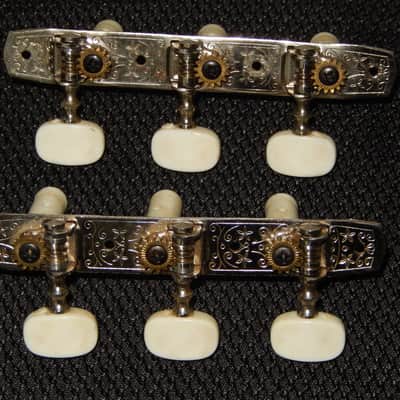
According to its previous owner this guitar was purchased by his father in 1966. The original nickel-plated tuners (last picture) were used in Japan only in mid 1960s. Because these tuners are very hard to turn, they were replaced by modern era Gotoh tuners. The headstock on this guitar is Tadanao’s own design and the red stamp on the label bears his name. I don’t know why the label is installed at an angle (not in perfect horizontal position) but it certainly is an original one. The fret position dots visible on the side of the fingerboard seem to be original as well. The overall impression that you will have with this guitar in your hands is that it is “practically unused” instrument. Its body shines (like new) and it’s free from any scratches or dents. Its straight neck, fingerboard and frets don’t show signs of use.
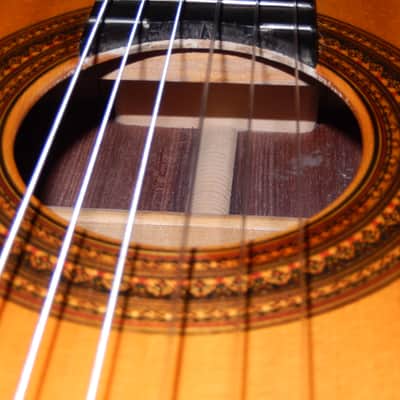
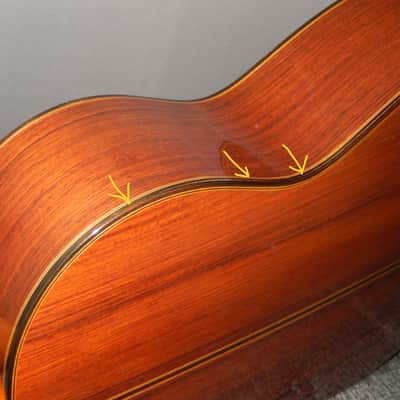
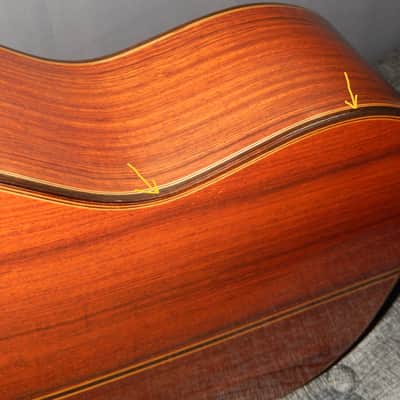
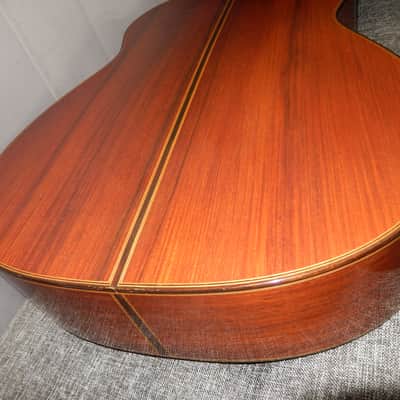
The only imperfections I have found are light attrition on back of the headstock, light attritions on the binding finish near “butt area” and cracks in the finish running over the sections of the back plate binding. These cracks are not associated with any cracks in the wood below nor any separation between the parts. They are running right over the binding and are hard to spot in regular light. They don’t require any repairs unless you chose to do so for “personal” reasons. When you inspect it, you will realize that this guitar is built “to last forever”. Its side and back plates are relatively thick and very well preserved by the finish, while its top is stabilized by fan of 11 braces. Its body feels heavier than average and certainly feels sturdier than average.
This guitar certainly deserves the title of Grand Concert instrument. Its tonality closely resembles tonality of Antonio Torres guitars. This truly magnificent guitar offers immense volume and super response combined with moderately bright romantic tonality, with deep cello-like basses, strong piano-like round trebles, with high level of note clarity and separation and very extended sustain.
With all its volume and tonal beauty, this guitar can easily challenge many Spanish made guitars priced at $18000USD level.
IF YOU HAD MY EXPERIENCE WITH CLASICAL GUITARS, YOU WOULD KNOW HOW DIFFICULT IT IS TO FIND A 60 YEAR OLD GUITAR IN SIMILAR CONDITION. YOU WOULD ALSO KNOW THAT AMERICAN LUTHIERS TAKE AT LEAST $20000USD FOR A SIMILAR CLASS INSTRUMENTS. IT WOULD BE OBVIOUS TO YOU THAT THE OBJECTIVE VALUE OF THIS INSTRUMENT WILL ONLY GROW WITH TIME.
SPECIFICATIONS:
Top: High Grade Solid Spruce/original symmetrical bracing system based on 11 braces fan/Cashew lacquer
Back & sides: Solid Brazilian Rosewood/Cashew lacquer
Neck: Honduras Mahogany
Fingerboard: Ebony
String Length: 650mm
Nut width: 52 mm
Strings: Savarez Cristal Normal Tension
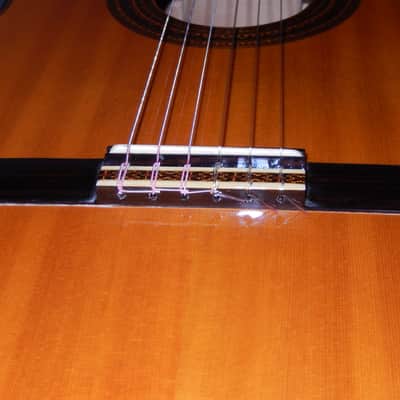
The guitar’s action is set to 3.50mm under E6 and 3.00 with still some extra room on the saddle.
The guitar will be shipped in brand new hard shell case.
WHEN YOU BUY ANY GUITAR, YOU MUST ANTICIPATE TAKING IT TO YOUR LOCAL GUITAR SHOP FOR FINAL ADJUSTMENTS CALLED “SETUP”. DEPENIDNG ON YOUR PLAYING TECHNIQUE, THIS SETUP ON USED GUITARS MAY INCLUDE NEW CUSTOM-MADE NUT AND SADDLE. IF YOU HEAR STRING BUZZ IT DOESN’T MEAN THAT GUITAR IS DEFECTIVE. IF YOU PLAY HARD ENOUGH ALL BASS STRINGS WILL BUZZ OVER THE FRETS, UNLESS THEY ARE SUSPENDED VERY FAR FROM THE FINGERBOARD. UNLESS YOU PLAY QUITE GENTLY, YOU CAN’T HAVE LOW ACTION AND NO BUZZES. KEEP IN MIND THAT CELLO-LIKE BASSES ON HIGH GRADE CLASSICAL GUITARS HAVE THEIR NATURAL “BUZZ”.
Real Value of Japanese Vintage Guitars
The key to understand value of vintage Japanese guitars is to acknowledge galloping price inflation throughout the late 1960s and 1970s with its peak of 25% in 1974.
During 1960s and most of 1970s model numbers of Japanese guitars were strictly connected with their prices in Japanese yen.
The same class guitar sold in 1970 for 100 000 yen (labelled as model 10), would be sold for 150 000 yen in 1972 (labelled as model 15), 200 000 yen in 1974 (labelled as model 20) and 300 000 yen in 1978 (labelled as model 30). Therefore, you shouldn’t be surprised that two Yamaha GC10 guitars made 10 years apart are two instruments of totally different class. The same rule applies to all guitar models made by all other Japanese makers.
Japanese inflation slowed down in the 1980s. By the early 1980s and during following decades model numbers were no longer strictly associated with their prices. Some Japanese guitar makers introduced model names instead of model numbers. For several economic reasons, since 1980s Japanese made guitars were becoming more and more expensive, while their exports slowing down. Today (2025) Japanese high end classical guitar models are priced at $20000USD level.
Reverb Buyer Protection
Reverb has your back if your item is lost, damaged, or doesn't match its description. Simply report any issues within 7 days and we'll help you get a full refund.Learn more about Reverb Buyer Protection.
| Listed | 3 years ago |
|---|---|
| Condition | Excellent (Used) Excellent items are almost entirely free from blemishes and other visual defects and have been played or used with the utmost care.Learn more |
| Brand |
|
| Model |
|
| Finish |
|
| Categories | |
| Year |
|
| Made In |
|
| Right / Left Handed |
|
| Number of Strings |
|
| Body Shape |
|
Product safety information may be available here.

