HHB Tube Compressor Radius 30
This seller has not set a shipping cost for Netherlands. Please contact them to ask about shipping.

Our users rate Reverb
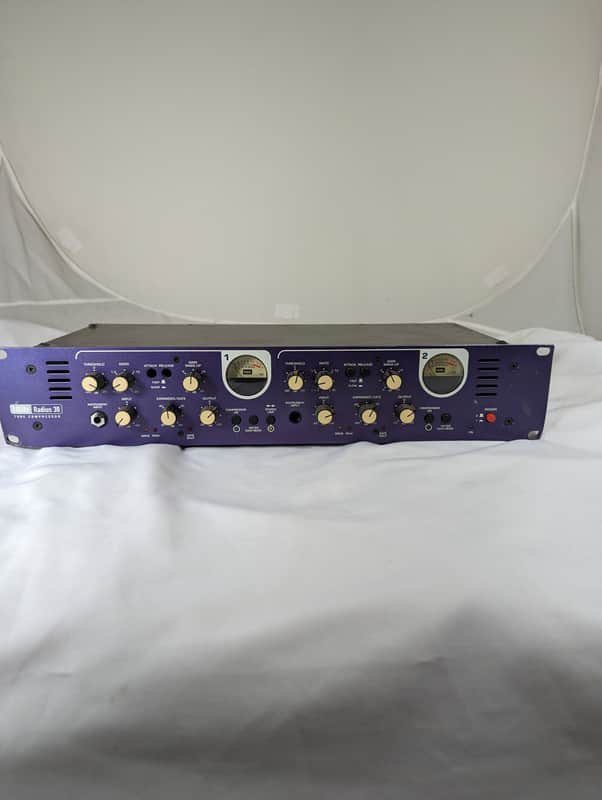
Here we have a tube compressor looking for a new home. Unit turns on and dials and meters work as intended. Not fully tested. SOLD AS-IS.
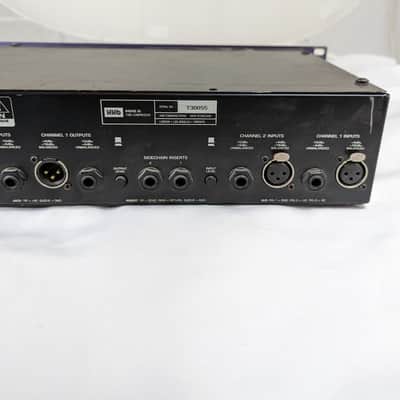
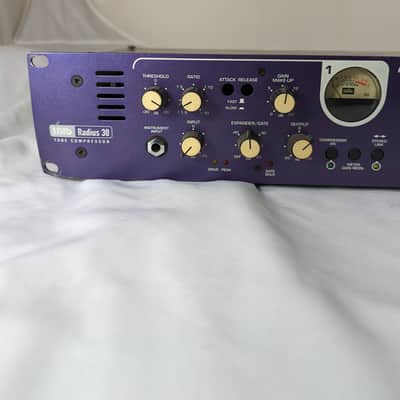
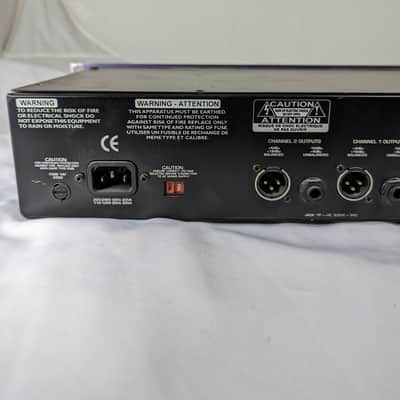
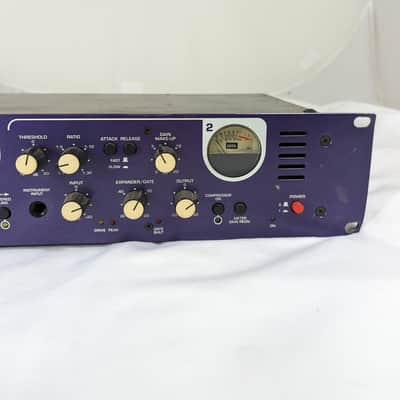
Radius 30 The Radius 30 is a 2U rack mountable compressor, measuring around eight inches deep. The purple face plate is attractively marked with white graphics and ivory-coloured knobs. Around the back, XLR (pin two hot) balanced and 6.5mm unbalanced jack connectors take care of the I/O. The 6.5mm instrument input on the front panel allows the unit to be used as a DI for electric guitar and keyboard applications. The frequency response is a staggering 10Hz to 40kHz, while line level input has a good noise floor figure of -80dBu (at unity gain); and the quoted dynamic range figure is 106dB, which is 10dB better than CD quality. The Radius 30 features include: an input gain which drives the tube stage; variable threshold for activating the compressor (+20dB to -20dB); sweepable compression ratio (1:1.5 to 1:30); gain make-up (0dB to +20dB) to bring up the level of the compressed signal; an output level control and an expander/gate feature. When the expander/gate is shut, an LED illuminates and additional LEDs indicate ‘Drive’ and ‘Peak’ levels. Additional switches include: stereo link and a compressor in/out button, both of which have LED indicators. When the Radius 30 is stereo-linked, the compressor for both channels is triggered by one channel’s signal, yet individual adjustments for threshold, ratio, and I/O levels may be made. Attack times are switchable between 0.5ms and 20ms, and release times are either 40ms or two seconds. The backlit VU meter may be selected to display output level or gain reduction. Furthermore, a 6.5mm side-chain insert allows an equaliser to be used for frequency dependent compression, i.e. de-essing. Being a valve unit, the settings on the Radius 30 improve the sound of most instruments – variations in input level, threshold, and gain make-up will affect the overall sound character. Having valves in the signal path, there may be times when tube colouration is all that’s needed. However, with the lowest compression ratio of 1:1.5 (rather than 1:1) some compression will be added even though the existing dynamic range may not need to be changed. On the other hand, the highest compression ratio of 1:30 does not constitute true limiting. With the ratio settings marked at 1:1.5, 1:5, 1:10, and 1:30, finding other exact values may be difficult. Considering that ratios between 1:1.5 and 1:5 are most popular for tracking and mixing, precision is not the Radius 30’s forte. In general, ratios under 1:5 were subtle compared to other compressors and this is an advantage for gentle compression applications. Attack and release times offer only two options – fast and slow. While the available settings are good for vocals, guitar and piano, the Radius 30 may be unsuitable for fast attack transient instruments. However, the vacuum tube stage smoothes out transient response, making drums sound warm and fat. By increasing the input drive for bass guitar, bass tone improved – again, the result of the valve stage. Vocals seemed to benefit the most from Radius 30 compression. Working the input levels at a moderate setting took away the harshness normally associated with budget digital recording gear – this alone will justify its use to many. The individual control afforded by the stereo-link feature gives the Radius 30 more flexibility for fine-tuning stereo signals or two mono signals of the same sound, e.g. a close and distant mic set-up of the same amplifier. A fat sound was produced when the compressor was inserted across the main stereo L/R mix outputs and digital synths were warmed up before being recorded. Overall, the Radius 30 offers adequate control to shape a good sound on a variety of instruments. The Radius 30 also includes an expander/gate. It exists as a one knob control which enables you to adjust the threshold until the Gate Shut LED illuminates. The attack and release times of the gate seemed better tailored to vocals and other instruments that have mild envelope shapes – transients on more percussive sounds may be lost. While it’s uncommon for engineers to use E Q U I P M E N T T E S T 79 gates during tracking, I found that adjusting the gate knob during recording produced some useful results. For example, it helped clean up the head and tail of an overdub, thereby improving overall dynamic range. -HHB Manuel
This item is sold As-Described
This item is sold As-Described and cannot be returned unless it arrives in a condition different from how it was described or photographed. Items must be returned in original, as-shipped condition with all original packaging.Learn More.
| Listed | 4 years ago |
|---|---|
| Condition | Fair (Used) Fair condition gear should function but will show noticeable cosmetic damage or other issues.Learn more |
| Brand |
|
| Model |
|
| Categories |
Product safety information may be available here.

