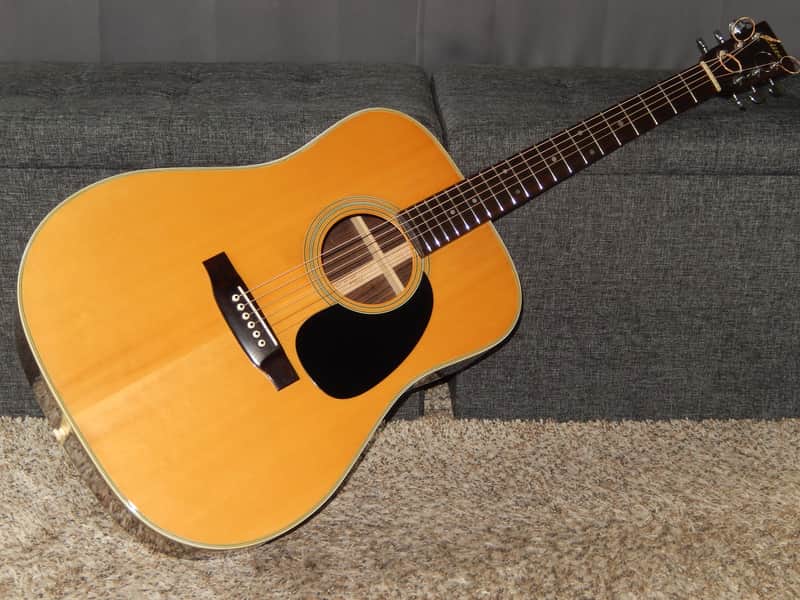
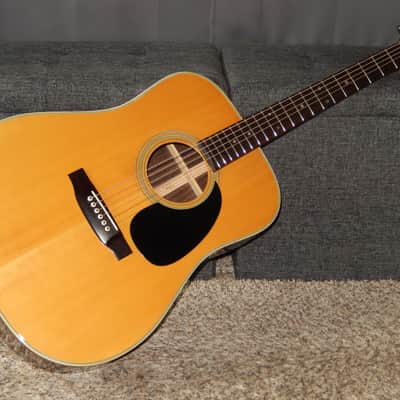
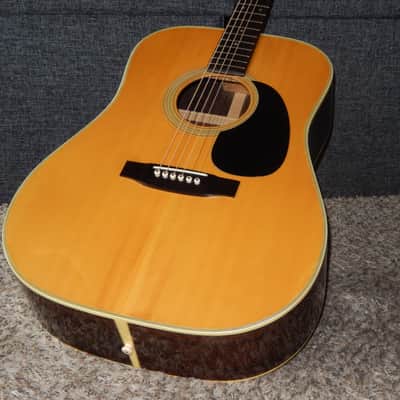
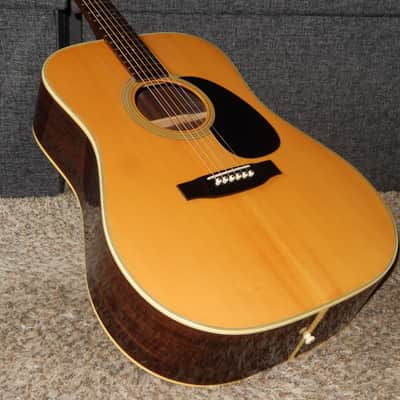
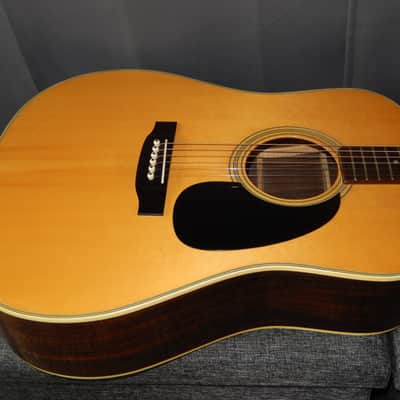
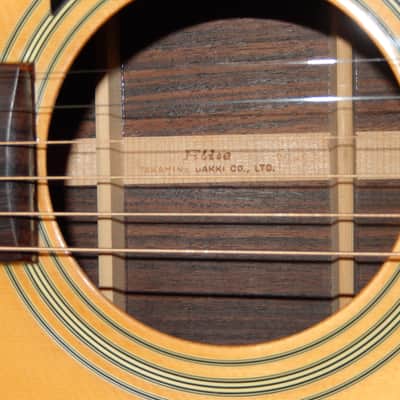
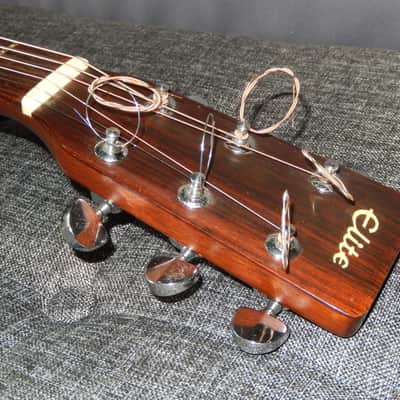
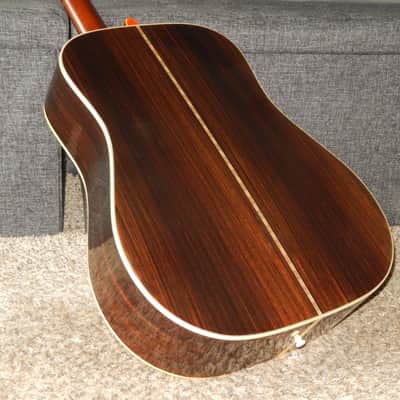
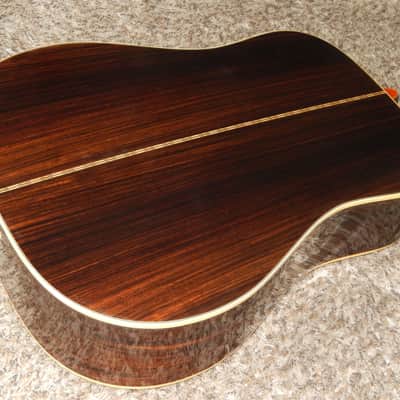
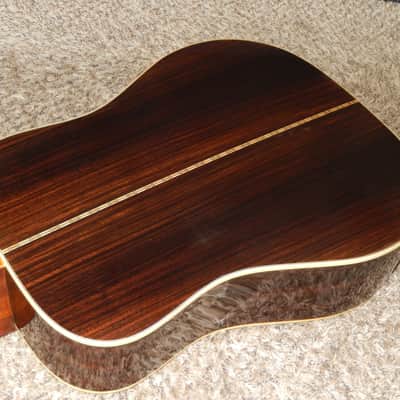
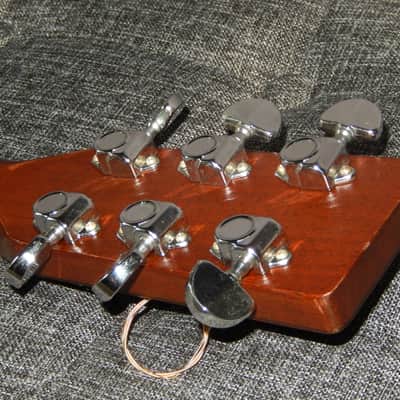
MADE IN JAPAN 1978 - TAKAMINE ELITE TW30 - SIMPLY TERRIFIC - MARTIN D28 STYLE - ACOUSTIC GUITAR
This seller has not set a shipping cost for Malta. Please contact them to ask about shipping.


Our users rate Reverb
Takamine Elite TW30
The terrific guitar was made in 1978, being the one of lower end models within Takamine Elite acoustic guitar series of that era.
Takamine started its Elite series in very early 1970s and ended it around 1978. While in the early 1970s model TW30 had solid top, by mid 1970s it was made with "laminated" top. If your ears are still working fine, you will hear how great these "laminates" really are.
So, this vintage TW30 1978 is an “all laminates” body guitar. Yet this body produces truly amazing sound, beating great majority of "all solid woods" guitars currently sold for $3500+ on US market. Yes, you'll hear it too.
It offers great volume and superb response. Its sound is moderately deep yet very rich. Basses are quite deep but also quite “clean”. Trebles are metallic but sweet at the same time. Individual notes are very well separated but hen chords and arpeggios are played guitar releases a good deal of overtones and harmonies, magnified by quite impressive sustain.
This guitar was priced 30 000 yen in 1978, when most solid top models were priced minimum 50 000 yen. Yet, it sounds better than many of these higher priced guitars.
In fact it sounds very close to this (made for export) C.F Mountain W500D guitar:
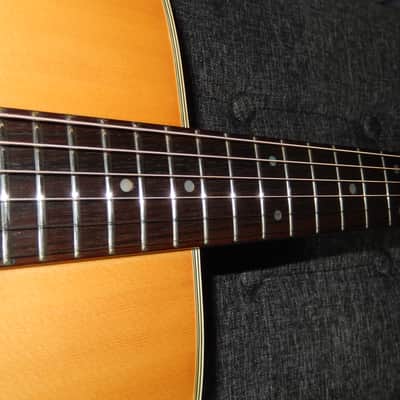
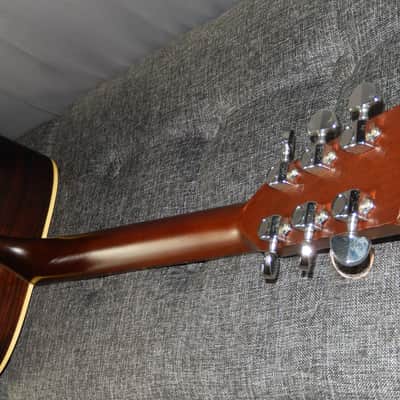
Despite few tiny marks within the finishes on its body, this guitar survived in “practically mint” condition. Its original tuners still look “close to new”. Its neck is straight, while its fingerboard and frets look “like never used”. With its quite low action it plays super easy.
Specifications:
Top: Spruce/ Martin style bracing with non-scalloped braces/ very thin coat of finish
Back & Sides: Rosewood/ urethane
Fingerboard: Rosewood
Neck: Nato
Scale 650 mm
Width at Nut: 42 mm
Its action is set to 2.50 mm under E6 and 2.00 mm under E1 with practically no extra room on the saddle
This guitar will be shipped in brand new Yamaha soft shell case.
IF YOU BUY A GUITAR, YOU MUST ANTICIPATE TAKING IT TO YOUR LOCAL GUITAR SHOP FOR FINAL ADJUSTMENTS CALLED “SETUP”. STRING BUZZ DOESN’T MEAN THAT GUITAR IS DEFECTIVE.
My posted for sale guitars are stored in climate-controlled vault already packed into shipping boxes, with loosen strings. Because the strings are loosened, they don’t pull the neck or soundboard, and the neck may relax (straighten more) and the soundboard flatten a bit, which may result with the string action being lower than my it was with my original settings and lead to buzzes and/or dead notes after guitar arrives to you. Such a change in neck curvature can also happen just because of vibrations during the shipment and/or temperature fluctuations. Therefore, you must be ready to make final action adjustment yourself and or have it done by professional. All that really needs to be done is the simple neck adjustment by using the truss rod (turning the truss rod counterclockwise will relief the neck and strings will move away from the frets).
THAT IS WHY TRUSS RODS ARE INSTALLED IN THE NECKS OF ACOUSTIC GUITARS!!!
Real Value of Japanese Vintage Guitars
The key to understand value of vintage Japanese guitars is to acknowledge galloping price inflation throughout the late 1960s and 1970s with its peak of 25% in 1974.
During 1960s and most of 1970s model numbers of Japanese guitars were strictly connected with their prices in Japanese yen.
The same class guitar sold in 1970 for 100 000 yen (labelled as model 10), would be sold for 150 000 yen in 1972 (labelled as model 15), 200 000 yen in 1974 (labelled as model 20) and 300 000 yen in 1978 (labelled as model 30). Therefore, you shouldn’t be surprised that two Yamaha GC10 guitars made 10 years apart are two instruments of totally different class. The same rule applies to all guitar models made by all other Japanese makers.
Japanese inflation slowed down in the 1980s. By the early 1980s and during following decades model numbers were no longer strictly associated with their prices. Some Japanese guitar makers introduced model names instead of model numbers. For several economic reasons, since 1980s Japanese made guitars were becoming more and more expensive, while their exports slowing down. Today (2025) Japanese high end classical guitar models are priced at $20000USD level.
This item is sold As-Described
This item is sold As-Described and cannot be returned unless it arrives in a condition different from how it was described or photographed. Items must be returned in original, as-shipped condition with all original packaging.Learn More.
| Listed | 5 years ago |
|---|---|
| Condition | Mint (Used) Mint items are in essentially new original condition but have been opened or played.Learn more |
| Brand | |
| Model |
|
| Finish |
|
| Categories | |
| Year |
|
| Made In |
|
| Body Shape |
|
Product safety information may be available here.

