
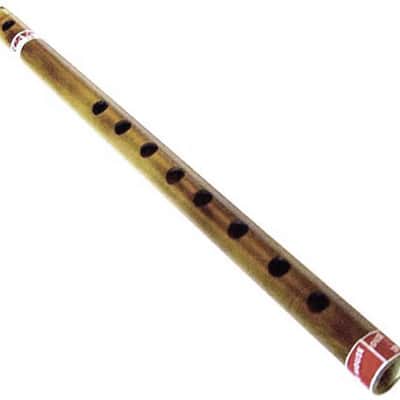
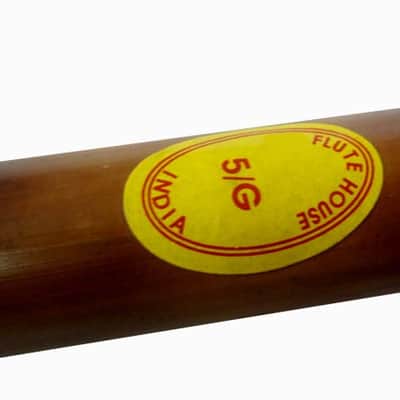


14-inch Indian Carnatic Venu Pulangoil Bamboo Flute in 5/G Sruthi. ALL TARIFF COSTS INCLUDED FOR USA
Our users rate Reverb
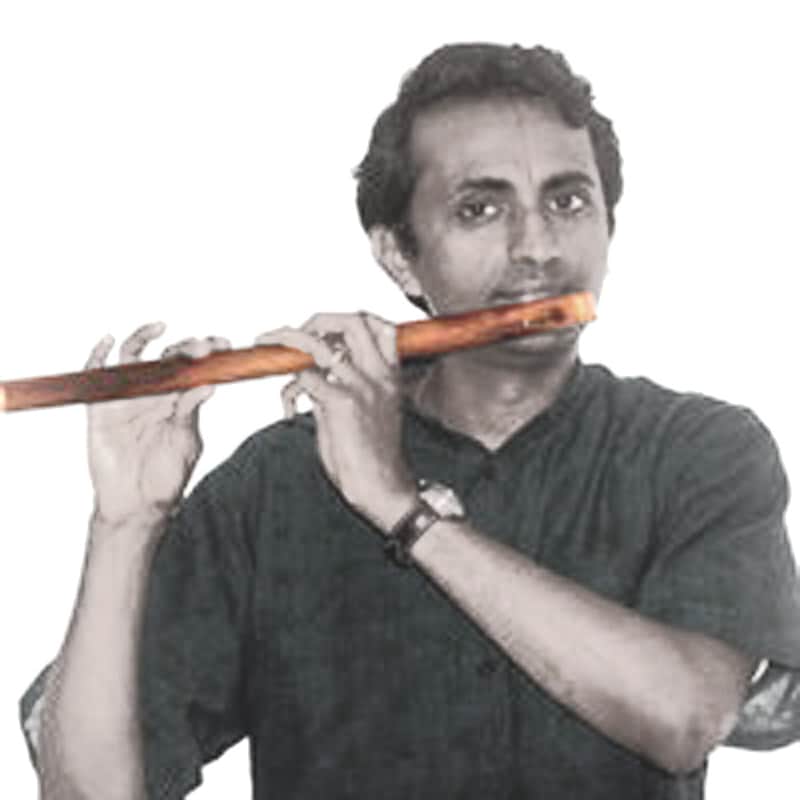
Very popular size and shruti - small and easy to play and used by famous Carnatic music professionals as illustrated in the photos.
Please note that this can take 2 weeks extra to prepare if not in stock, each piece is carefully handmade and baked. Special shrutisd and sizes available upon request.
Traditional "rough" construction with baked clay at one end of the smoked/burnt bamboo, fun DIY to use silk threads to decorate and strengthen the bamboo!
Tuning is perfect.
Small size, east to play and learn the complex fingering, perfect size for Carnatic flute beginners.
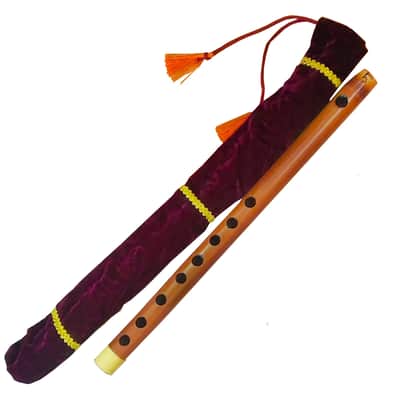
A velvet cover is provided for maximum safety
The venu (Sanskrit: वेणु; veṇu) is one of the ancient transverse flutes of Indian classical music. It is an aerophone typically made from bamboo, that is a side blown wind instrument. It continues to be in use in the South Indian Carnatic music tradition. In Northern Indian music, a similar flute is called bansuri.
Difference between Bansuri and Venu
Often beginners in India find themselves in a dilemma on what kind of flute to begin playing on as India has two distinct kinds of traverse flutes. They are the Bansuri (North Indian Bamboo Flute) and the Venu (South Indian Bamboo Flute). The main differences between these two are the raw material, construction and style of playing.
Raw material for Venu is thicker and denser and grows in Kerala. It is darker and produces clear and rich mellow tone. (Examples such as Shri Kudamaloor Janardanan, J.A. Jayanth, Dr. N Ramani etc. use the Carnatic Flute). Bansuri uses a thinner walled bamboo (but longer in length and diameter). It is lighter in color and produces an light airy tone (it is called Jawaari). This bamboo grows in Assam (Silchar)
Venu is constructed with 8 playing holes and 1 blowing hole. Of these 8 playing holes, 7 are actually used for playing and the last finger hole is used in tuning. Bansuri uses 6 playing holes and 1 blowing hole. There have been certain artists that have experimented with additional Pancham Hole (thumb hole to achieve the note Pa) and Teevra ma hole at the end. However, standard bansuri usually contains only 6 holes. These differences are mainly to accommodate the different styles of music that are played on it.
The Sa on Venu is achieved by closed the top 2 finger holes. On a bansuri the top 3 finger holes are closed to achieve this note. The way the notes are played is also slightly different. Carnatic music emphasizes the "gayaki style" or "the style of imitating the human voice". Hence the usage of gamakas and andolans require a nimble hold and a way to bend the notes smoothly on a Venu. Bansuri is more suited to Hindustani style of music due to its importance on long sustained notes and fast taans. These two instruments serve different styles of music and hence the difference in playing and construction.
| Condition | Brand New (New) Brand New items are sold by an authorized dealer or original builder and include all original packaging.Learn more |
|---|---|
| Brand |
|
| Model |
|
| Finish |
|
| Year |
|
| Made In |
|
Product safety information may be available here.

