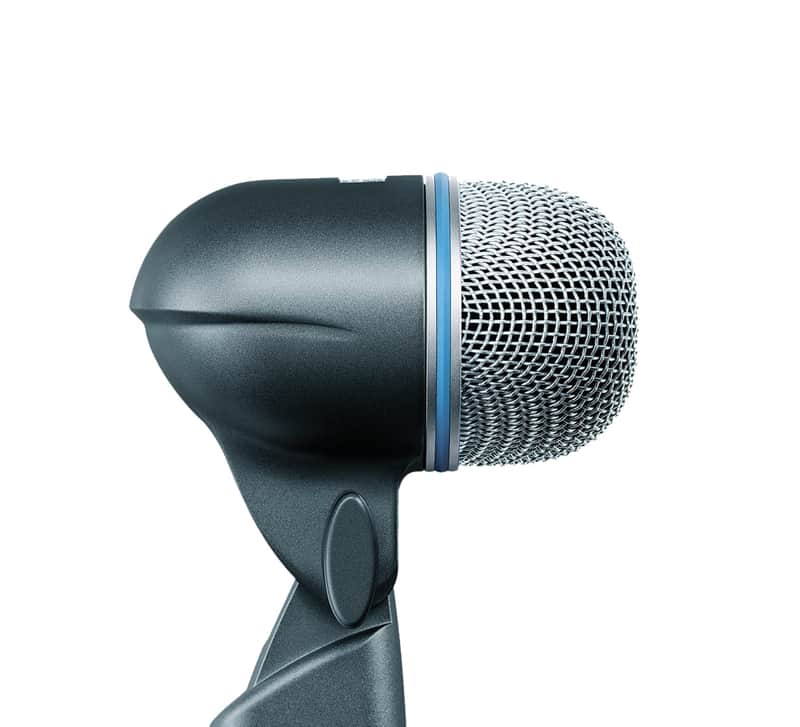
Shure Beta 52A Cardioid Dynamic Microphone
This seller has not set a shipping cost for Lithuania. Please contact them to ask about shipping.

Only 1 left
Grab it before it's gone


Our users rate Reverb
The Beta 52®A is a precision-engineered dynamic microphone with a tailored frequency response designed specifically for kick drums and other bass instruments. It provides superb attack and “punch,” and delivers studio quality sound even at extremely high sound pressure levels (SPL). An integrated, locking stand adapter simplifies mounting and adjustments.
Featuring a modified supercardioid pattern, the Beta 52A exhibits remarkable gain before feedback and excellent off-axis rejection. A hardened, steel mesh grille and die-cast metal construction withstands years of abuse, making it ideal for touring sound reinforcement.
Features- Premier live performance microphone with Shure quality, ruggedness, and reliability
- Modified supercardioid pick-up pattern for maximum gain before feedback and superior rejection of off-axis sound
- Tailored frequency response specifically shaped for kick drums and bass instruments
- Neodymium magnet for greater sensitivity and higher output
- Advanced pneumatic shock mount system that minimizes transmission of mechanical noise and vibration
- Dent-resistant, steel mesh grille and enamel coated die-cast metal construction resist wear and abuse
- Studio quality performance, even at high SPL
- Built-in stand adapter with dynamic locking system and XLR connector simplifies setup and provides greater flexibility
- Make sure microphone does not touch drum head or damping inside of the drum.
- Aim the microphone toward the desired sound source and away from unwanted sources.
- Place closer to beater head for more attack, further away for more resonance.
- Work close to the microphone for extra bass response.
- Avoid excessive handling to minimize pickup of mechanical noise and vibration.
The following table lists the most common applications and placement techniques. Keep in mind that microphone technique is largely a matter of personal taste; there is no one "correct" microphone position.
Application Suggested Microphone Placement Tone Quality Kick Drum 5 to 7.5 cm (2 to 3 in.) away from beater head, slightly off-center from beater. Sharp attack; maximum bass sound, highest sound pressure level. 20 to 30 cm (8 to 12 in.) from beater head, on-axis with beater. Medium attack; balanced sound. NOTE: To create a tighter sound with more “punch,” place a pillow or blanket on bottom of the drum against the beater head. Guitar & Bass Amplifiers 2.5 cm (1 in.) from speaker, on-axis with center of speaker cone. Sharp attack; emphasized bass. 2.5 cm (1 in.) from speaker, at edge of speaker cone. Sharp attack; higher frequency sound. 60 to 90 cm (2 to 3 ft.) back from speaker, on-axis with speaker cone. Softer attack; reduced bass. Avoiding Pickup of Unwanted Sound SourcesA supercardioid microphone has the greatest sound rejection at points 120° toward the rear of the microphone. Place the microphone so that unwanted sound sources, such as monitors and loudspeakers, are at these angles, not directly behind it. To minimize feedback and ensure optimum rejection of unwanted sound, always test microphone placement before a performance.
Recommended Loudspeaker Locations for Supercardioid Microphones
Proximity EffectUnidirectional (cardioid) microphones progressively boost bass frequencies by 6 to 10 dB below 100 Hz when the microphone is at a distance of about 6 mm (1/4 in.) from the sound source. This phenomenon, known as proximity effect, can be used to create a warmer, more powerful sound. To prevent explosive low frequency sound during close-up use, the bass response gradually rolls off. This provides greater control and helps the user take advantage of proximity effect.
Using the Stand AdapterThe integrated stand adapter resists slipping when struck or bumped, yet permits adjustments without loosening the knob.
- Thread the microphone onto the stand.
- Before tightening the adjustment knob, adjust the stand height and position as necessary.
- Tighten the adjustment knob to lock the microphone in place. Do NOT use tools or over tighten.
Dynamic (moving coil)
Frequency Response20 to 10,000 Hz
Polar PatternSupercardioid
Output ImpedanceEIA rated at150 Ω(45 Ωactual)
Sensitivityat 1kHz,open circuit voltage
-64 dBV/Pa(0.6 mV)[1]
Maximum SPL1 kHz at 1% THD, 1 kΩ load
174 dB
PolarityPositive pressure on diaphragm produces positive voltage on pin 2 with respect to pin 3
WeightNet
0.605 kg(1.35 lbs)
ConnectorThree-pin professional audio (XLR), male, balanced
HousingSilver blue enamel-painted die cast metal with hardened, matte-finished steel mesh grille
[1] 1 Pa=94 dB SPL
Typical Frequency Response
Typical Polar Patterns
Accessories Furnished Accessories5/8" to 3/8" (Euro) Threaded Adapter
95A2050
Storage BagZippered Carrying Bag
95A2324
Replacement PartsCartridge for BETA 52 and BETA 52A
R175
Grille for BETA 52A
RK321
Plug (Connector) Assembly
90J1984
Thank you for visiting our Reverb shop. Feel free to contact the shop directly for more information and deals!
| Condition | Brand New (New) Brand New items are sold by an authorized dealer or original builder and include all original packaging.Learn more |
|---|---|
| Brand | |
| Model |
|
| Finish |
|
| Categories |
Product safety information may be available here.

