JBL D130 1968 cream


JBL D130 1968 cream


Our users rate Reverb
JBL D130 since ca 1955
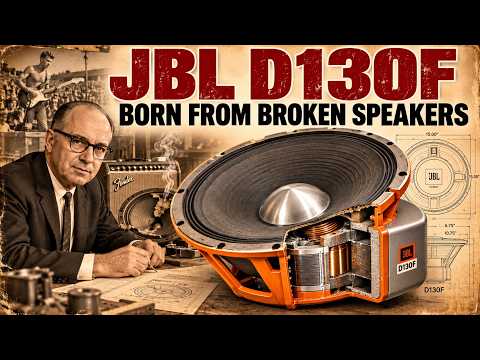
If one component can be said to embody the innovation, quality and attention to detail that defined JBL, it has to be the D130. This wide range 15" driver was introduced in 1948 and remains in production to this day as the updated E130. This driver was responsible for establishing the nascent James B Lansing Sound as a force to be reckoned with in the loudspeaker industry.
The D130 was the second low frequency loudspeaker introduced by James B. Lansing Sound after the D101 of 1946. It was personally designed and developed by James Lansing. It incorporated a 4" flat wire voice coil attached to a light, curvilinear cone with a 4" aluminum diaphragm instead of a standard dust cap to extend high frequency response. The coil was immersed in one of the strongest permanent magnetic fields yet developed for a loudspeaker. It resulted in a driver with outstanding sensitivity, range and dynamic response.
The 4" flat wire coil was the single most innovative feature of this design. It was the first low frequency driver to incorporate a coil of this large diameter. To achieve the maximum motor strength, the coil gap was designed to be a very narrow 0.05". The degree of precision necessary to maintain such a large, exact circular shape for both the coil and the gap was unheard of at the time. It was years before competitors were able to match this feat.
The advantages of this innovation are many. The large coil dissipates heat more efficiently, increasing power handling and reducing dynamic compression. The large coil also places more wire in the gap for fewer turns. This allowed the coil to use a single layer of wire that could fit in a narrower gap. The result is maximum utilization of the energy from the magnetic structure and maximum efficiency. Finally, the large diameter coil yields a stronger moving structure since the force applied to the coil is transferred to the cone over a larger area. The cone is therefore less prone to breakup.
There virtually is no loudspeaker market for which the D130 did not find application. In the 1950's through the 1960's, it was the loudspeaker that defined the home hi-fi phenomenon. It was used in more component hi-fi systems of that era than any other speaker. It was the workhorse driver used in James B. Lansing Sound's first commercial systems for the movie industry. It became a mainstay in the musician's market after Leo Fender incorporated a version of it in his early amplifiers. In the rock era of the seventies, it was common to see walls of D130's providing sound reinforcement at concerts.
Harman International, Courtesy Mark Gander and John Eargle
Dimensions:
Length 96 cm, width 63 cm, depth 29 cm
Weight: 32 kg
This item is sold As-Described
This item is sold As-Described and cannot be returned unless it arrives in a condition different from how it was described or photographed. Items must be returned in original, as-shipped condition with all original packaging.Learn More.
| Listed | 19 hours ago |
|---|---|
| Condition | Very Good (Used) Very Good items may show a few slight marks or scratches but are fully functional and in overall great shape.Learn more |
| Brand | |
| Model |
|
| Finish |
|
| Categories | |
| Year |
|
| Made In |
|
Product safety information may be available here.

