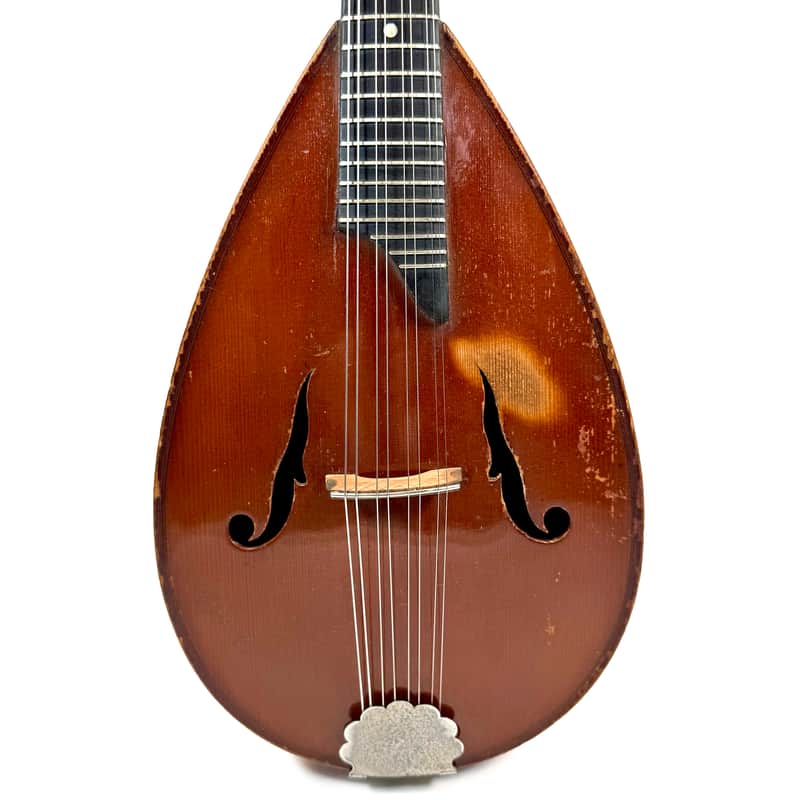
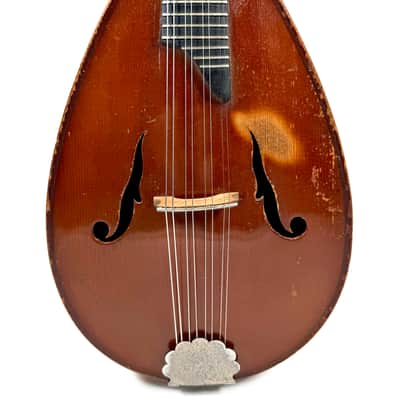
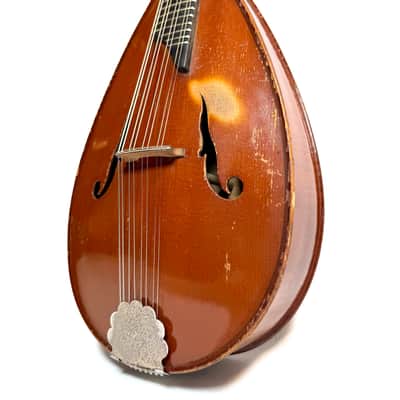
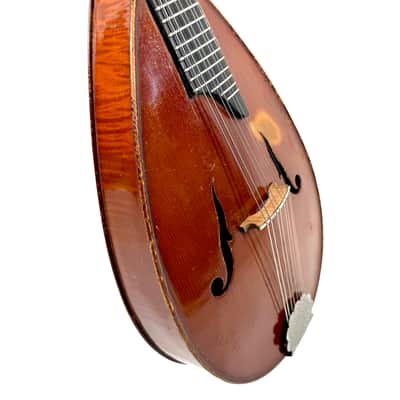
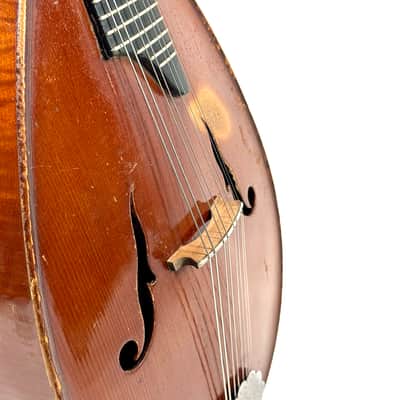
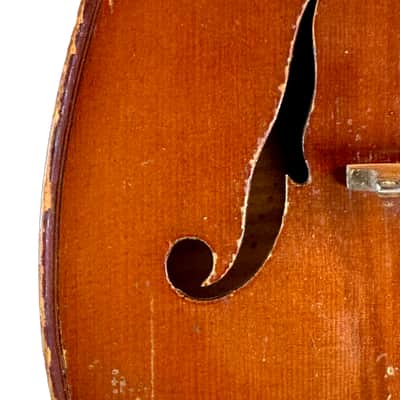
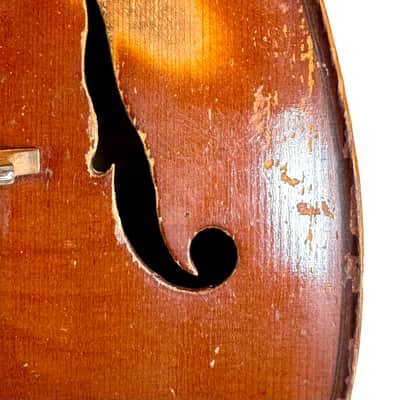
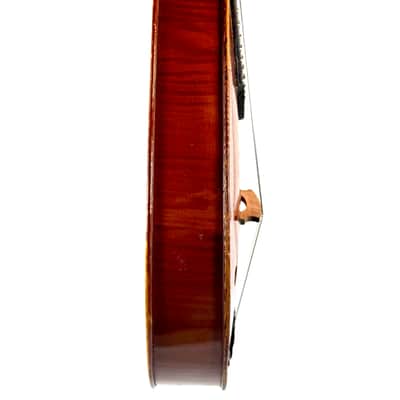
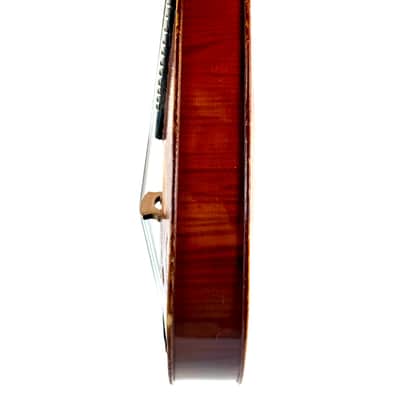
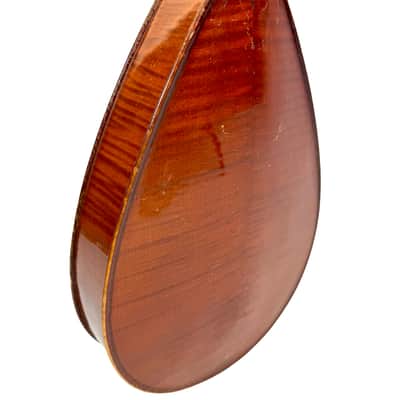
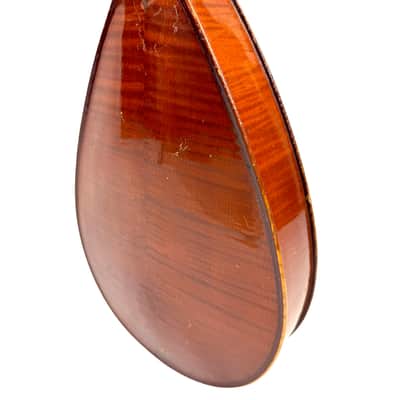
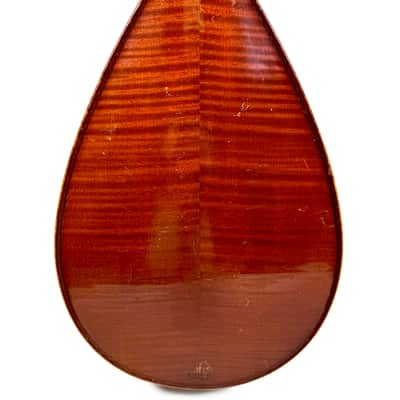
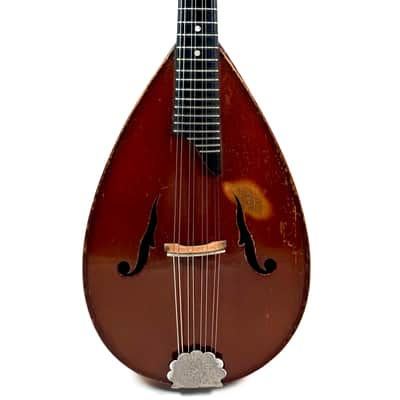
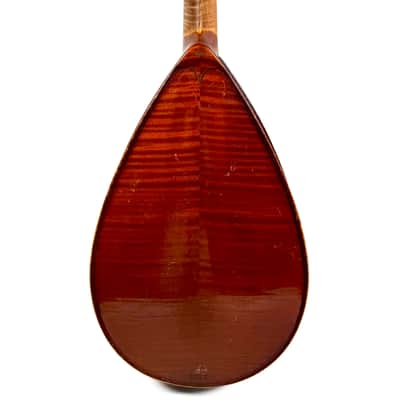
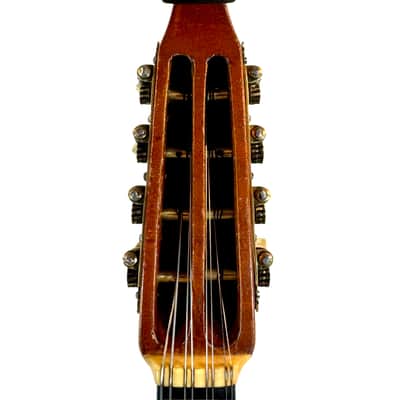
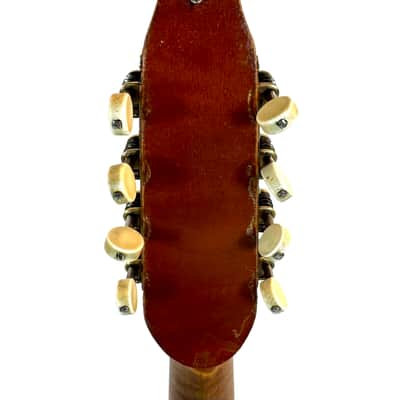
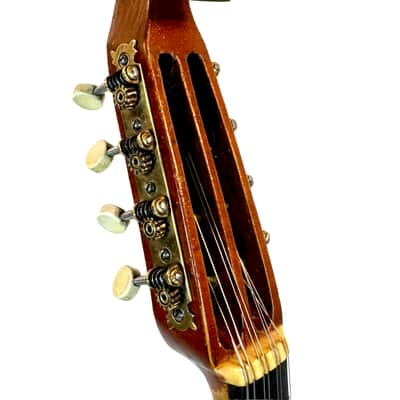
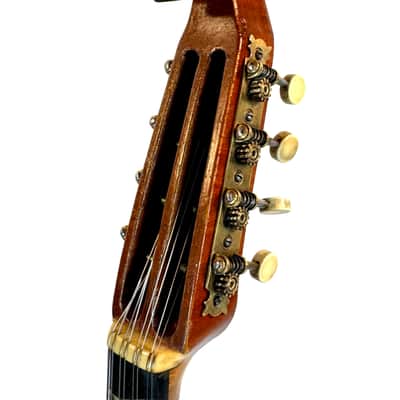
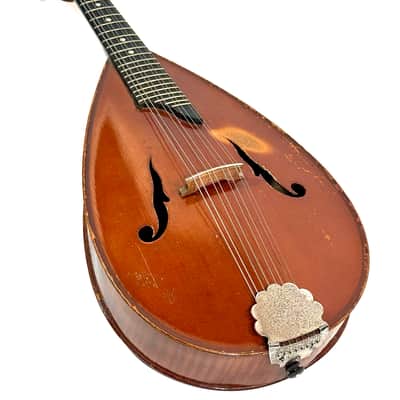
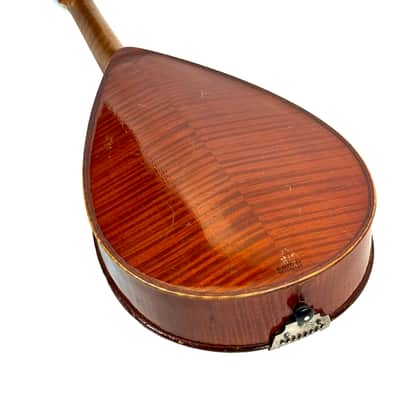
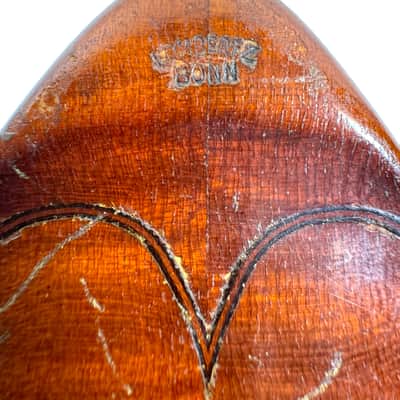
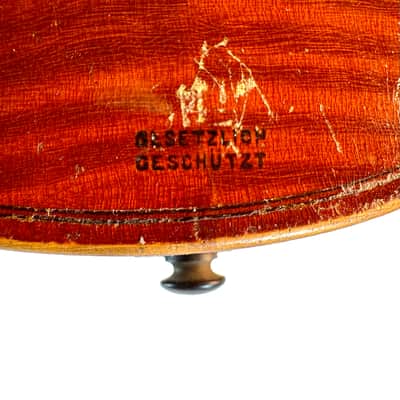

Concert Mandolin-Violin (Patented) Lambertz Bonn 1910’s / 1920’s


14-Day Return Policy
Enjoy peace of mind with your new gear
Our users rate Reverb
This Lambertz Concert Mandolin–Violin (patented), made in Bonn, belongs to the broad movement of organological experimentation that marked the late 19th and early 20th centuries in Europe—a period during which the rise of plectrum orchestras and mandolin ensembles encouraged luthiers to rethink the forms and sound projection of plucked string instruments.
In Germany, as in France and Italy, many craftsmen sought to modernize the mandolin in order to give it a stage presence comparable to that of the violin, the leading instrument of classical and concert ensembles.
Inely, the luthier Lambertz filed a patent in the early 20th century for a hybrid model combining the aesthetics, the structural construction of the body (bass bar and soundpost beneath the bridge), and the overall silhouette of the violin, while retaining plectrum technique and the tessitura specific to the mandolin.
This type of instrument was primarily intended for concert musicians seeking an ergonomics familiar to violinists, while preserving the rapid articulation and brilliance characteristic of the mandolin.
At the same time, luthiers such as Jérôme Thibouville Lamy in France, as well as several specialized German workshops, multiplied their research into new forms blending violin bodies with the acoustic principles of the mandolin, testifying to a genuine enthusiasm for these hybrid instruments fusing violin and mandolin.
The so-called “violaline” model, patented and distributed in France by the Jérôme Thibouville Lamy company between 1901 and 1912, perfectly illustrates this trend and confirms that the idea of an instrument merging mandolin and violin appealed equally to manufacturers and professional musicians.
The combination of excellent preservation and normal wear consistent with regular use clearly demonstrates that this mandolin–violin has been appreciated throughout its lifetime, and that it will undoubtedly continue to captivate musicians and enthusiasts today.
This Lambertz mandolin–violin thus belongs to the lineage of rare and inventive instruments designed to meet the growing demands for sound projection, playing comfort, and visual prestige in early 20th-century concert halls.
In short, this Lambertz Concert Mandolin–Violin from Bonn represents a rare and historically fascinating piece, ideal for a passionate musician in search of a distinctive instrument combining innovation, elegance, and true musical character.
Technical specifications:
- Top: Spruce
- Back: Flamed maple
- Sides: Flamed maple
- Neck: Flamed maple
- Fingerboard: Ebony
- Nut width: 27.5 mm
- Radius: Similar to a violin
- Frets: 23 frets
- Scale length: 332 mm
- Neck profile: V
- Country of manufacture: Germany
- Year: 1910s / 1920s
- Finish: Natural brown
- Ornamentation: White mother-of-pearl dot fingerboard markers
- Details: Normal wear and signs of use consistent with age / Head repair / Non-original bridge / Excellent overall condition
Like all our instruments, this mandolin–violin has been set up with great care.
It therefore offers outstanding playing comfort, with a low, very easy action, perfect, among other things, for fast solo playing.
The sound stands out for its precise attack, great clarity in the upper register, and direct projection, while retaining an elegant roundness inherited from the violin-type body.
The timbre is simultaneously bright, singing, and well balanced, making it ideal for both virtuosic passages and expressive melodic lines in a concert setting.
| Listed | 21 days ago |
|---|---|
| Condition | Very Good (Used) Very Good items may show a few slight marks or scratches but are fully functional and in overall great shape.Learn more |
| Brand |
|
| Model |
|
| Finish |
|
| Categories | |
| Year |
|
| Made In |
|
Product safety information may be available here.

