

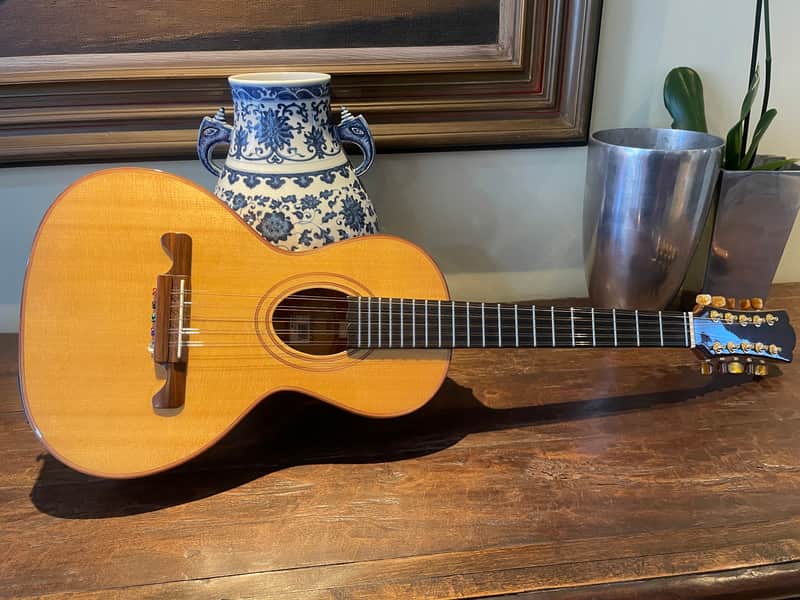
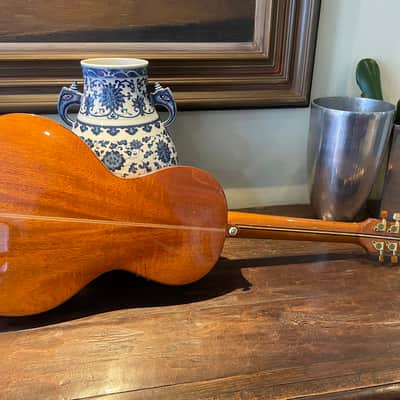
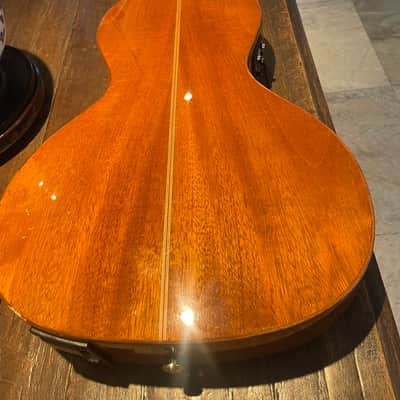
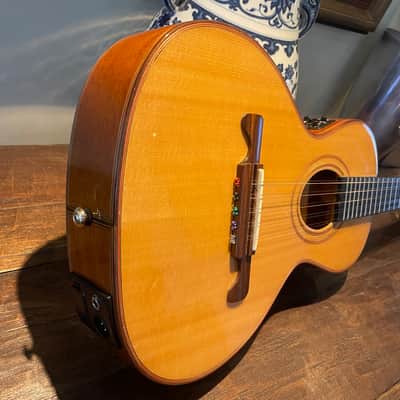
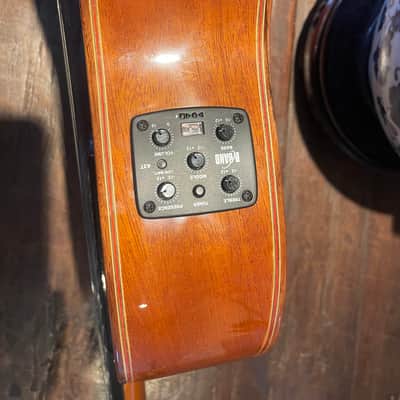
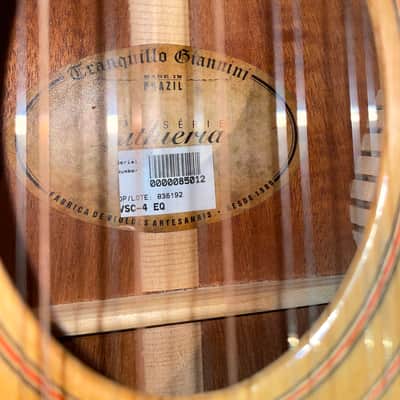

Brazilian 10 strings Guitar - Giannini Viola Caipira série Lutheria 2006 - Natural
Lo strumento è stato venduto
Vedi strumenti simili di altri venditori Reverb

I nostri utenti valutano Reverb
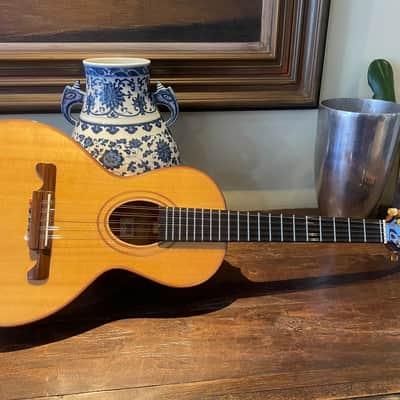
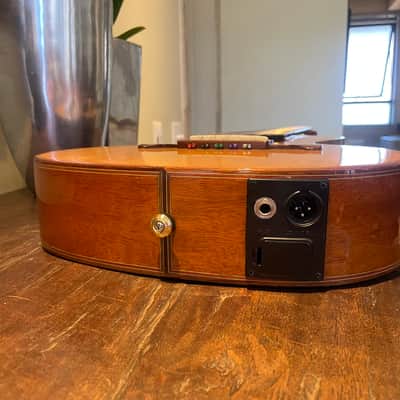
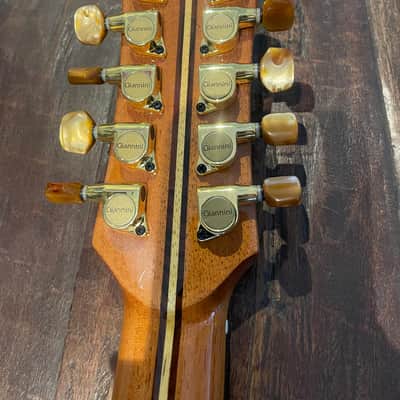
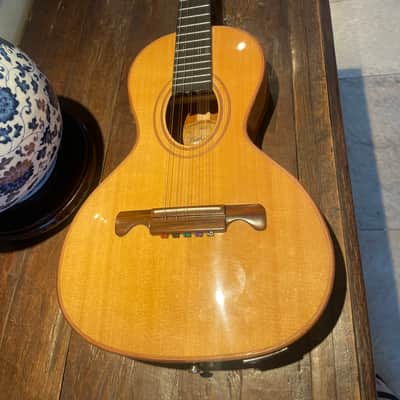
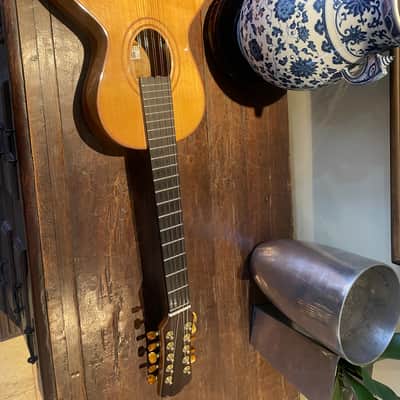
Traditional Brazilian 10-string guitar, known as viola caipira. Special series made by Gianinni luthier. Solid bottom and sides in Brazilian rosewood and solid pine top. Collector's instrument, comes with hard case.
Traditional Brazilian 10-string guitar, viola caipira is a instrument very similar to a baroque guitar actually, with a 5 course metal strings, with the strings arranged in pairs, like a lute.
Tunings for Viola Caipira:
The tunings for Viola Caipira have distinctive names that identify them. The most well-known ones include Cebolão (which can be in D or E major), Rio Acima, Rio Abaixo, and Boiadeira. Another tuning, Paraguaçu, is commonly used by repentistas in northeastern Brazil.
Cebolão Tuning in D
Cebolão tuning, as previously mentioned, has two variants: one tuned in D major and the other in E major. In D major tuning, the open string notes from the lowest to the highest, or from the first pair to the fifth pair, are: D, A, F#, D, and A. The diagram below shows the notation of the notes on the sheet music.
Cebolão Tuning in D
We notice that the open strings produce the D major chord (D,F#,A). The notes produced by the fifth pair are repetitions of the first pair, and the same pattern repeats between the second and fifth pair. However, in the fourth and fifth pair, there is an octave separation between the notes, giving the characteristic sound of the Viola Caipira.
Cebolão Tuning in E
Cebolão tuning in E follows the same logic as Cebolão in D, but in this case, each string is tuned a whole step higher, resulting in greater tension on the strings. Now we have the notes of the E major chord (E, G#, B). Thus, in the first pair, we have E, in the second pair we have B, in the third pair G#, in the fourth pair E again, and in the fifth pair B.
Boiadeira Tuning
Boiadeira tuning differs from Cebolão in D only in the tuning of the fifth pair, which instead of being tuned to A, is tuned to G. Therefore, the first pair is tuned to D, the second pair to A, the third to F#, the fourth to D, and the fifth pair, which characterizes Boiadeira tuning, is tuned to G. This results in: D, A, F#, D, and G.
Rio Abaixo Tuning
In Rio Abaixo tuning, the viola is tuned to G major (notes of the G chord: G, B, D). Therefore, the first pair is tuned to D, the second to B, the third to G, the fourth to D, and the fifth pair to G.
Rio Acima Tuning
Rio Acima tuning is quite different from the others. The first pair is tuned to E, the second to C, the third to G, the fourth to E, and the fifth pair to C. The chord produced by the open strings is C major (C, E, G).
Paraguaçu Tuning
Paraguaçu tuning, widely used by repentistas in northeastern Brazil, has the following tuning: the first pair tuned to D, the second to B, the third to G, the fourth to D, and the fifth pair to A.
Natural Tuning
Finally, we have the natural tuning which has the same notes as the guitar tuning. The first pair is tuned to E, the second to B, the third to G, the fourth to D, and the fifth pair to A.
Questo articolo è venduto "Come da descrizione”
Questo articolo è venduto "Come da descrizione" e non può essere restituito a meno che non arrivi in condizioni diverse da come è stato descritto o fotografato. Gli articoli devono essere restituiti nelle condizioni originali in cui sono stati spediti, con tutti gli imballi originali.Scopri di più.
| Pubblicato | 3 anni fa |
|---|---|
| Condizione | Eccellente (Usato) Gli articoli "Eccellenti" sono quasi completamente privi di difetti e altri difetti visivi e sono stati suonati o utilizzati con la massima cura.Scopri di più |
| Marchio | |
| Modello |
|
| Finish |
|
| Categorie | |
| Anno |
|
| Prodotto in |
|
Le informazioni sulla sicurezza del prodotto sono disponibili qui.