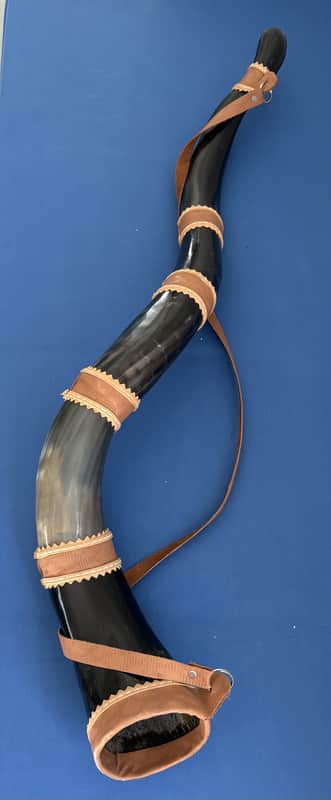
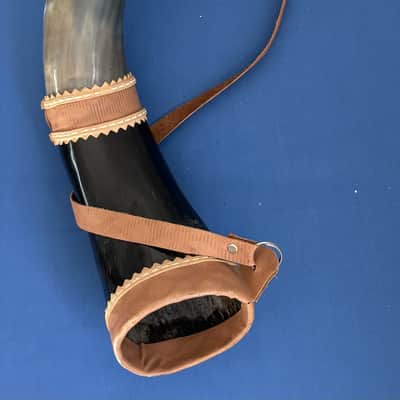
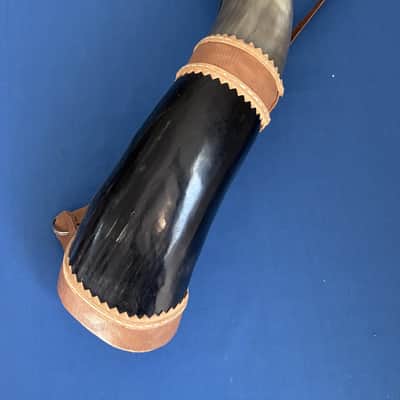
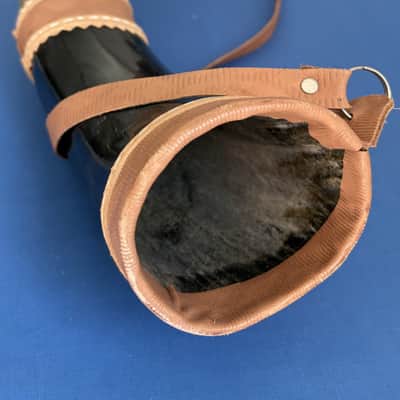
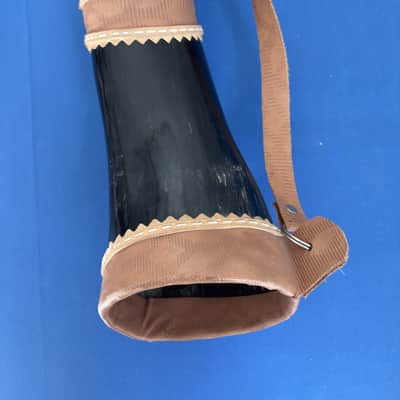
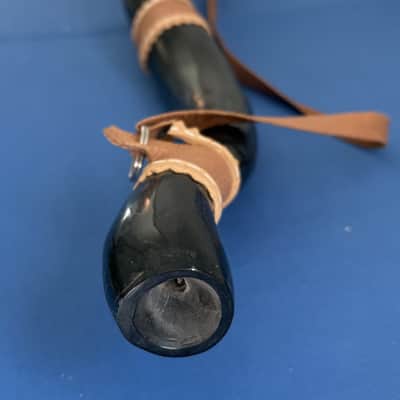
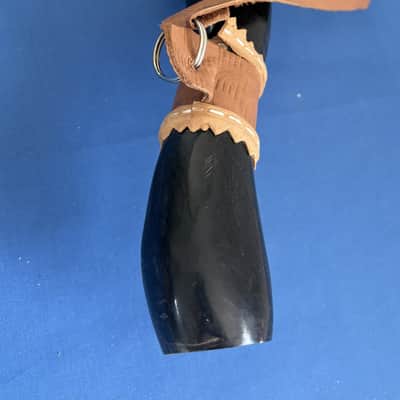
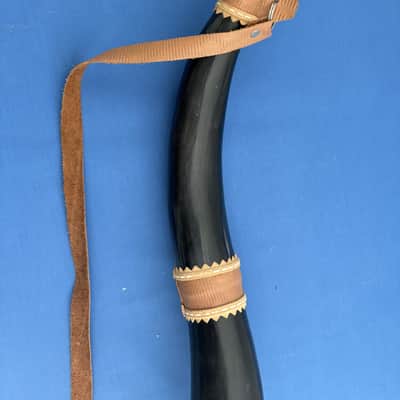
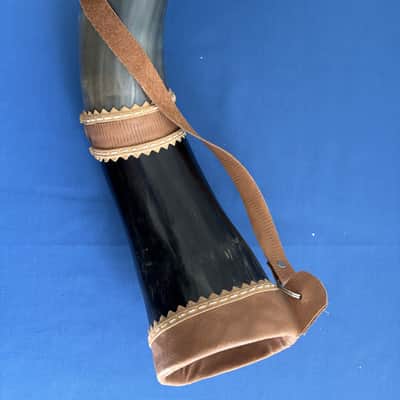
40" Brazilian Berrante Ox Horn Trumpet Handmade in 5 Horns and Leather Streaps

Our users rate Reverb
The deep and unique sound of the berrante horn can already be recognized from afar. It is the gateway to the deep traditions of rural cultures in Brazil. For this reason alone, you should find out more about this musical instrument on your next Brazil vacation to the more rural regions of the country
What is a berrante?
The berrante describes a traditional Brazilian horn that is often used in cattle breeding. Due to its particularly curved shape and structure, it differs greatly from other horns. The berrante horn is mainly used to guide herds of cattle and control the animals' attention. It is not only a practical tool for working in the pastures, but also a cultural symbol that represents the Brazilian cattle breeders' connection to nature and their craft.
Where does Berrante come from?
The roots of berrante can be traced back to the Brazilian ranching culture, "cultura sertaneja". During the 17th century, when Brazil was still a Portuguese colony, delegations crossed the country to bring cattle from one region to another. Over time, the cattle were taken from the coast further inland of São Paulo, Minas Gerais and Mato Grosso. Berrantes were used to keep the cattle together on this long and exhausting journey. The horns made it possible to "talk" to the animals and communicate with each other, as the deep sound of the berrantes could be heard for miles.
The blowing horn or winding horn is a sound device that is usually made of or shaped like an animal horn, arranged to blow from a hole in the pointed end of it. This rudimentary device had a variety of functions in many cultures, in most cases reducing its scope to exhibiting, celebratory or group identification purposes signal instrument. On the other hand, it has kept its function and profile in many cattle raising, agricultural and hunter-gatherer societies.
The oldest varieties were made of horns of Bovidae and wood. The earliest findings in Europe are Bronze Age metal horns, the strength of which resulted in its better endurance of the rigours of time. As a result, previous traces of other materials have vanished, so the oldest surviving animal horn dates back to the Late Iron Age in Visnum, Sweden. As big horned animals are rarely found in Scandinavia, blowing horns are often made from wood, wound birch bark or bout, called a "lur".
TERMS
You can email us with any questions. All items are
sold with a guarantee.
Items shown in the pictures, are the actual item you
will receive.
PAYMENTS
If your shipping address is different from that of the
billing address, we ask that the shipping address be officially
approved by you.
SHIPPING
We ship via USPS for Domestic and International
ALL CUSTOM FEES, DUTIES AND TAXES ARE BUYERS RESPONSIBILITY.
We usually ship within 1 business day of receipt payment.
If you have won or purchased multiple items, we will
gladly combine them to save you shipping costs whenever possible.
INTERNATIONAL SHIPPING
Import duties, taxes and charges are not included in the item price or shipping charges.
These charges are the buyer’s responsibility.
Please check with your country’s customs office to determine what these additional costs will be.
ABOUT US
We are generally online all day and try to answer all
questions in a prompt manner.
Because we take our role in the industry seriously
and listen to our customers, we have always been
dedicated to 3 principles:
GREAT PRODUCTS, GREAT PRICES AND GREAT SERVICES!
Thank You for visiting our store!
| Condition | Brand New (New) Brand New items are sold by an authorized dealer or original builder and include all original packaging.Learn more |
|---|---|
| Brand | |
| Model |
|
| Finish |
|
| Year |
|
| Made In |
|
Product safety information may be available here.

