
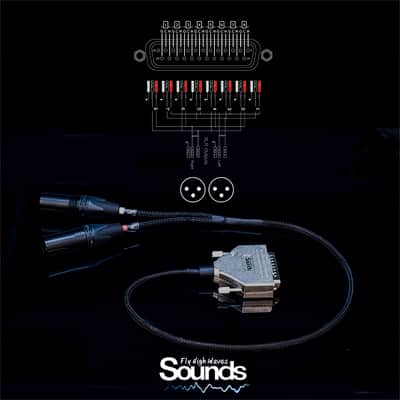
D-Sub Summing Cable 8 Channels Balanced Analog DAW Mixing Signals XLR
This seller is currently away
See similar gear from other Reverb sellers

Our users rate Reverb
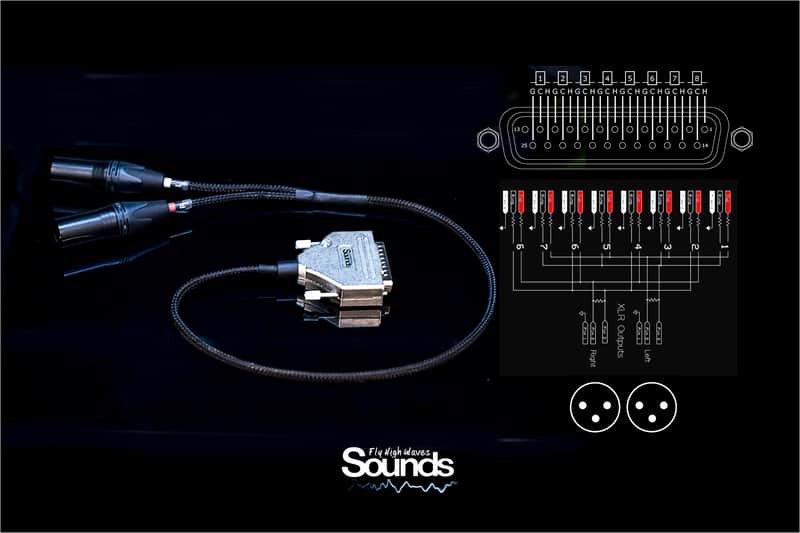
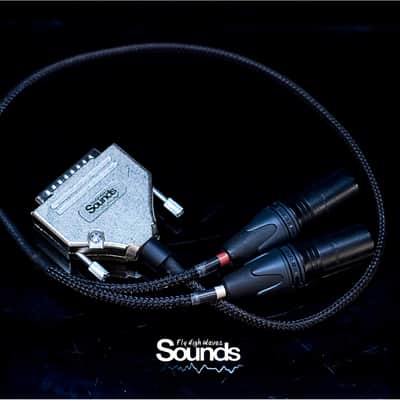
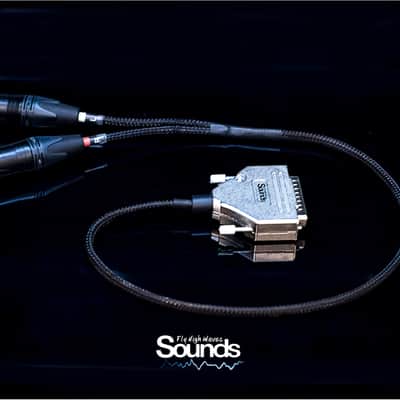
D-Sub Summing Cable 8 Channels Balanced Analog DAW Mixing Signals XLR.
Cable Version of the summing Boxes that we designed.Resistor network inside for summing 8 channels of analog audio signals into 2 Balanced XLR Outputs. Hand point-to-point soldering. Shortest signal path with precision resistors network bus. Marks or small imperfections may appear in the making process. Signal mixing using physical wires like in vintage & classic mixing consoles via buses. Limited Availability.
Specifications:
◉ Analog Passive
◉ Studio-grade
◉ Balanced
◉ Audio Grade Solder
◉ Mogami Made in Japan cable
◉ Input Impedance 10k balanced
◉ Output Impedance 160R balanced
◉ Crosstalk (1kHz) <-80dB
◉ 8 Inputs
◉ 2 XLR Outputs Neutrik
◉ Attenuation - 45dB ( Reamp on your choice )
◉ Load Impedance Range Recommendation 10 - 1.5k - 20k
◉ 15k (Standard mic preamp input)
◉ Source Impedance 100R (standard line output)
◉ Silver over chrome plating.
◉ Point to Point Soldering
◉ Screened
◉ Handcrafted in the UK
◉ All metal shell
◉ Free UK Shipping.
◉ International Shipping.
◉ Now you can add to your mix: Transparency, depth, panning, separation, DAW total recall, and Pure Analog signal mixing.
in the box
point an
◉ Pay for it , test it, keep it or return it. When is gone is gone. and Other models are available in Summing Box versions as well in Limited Editions. Please contact me via message if you have any ideas.
What is Analog Summing Anyway?
Before we dive into an explanation of analog summing, it's helpful to understand what analog summing is. Summing is the process by which all of the tracks and buses in a song are combined into one stereo track. This may sound a lot like the definition of “mixing,” but summing is a different process than mixing. Mixing is the work that a mixing engineer performs through level adjustments, panning, equalization, and so on in order to make a mix ready for release. Summing is simply the work that your DAW or console does to turn the different tracks that you have prepared with EQ and other effects into one stereo track.
For many people, the summing process occurs completely in the box and happens while bouncing down a final mix. You can choose to bounce it down in real time or expedite the process, but in either case, your DAW is crunching 1sEditions and 0’s to produce a stereo file. This is digital summing.
Analog summing is another way of producing a stereo track and would traditionally happen through the use of an analog mixing console bouncing down multiple tracks to a two-track tape machine. A traditional mixing console has many different components that are not related to summing -- preamps, equalizers, pan pots, etc. These features are helpful for a recording studio to have nonetheless because they enable recording and mixing. Because analog summing mixers don’t come equipped with these features which are found in large format consoles (preamps, EQ, etc.), they are sometimes jokingly referred to as “mixers that you can’t mix through.” This is perhaps an important consideration when looking into summing mixers for your studio: they are designed strictly for hybrid mixing setups (sometimes called “out-of-the-box mixing”) where most of the mixing is done in the box, but stereo groups are sent to the summing mixer and bounced down to a stereo track. If you want a full-featured analog console, look elsewhere.
It might also be helpful to mention what analog summing does in terms of sound. As I’ve said -- your DAW can already perform summing. If digital summing gets the job done, why would anyone care about analog summing? Proponents of analog summing often talk about certain sound qualities that can only be achieved in the analog domain. Using analog summing, the mix opens up in a way that can’t be achieved digitally and the different tracks seem to have a bit more separation, depth, and what is often referred to as a “3D” quality. While they can provide a nice touch to your tracks that you wouldn't be able to achieve otherwise, the effects of analog summing are all-in-all rather subtle. Compared to digital summing, we are certainly not talking about a night and day difference, or even the 5 PM/7 PM difference that is sometimes likened to different microphone preamps. In terms of workflow, you can route your groups through a summing mixer at the end of your mixing process, but it is probably more helpful to set it up at the beginning of a mixing session so that you can mix through it. "
This item is sold As-Described
This item is sold As-Described and cannot be returned unless it arrives in a condition different from how it was described or photographed. Items must be returned in original, as-shipped condition with all original packaging.Learn More.
| Condition | Brand New (New) Brand New items are sold by an authorized dealer or original builder and include all original packaging.Learn more |
|---|---|
| Brand |
|
| Model |
|
| Finish |
|
| Categories | |
| Year |
|
| Made In |
|
Product safety information may be available here.