Aria Pro II SB-1000 BB Noisekiller preamp replacement/upgrade 1977-1987


14-Day Return Policy
Enjoy peace of mind with your new gear
Our users rate Reverb
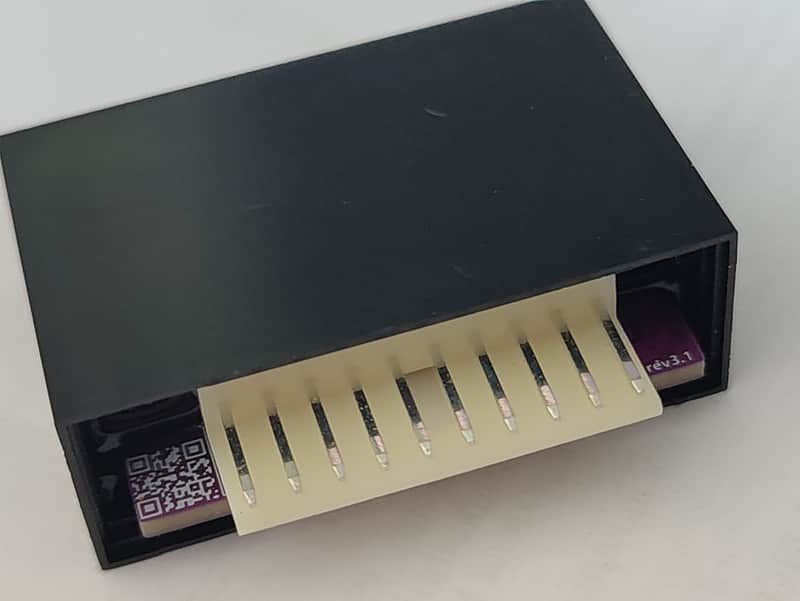
This listing is for a replacement 10-pin BB Noisekiller preamp for vintage late-1970s and 1980s Matsumoku-made Aria Pro II SB-1000 basses and other Aria Pro II instruments with the Noisekiller preamp system.
It is designed as a direct replacement for the original potted Aria Pro II preamp module, retaining the original function, connector format, tone and operation, using the best modern quality components and PCB manufacturing
The same preamp system was also used in a small number of related instruments with the Noisekiller system, including the SB-R150, SB-800, and the less commonly seen NK-700/NK-800 guitars.
This module is also suitable for custom active/passive hybrid instrument circuits where the original Aria Pro II-style balanced supply and noise-cancelling arrangement is being reproduced.
Why replace the original module?
Original Aria Pro II BB Noisekiller preamps are now 40-50 years old. Many have failed completely, and others suffer from inevitable age-related degradation and issues such as increased noise, weak output, or audible ticking from the LED/battery circuit in the 80s basses.
Aria Pro II did not offer these preamp modules as normal aftermarket replacements, so many SB-1000s have unfortunately been left with missing electronics, unsuitable replacement preamps, or simplified passive wiring that loses the original tonality of the bass. When the original BB circuit is removed, a large part of the SB-1000's distinctive response and versatility is lost.
This replacement restores the correct active circuit behaviour without requiring modification or physical repair to the original bass.
Compatibility
This preamp is compatible with original vintage 10-pin BB Noisekiller installations, including:
- 1978-1980 "Batwing" SB-1000 basses
- Later 1980s SB-1000 models with blinking LED battery indicator
- SB-R150
- SB-800
- NK-700 / NK-800 guitars using the same BB preamp format
The module is designed as a simple plug-in replacement. Installation simply involves unplugging the connector from the original potted preamp and fitting the replacement module.
This listing is not for the modern Aria Pro II SB-1000 reissue electronicsm as the reissue circuitry and connector arrangement are different. A reissue-compatible version is being developed separately and will be available soon.
Internal construction and component quality
The circuit has been modernised for long-term durability, reliability and consistency while preserving the intended function and tonal identity of the original design.
We use:
- precision Vishay metal-film resistors
- WIMA and Nichicon capacitors
- modern JFET-input op-amps
- professionally manufactured PCBs
- original-format 10-pin connector layout
- epoxy potting for protection
The goal of the preamp is not to turn the SB-1000 into a different bass, but to restore the original active system with higher levels of reliability, incredible low noise operation using stable modern components and consistent manufacturing.
The standard modernised version uses components and a design selected for correct operation from the original 18V battery supply. Vintage-style versions using JRC4558/NJM4558-type op-amps can also be supplied on request for owners who want a period-style specification.
Modern version vs vintage-style version
For most players and for studio work, I recommend the modern version. It offers:
- ultra-low noise performance
- stable modern components
- improved long-term reliability
- improved battery lifetime
For the strictest of restoration purposes, I can also provide a version closer to the original component specification. Both versions retain the original BB Noisekiller function and work with the original SB-1000 pickup, varitone and control wiring seamlessly.
Installation note
As per the originals, the preamp is epoxy potted to protect the circuit. The unit is supplied with an original specification 10-pin header. Remove the cable from the jack socket to isolate the battery supply before replacement.
If you are unsure on whether your bass is compatible or has been modified, send clear photos of your electronics cavity, original connector and wiring. I am happy to confirm and help diagnose issues.
Product FAQ
Can I upgrade a passive bass to active using this preamp?
Yes, but it is not a simple "drop in any bass" preamp. A custom installation normally requires:
- two 9V batteries for the original balanced 18V supply
- a switched DPDT jack socket for battery switching (Kobiconn or similar, ask for availability)
- suitable value volume and tone controls, around 20k-25k for low impedance operation
- space for the preamp module and batteries
- a suitable 10-pin connector (can be supplied on request)
I have used this circuit in multiple custom basses and guitars, but it should be treated as a specialist installation rather than a generic active preamp. That being said, it is incredible when implemented with the tone-shaping varitone.
Can the preamp run from a single 9V battery?
In practice, no. The original system uses a balanced 18V supply from two 9V batteries. While it is possible to create workarounds from a single battery, doing so compromises the intended supply arrangement, headroom and noise-cancelling behaviour. For reliable results, use the proper two-battery supply.
My bass has been completely gutted. Can I buy new pickups, controls and wiring?
Possibly, but a full restoration is more involved than replacing the preamp alone. I can provide most parts, but at this stage not entire drop-in electronics or pickups. Replacement pickups can be obtained from specialist makers such as Kent Armstrong.
The earlier late-1970s active-only SB-1000 wiring is simpler and can be reproduced with standard parts, and requires reasonable skills with a soldering iron and organisation of the wiring. The more complex arrangement of the 80s basses with the backup passive mode requires parts that are commercially impractical to source at small scale. In all fairness, the 70s circuit is more streamlined and focused on what the bass was designed to do best. Email me if you need help with restoration work.
My original LED circuit causes clicking or pulsing in the audio. Is that normal?
No. The blinking LED/battery circuit in the 80s basses (wrapped in electrical tape) becomes noisy as its parts age, and affects the audio operation of the preamp. The LED pulse can appear as an audible click, tick or pulse in the audio signal.
Replacing an old preamp module usually resolves this, as the design is more resistent to being affected by a faulty LED blinker circuit. I am in the process of designing a friendlier battery monitoring system to replace these old units, watch this space or email me for news.
-----
Customer Comments
- "it makes it (client's second-hand bass, repaired) sound just like the SB-1000 I had in 1981"
- "[the pre-amp] opened up [the bottom end] drastically and is a lot less muddy than with my original preamp. The high mids and highs are a lot cleaner as well"
- "I thought something was wrong because it was almost silent compared to how it used to be. I almost **** myself because I turned [the amp] right up before I played it!"
- "I haven't used the [rotary] switch for years after the old one crapped out on me and I forgot how deep the bass sounds"
- "Sweet and transparent and the clicking from the LED stopped"
| Condition | Brand New (New) Brand New items are sold by an authorized dealer or original builder and include all original packaging.Learn more |
|---|---|
| Brand | |
| Model |
|
| Categories | |
| Year |
|
| Made In |
|
Product safety information may be available here.