
Pineville, NC, United States
About this listing
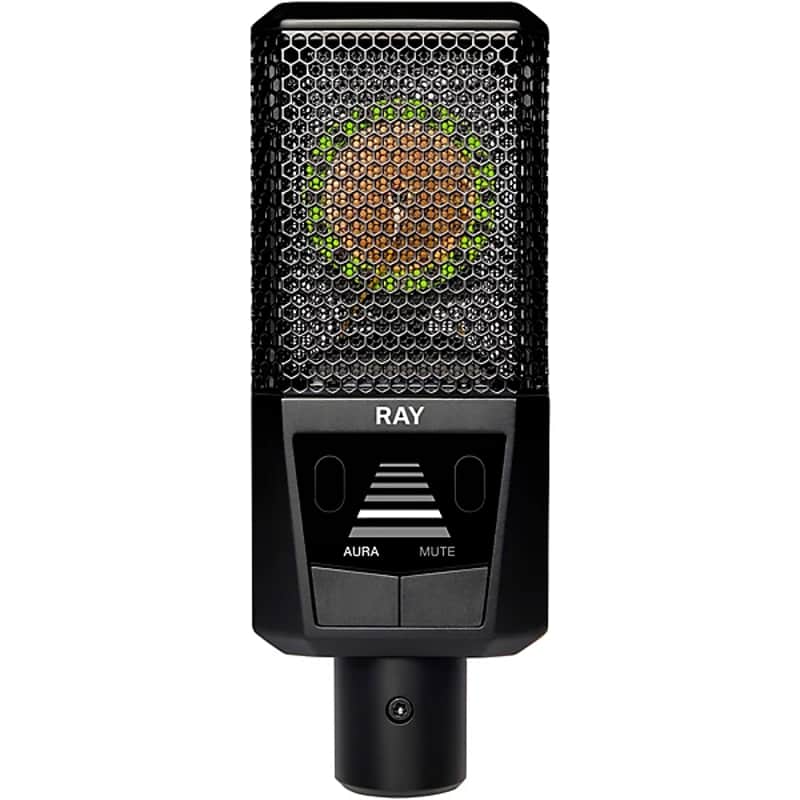
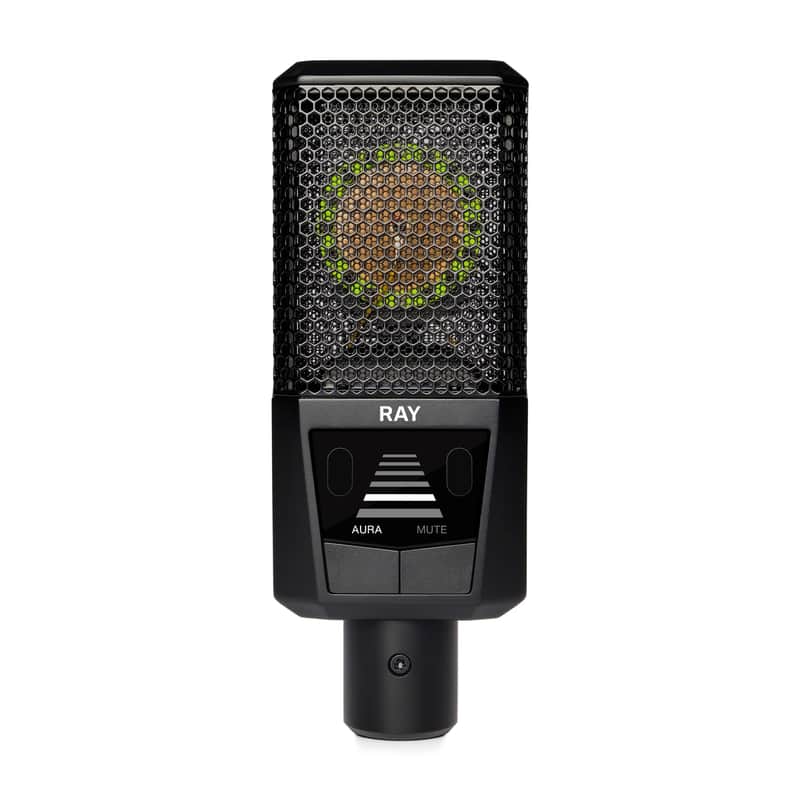
Lewitt RAY: The Condenser Microphone That Follows You
The Lewitt RAY is a large-diaphragm true condenser microphone with AURA auto-distance technology, a 1" (25 mm) cardioid mic that actively senses how far your voice is from it and corrects itself in real time. Where an ordinary microphone captures whatever hits the capsule and leaves the problems for you to fix later, the RAY measures the distance between you and the mic many times a second and uses that live information to keep your level steady and your tone natural — whether you lean in for emphasis or sit back to think. It is the microphone that stops fighting you and starts following you, so you can concentrate on what you are saying instead of how close you are sitting.
What a Large-Diaphragm Condenser Brings to Your Sound
A large-diaphragm condenser is the microphone type behind the sound most people picture as "studio" — full, detailed, and flattering. Its 1" (25 mm) diaphragm is thin and highly responsive, so it captures the fine detail, breath, and body of a voice or instrument that smaller and dynamic mics smooth over. Being a true condenser, it needs 48V phantom power to run its capsule, and in return it delivers high sensitivity (22.6 mV/Pa) and a wide, honest 20 Hz to 20 kHz frequency response. That is the raw material the RAY starts with — and AURA is what makes that studio-grade capture behave predictably in the real world.
The Problem Every Moving Talker Knows
Point a sensitive condenser at a person and one physical fact takes over: distance changes everything. Move closer and the proximity effect exaggerates the low frequencies, so your voice turns boomy and muddy; move away and you lose both level and low-end warmth, so you sound thin and distant. Most talkers move constantly — leaning into a punch line, turning to a co-host, gesturing, drifting back in a chair — and every one of those movements changes how you sound. The traditional fix is discipline: stay locked on the mic, or ride a fader and reach for EQ afterward. AURA replaces that discipline with technology.
AURA: How Time-of-Flight Distance Sensing Works
At the heart of the RAY is AURA, an onboard optical sensor that measures distance using time of flight — the same principle a laser rangefinder or a phone's face scanner uses. The sensor emits pulses of light and times precisely how long they take to bounce off the sound source and return; because the speed of light is constant, that travel time converts directly into an exact distance measurement. AURA does this continuously across a working range of roughly 2 to 40 inches (5 to 100 cm), so at every instant the microphone knows how far your voice is from the capsule. That single live measurement is what powers everything else the RAY does — instead of guessing from the audio signal, the mic is actually looking at where you are.
Automatic Level: Consistent Loudness, However You Move
The first thing AURA does with that distance reading is hold your perceived loudness steady. Sound naturally gets quieter as it travels, so leaning back would normally drop your level while leaning in would spike it. The RAY compensates automatically: as you move away it raises the level to keep you present, and as you move in it eases the level back so you never jump forward in the mix. The result is a consistent, broadcast-steady volume whether you are right on the mic or a foot and a half back — no compressor riding the peaks, no engineer chasing a fader, no listener reaching for the volume knob because you drifted off.
Distance-Reactive EQ: Killing Boom Up Close, Loss Far Away
Holding the level steady is only half the fix, because distance also changes tone. So AURA applies a distance-reactive corrective EQ that changes with how close you are. Up close, where the proximity effect would pile up boomy, muddy bass, the RAY rolls that excess low end back so your voice stays clear and articulate. Far away, where a voice normally goes thin and loses warmth and high-end detail, it compensates in the other direction to keep the tone full and natural. Because the EQ tracks your live distance rather than sitting at one fixed setting, the microphone sounds like the same you at two inches or twenty — the correction is always matched to exactly where you are.
MUTE by Distance: Hands-Free Muting by Leaning Away
AURA also drives one of the most genuinely useful features on any microphone: MUTE by Distance. You choose a threshold — 6, 12, 18, 24, or 32 inches — and when you lean past it, the RAY automatically mutes itself by about 70 dB, then un-mutes the instant you come back within range. Need to cough, sneeze, take a sip, talk to someone off-mic, or say something you do not want on the stream? Just lean back. There is no button to find, no fumbling for a mute switch mid-sentence, and no dead air where you forgot to un-mute. For gamers, streamers, and podcasters, it turns muting into a natural physical movement instead of a thing to remember.
Quiet, Detailed, and Ready for Loud Sources
All of that intelligence sits on top of a genuinely quiet, capable capsule. The RAY's self-noise is a low 8 dB(A), which means it captures soft, intimate speech and delicate detail with almost no hiss of its own — important precisely when AURA is boosting your level as you sit back. At the other extreme, a maximum SPL of 131 dB lets it handle loud sources, from a projected performance to a cranked amp, without distorting. Between that low noise floor and high headroom sits a wide dynamic range that keeps the microphone honest whether you whisper or belt.
XLR-Native: Built to Pair With an Interface
The RAY speaks the studio's native language: it has a standard 3-pin XLR analog output and runs on 48V phantom power, drawing about 7.2 mA. There is no USB port, and that is deliberate — an XLR mic plugs into a dedicated audio interface or mixer, which supplies the phantom power, adds a clean preamp, and hands high-quality digital audio to your computer. That pairing is exactly why a mic like the RAY belongs with an interface: the interface handles conversion and gain while the RAY handles the sound and the smart distance correction. If you are building a setup, think of the two as a matched pair — a capable audio interface is the natural companion that brings the RAY to life.
Who the Lewitt RAY Is For
The Lewitt RAY is for anyone whose voice moves. For the podcaster running a multi-person show, it keeps every host at a consistent level even as they lean in and out, and MUTE by Distance handles coughs and side chat hands-free. For the streamer and content creator, it delivers a full, professional condenser sound while quietly correcting the tone and level shifts that a live, animated performance produces. For the voiceover artist and musician, it captures detail and body with studio-grade quietness, then keeps that capture even as you work a phrase closer to or further from the capsule. And for anyone who has ever been told to "stop moving on the mic," the RAY is the microphone that finally makes that note obsolete — you perform, and it follows.
Price$349

Free 2-Day Shipping

30-Day Return Policy
Enjoy peace of mind with your new gear