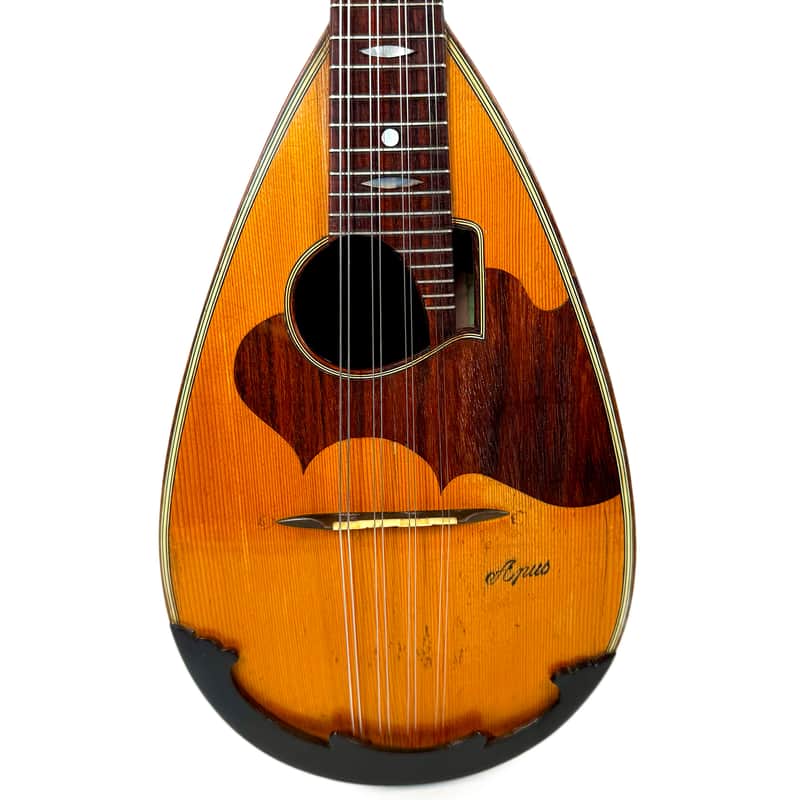
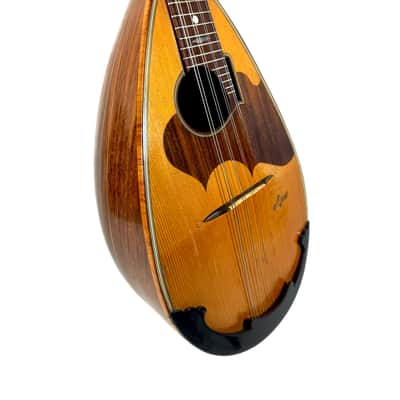
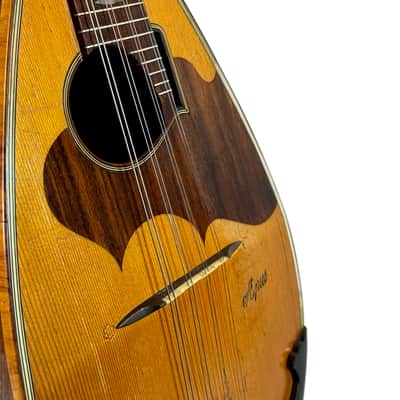
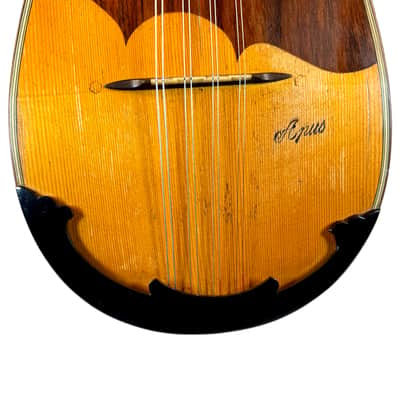
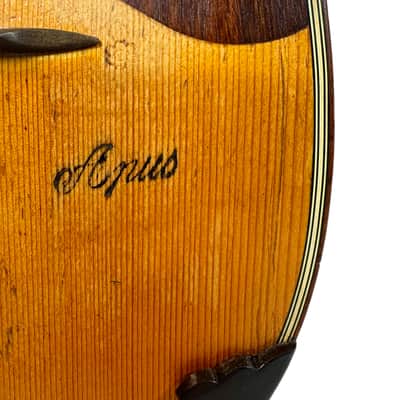
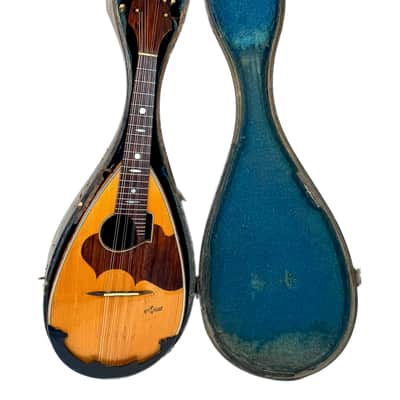
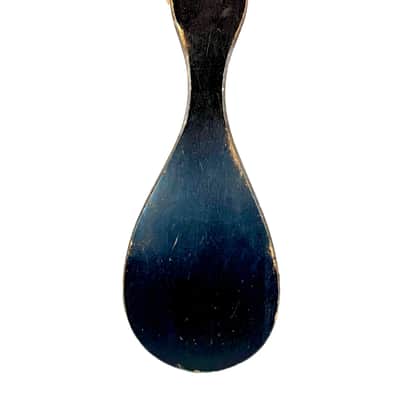

G. Kasermann Concert Mandolin (Apus Mark) 1920’s


14-Day Return Policy
Enjoy peace of mind with your new gear
Giovanni Käsermann (or Häsermann, 1881–1965), probably originally from Switzerland, is both one of the most important and one of the most overlooked figures in the history of the Neapolitan mandolin.
Beginning mandolin making with his brother in the early 1900s (under the name fratelli Häsermann), and the only luthier to have successively been the first craftsman (workshop foreman) for both Calace and Vinaccia, he continued, after his brother’s death, to work as an independent luthier at No. 112 Via Carbonara in Naples.
His distinctive style profoundly influenced Neapolitan mandolin making and spread far beyond the borders of Italy through his disciples.
Giovanni Käsermann’s style reuses the characteristics of Raffaele Calace’s instruments while simplifying them even further.
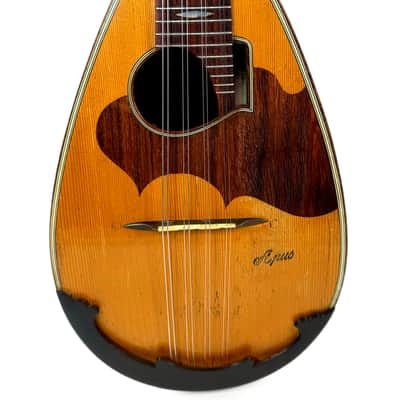
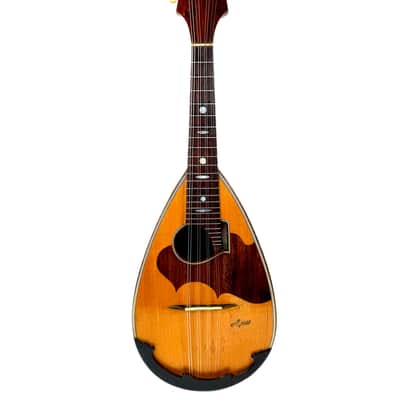
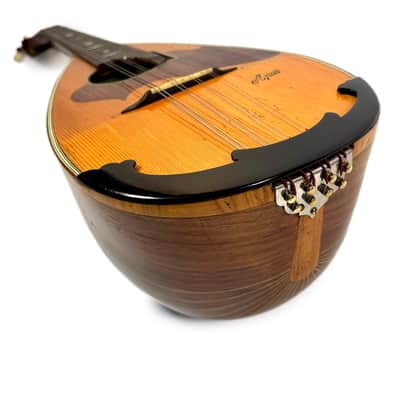
This instrument from the late 1920s features the D-shaped soundhole, which rounds out the bass response and improves the clarity of the trebles, as well as the right-offset pickguard popularized by Calace’s model #13, while stripping away its ornamental flourishes.
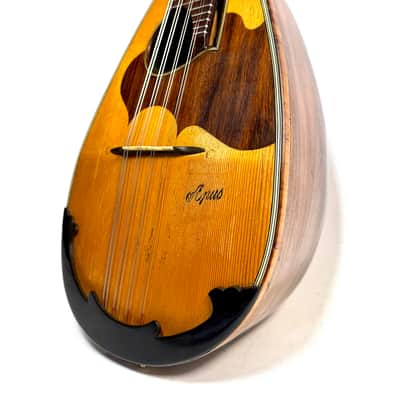
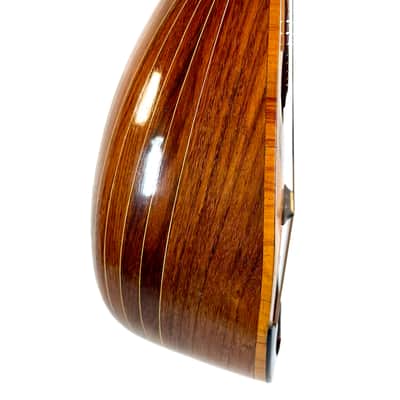
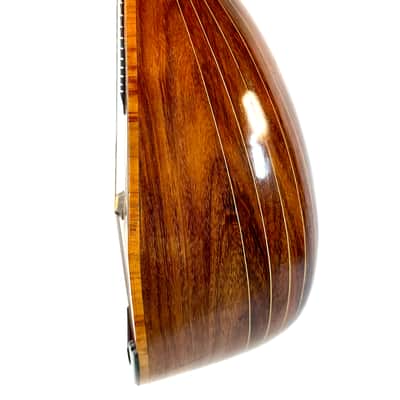
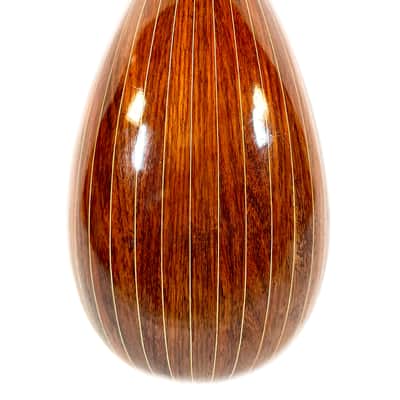
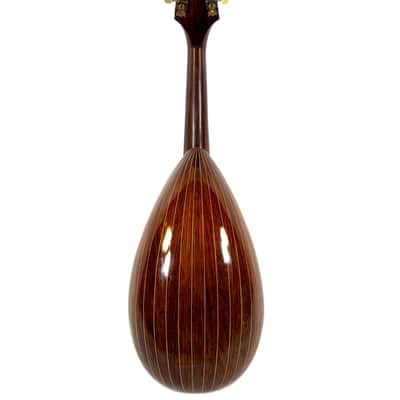
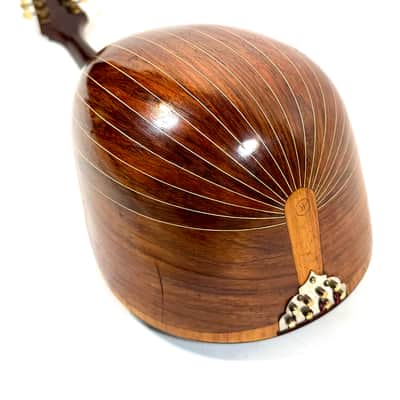
At the same time, the instrument retains the rosewood back typical of Neapolitan mandolins, unlike its twin labeled “Carlo Sartori,” which reflects the growing influence of Roman lutherie during the 1920s that placed maple backs on equal footing with rosewood.
Accustomed to producing instruments for other luthiers, Giovanni Käsermann exported part of his production to Germany, to the point of having a lasting influence on the style of German mandolins, which adopted this efficient, no-frills design focused on musicality.
It is even possible that many German luthiers today are unaware of the extent to which German mandolin design owes to the influence of Giovanni Käsermann.
Here, there is no possible doubt: this is an instrument bearing the master’s unmistakable signature, an assertive Italian character that translates Calace’s innovations with a corresponding level of craftsmanship and materials.
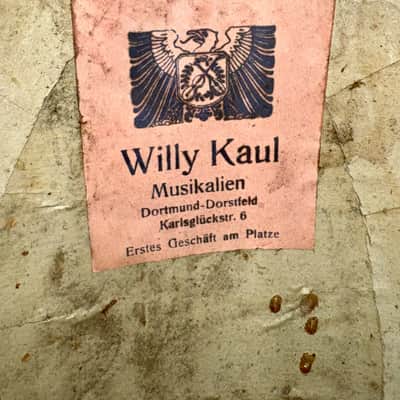
The name shown on the label, “Willy Kaul,” is that of the distributor who, by not mentioning the original luthier, ensured that the quality of the instrument would compel musicians to return to him to acquire others—a practice often used by distributors outside Italy to establish their own brand.
The enduring success of Giovanni Käsermann’s instruments lies in their ability to deliver the typically Neapolitan musicality of Calace instruments, with a comparable level of finish, at a lower price.
A formula that makes them particularly sought after today, especially since the instrument presented here is fitted with a concert fingerboard.
We guarantee that this mandolin was indeed made by Giovanni Käsermann in the late 1920s and that the instrument is authentic and structurally intact in all its parts.
In short, this late-1920s Neapolitan mandolin by Giovanni Käsermann perfectly embodies the union of the great Neapolitan lutherie tradition, the influence of Calace’s innovations, and a refined design focused on essentials: rich, expressive, and authentic musicality in the service of mandolin players.
Technical specifications:
- Top: Spruce
- Back: 19-rib rosewood bowl
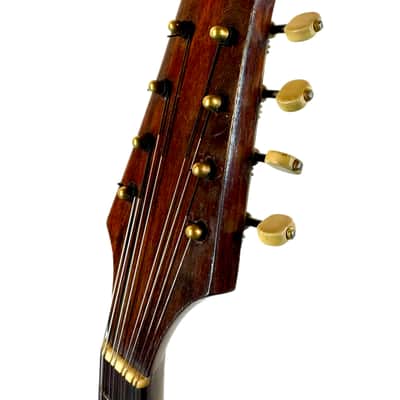
- Neck: Beech veneered with rosewood
- Fingerboard: Rosewood
- Nut width: 27.5 mm
- Radius: Flat
- Frets: 24 frets
- Scale length: 331 mm
- Profile: Neapolitan / Roman
- Pickguard: Rosewood
- Country of manufacture: Italy
- Year: 1920s
- Finish: Natural
- Ornamentation: Purfling along the top edge and rosette / Fingerboard markers in white mother-of-pearl dots and mandorlas
- Details: Normal wear and playing marks consistent with its age / Very good condition / Armrest tip repaired / In its original case
Like all our instruments, this mandolin has been carefully set up.
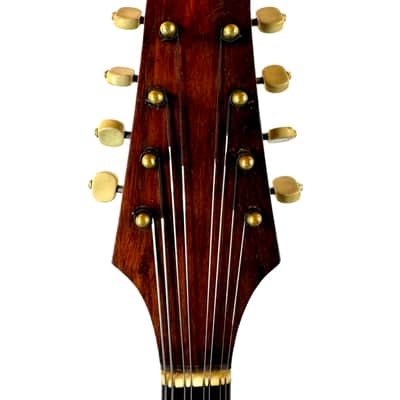
It therefore offers excellent playing comfort and is fitted with a set of flatwound Fisoma Supersolo strings.
The sound of this Neapolitan mandolin reveals round, deep basses combined with precise, bright, and perfectly defined trebles, offering clear and balanced projection ideally suited to both the classical repertoire and traditional Neapolitan music.
Its warm tone, rich in harmonics and endowed with great musical expressiveness, gives each note an elegant, singing presence that immediately captivates both the musician’s ear and that of the listener.
| Listed | 9 days ago |
|---|---|
| Condition | Very Good (Used) Very Good items may show a few slight marks or scratches but are fully functional and in overall great shape.Learn more |
| Brand |
|
| Model |
|
| Finish |
|
| Categories | |
| Year |
|
| Made In |
|
Product safety information may be available here.

