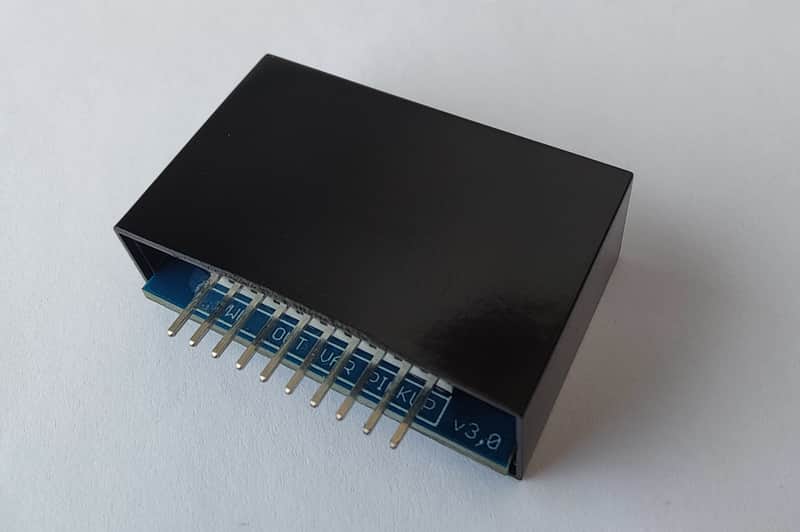
Aria Pro II SB-1000 BB Noisekiller preamp replacement/upgrade 1977-1987

Only 1 left
Grab it before it's gone


14-Day Return Policy
Enjoy peace of mind with your new gear
Our users rate Reverb
UPDATE: As of June 26th 2026 we are again able to ship to US customers!
This listing is for replacement pre-amps for vintage 70s-80s Matsumoku Aria Pro II SB-1000 basses. These pre-amps are straight swaps for the original part using identical design principles, but with circuit improvements and using the best modern precision components and PCB manufacturing available. The pre-amp was also found in the very limited SB-R150 and SB-800 basses in addition to the less well known NK-700/800 series of guitars. Beyond Aria Pro II instruments, this preamp can be used in custom hybrid electric circuits to eliminate hum and noise in most instruments provided they can be fitted with a switched jack and two 9v batteries.
-----
The components in the original Aria Pro II pre-amps are around 40 years old, far older than the decade or so they were expected to work for! Those that haven't failed have inevitable component aging and performance degradation. Original pre-amp circuits were never made available as aftermarket replacements meaning many vintage SB-1000s end up gutted of their active electronics, fitted with a different pre-amp (such as the modern Aria Pro II SB-1000 re-issues which are different ) or left to run as a simpler passive bass. Without the original circuit much of the versatility and distinctive SB-1000 sound owners hunt for ends up lost.
This version of the 10-pin BB Noisekiller pre-amp design is compatible with both the original 1978-80 "batwing" SB-1000 basses, the later 80s models with the blinking LED and other bass and guitar models featuring this preamp. Like the originals they are a plug-and-play design that only require that the connector be pulled from the old unit and pushed onto the new one. See note below about connector orientation.
-----
In the ~40yrs since the original SB-1000s were made, electronic components have improved in technology and quality by magnitudes. Our preamps are true to the original design's functionality and tone, but exceed originals in performance, audio quality and overall lifetime; the intrinsic sound of the pre-amp is the same, but with the bonus of increased reliability and fidelity, plus better battery lifetime. We opted to use the stellar Burr Brown OPA2227 for our modern version of the BB preamp, along with laser-trimmed metal film resistors, high-spec Japanese capacitors, turned pin IC sockets, heavy copper PCBs and larger grounding planes designed for maximum noise rejection.
For those that insist on absolute vintage reproduction purposes we can also offer pre-amps designed around the original JRC4558 chips and component types as per the originals. In general we recommend the modern variants over the original design every time, purely for the better performance across the board. If you absolutely need a preamp conforming to the original, ping us a message.
-----
As per the originals, pre-amps are epoxy potted to protect the circuit. Pre-amps are supplied with an unkeyed 10-pin header. Ensure that the pre-amp is oriented in the same direction as the previous unit when plugging in the connector, ie. PCB the same side of the connector. All pinout labels are printed onto the PCB however confirmation of orientation can easily be made via email if you want to send photos.
-----
Product FAQs
Q. Can I upgrade a passive bass to active using these preamps?
A. Yes. The only caveats being that you will need to swap out your volume and tone pots to lower values (20-25k) and fit a switched DPDT jack socket to manage the 2x 9v battery supply. A Molex KK or TE CST-100 connector is all you need to fit the pre-amp. These are available from electronics suppliers or here on eBay also. You will of course also need space for the batteries and pre-amp which are generally not as easy to acquire! Gotoh dual battery boxes are a nice option, and generally the preamp itself seats on the rear of a cavity plate. I've fitted several instruments with SB-1000 type circuits from custom 5-string basses to Telecasters.
Q. Can the pre-amp be run on a 9v supply?
A. Yes and no but mostly "no". The pre-amp works on a balanced supply hence the two batteries. Whilst it is possible to fudge a solution to use only one battery, the impact on the noise cancelling capability and overall signal headroom make the negatives outweigh the positives. It's easier to work with "no" than the headaches associated with a poor "yes"!
Q. I bought my bass with the pre-amp missing. Which way around do I fit this pre-amp?
A. The three pins marked "PWR" on the pre-amp PCB correspond to the three wires that supply voltage. These lead to the switched jack socket. The red and blue wires should lead to two of the jack socket tags whilst the orange leads to the batteries. The pins on the opposite side "PICKUP" lead to the either the switch in the 80s basses or straight to the pickup in 70s basses.
Q. My bass has been completely gutted! Can I buy new pickups, electronics, etc?
A. Ouch. Well, retrofit pickups can be bought from Kent Armstrong in the US. The electronics are a bit more difficult. The stacked pots in the 1981-1986 SB-1000 are impossible to buy outside of a custom order of a few thousand (!!) however sometimes we have replacements, but very rarely. The varitone and rest of the electronics loom can be reproduced, but the downside is that the complex nature of the electronics and large amount of time involved means they're not a cheap proposition. 1977-1979 SB-1000s (active only) were much simpler and can be reproduced using standard components, however the varitone is still a bit of a time/money sink. As you'd expect, retrofitting is easier done with the bass on the bench so we don't offer drop-in looms any more. By all means drop us an email for advice and we'll always help as best we can with guidance on restorations.
Q. My battery LED circuit is causing clicks in the audio. Is this normal?
A. No, or at least it is not what is supposed to happen of course. Component aging causes components such as the capacitors to leak current or other unwanted things. The upshot of this is that the LED blinker circuit (the one wrapped in electrical tape) injects noise spikes onto the pre-amp supply, which is then pushed onto the audio signal as clicks or "pulses" if the preamp's supply smoothing components are also leaky.
-----
Customer Comments
- "[the pre-amp] opened up [the bottom end] drastically and is a lot less muddy than with my original preamp. The high mids and highs are a lot cleaner as well"
- "I thought something was wrong because it was almost silent compared to how it used to be. I almost **** myself because I turned [the amp] right up before I played it!"
- "I haven't used the [rotary] switch for years after the old one crapped out on me and I forgot how deep the bass sounds"
- "Sweet and transparent and the clicking from the LED stopped"
| Condition | Brand New (New) Brand New items are sold by an authorized dealer or original builder and include all original packaging.Learn more |
|---|---|
| Brand | |
| Model |
|
| Categories | |
| Year |
|
| Made In |
|
Product safety information may be available here.