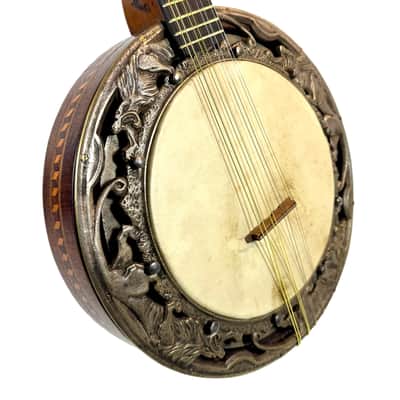
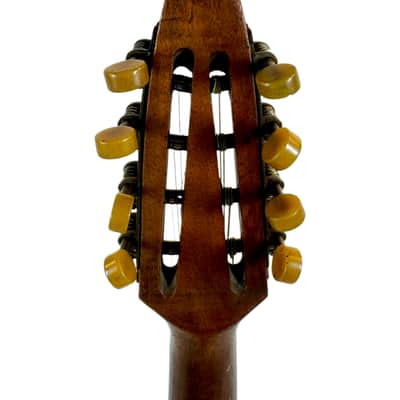
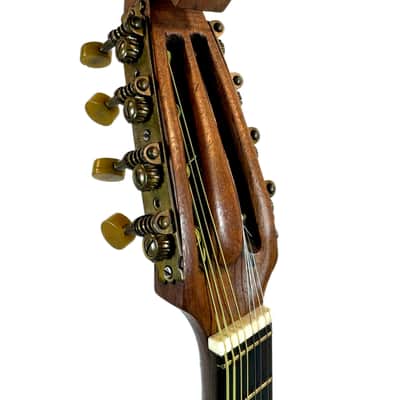
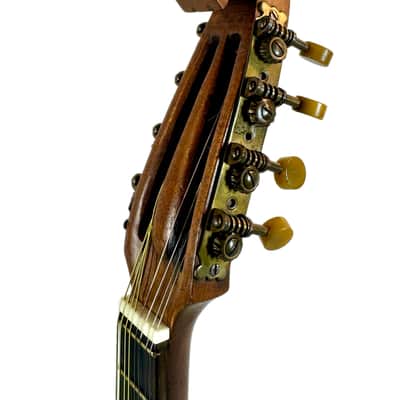
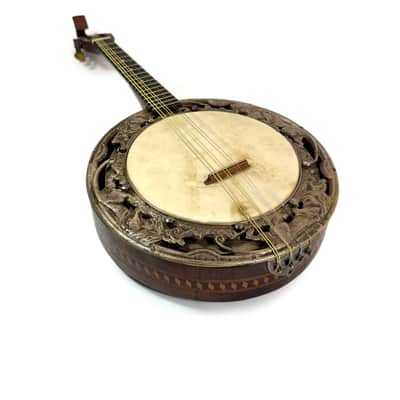

"Stentor" Art Nouveau Banjo-Mandolin with Lion-Decorated Tension Hoop, 1920s


14-Day Return Policy
Enjoy peace of mind with your new gear
Our users rate Reverb
Born from the meeting of the European mandolin and the banjo popularized at the end of the 19th century, the banjo-mandolin first established itself in the Anglo-American world before enjoying wide circulation across Europe around the turn of the 1900s, thanks to its powerful sound, crisp attack, and an aesthetic that was as appealing as it was functional.
Its principle is simple and formidably effective: retaining the mandolin’s tuning and playing technique while benefiting from the immediate projection of a stretched skin over a circular rim, perfectly meeting the expectations of parlour musicians, plectrum orchestras, popular ensembles, and the dance repertoires then flourishing.
At that time, the banjo-mandolin accompanied the international craze for mandolin ensembles, light music, entertainment repertoire, and plucked string instruments capable of carrying clearly in group settings.
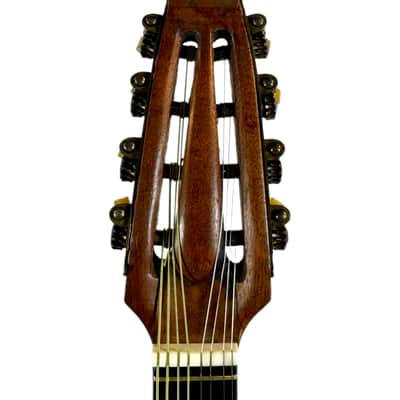
During the 1910s and 1920s, many workshops and trade houses offered their own variants, often richly decorated, blending Art Nouveau and later Art Deco influences, ornate metalwork, engraving, finely shaped pegheads, and elaborately detailed tension hoops designed to appeal as much to the eye as to the ear.
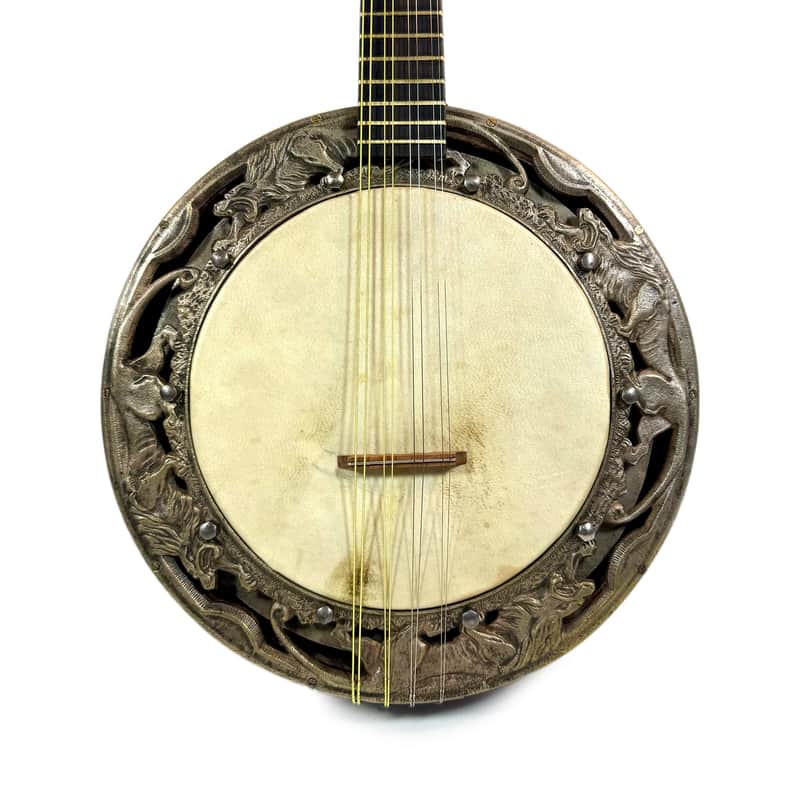
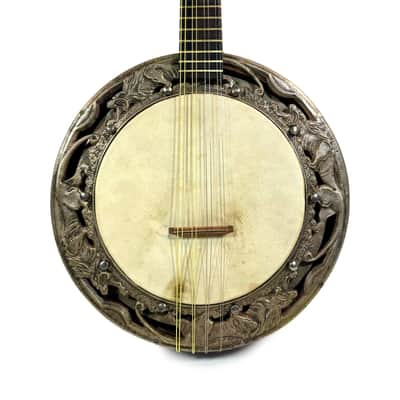
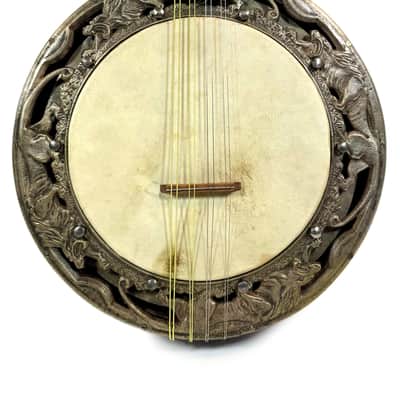
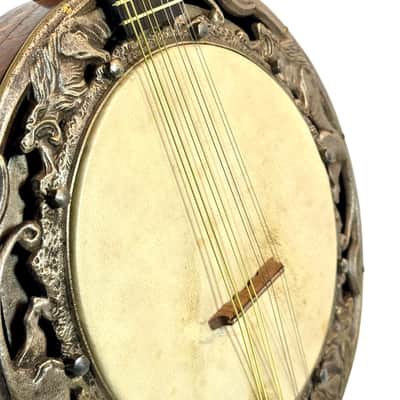
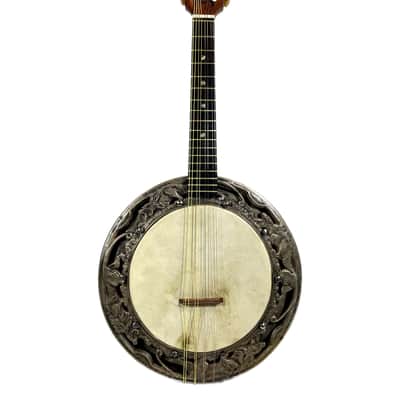
This 1920s "Stentor" Banjo-Mandolin fits squarely within that decorative and musical tradition, with a particularly distinctive visual personality marked by its Art Nouveau aesthetic and its rare tension hoop adorned with roaring lion motifs, a striking detail that immediately reinforces its collector’s appeal.
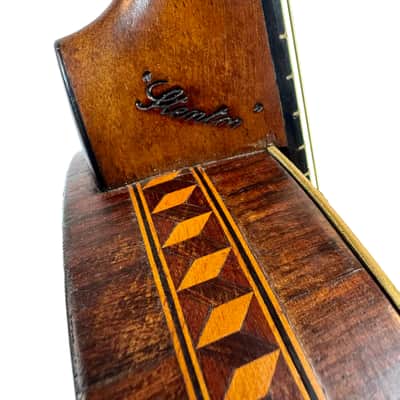
The "Stentor" brand, now found on various vintage instruments circulating on the market, suggests a trade name typical of the interwar period. It is also likely that it was distributed by Jérôme Thibouville-Lamy (JTL), a major French instrument dealer, as evidenced by certain violins bearing the same name and associated with that distributor.
This is precisely what makes this type of vintage banjo-mandolin so appreciated: it stands as a vivid witness to the musical fashion of the 1920s, the history of plectrum orchestras, and the period’s taste for expressive, decorative, instantly responsive instruments perfectly suited to convivial or stage performance.
Technical specifications:
- Head: Natural
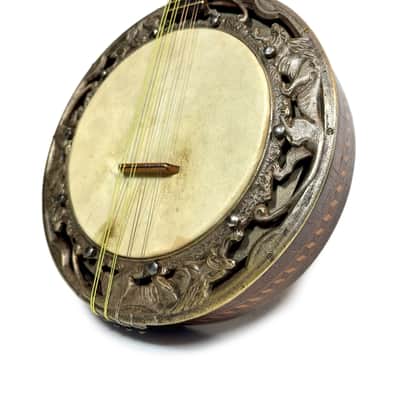
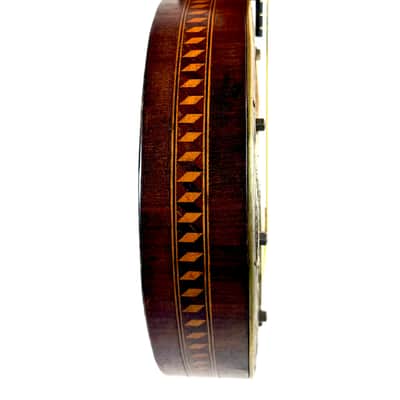
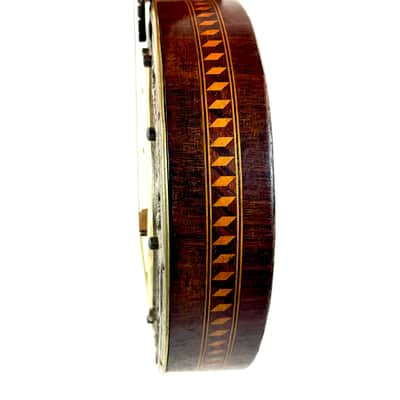
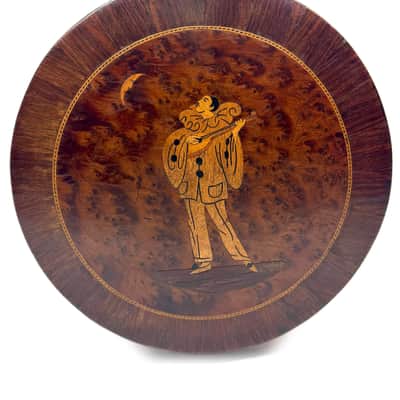
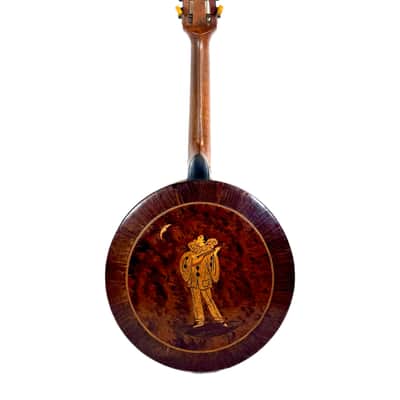
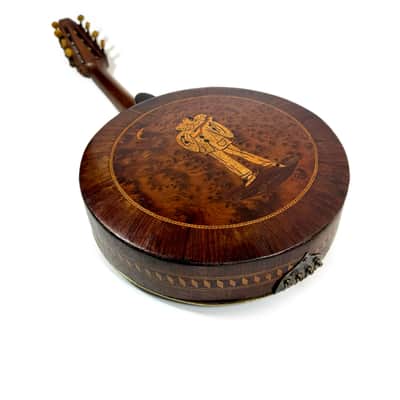
- Resonator: Marquetry-decorated mahogany, "Pierrot of the Moon"
- Neck: Mahogany
- Fingerboard: Rosewood
- Nut width: 29 mm
- Radius: Flat
- Frets: 17 frets
- Scale length: 336 mm
- Neck profile: V
- Country of manufacture: Italy / France
- Year: 1920s
- Finish: Natural
- Decorations: Sculpted metal tension hoop with roaring lion motifs / Resonator sides inlaid with a geometric frieze / Resonator back inlaid with a "Pierrot of the Moon" / Fingerboard markers in burgau mother-of-pearl dots
- Details: Light wear and signs of use consistent with its age / Very good condition / Supplied with gig bag
Like all our instruments, this banjo-mandolin has been carefully set up.
As a result, it offers very comfortable playability.
Its tone stands out for its lively, snappy, punchy, and bright attack, with that characteristic bite of a vintage banjo-mandolin so prized by musicians who appreciate direct, precise, and immediately projecting tones.
It is captivating for its quick response, brilliant, dry, shimmering tonal color, ideal for bringing out every note with depth, character, and a distinctly vintage charm.
| Listed | 10 days ago |
|---|---|
| Condition | Very Good (Used) Very Good items may show a few slight marks or scratches but are fully functional and in overall great shape.Learn more |
| Brand | |
| Model |
|
| Finish |
|
| Categories | |
| Year |
|
| Made In |
|
Product safety information may be available here.

