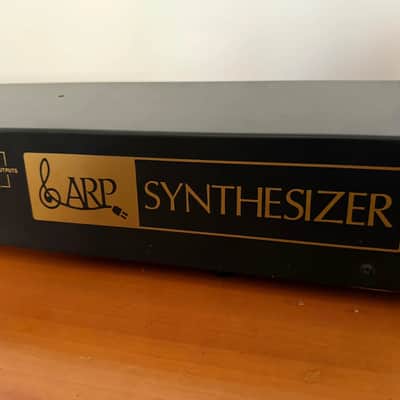
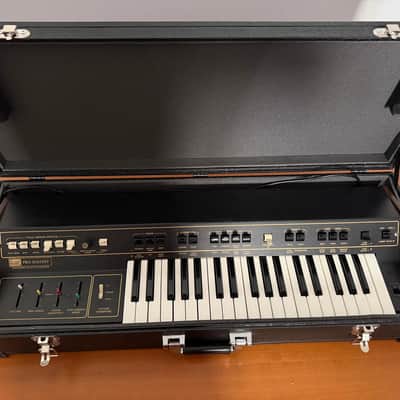
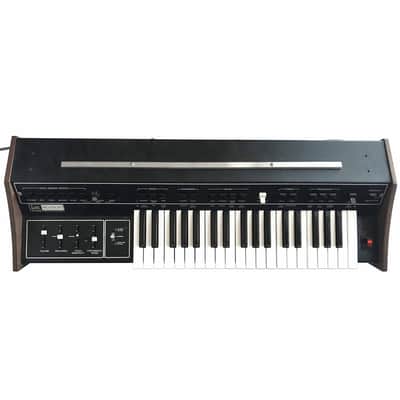
ARP Pro-Soloist Monophonic Analog Synthesizer 1972 - 1977 - Black
Our users rate Reverb
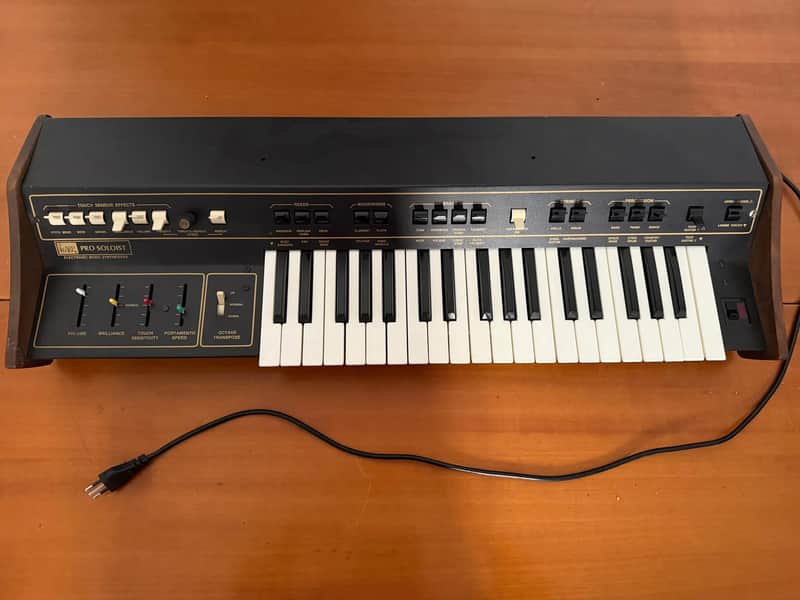
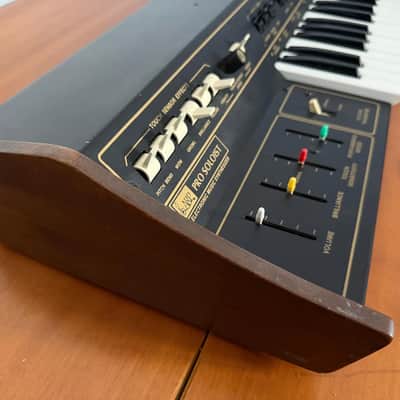
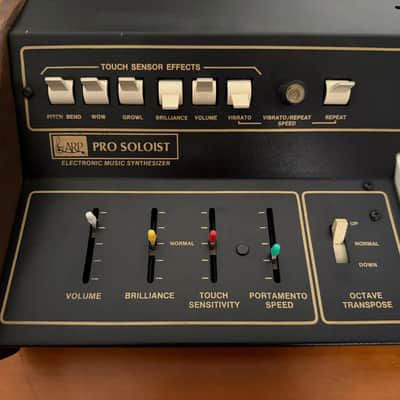
ARP Pro Soloist – Description The ARP Pro Soloist is a monophonic analog synthesizer produced by ARP Instruments between 1972 and 1977. Born as an evolution of the ARP Soloist, it was one of the first preset synthesizers to achieve great commercial success thanks to its ease of use and remarkable expressiveness in live performance. Intended primarily for melodic lines and solos, the Pro Soloist offered 30 preset sounds (winds, strings, guitars, basses, orchestral instruments, and electronic sounds), selectable via buttons. While not programmable like modular synthesizers of the time, it allowed the sound's character to be modified through controls for brilliance, portamento, vibrato, and, above all, one of its most important innovations: the pressure-sensitive keyboard (aftertouch), which allowed the user to control vibrato, volume, filter opening, bend, and other expressive effects. The internal architecture combined analog circuitry with digital ROM memories dedicated to preset selection, a highly advanced solution for the time that guaranteed greater reliability than the previous Soloist. Its warm, punchy tone made it an iconic instrument of 1970s progressive rock, used by artists such as Tony Banks (Genesis), Vangelis, Herbie Hancock, Patrick Moraz, and Gary Numan. Specifications Features Manufacturer ARP Instruments Years of Production 1972–1977 Type Monophonic Analog Synthesizer Subtractive Analog Synthesizer Polyphony Monophonic Oscillators 1 VCO Waveforms Sawtooth and Pulse Low-Pass Filter 24 dB/octave with Resonant Filter Network AR (Amplifier) and ADSR (Filter) Envelopes LFO Yes Keyboard 37 keys (3 octaves) with aftertouch Presets 30 non-programmable factory sounds Transposition ±1 octave Portamento Adjustable Expression Controls Volume, Touch Sensitivity, Brilliance, Vibrato, Wow, Growl, Pitch Bend User Memory None MIDI No Audio Output Mono 1/4" Weight Approximately 8.4 kg Dimensions 86.4 × 25.4 cm × 10.2 cm Main Features Analog synthesizer dedicated to solos. 30 instantly selectable presets. Keyboard with aftertouch, a very rare feature in the early 1970s. Warm, bright tone, ideal for synthetic horns, leads, and orchestral instruments. Sturdy construction with wooden side panels. Widely used in 1970s progressive rock, fusion, and electronic music.
This item is sold As-Described
This item is sold As-Described and cannot be returned unless it arrives in a condition different from how it was described or photographed. Items must be returned in original, as-shipped condition with all original packaging.Learn More.
| Listed | a month ago |
|---|---|
| Condition | Excellent (Used) Excellent items are almost entirely free from blemishes and other visual defects and have been played or used with the utmost care.Learn more |
| Brand | |
| Model |
|
| Finish |
|
| Categories | |
| Year |
|
| Made In |
|
| Keyboard Action |
|
| Analog / Digital |
|
| Polyphony |
|
| Number of Keys |
|
| Key Size |
|
Product safety information may be available here.

