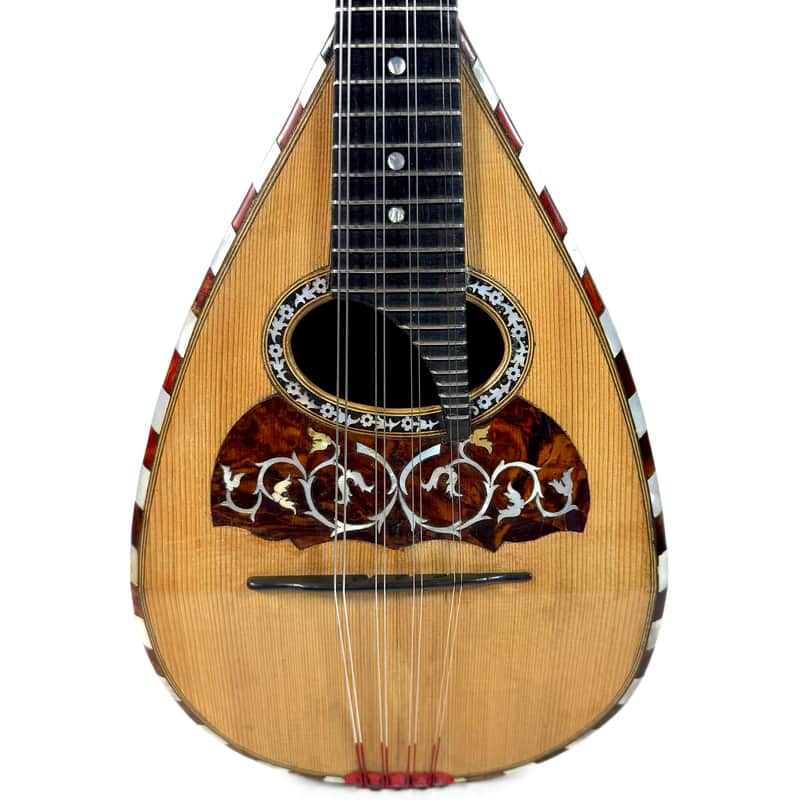
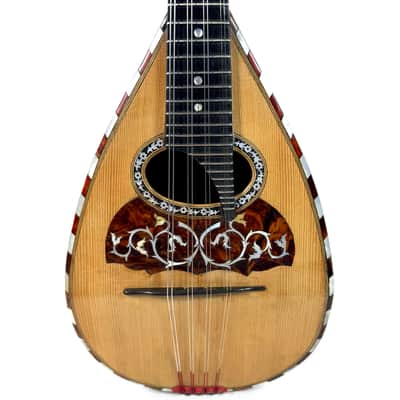
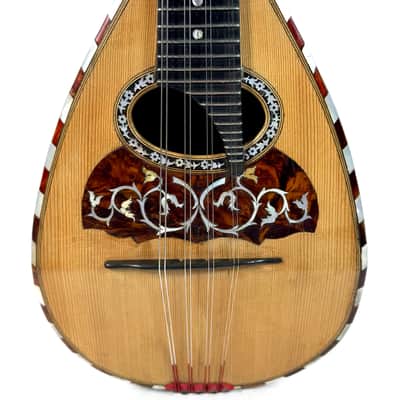
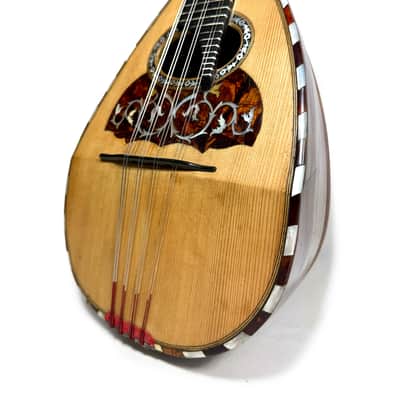
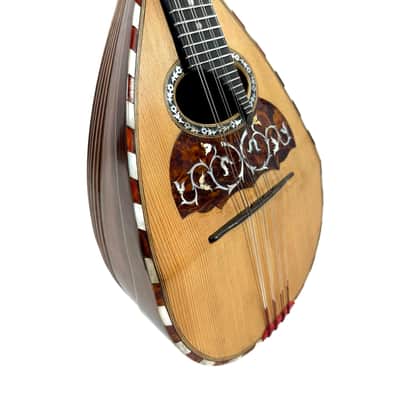
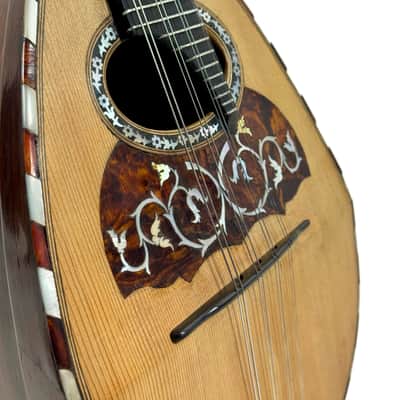
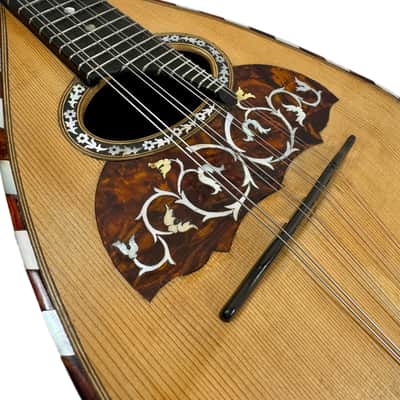
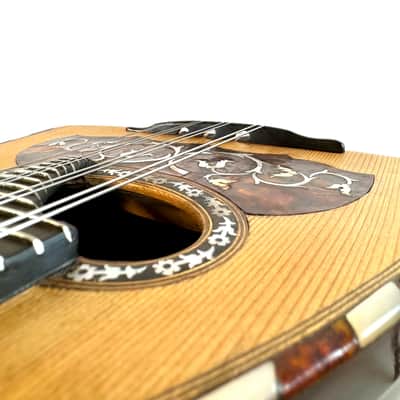
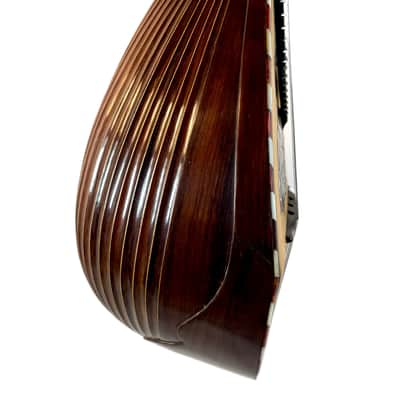
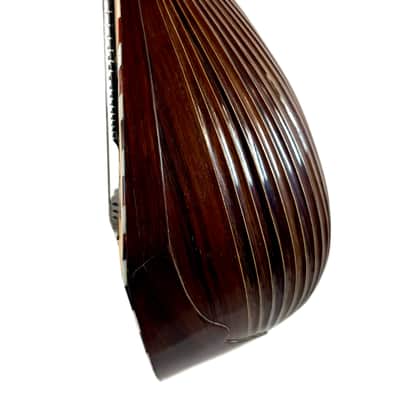
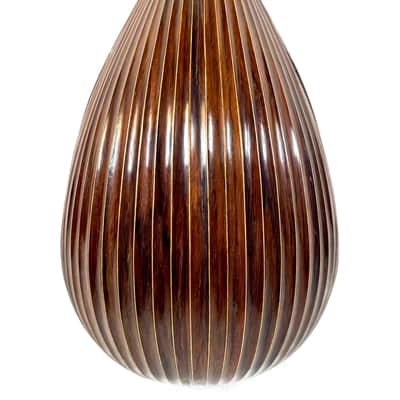
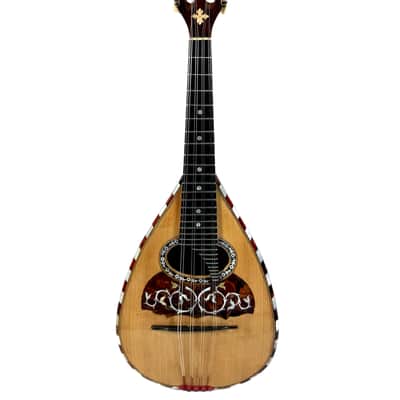
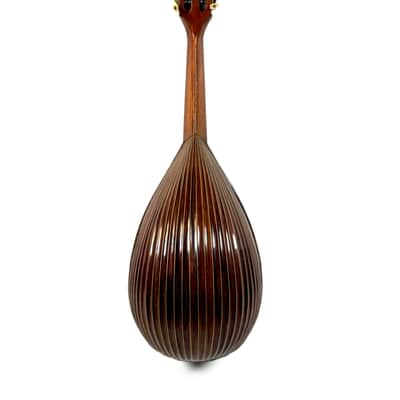
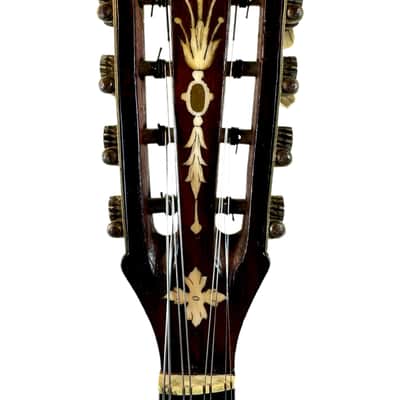
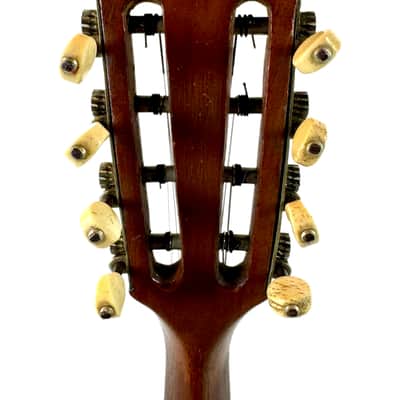
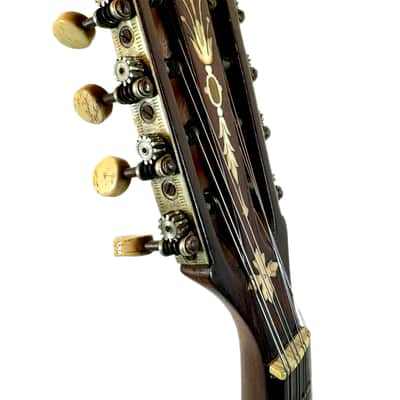
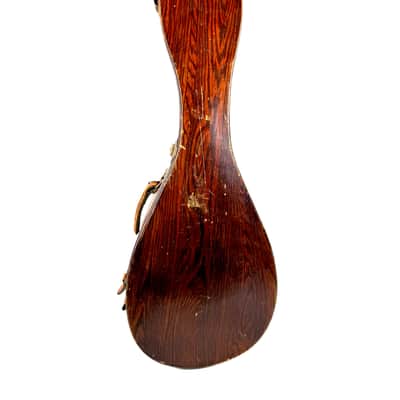

Concert Mandolin (Embergher School) G. Cacchione & Figli 1910s


14-Day Return Policy
Enjoy peace of mind with your new gear
Our users rate Reverb
At the turn of the 20th century, the mandolin experienced a considerable rise in popularity across Europe, particularly in Italy where it became a central instrument in plectrum orchestras and bourgeois musical salons.
It was within this context that what is known as the Embergher School developed, founded around the famous Roman luthier Luigi Embergher, whose instruments revolutionized the traditional design of the Neapolitan bowl-back mandolin.
From the late 19th century onward, Embergher introduced what became known as the “concert mandolin,” offering improved sound projection and ergonomics designed for concert halls and orchestral ensembles.
These innovations met with immediate success among the virtuosi and composers of the time, particularly within Italian and European musical circles where the mandolin gained true recognition as a solo instrument.
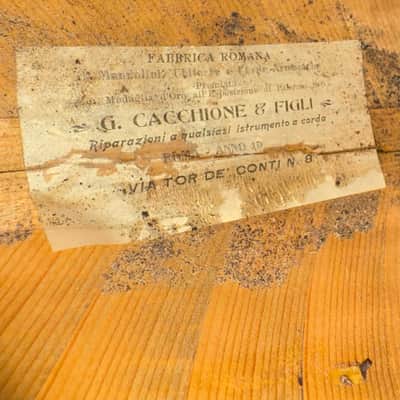
Inspired by this new aesthetic in instrument making, several Neapolitan workshops adopted and further developed the principles of the Embergher school, including the house of G. Cacchione & Figli, active in Naples in the early 20th century and renowned for the craftsmanship of its plucked string instruments.
During the 1910s, concert mandolins produced by this workshop, among others, reflect this major evolution in Italian lutherie, combining Neapolitan tradition with the structural advances introduced in Rome.
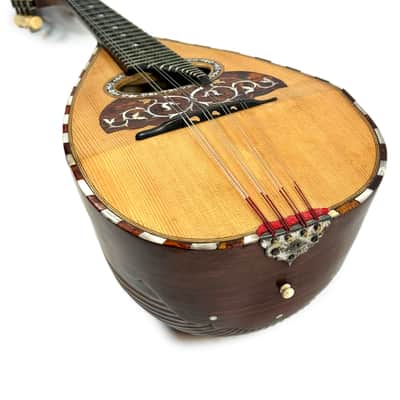
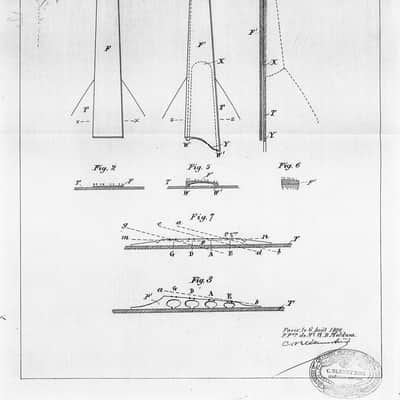
Particular attention should be drawn to its original bridge, which is clearly inspired by the bridges patented by Giovanni Maldura in 1896 and later adopted by Luigi Embergher.
(See photo of the digitized patent page.)
Today, a G. Cacchione & Figli concert mandolin from the 1910s represents a valuable testimony to the golden age of the Italian mandolin and the lasting influence of the Embergher school in the history of lutherie.
Thus, this G. Cacchione & Figli concert mandolin from the 1910s stands as a precious witness to the golden age of the Italian mandolin and the enduring influence of Luigi Embergher in the history of instrument making.
In short, here is an excellent mandolin, offering both remarkable historical value and beautiful musicality that will appeal to musicians and enthusiasts alike.
Technical specifications:
- Top: Spruce
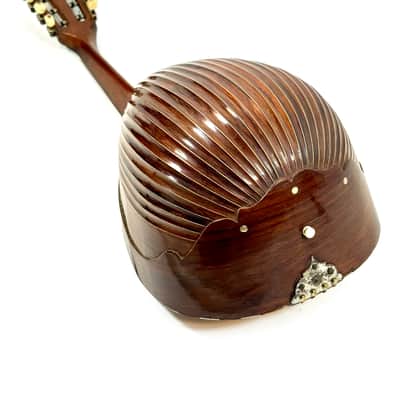
- Back: Rosewood, 29 hollow ribs
- Neck: Maple
- Fingerboard: Ebony
- Nut width: 24.5 mm
- Radius: Roman
- Frets: 29 frets
- Scale length: 334 mm
- Neck profile: Roman
- Pickguard: Tortoiseshell with white mother-of-pearl inlay
- Country of manufacture: Italy, Rome
- Year: 1910s
- Finish: Natural
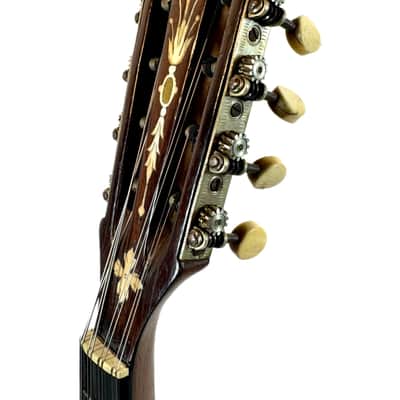
- Decorations: White mother-of-pearl position markers / Headstock inlaid with bone decorations / Tortoiseshell pickguard inlaid with floral arabesque motifs in white mother-of-pearl / Soundboard edge purfling in tortoiseshell and white mother-of-pearl
- Details: Original compensated bridge / Excellent condition / A few light signs of use and wear consistent with its age / Delivered in its original case
Like all our instruments, this mandolin has been carefully set up.
As a result, it offers excellent playing comfort.
The tone of this concert mandolin stands out for its broad, precise and well-balanced projection, with particularly remarkable trebles, bright and singing, supported by a rich and expressive midrange.
Its clear, elegant and powerful timbre fills the space with crystalline articulation, making it ideal both for virtuosic solo playing and for mandolin ensembles.
| Listed | a month ago |
|---|---|
| Condition | Very Good (Used) Very Good items may show a few slight marks or scratches but are fully functional and in overall great shape.Learn more |
| Brand |
|
| Model |
|
| Finish |
|
| Categories | |
| Year |
|
| Made In |
|
Product safety information may be available here.

