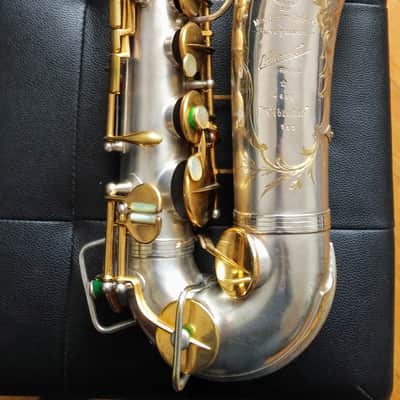

Pierret Vibrator Alto Saxophone with Virtuor 1930s silver / gold plated
Price€1,750
+ €35 Shipping
This listing has ended
See similar gear from other Reverb sellers
Listed:6 years ago
Views:207
Saves:5
Offers:0

Berlin, Germany
Our users rate Reverb
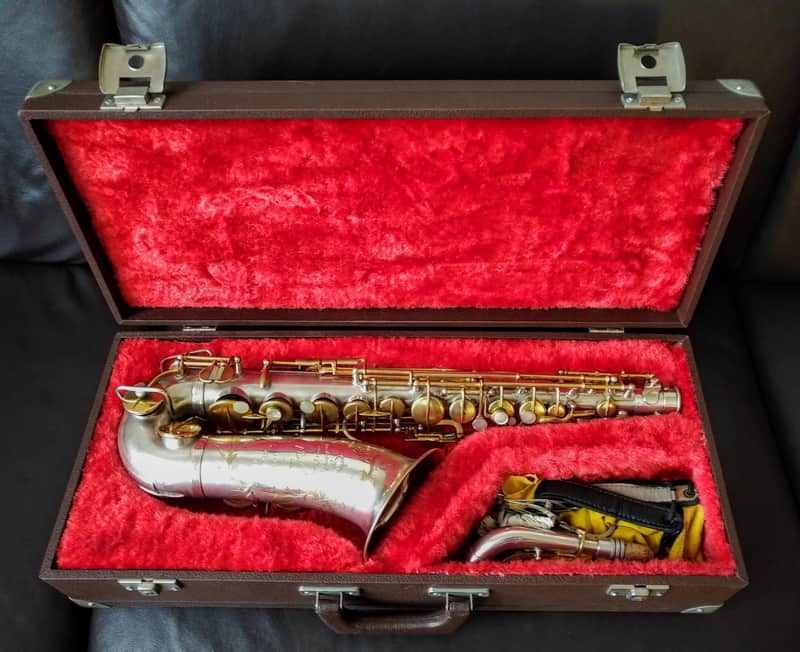
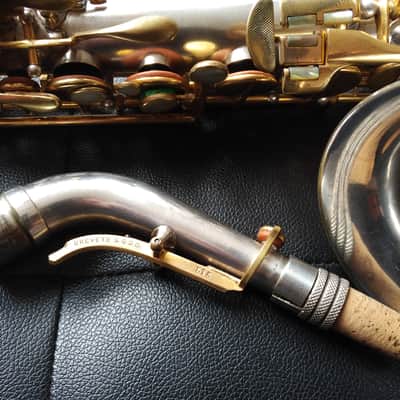
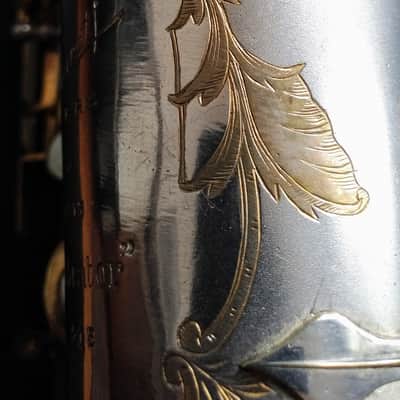
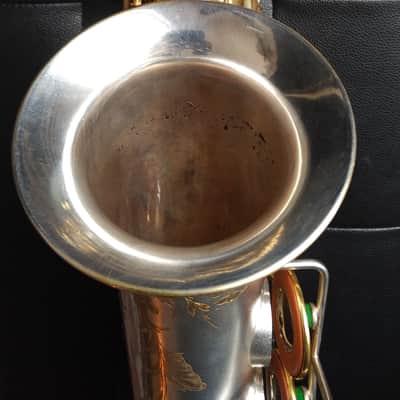
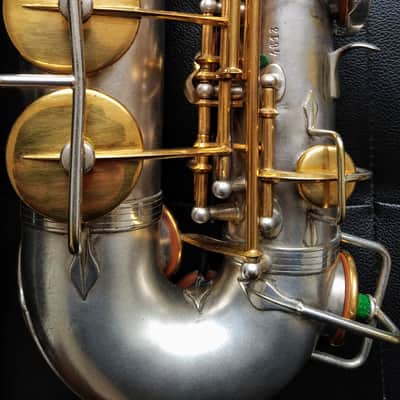
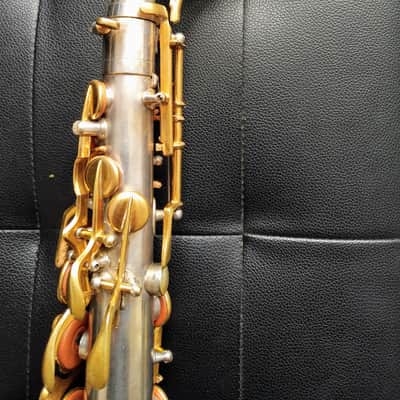
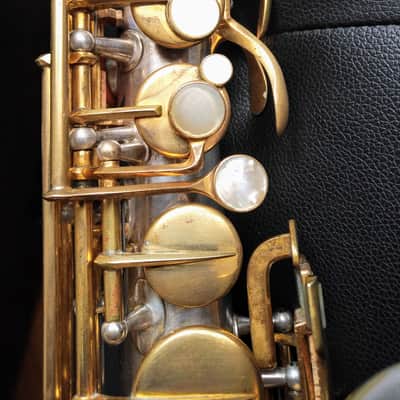
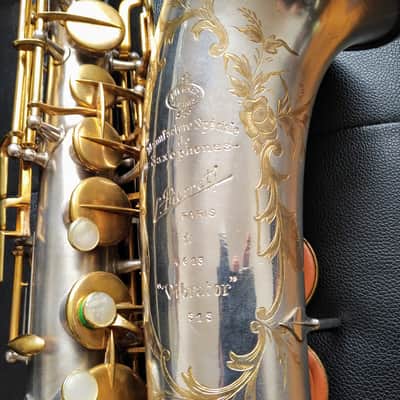
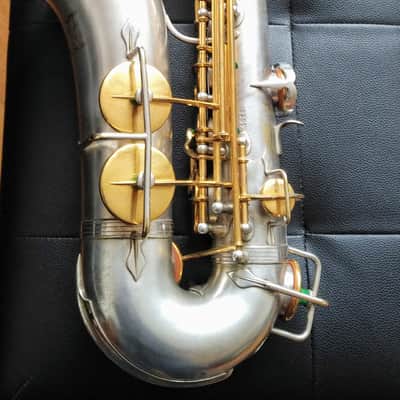
As I want to stay away from building a collection I am selling my freshly restored Pierret "Vibrator" alto which was built in the beginning 1930s with the underslung neck (patented 1929 as “Virtuor”). This one has Pierret´s rare most expensive finish according to their 1938 catalgoue - a gold inlaid engraving and the two tone finish with gold plated mechanic. Pierret Saxophones accompanied me for several years of my professional career, especially for playing in big bands.
In my opinion, the most beautiful model in which the company was able to keep up with its main competitor Selmer in Paris is the "vibrator" model with the "Virtuor" neck, built in the early 1930s. It has a wide bore and large cup and is built very solid. I find it to be the company's best and most original one which shares more somehow in feeling and tonal response and flexibility with a CONN NW I than other french saxophones I have played.
The L. Pierret company came from the stream of the "music makers association" which was a loose bunch of independent saxophone builders who had worked before with Adolphe Sax, most namely Feuillet who served as the chief of the Adolphe Sax workshop and Millereau who left the sax company and manufactured as early as in the 1860s his own instruments. Louis Joseph PIERRET was born on December 8, 1874 in the fifth arrondissement in Paris, son of Marie Joséphine PIERRET, a servant and an unnamed father. At the time of his marriage, on December 16, 1899, he declared himself to be a luthier and domiciled at 47 rue Piat. He died in Paris sixteenth on August 4, 1952. Louis Pierret was a former worker for the company MILLEREAU et BESSON when he founded his company specializing in saxophones in 1906. There is only scattered evidence on the net as the company did not have such a lasting commercial success and impact.
When comparing vintage french saxophones in the 1920s and 1930 it stands out for me that SELMER (as Buffet and Couesnon) experimented early on with a small bore design improving response (particularly in the lower register) and evenness of scale whereas a few other companies including Adolphe Sax Jr. maintained the large wide bore profile longer - like the American companies, particularly CONN. An interesting comparison is for example an early Selmer model 22 or 26 with a Selmer 28 "Large Bore" (after the take over of the Sax Workshop by Selmer) where suddenly there is a different core sound and openness in response. These are in my opinion the most beautiful sounding Selmer instruments.
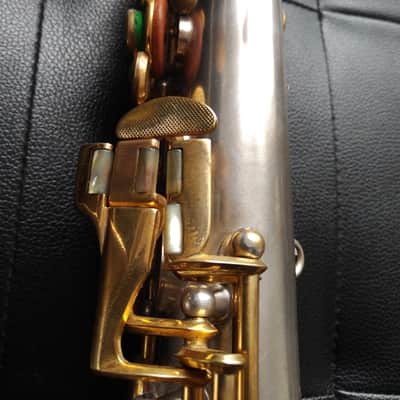
The PIERRETs of this era are very similar to that concept of a wider bore and bell and maintain a similar almost tenor like quality on their altos. Their mechanical improvements resemble those of COUESNON´s monopoly models maybe the closest, as they also worked with the top soloists in the 1930s (for example Hippolyte Poimboeuf, the tenor saxophone player in Marcel Mule's sax quartet) before eventually SELMER managed to control the market with their larger resources. PIERRET manufactured only saxophones, no clarinets or other woodwinds and could not invest much in larger building workshops. They eventually lost out during the vast expansion of saxophone manufacturing in the 1930s to bigger companies despite filing numerous patents and improving their design slowly. It stands to reason that the later Pierret models were always trying to keep up with Selmer and Buffet in terms of mechanical improvements but the early models like this one just have quite a lovely broad presence that is hard to find in other french saxophones in the 1930s, only perhaps in SML saxophones later onwards. The front F and ergonomics are original and feel quote modern. The octave mechanism is fine and the intonation tendencies quite balanced, I think that speaks of the high quality of craftsmanship of this builder...
Here is a video of a playtest:
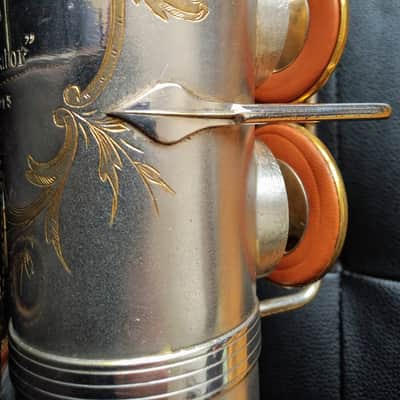
This saxophone has a wonderful, warm, large sound with great balance and balanced intonation across the entire range. This model was either an exhibit or made for a soloist, it has a complex engraving that was inlaid with gold and the entire mechanism was gold-plated. The fine jeweler engraving was only used by Selmer at this time for special exhibition models and is very rarely found on other saxophones. It was just freshly overhauled with high quality pads with metal resonators. It comes in a somewhat modern SELMER case from the 1970s as pictured.
You will find good information on the company in the internet - this instrument was owned by a passionate french saxophonist for many decades until his retirement and meticulously cared for, it deserves to have another player dedicated to it who plays it for many years as main instrument.
In my opinion, the most beautiful model in which the company was able to keep up with its main competitor Selmer in Paris is the "vibrator" model with the "Virtuor" neck, built in the early 1930s. It has a wide bore and large cup and is built very solid. I find it to be the company's best and most original one which shares more somehow in feeling and tonal response and flexibility with a CONN NW I than other french saxophones I have played.
The L. Pierret company came from the stream of the "music makers association" which was a loose bunch of independent saxophone builders who had worked before with Adolphe Sax, most namely Feuillet who served as the chief of the Adolphe Sax workshop and Millereau who left the sax company and manufactured as early as in the 1860s his own instruments. Louis Joseph PIERRET was born on December 8, 1874 in the fifth arrondissement in Paris, son of Marie Joséphine PIERRET, a servant and an unnamed father. At the time of his marriage, on December 16, 1899, he declared himself to be a luthier and domiciled at 47 rue Piat. He died in Paris sixteenth on August 4, 1952. Louis Pierret was a former worker for the company MILLEREAU et BESSON when he founded his company specializing in saxophones in 1906. There is only scattered evidence on the net as the company did not have such a lasting commercial success and impact.
When comparing vintage french saxophones in the 1920s and 1930 it stands out for me that SELMER (as Buffet and Couesnon) experimented early on with a small bore design improving response (particularly in the lower register) and evenness of scale whereas a few other companies including Adolphe Sax Jr. maintained the large wide bore profile longer - like the American companies, particularly CONN. An interesting comparison is for example an early Selmer model 22 or 26 with a Selmer 28 "Large Bore" (after the take over of the Sax Workshop by Selmer) where suddenly there is a different core sound and openness in response. These are in my opinion the most beautiful sounding Selmer instruments.
The PIERRETs of this era are very similar to that concept of a wider bore and bell and maintain a similar almost tenor like quality on their altos. Their mechanical improvements resemble those of COUESNON´s monopoly models maybe the closest, as they also worked with the top soloists in the 1930s (for example Hippolyte Poimboeuf, the tenor saxophone player in Marcel Mule's sax quartet) before eventually SELMER managed to control the market with their larger resources. PIERRET manufactured only saxophones, no clarinets or other woodwinds and could not invest much in larger building workshops. They eventually lost out during the vast expansion of saxophone manufacturing in the 1930s to bigger companies despite filing numerous patents and improving their design slowly. It stands to reason that the later Pierret models were always trying to keep up with Selmer and Buffet in terms of mechanical improvements but the early models like this one just have quite a lovely broad presence that is hard to find in other french saxophones in the 1930s, only perhaps in SML saxophones later onwards. The front F and ergonomics are original and feel quote modern. The octave mechanism is fine and the intonation tendencies quite balanced, I think that speaks of the high quality of craftsmanship of this builder...
Here is a video of a playtest:
This saxophone has a wonderful, warm, large sound with great balance and balanced intonation across the entire range. This model was either an exhibit or made for a soloist, it has a complex engraving that was inlaid with gold and the entire mechanism was gold-plated. The fine jeweler engraving was only used by Selmer at this time for special exhibition models and is very rarely found on other saxophones. It was just freshly overhauled with high quality pads with metal resonators. It comes in a somewhat modern SELMER case from the 1970s as pictured.
You will find good information on the company in the internet - this instrument was owned by a passionate french saxophonist for many decades until his retirement and meticulously cared for, it deserves to have another player dedicated to it who plays it for many years as main instrument.
This item is sold As-Described
This item is sold As-Described and cannot be returned unless it arrives in a condition different from how it was described or photographed. Items must be returned in original, as-shipped condition with all original packaging.Learn More.
| Listed | 6 years ago |
|---|---|
| Condition | Excellent (Used) Excellent items are almost entirely free from blemishes and other visual defects and have been played or used with the utmost care.Learn more |
| Brand | |
| Model |
|
| Finish |
|
| Categories | |
| Year |
|
| Made In |
|
Product safety information may be available here.