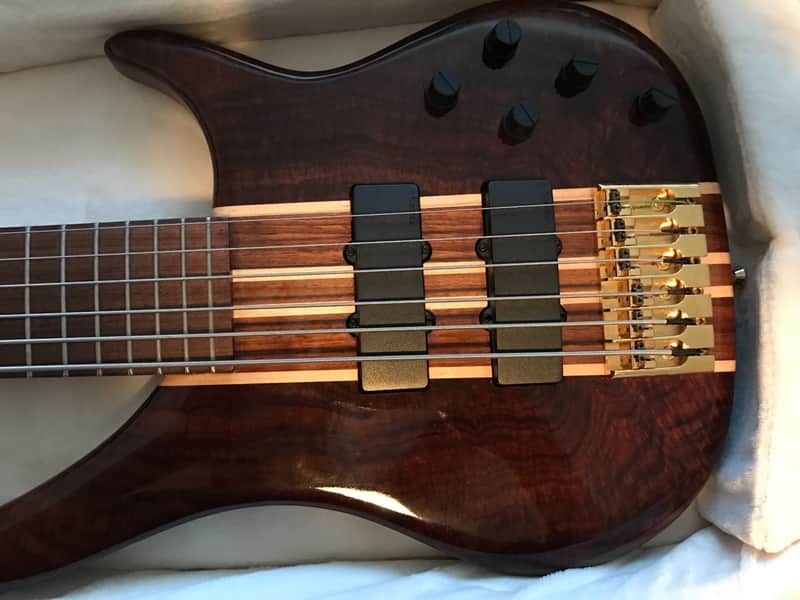
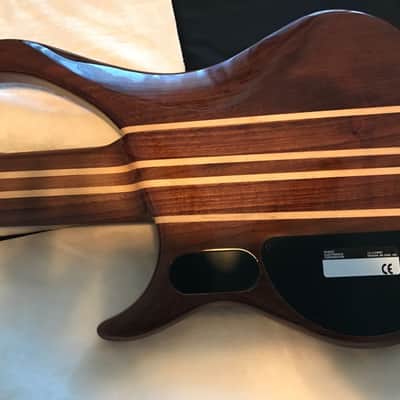
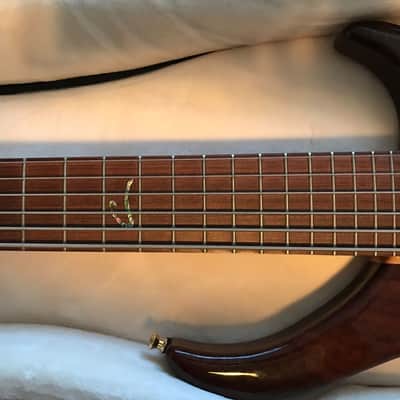

Peavey CIRRUS 2009 6 string
This gear has sold
See similar gear from other Reverb sellers
Listed:10 years ago
Views:1,069
Saves:16

Antioch, CA, United States
Our users rate Reverb
PEAVEY CIRRUS USA
The volume and tone controls follow an intuitive layout: master volume, pickup pan and three-band EQ-bass, mid and treble. The 18-volt internal preamp is quiet enough for hiss-free studio use and offers +/-10dB of boost/cut. The two 9-volt batteries are accessible through a compartment on the back held on by two screws. It's not inconvenient, but it's also not something you'd want to deal with in the middle of a set. The control cavity was well shielded with conductive paint, contributing to the overall quiet operation of the electronics.
Peavey has been using its patented VFL pickup design for many years. The pickup's curved top places the magnets at the same distance from each string, which helps the string-to-string balance. The VFL's are hum-free and engineer friendly-a hi-fi, full-spectrum response comes through without having to tweak the preamp. The tone is definitely modern, there's no hint of vintage grit here. The Cirrus produces a well-balanced, consistent tone across its four-octave range-which is no small accomplishment.
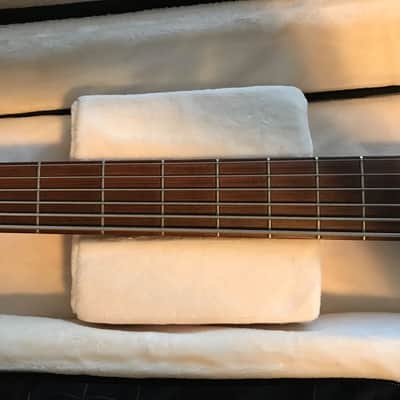
The 3/4-inch string spacing at the bridge totals up to a three and 5/16-inch width, which tapers to a manageable two inches at the nut. The flat neck profile gives comfortable access to all the strings, and the oiled finish feels smooth under the thumb. Access to the 24th fret is completely unhindered, thanks to the scooped lower cutaway. The Cirrus, like many new five- and six-string basses has a 35-inch scale length, as opposed to standard 34-inch scale. The advantages of the extra inch are well appreciated in the lower end, making for a tight, well-focused B-string. The extreme low notes have pianolike clarity, making the range ultimately more useful.
The Cirrus responds quickly to the touch, the sound seemingly jumps out of the instrument. This fast response is matched with an equally impressive dynamic range. Even with high-tech electronics, the sound of a bass is still largely determined by the marriage of wood, construction and personal technique. The Cirrus adjusts to the subtleties of attack and pressure nicely-it goes where you point it.
On a straightahead jazz gig, I rolled off some highs and gently boosted the mids and lows to get a warm, detailed sound with both pickups. Switching to the rear pickup for soloing gave me a thinner sound, perhaps too thin. I decided to play with both pickups up full and use hand position to achieve the articulation I desired. The Cirrus consented to my demands without a fight. When I dusted off my slap-funk chops, the Cirrus dished up some serious spank. The deep fundamental was there, and the contemporary sheen sparkled with each finger pop. The bass has an aggressive quality; it's sure to get you heard even in the most cluttered, high-volume setting. No doubt this is why it's found a fan base in hard-rock circles, but this tendency can be tempered with a reserved attack and darker EQ settings. The Cirrus 6 lives up to the Peavey legacy of useful musical tools, but takes it a step further with its dead-sexy looks and a versatile, modern palette of tones.
The volume and tone controls follow an intuitive layout: master volume, pickup pan and three-band EQ-bass, mid and treble. The 18-volt internal preamp is quiet enough for hiss-free studio use and offers +/-10dB of boost/cut. The two 9-volt batteries are accessible through a compartment on the back held on by two screws. It's not inconvenient, but it's also not something you'd want to deal with in the middle of a set. The control cavity was well shielded with conductive paint, contributing to the overall quiet operation of the electronics.
Peavey has been using its patented VFL pickup design for many years. The pickup's curved top places the magnets at the same distance from each string, which helps the string-to-string balance. The VFL's are hum-free and engineer friendly-a hi-fi, full-spectrum response comes through without having to tweak the preamp. The tone is definitely modern, there's no hint of vintage grit here. The Cirrus produces a well-balanced, consistent tone across its four-octave range-which is no small accomplishment.
The 3/4-inch string spacing at the bridge totals up to a three and 5/16-inch width, which tapers to a manageable two inches at the nut. The flat neck profile gives comfortable access to all the strings, and the oiled finish feels smooth under the thumb. Access to the 24th fret is completely unhindered, thanks to the scooped lower cutaway. The Cirrus, like many new five- and six-string basses has a 35-inch scale length, as opposed to standard 34-inch scale. The advantages of the extra inch are well appreciated in the lower end, making for a tight, well-focused B-string. The extreme low notes have pianolike clarity, making the range ultimately more useful.
The Cirrus responds quickly to the touch, the sound seemingly jumps out of the instrument. This fast response is matched with an equally impressive dynamic range. Even with high-tech electronics, the sound of a bass is still largely determined by the marriage of wood, construction and personal technique. The Cirrus adjusts to the subtleties of attack and pressure nicely-it goes where you point it.
On a straightahead jazz gig, I rolled off some highs and gently boosted the mids and lows to get a warm, detailed sound with both pickups. Switching to the rear pickup for soloing gave me a thinner sound, perhaps too thin. I decided to play with both pickups up full and use hand position to achieve the articulation I desired. The Cirrus consented to my demands without a fight. When I dusted off my slap-funk chops, the Cirrus dished up some serious spank. The deep fundamental was there, and the contemporary sheen sparkled with each finger pop. The bass has an aggressive quality; it's sure to get you heard even in the most cluttered, high-volume setting. No doubt this is why it's found a fan base in hard-rock circles, but this tendency can be tempered with a reserved attack and darker EQ settings. The Cirrus 6 lives up to the Peavey legacy of useful musical tools, but takes it a step further with its dead-sexy looks and a versatile, modern palette of tones.
This item is sold As-Described
This item is sold As-Described and cannot be returned unless it arrives in a condition different from how it was described or photographed. Items must be returned in original, as-shipped condition with all original packaging.Learn More.
| Listed | 10 years ago |
|---|---|
| Condition | Mint (Used) Mint items are in essentially new original condition but have been opened or played.Learn more |
| Brand | |
| Model |
|
| Finish |
|
| Categories | |
| Year |
|
| Made In |
|
Product safety information may be available here.