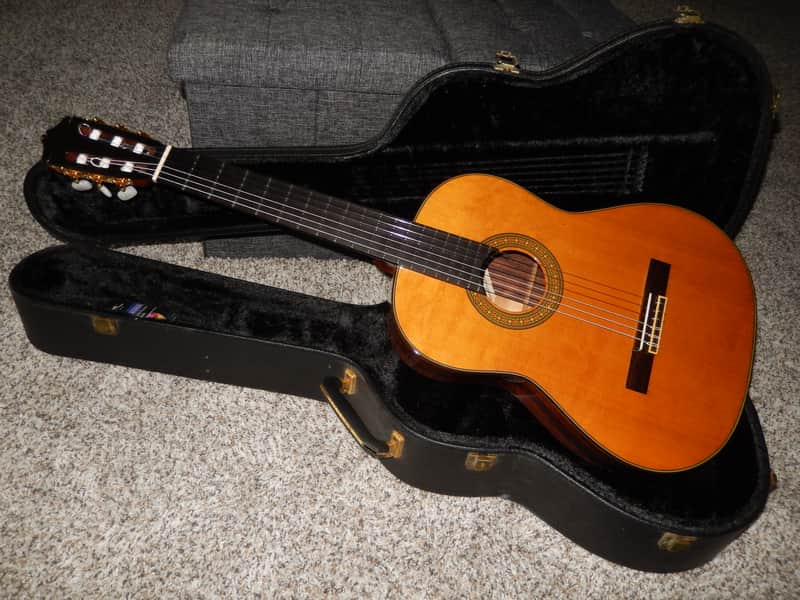
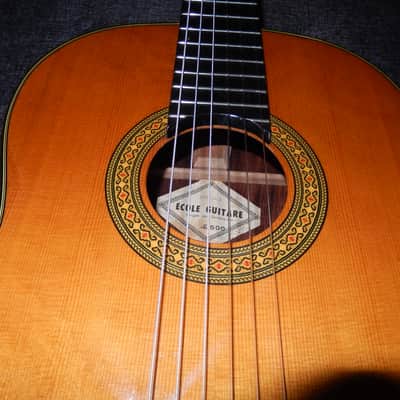
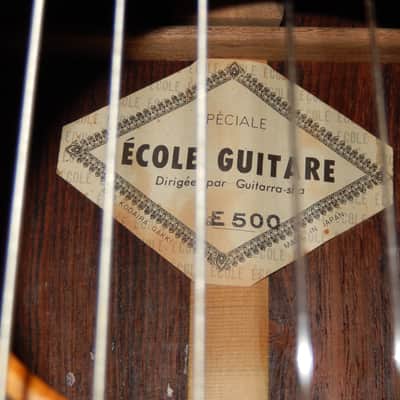
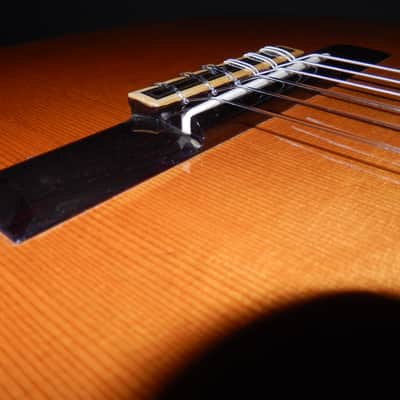
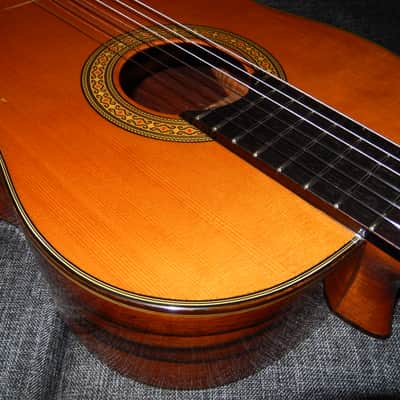
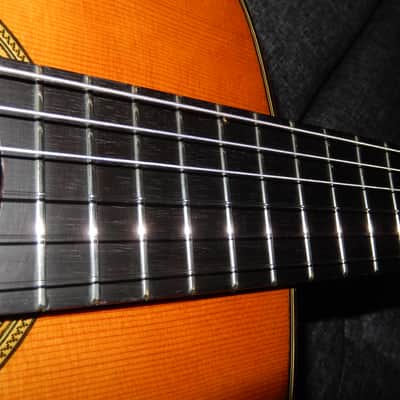
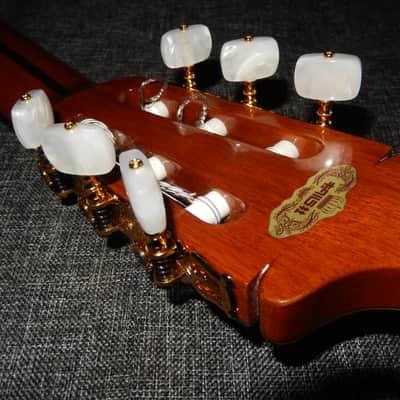
RARITY - MADE BY EICHI KODAIRA - ECOLE E500 1977 - RAMIREZ STYLE CLASSICAL CONCERT GUITAR - CEDAR/BRAZILIAN ROSEWOOD
This seller has not set a shipping cost for Luxembourg. Please contact them to ask about shipping.


Our users rate Reverb
Ecole E500 BR b/s 1977
This guitar was made sometime in the mid/late 1970s. All these early Ecole guitars were very highly regarded by Japanese players and considered as concert instruments. They were made at Eichi Kodaira’s workshop since early 1970s until Eichi Kodaira joined Masaru Matano and Hiromi Yamaguchi (maker of superb Cervantes guitars) to form and lead Asturias workshop, owned and managed by powerful Lumber Trading company, Rokkomann Inc.
Before Asturias guitars became world famous, M. Matano, Ecole and Cervantes guitars were highly regarded not only by Japanese, but also by many international players, who recognized their terrific value when compared with far more expensive similar grade Spanish made instruments. Today, while these older brands are history, it is Asturias guitars that represent the same highest imaginable level of craftsmanship and which are still very highly valued in Europe, Australia and Asia despite their steadily growing prices.
The construction of this guitar was inspired by Jose Ramirez bleprints, yet Kodaira's magical touch was the most important factor leading to its gorgeous tonality. It sounds better that modern era Ramirez guitars sold at high prices. Ramirez "Sencillo" stands no chance against this guitar.
This guitar really sings! It has beautiful tone, clear, full, and rich with great resonance, with very impressive sustain and great volume. The clarity of the treble notes is truly exceptional. I would describe them as being “glassy”. This guitar is very responsive and super easy to play.
Brand new Japanese made guitars made with solid tops and "non-solid" BR b/s are priced minimum $5500. Yet, in terms of volume and tonality they are no match to a vintage guitar made nearly 50 years ago.
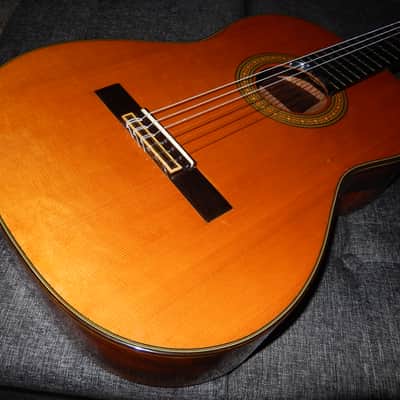
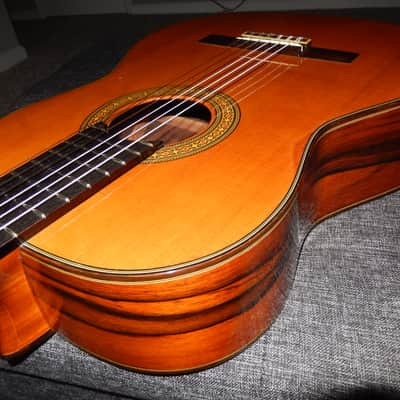
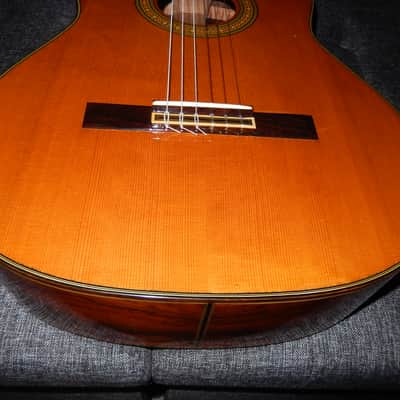
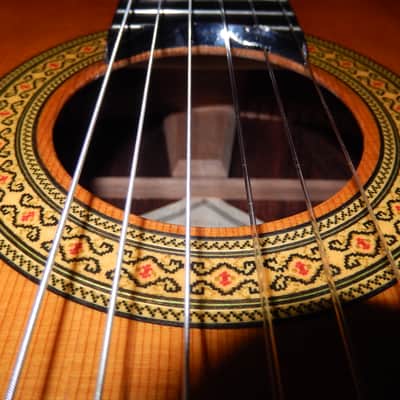
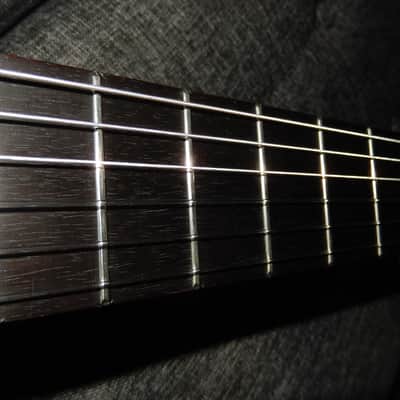
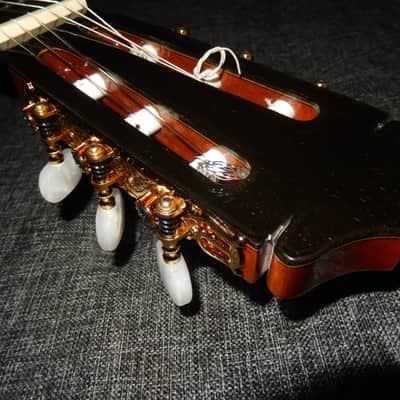
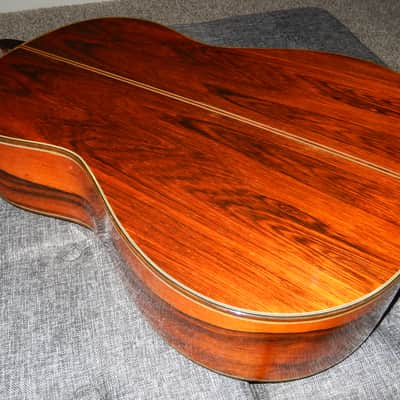
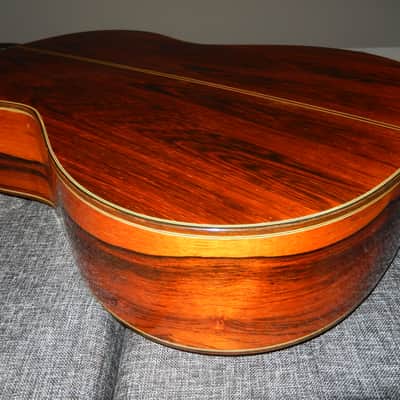
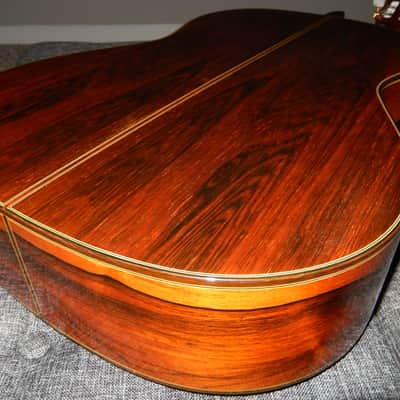
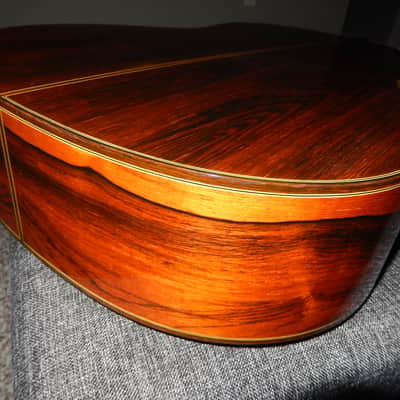
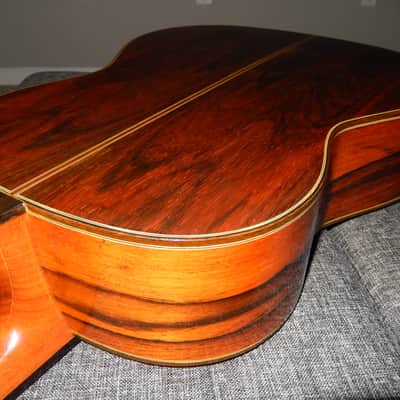
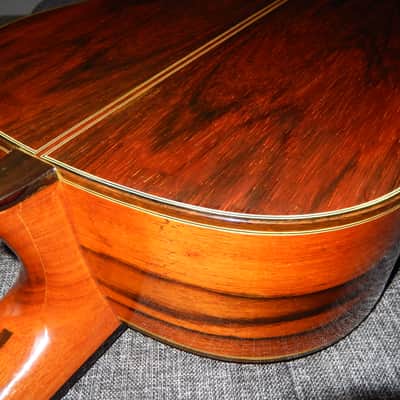
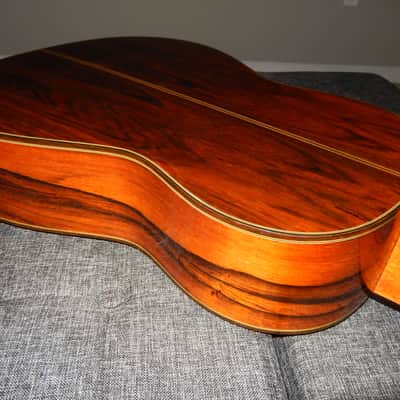
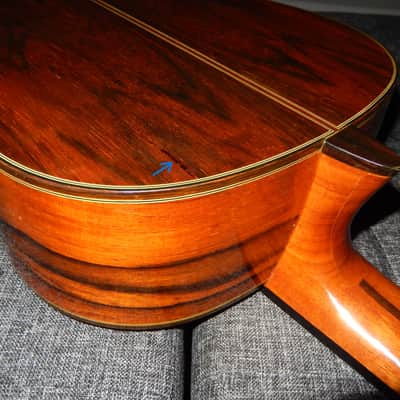
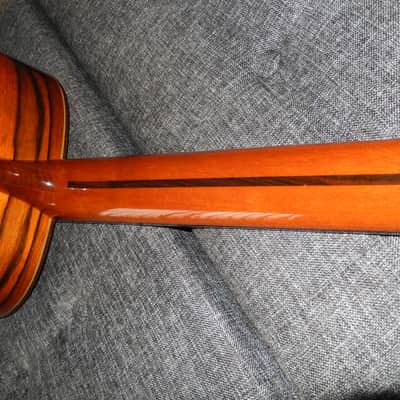
Despite its age, this guitar remains in excellent condition. Besides a couple of very small dents on its top, and about 1inch long scratch (“masked” by previous owner with black felt tip pen) located on the upper right bout of the back, guitar looks and smells like it was brand new. The very base of its neck hasn’t been damaged or repaired but simply made from either 2 or 3 pieces of mahogany. The original tuners also looked like new but were hard to turn and were replaced by new Gotoh set.
Specifications:
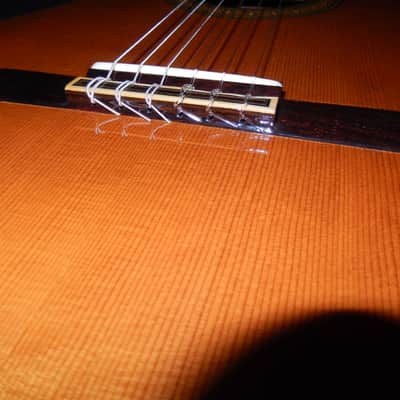
Top: High Grade Solid Cedar/ lacquer
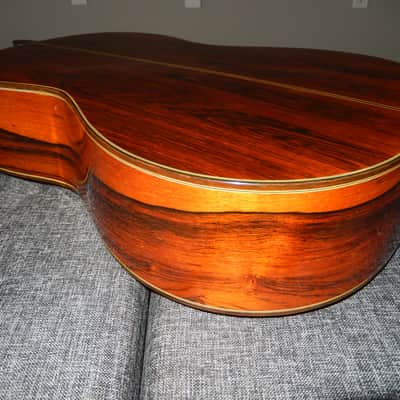
Back & Sides: High Grade Figured Brazilian Rosewood Laminates/urethane
Neck: Mahogany with Ebony or Rosewood Insert
Fingerboard: Ebony or Very Well Ebonized Rosewood
Scale: 650 mm
Nut width: 52 mm
Strings: Magma Nylon Cristal Medium Tension
Its action is set to 3.50 mm under E6 and 3.00 mm under E1 with very little extra room on the saddle.
This guitar is equipped with a non-original hard shell case in excellent condition.
THE ONLY PURPOSE OF THIS CASE IS TO PROTECT THE GUITAR DURING SHIPMENT. I WILL NOT PROVIDE ITS DETAILED DESCRIPTION OR MAKE ADDITIONAL PICTURES, NOR I WILL ACCEPT ANY COMPLAINTS. IF YOU DON’T LIKE THIS CASE YOU WILL NEED TO BUY A DIFFERENT ONE.
WHEN YOU BUY ANY GUITAR, YOU MUST ANTICIPATE TAKING IT TO YOUR LOCAL GUITAR SHOP FOR FINAL ADJUSTMENTS CALLED “SETUP”. DEPENIDNG ON YOUR PLAYING TECHNIQUE, THIS SETUP ON USED GUITARS MAY INCLUDE NEW CUSTOM-MADE NUT AND SADDLE. IF YOU HEAR STRING BUZZ IT DOESN’T MEAN THAT GUITAR IS DEFECTIVE. IF YOU PLAY HARD ENOUGH ALL BASS STRINGS WILL BUZZ OVER THE FRETS, UNLESS THEY ARE SUSPENDED VERY FAR FROM THE FINGERBOARD. UNLESS YOU PLAY QUITE GENTLY, YOU CAN’T HAVE LOW ACTION AND NO BUZZES. KEEP IN MIND THAT CELLO-LIKE BASSES ON HIGH GRADE CLASSICAL GUITARS HAVE THEIR NATURAL “BUZZ”.
Real Value of Japanese Vintage Guitars
The key to understand value of vintage Japanese guitars is to acknowledge galloping price inflation throughout the late 1960s and 1970s with its peak of 25% in 1974.
During 1960s and most of 1970s model numbers of Japanese guitars were strictly connected with their prices in Japanese yen.
The same class guitar sold in 1970 for 100 000 yen (labelled as model 10), would be sold for 150 000 yen in 1972 (labelled as model 15), 200 000 yen in 1974 (labelled as model 20) and 300 000 yen in 1978 (labelled as model 30). Therefore, you shouldn’t be surprised that two Yamaha GC10 guitars made 10 years apart are two instruments of totally different class. The same rule applies to all guitar models made by all other Japanese makers.
Japanese inflation slowed down in the 1980s. By the early 1980s and during following decades model numbers were no longer strictly associated with their prices. Some Japanese guitar makers introduced model names instead of model numbers. For several economic reasons, since 1980s Japanese made guitars were becoming more and more expensive, while their exports slowing down. Today (2025) Japanese highest end classical guitar models are priced at $20000USD level.
This item is sold As-Described
This item is sold As-Described and cannot be returned unless it arrives in a condition different from how it was described or photographed. Items must be returned in original, as-shipped condition with all original packaging.Learn More.
| Listed | 6 months ago |
|---|---|
| Condition | Excellent (Used) Excellent items are almost entirely free from blemishes and other visual defects and have been played or used with the utmost care.Learn more |
| Brand | |
| Model |
|
| Finish |
|
| Categories | |
| Year |
|
| Made In |
|
| Body Shape |
|
Product safety information may be available here.

