Best Sellers
Top products on Reverb over the past 90 days
Best Sellers in Acoustic Guitars - Archtop
- 1
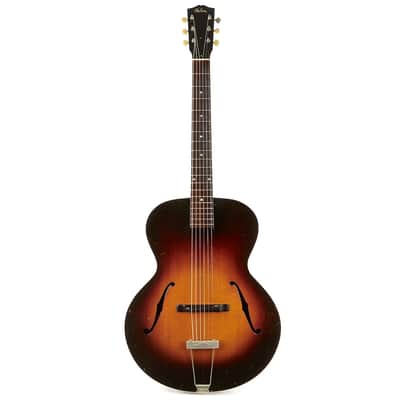
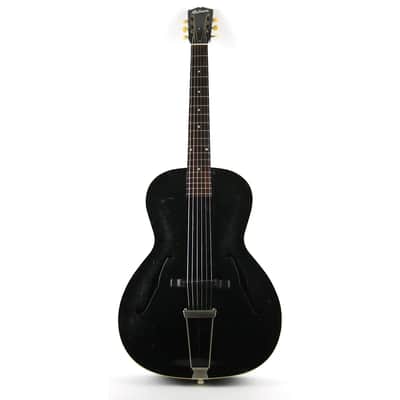
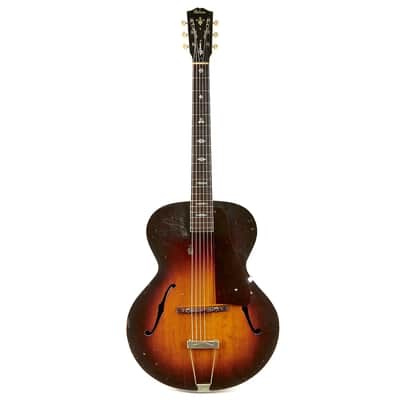
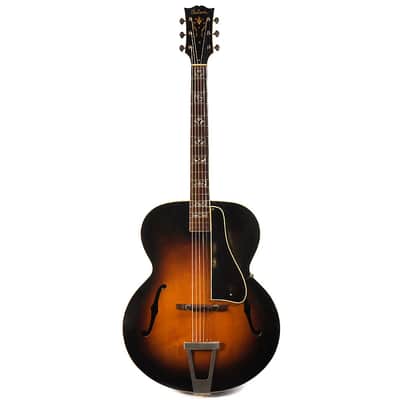
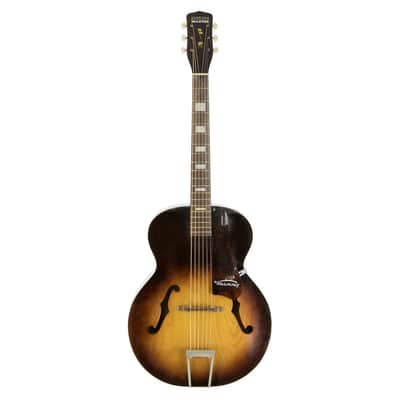
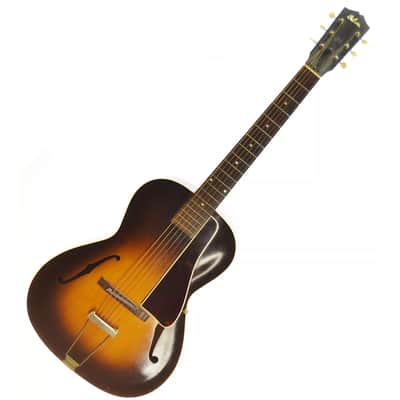
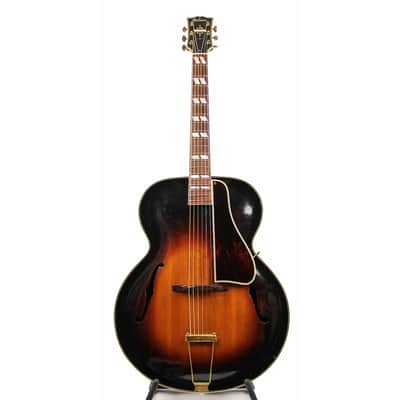
Gibson L-50 F-Hole 1935 - 1971
This long-running Gibson archtop went through several design changes in the '30s and '40s including changes in hardware and body dimensions. Like other Gibsons, there was also some inconsistencies in production during World War II. From 1949 onward, the model stayed large the same.
Body Style: Archtop acoustic
Years of Production: 1935 - 1971 - 2
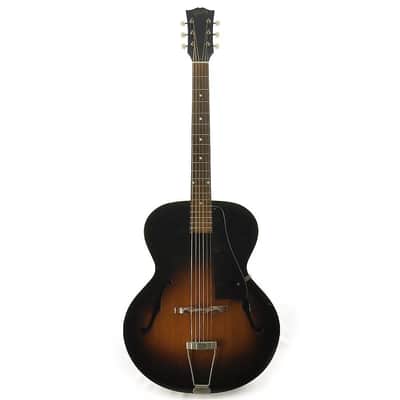
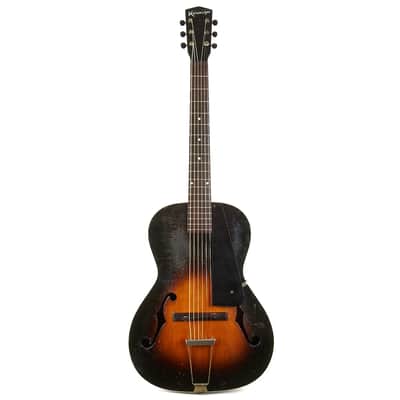
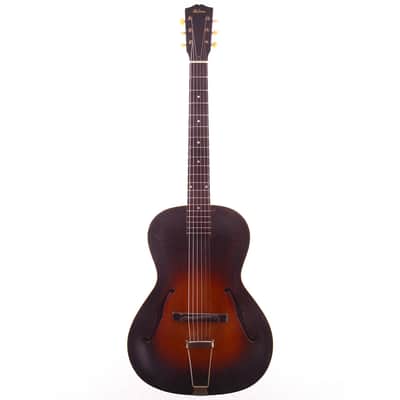
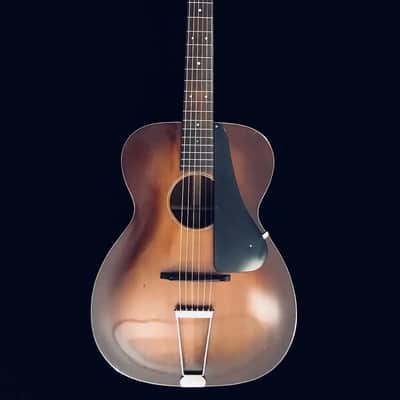
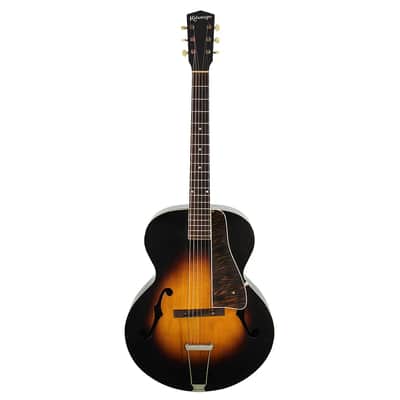
Gibson L-48 1946 - 1957
The Gibson L-48 was introduced after World War II as a simple archtop acoustic. There was some variation as to the wood used on the body through the '40s. Other changes to the wood composition occurred in 1952 and 1957.
Years of Production: 1946 - 1957
Design Elements: Kluson Deluxe tuners, dot inlays, sunburst finish, F-holes - 7
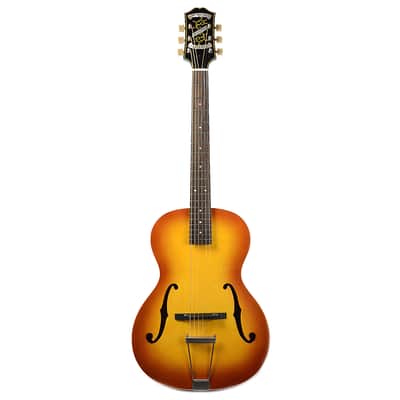
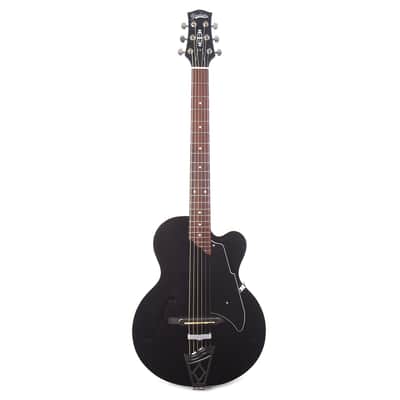
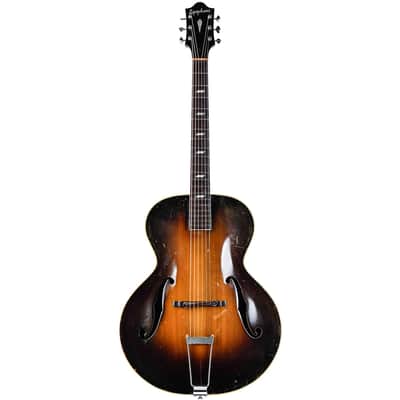
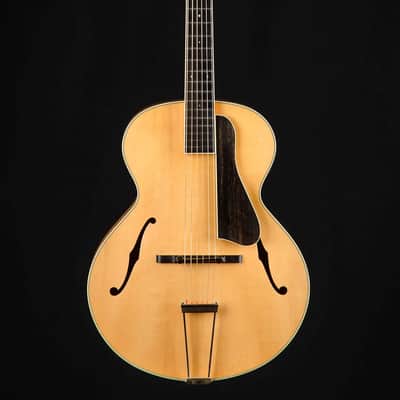
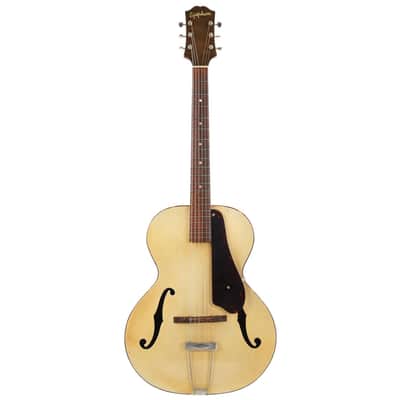
Epiphone Masterbilt Century Olympic
The Epiphone Masterbilt Century Collection Olympic captures the original quality construction and rich tone that put the company on the map with 21st century electronics for the best of old and new. The Olympic is the classic archtop entry in the series built with a solid spruce top with traditional longitudinal and mahogany body with a Shadow NanoFlex HD under-saddle pickup/eSonic HD preamp combo to make sure you're heard wherever you play. Completed with aesthetic accents like an historic aged-nickel trapeze tailpiece and dovewing banner logo headstock, this model gives a nod to the past with a contemporary build that players of any age will love. - 9
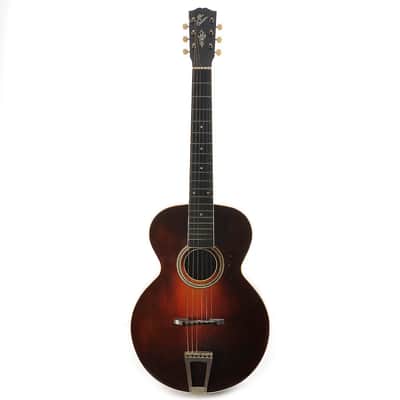
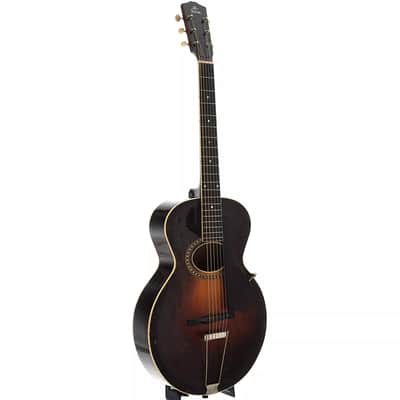
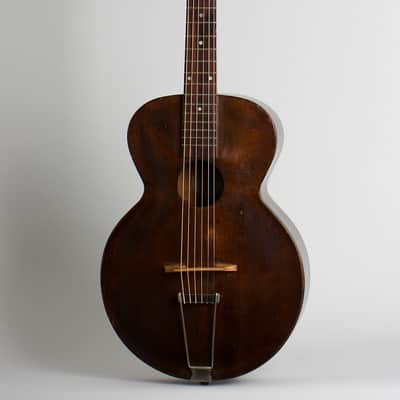
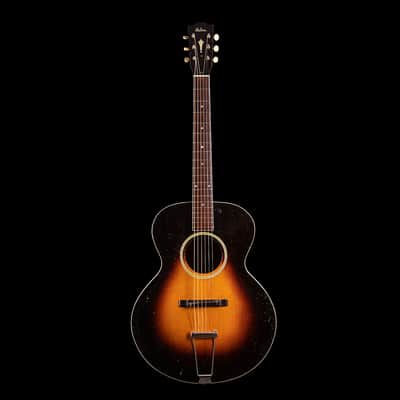
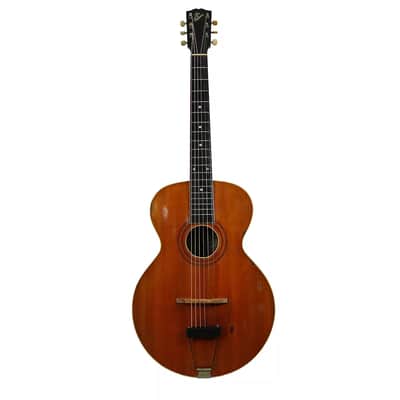
Gibson L-3 1902 - 1925
Part of the L series, the L-3 evolved from a circular to an oval soundhole starting in 1928. This guitar has an arched Spruce top with Birch back and sides.
Years of Production: 1902 - 1925 - 16
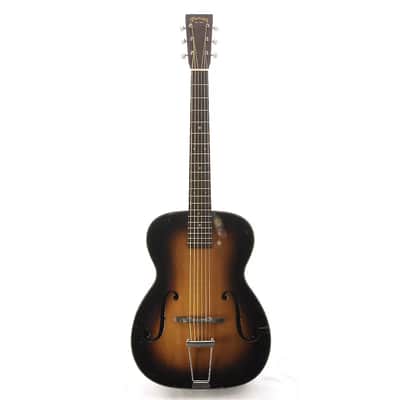
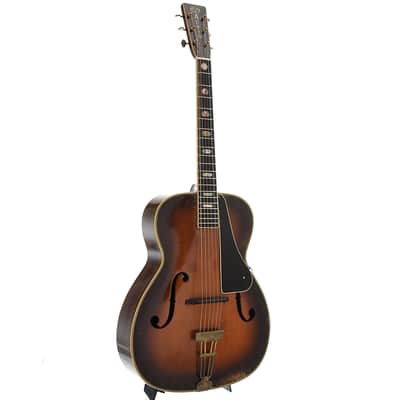
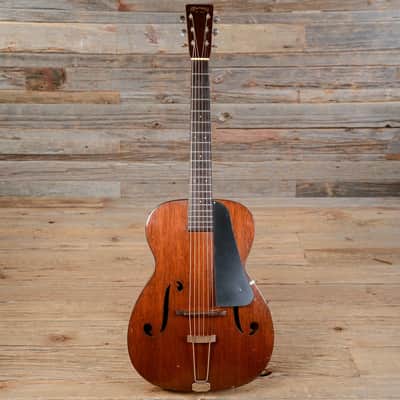
Martin R-18 Archtop 1934 - 1945
Martin produced the R-series of archtops from 1932 to 1942. These guitars failed to earn much attention from players in their day, though are well-regarded by some modern collectors. The R-18 was the first entry in the R-series. Initially, the top was arched with bracing, but by 1937, the R-18 used a carved top.
Years of Production: 1932 - 1942
Wood Composition: Mahogany back and sides, Spruce top, Rosewood fingerboard
Design Elements: F-holes, dot inlays, 4-ply top binding, 14 frets (clear of body) - 27
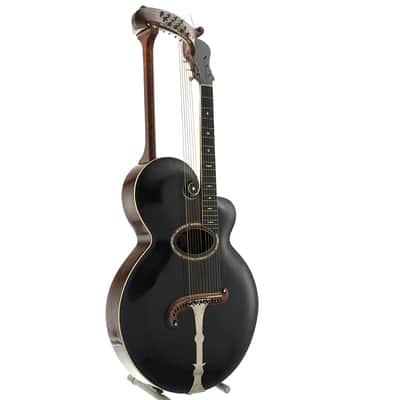
Gibson Style U Harp Guitar 1902 - 1927
A truly legendary piece of gear, the Gibson Style U Harp was one of the company's first ventures into uncharted design territory. The forerunner to the double-neck guitars which would appear half a century later, the U Harp combined 10 sub-bass strings and six in standard tuning along with a spruce top and birch body for a lush sound in an unprecedented package. A collector's item in every sense of the term. - 29
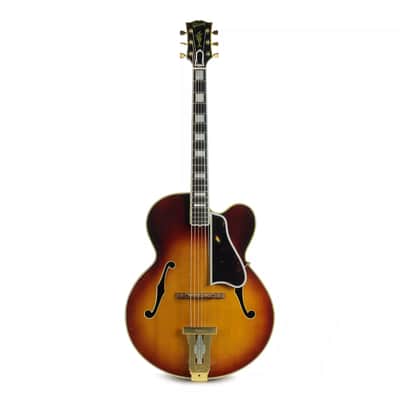
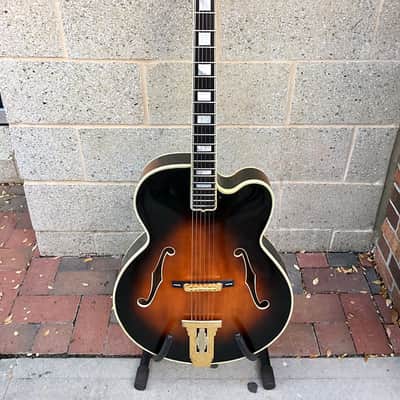
Gibson L-5C 1948 - 1969
Originally built by legendary Gibson luthier, Lloyd Loar, the Gibson L-5 is an extremely collectible acoustic archtop. The earliest L-5s are the most prized, but later examples like those from the '50s are still very highly regarded instruments. The L-5 C was introduced as the L-5 P as a cutaway version of the L-5. The name was switched to L-5 C in 1948.
Years of Production: 1948 - 1969
Body Style: Archtop acoustic, single cutaway
Design Elements: F-holes, bound elevated pickguard, bound fingerboard, block inlays
Notable Players: Maybelle Carter, Lee Ritenour, Wes Montgomery - 32
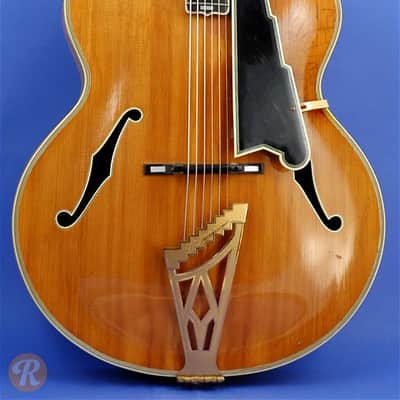
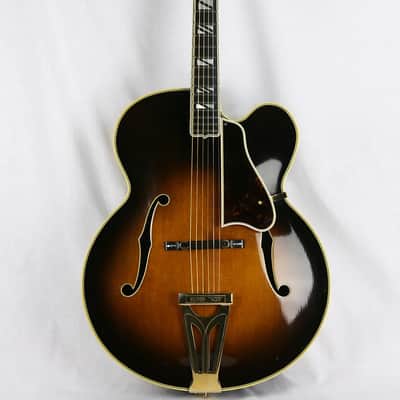
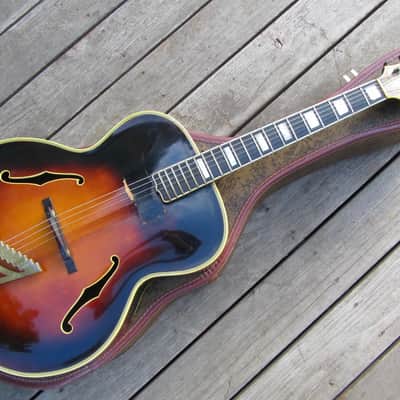
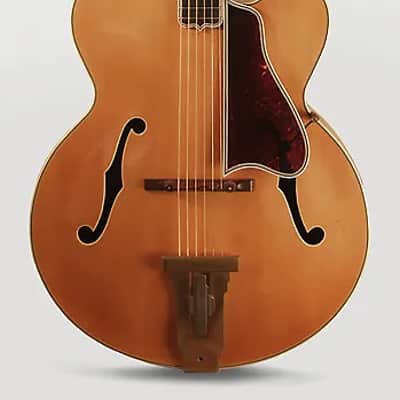
D'Angelico New Yorker Natural 1948
John D'Angelico built 1,164 guitars between 1932 and his death in 1964. His major designs include the Excel and New Yorker, which many collectors rank as some of the finest archtop guitars ever built. Valuation on rare vintage archtops such as the New Yorker is done on a very case-by-case basis. Because the market is so specific and small, no two guitars can be accurately priced exactly the same. Many D'Angelico guitars have suffered from binding deterioration, and those with replaced binding are less desirable than others. The large-bodied New Yorker featured multi-binding on its pickguard and f-holes, and ranks as the most valuable D'Angelico.
Years of Production: 1936 - 1964
Unique to this Era: D'Angelico switches to a stairstep-style tailpiece in 1943. By 1949, most Excels are built with a cutaway.
Body Style: Archtop acoustic
Wood Composition: Curly Maple back and sides, Spruce top
Design Elements: Multi-bound pickguard, f-holes, split block inlays, stairstep tailpiece, multi-bound top - 37
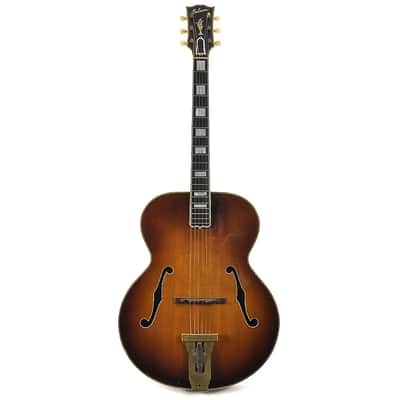
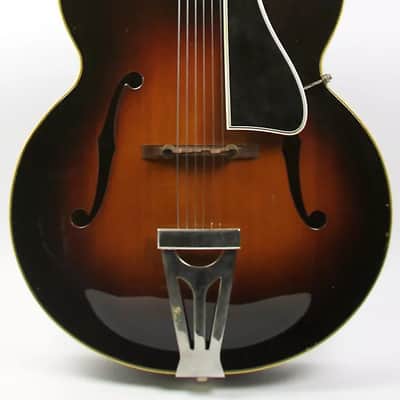
Gibson L-5 1939 - 1958
Originally built by legendary Gibson luthier, Lloyd Loar, the Gibson L-5 is an extremely collectible acoustic archtop. The earliest L-5s are the most prized, but later examples like those from the '50s are still very highly regarded instruments. Starting in 1939, a cutaway version was produced which lasted until 1982.
Years of Production: 1939 - 1958
Body Style: Archtop acoustic
Design Elements: F-holes, bound fingerboard, block inlays
Notable Players: Maybelle Carter, Lee Ritenour, Wes Montgomery - 41
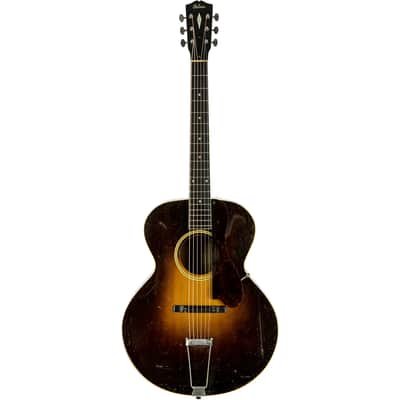
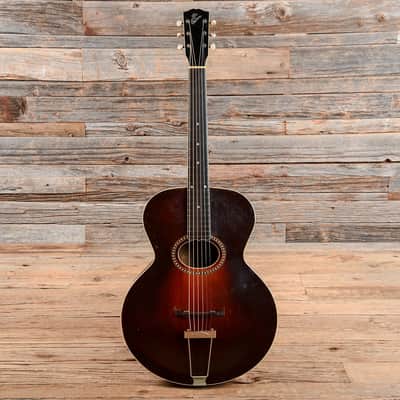
Gibson L-4 14-Fret 1928 - 1934
Gibson has used the L-4 moniker on a number of different style guitars over the years starting in 1912. The original L-4 was an acoustic archtop with an oval sound-hole and elevated pickguard. By 1928, the design had changed to a more circular sound-hole with a 14 frets clear of the body. The model changed again when F-holes were introduced in 1933, before the L-4 eventually morphed into an electric archtop as the L-4CES starting in 1958.
Years of Production: 1928 - 1934
Unique to this Year: First year with unbound fingerboard.
Body Style: Archtop acoustic
Design Elements: Round sound-hole, trapeze tailpiece, single-bound top and back, 14 frets clear of body - 43
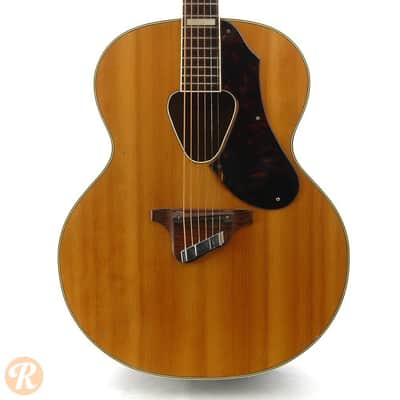
Gretsch 6021 Town & Country Natural
Gretsch produced some guitars under the Bacon Belmont brand name for catalog distribution in the '50s. This model is virtually identical to the Gretsch 6021 Town and Country.
Body Style: Flattop jumbo
Wood Composition: Spruce top, Maple back and sides - 49
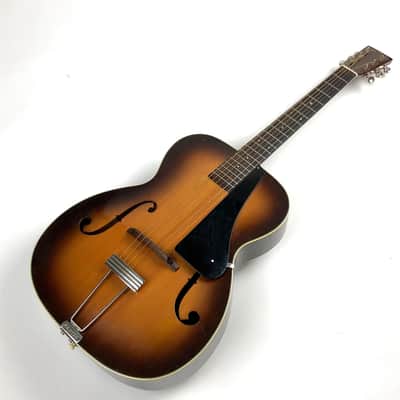
Martin C-1 F-Hole 1932 - 1942
The Martin C-1 was an archtop acoustic guitar with a solid Spruce top and Mahogany back and sides. This model featured a round sound hole from 1931 - 1933, while an F-hole model debuted in 1932 and became the standard appointment until production ended in 1942.
The round hole specimens (of which only 449 were made) are slightly more valuable than the F-hole specimens (786 made).
Gibon archtops are generally thought to be superior to the Martin archtops of this period.
Years of Production: 1932 - 1942 - 51
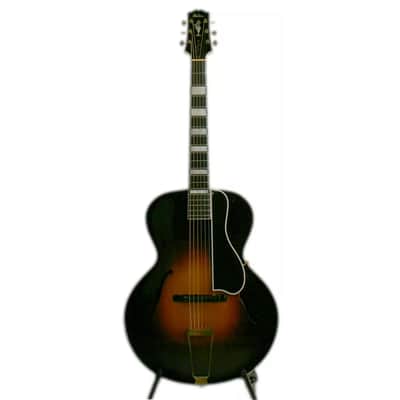
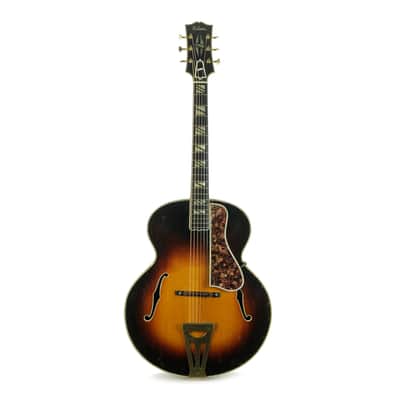
Gibson L-5 1934 - 1938
The Gibson L-5 is one of most iconic acoustic archtop guitars ever made. An important dividing line in its history is 1934, when the body enlarged from 16" wide to 17" wide. Some 16" models continued in production, and the earlier smaller bodied specimens are considered more valuable.
Years of Production: 1934 - 1938