MOTU 1296 Digital Interface with PCI-324 Card and Cable
New Price€180.69
+ Shipping
This listing has ended
See similar gear from other Reverb sellers
Listed:9 years ago
Views:260
Watchers:2
Offers:4

Pawlet, VT, United States
Our users rate Reverb
I am the original owner of the MOTU 1296 Core System. It's been sitting in the rack for years, but is 100% functional.
Back in the day this interface blew the doors off of the competing PT interfaces in terms of sonics.
Here is what Pro Sound News had to say about it:
The MOTU 1296 is a computer-based, 24-bit/96 kHz hard disk recording system for Mac OS and Windows 95/98. It has 12 simultaneous inputs and outputs. The system consists of a PCI card connected to a standard 19-inch, two-space, rackmountable I/O unit.
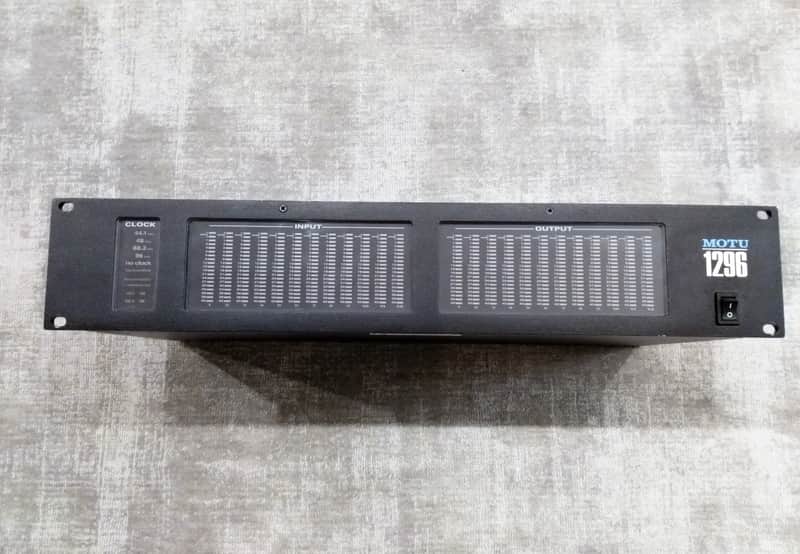
The front panel features 24 19-segment level meters with peak/hold indicators - one for each input and output channel, and an informative panel with LED illumination to indicate clocking and sample rate conversion information.
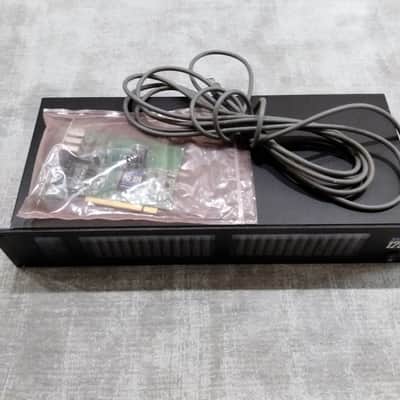
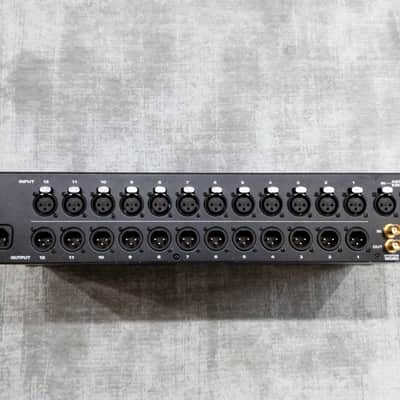
The rear panel has four banks of I/O in the following formats: one bank of 12 +4 dBu XLR analog inputs, one bank of 12 XLR +4dBu analog outputs and one pair of AES/EBU stereo digital I/O ports on XLR connectors. The AES/EBU I/O features independent sample rate converters for input and output. It also includes a pair of BNC connectors for system word clock I/O, and a separate BNC word clock jack for independently synchronizing the 1296's AES/EBU output to an external input clock, as well as an Audio Wire (similar but not identical to FireWire) connector for connecting the included 15 foot cable to the computer's PCI-324 sound card.
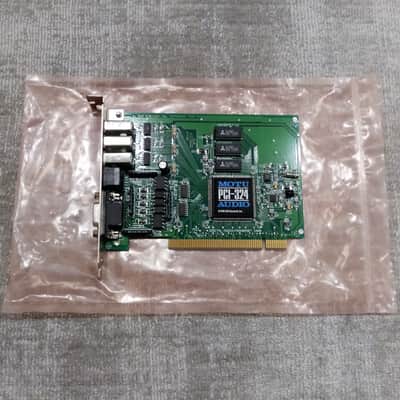
Up to three 1296 I/O units can be connected to the system's single PCI card for a maximum of 36 input and 36 output connections, or one can connect - as I did - single MOTU 2408 and 308 units to the PCI-324 card's other two Audio Wire inputs. Unfortunately, when one's system clock is set at one of the two high sample rates (88.2 or 96 kHz), any lower sample rate MOTU units connected to the sound card go into a standby mode, unable to pass any I/O. Switch the system clock to 44.1 or 48 kHz, however, and they spring back to life to work happily in tandem with the 1296.
The MOTU system, as usual, includes a copy of AudioDesk, a full-featured audio workstation software application for the Mac OS, which supports both 16- and 24-bit recording. For Windows users, a WAV driver is included for audio applications that support multichannel recording.
Also included are ASIO drivers for both Mac and Windows, enabling multichannel operations with Cubase VST, Logic and any other DAW applications for both Mac and Windows that support ASIO drivers.
It also ships with a standard Mac Sound Manager driver for any audio application that supports Sound Manager. I use that driver frequently for routing playback of Internet audio files downloaded or streamed, in any format (RealAudio, MP3, Liquid Audio, QuickTime, Windows Media, etc.) to the MOTU PCI-324 card.
Output through the MOTU hardware, these compressed files sound as good as they possibly can. Furthermore, once Apple's Sound Manager has routed them to the MOTU card, I can easily capture even streaming audio files directly to my hard disk via MOTU's Digital Performer. And you thought that Sound Manager was useful only for ripping CD tracks!
I used Digital Performer 2.72 for all my tests. This has long been my DAW sequencer application of choice, a decision continually reinforced by the exemplary manner in which MOTU hardware integrates with it.
Regardless what software you use with the MOTU 1296, the host computer determines the number of tracks that the software application can record and play simultaneously, as well as the amount of real-time effects processing that can be applied to a mix. A faster computer with more RAM and faster hard drives allows a greater number of simultaneous tracks and real-time effects.
Dave Roberts, MOTU's demo guy supreme, says he gets 24-track recording and 36-track playback at 96 kHz with a G4 450 MHz single processor CPU, 256 MB of RAM and an Adaptec 29160 SCSI card controlling a Glyph drive chassis containing a 15,000 rpm Seagate Cheetah.
The bottom line here is: Anyone contemplating recording lots of tracks at high sample rates should buy the newest and fastest computer.
Here's how the 1296 deals with sample rate issues in general: The 1296's AES/EBU section is equipped with real-time (asynchronous) sample rate converters on both input and output. In addition, the AES/EBU section has its own clock crystal, allowing it to run at a completely independent sample rate from the 1296 system clock (as set by one's DAW software application). Together, these features provide a great deal of flexibility in making digital transfers.
One can transfer digital audio using the following three scenarios:
• Transfer digital audio into or out of the 1296 at a sample rate completely different from that of the 1296's system clock rate.
• Transfer digital audio into the 1296 without using any external synchronization arrangements (i.e., the 1296 does not have to lock to an external clock).
• Receive AES/EBU input at one sample rate, run the 1296 system clock at a second sample rate, and send AES/EBU output at yet a third sample rate.
The sample rate and clock flexibility built into the 1296 unit simply add a couple of extra levels of master/slave clocking and I/O possibilities to the equation. I cannot conceive of a routing scenario among the equipment present in my studio that I could not accomplish with my MOTU setup.
Although the 1296 has 12 physical inputs and 12 physical outputs, the AES/EBU input pair must "steal" two of the 12 analog inputs. On the output side, however, the AES/EBU pair can mirror any of the output pairs, so one does not have to steal anything.
In use
I am sorry to come to a bit of an anticlimax here, but the wonderful sound quality of the MOTU 1296 was no surprise. At 96 kHz, it sounded as good as my (considerably higher-priced) Merging Technologies Sphynx I/O unit and, at the lower sample rates, sounded at least as good as MOTU's 2408 Mk. II and 1224i boxes which is to say, the 1296 is very fine indeed.
The sample rate conversion "quality loss" was similarly not much of an issue. Although using asynchronous conversion (rather than the characteristically better-sounding but less flexible synchronous conversion algorithms employed by dedicated hardware boxes costing at least twice the price of the 1296), I heard no undesirable artifacts whatsoever.
I dare say that the state-of-the-art ADC and DAC chips (as well as the analog input and output amplifiers) used in the 1296 are now good enough to cease being a factor for discussion in any except the most high-end uses for the system. And that is certainly a good thing!
Summary
With the 1296 I/O unit, MOTU has succeeded in extending its hardware and software universe into the world of high sample rate recording, losing none of the previous units' "no muss/no fuss" bulletproof reliability in the process. Although one definitely needs a state-of-the-art computer to fully take advantage of all its multichannel possibilities, this is a small price to pay for such high sound quality and I/O flexibility.
Back in the day this interface blew the doors off of the competing PT interfaces in terms of sonics.
Here is what Pro Sound News had to say about it:
The MOTU 1296 is a computer-based, 24-bit/96 kHz hard disk recording system for Mac OS and Windows 95/98. It has 12 simultaneous inputs and outputs. The system consists of a PCI card connected to a standard 19-inch, two-space, rackmountable I/O unit.
The front panel features 24 19-segment level meters with peak/hold indicators - one for each input and output channel, and an informative panel with LED illumination to indicate clocking and sample rate conversion information.
The rear panel has four banks of I/O in the following formats: one bank of 12 +4 dBu XLR analog inputs, one bank of 12 XLR +4dBu analog outputs and one pair of AES/EBU stereo digital I/O ports on XLR connectors. The AES/EBU I/O features independent sample rate converters for input and output. It also includes a pair of BNC connectors for system word clock I/O, and a separate BNC word clock jack for independently synchronizing the 1296's AES/EBU output to an external input clock, as well as an Audio Wire (similar but not identical to FireWire) connector for connecting the included 15 foot cable to the computer's PCI-324 sound card.
Up to three 1296 I/O units can be connected to the system's single PCI card for a maximum of 36 input and 36 output connections, or one can connect - as I did - single MOTU 2408 and 308 units to the PCI-324 card's other two Audio Wire inputs. Unfortunately, when one's system clock is set at one of the two high sample rates (88.2 or 96 kHz), any lower sample rate MOTU units connected to the sound card go into a standby mode, unable to pass any I/O. Switch the system clock to 44.1 or 48 kHz, however, and they spring back to life to work happily in tandem with the 1296.
The MOTU system, as usual, includes a copy of AudioDesk, a full-featured audio workstation software application for the Mac OS, which supports both 16- and 24-bit recording. For Windows users, a WAV driver is included for audio applications that support multichannel recording.
Also included are ASIO drivers for both Mac and Windows, enabling multichannel operations with Cubase VST, Logic and any other DAW applications for both Mac and Windows that support ASIO drivers.
It also ships with a standard Mac Sound Manager driver for any audio application that supports Sound Manager. I use that driver frequently for routing playback of Internet audio files downloaded or streamed, in any format (RealAudio, MP3, Liquid Audio, QuickTime, Windows Media, etc.) to the MOTU PCI-324 card.
Output through the MOTU hardware, these compressed files sound as good as they possibly can. Furthermore, once Apple's Sound Manager has routed them to the MOTU card, I can easily capture even streaming audio files directly to my hard disk via MOTU's Digital Performer. And you thought that Sound Manager was useful only for ripping CD tracks!
I used Digital Performer 2.72 for all my tests. This has long been my DAW sequencer application of choice, a decision continually reinforced by the exemplary manner in which MOTU hardware integrates with it.
Regardless what software you use with the MOTU 1296, the host computer determines the number of tracks that the software application can record and play simultaneously, as well as the amount of real-time effects processing that can be applied to a mix. A faster computer with more RAM and faster hard drives allows a greater number of simultaneous tracks and real-time effects.
Dave Roberts, MOTU's demo guy supreme, says he gets 24-track recording and 36-track playback at 96 kHz with a G4 450 MHz single processor CPU, 256 MB of RAM and an Adaptec 29160 SCSI card controlling a Glyph drive chassis containing a 15,000 rpm Seagate Cheetah.
The bottom line here is: Anyone contemplating recording lots of tracks at high sample rates should buy the newest and fastest computer.
Here's how the 1296 deals with sample rate issues in general: The 1296's AES/EBU section is equipped with real-time (asynchronous) sample rate converters on both input and output. In addition, the AES/EBU section has its own clock crystal, allowing it to run at a completely independent sample rate from the 1296 system clock (as set by one's DAW software application). Together, these features provide a great deal of flexibility in making digital transfers.
One can transfer digital audio using the following three scenarios:
• Transfer digital audio into or out of the 1296 at a sample rate completely different from that of the 1296's system clock rate.
• Transfer digital audio into the 1296 without using any external synchronization arrangements (i.e., the 1296 does not have to lock to an external clock).
• Receive AES/EBU input at one sample rate, run the 1296 system clock at a second sample rate, and send AES/EBU output at yet a third sample rate.
The sample rate and clock flexibility built into the 1296 unit simply add a couple of extra levels of master/slave clocking and I/O possibilities to the equation. I cannot conceive of a routing scenario among the equipment present in my studio that I could not accomplish with my MOTU setup.
Although the 1296 has 12 physical inputs and 12 physical outputs, the AES/EBU input pair must "steal" two of the 12 analog inputs. On the output side, however, the AES/EBU pair can mirror any of the output pairs, so one does not have to steal anything.
In use
I am sorry to come to a bit of an anticlimax here, but the wonderful sound quality of the MOTU 1296 was no surprise. At 96 kHz, it sounded as good as my (considerably higher-priced) Merging Technologies Sphynx I/O unit and, at the lower sample rates, sounded at least as good as MOTU's 2408 Mk. II and 1224i boxes which is to say, the 1296 is very fine indeed.
The sample rate conversion "quality loss" was similarly not much of an issue. Although using asynchronous conversion (rather than the characteristically better-sounding but less flexible synchronous conversion algorithms employed by dedicated hardware boxes costing at least twice the price of the 1296), I heard no undesirable artifacts whatsoever.
I dare say that the state-of-the-art ADC and DAC chips (as well as the analog input and output amplifiers) used in the 1296 are now good enough to cease being a factor for discussion in any except the most high-end uses for the system. And that is certainly a good thing!
Summary
With the 1296 I/O unit, MOTU has succeeded in extending its hardware and software universe into the world of high sample rate recording, losing none of the previous units' "no muss/no fuss" bulletproof reliability in the process. Although one definitely needs a state-of-the-art computer to fully take advantage of all its multichannel possibilities, this is a small price to pay for such high sound quality and I/O flexibility.
| Listed | 9 years ago |
|---|---|
| Condition | Excellent (Used) Excellent items are almost entirely free from blemishes and other visual defects and have been played or used with the utmost care.Learn more |
| Brand | |
| Model |
|
| Finish |
|
| Categories | |
| Year |
|
| Made In |
|
Product safety information may be available here.