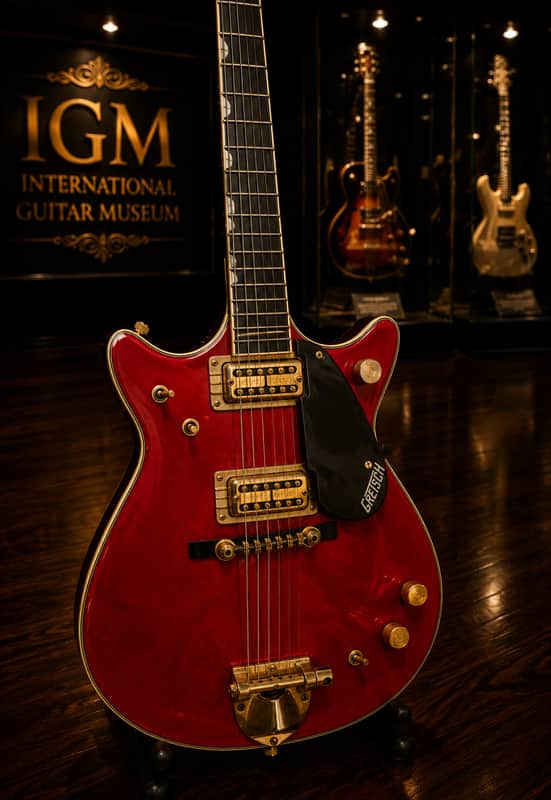
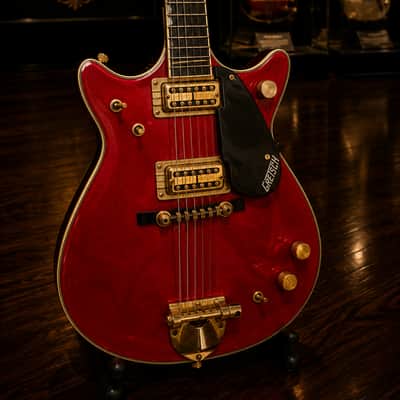
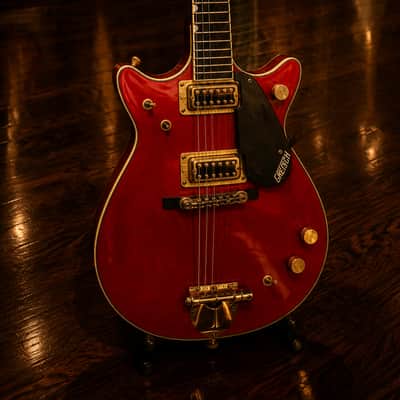
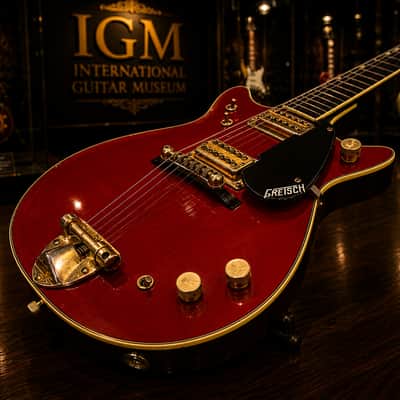
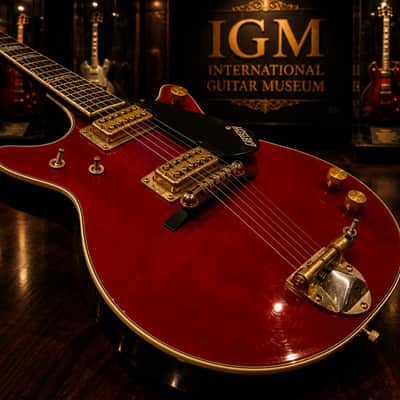
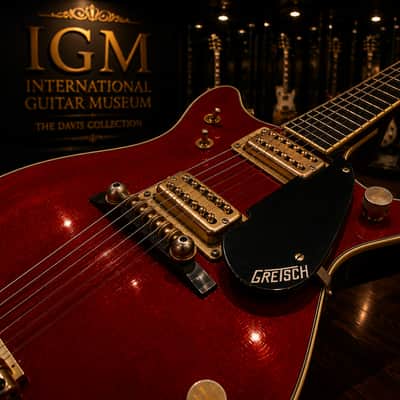
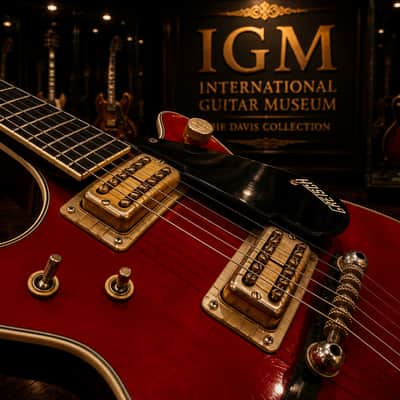
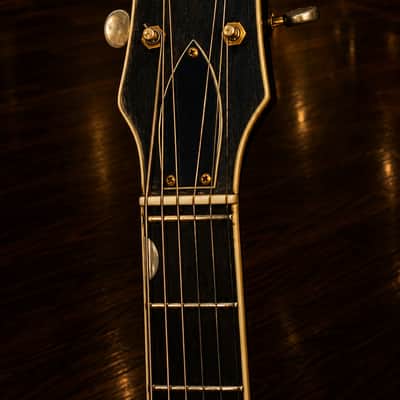
Gretsch JET FIREBIRD 6131 1961 - Red transparent
This seller has not set a shipping cost for Romania. Please contact them to ask about shipping.


Our users rate Reverb
JET FIREBIRD 6131
1961 GRETSCH JET FIREBIRD 6131 WITH BURNS TREMOLO
HISTORY
The Gretsch Jet Firebird story begins in 1955, two years after Gretsch introduced the Duo Jet as the company's answer to the Gibson Les Paul. The Jet Firebird was essentially the Duo Jet's flamboyant sibling — identical in construction but distinguished by its signature Oriental Red lacquer top over a black back and sides, a finish that immediately set it apart on any stage or in any showroom.
The Jet series went through several significant evolutionary stages. The earliest examples from 1953–1957 used DeArmond DynaSonic single-coil pickups. In late 1957 a landmark change occurred: Gretsch adopted the new Filter'Tron humbucker, designed by Ray Butts, which gave the Jets their defining chime and punch and became the sound most players associate with vintage Gretsch to this day.
Your 1961 model represents an extraordinarily important transitional moment. In 1961 — the same year Gibson transitioned the Les Paul back toward the SG's double cutaway — Gretsch made the same move, redesigning the entire Jet series with a double cutaway body. This gave the player dramatically improved upper fret access while retaining all the tonal character of the chambered mahogany construction that defined the line. The 1961 double-cutaway Jet Firebirds are the very first examples of this new format — first-year transition guitars, which always carry special significance to serious collectors.
Simultaneously with the double-cutaway redesign, Gretsch swapped the Bigsby vibrato for a Burns unit — the flat-arm Burns vibrato tailpiece made in England, which became standard equipment on the Jet series from 1961 through 1968 before Bigsby was reinstated. The Burns tremolo has a distinct character: lighter and more responsive than the Bigsby, with a flat arm that sits elegantly against the body, it gives the guitar a refined European quality that perfectly complements Gretsch's already sophisticated aesthetic. On a 1961 first-year double-cutaway example, the Burns unit is the correct, period-authentic hardware — and its presence confirms and anchors the guitar's transitional-year identity.
The Jet Firebird continued in production until 1971. In 1968 the Filter'Tron pickups were replaced with Super'Tron humbuckers. The 1961–1967 window — Filter'Trons and Burns tremolo — represents the most collectible configuration of the double-cutaway era, and 1961 first-year examples are the rarest within that window.
SPECIFICATIONS — 1961 GRETSCH JET FIREBIRD 6131
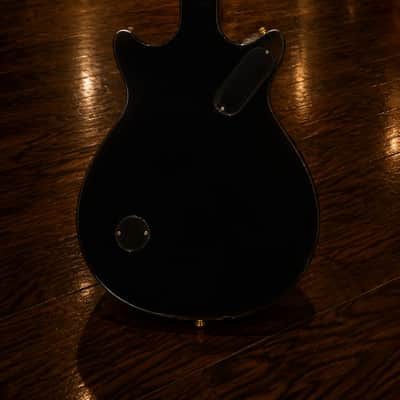
Body: Chambered mahogany back and sides with bound arched laminated maple top Finish: Oriental Red lacquer top / black back and sides
Body Shape: Double cutaway — first year of this configuration
Neck: Mahogany, set neck
Fingerboard: Ebony
Inlays: Thumbnail (half-moon) pearl inlays
Zero Fret: Yes
Frets: 22 medium-jumbo
Scale Length: 24.5 inches
Nut Width: 1 11/16 inches
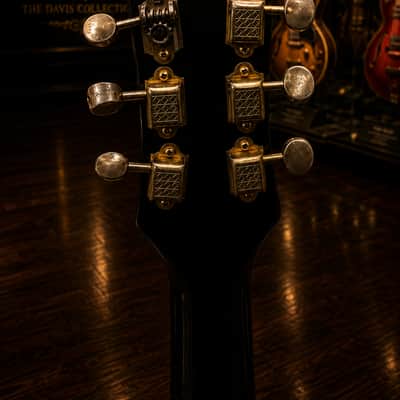
Headstock: Bound, walnut veneer face with pearl Gretsch "T-roof" logo
Tuners: Open-back Grover StaTite with oval buttons (chrome hardware on 1961) . Note: missing tuner cover.
Pickups: Two Filter'Tron humbuckers (gold-plated surrounds on some examples)
Controls: Two volume controls (lower treble bout), one master volume (upper treble bout), three-way pickup selector switch, three-way tone switch, standby switch
Knobs: Arrow-through-G style
Bridge: Space Control bridge on ebony base
Tailpiece: Burns flat-arm vibrato — standard equipment 1961–1968
Pickguard: Black with engraved Gretsch logo
Weight: Approximately 7–7.5 lbs (chambered body keeps weight remarkably low)
VALUATION
The 1961 Gretsch Jet Firebird in correct double-cutaway/Burns tremolo configuration is among the more consequential collectibles in the Gretsch Jet family, and the market reflects it.
| Listed | 4 hours ago |
|---|---|
| Condition | Very Good (Used) Very Good items may show a few slight marks or scratches but are fully functional and in overall great shape.Learn more |
| Brand | |
| Model |
|
| Finish |
|
| Year |
|
| Made In |
|
| Right / Left Handed |
|
| Body Type |
|
| Number of Strings |
|
Product safety information may be available here.

