Pioneer RG-2 Dynamic Range Expander Fluorescent Meters, Ex Sound, Vintage 1970s, JAPAN, Read Descri
This listing has ended
See similar gear from other Reverb sellers

Our users rate Reverb
Last chance! Next week if it hasn't sold it goes to Goodwill.
PLEASE READ--THIS UNIT HAS THREE PROBLEMS!
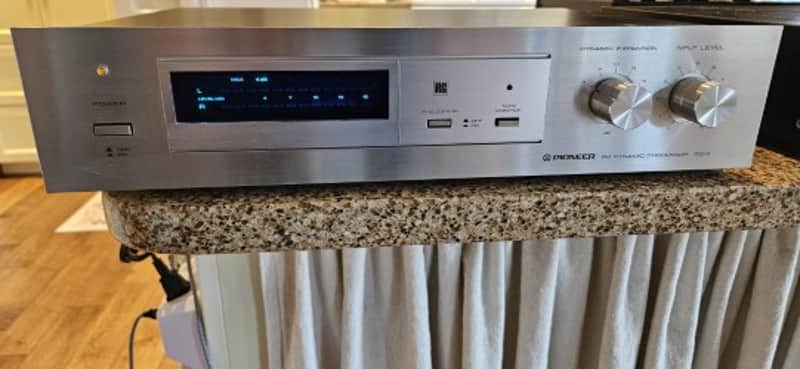
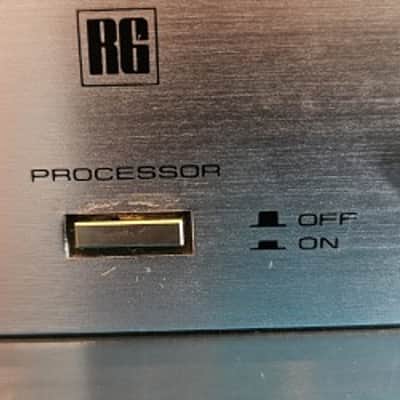
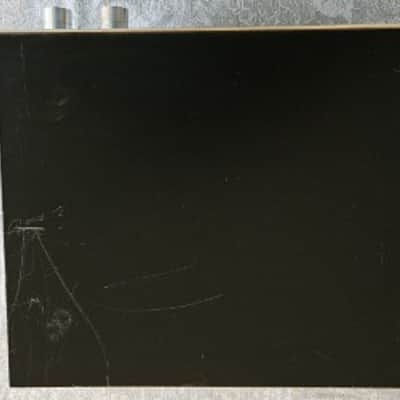
Although this unit is cosmetically in pretty good shape--there are some scratches on the top as you can see in the pictures (the face is quite nice), the tape monitor button is finicky and willl engage, but it takes a gentle touch! Also, the button to disengage the processer is superglued in the "on" position.
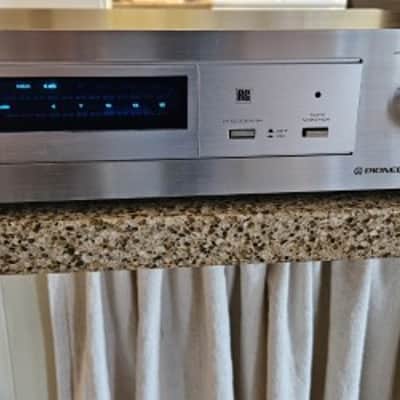
Also, the blue flouroscan lights were intermittant--sometimes they worked perfectly, other times they turned off. However, I opened her up, cleaned all the contacts, and after three days of checking, it seems to work fine now (although no guarantees).
Despite those problems, the unit does its dynamic expansion perfectly, with no noise when adjusting the output level, and both knobs move smoothly and evenly.
Because of these factors, I'm going to start this listing at $125, and will decrease the price over time.
Here are the features and specs of the unit:
The Pioneer RG-2 Dynamic Processor (often casually called the “RG-Two”) is a very interesting piece of late-1970s hi-fi history. It belongs to a category of components that were extremely popular during the golden age of stereo experimentation — devices designed to “improve” recordings in various ways. In this case, the RG-2 was intended to restore or expand dynamic range that had been compressed during recording, FM broadcasting, or cassette duplication.
In practical terms, it attempted to make music sound:
more open,
more dramatic,
punchier,
and more “live.”
And when used carefully, it actually could sound surprisingly effective.
The Pioneer RG-2 was manufactured roughly around 1979–1981
It appeared during the peak silver-face / rack-system era when companies like Pioneer Corporation, Sansui, Technics, dbx, and SAE were producing equalizers, reverbs, dynamic expanders,
noise reduction units, and spectrum analyzers for serious home stereo enthusiasts.
The RG-2 was marketed as a fairly sophisticated dynamic processor rather than a gimmick device.
What a Dynamic Expander Does:
Music is often compressed during production so soft sounds become louder and loud sounds become less extreme.
A dynamic expander does the opposite:
soft passages stay soft,
loud passages become more dramatic,
transient attack becomes stronger,
and the overall presentation can feel more lifelike.
The RG-2 specifically focused on: restoring musical dynamics, improving perceived punch, and increasing contrast between quiet and loud sounds.
This was especially appealing for FM radio, cassette tapes, older LPs, and heavily compressed rock recordings.
Major Features:
1. Dynamic Expansion Processing
The main feature was adjustable dynamic range expansion.
The front controls allowed users to vary the amount of expansion, processing intensity, and sometimes threshold behavior.
When dialed in properly, the effect could improve drum impact, increase perceived detail, and make music sound more spacious.
2. Multiple Processing Modes
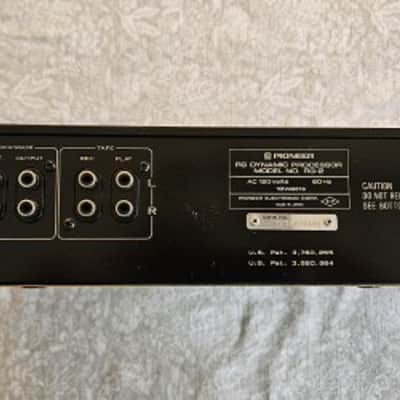
The RG-2 included different expansion settings, tape/source monitoring loops (which doesn't work on this particular unit as mentioned above), and processor bypass capability (also not available on this unit due to the faulty button).
This allowed listeners to instantly compare processed vs. unprocessed sound.
3. Fluorescent/LED Display
One of the coolest features is the display (which is intermittant on this partticular unit as mentioned above).
The RG-2 uses a large animated display showing dynamic activity signal levels, and expansion behavior.
Visually, it is peak late-70s hi-fi theater.
In a dark room next to silver Pioneer gear, blue fluorescent meters, and a cassette deck, it looks fantastic.
4. Tape Loop Integration (not working on this particular unit as mentioned above)
Like many processors of the era, it was designed to connect through a tape monitor loop, processor loop, or preamp/main-in setup.
This made it easy to insert into existing stereo systems, bypass instantly, and use selectively.
Specifications (Approximate)
Published specs vary slightly depending on source, but generally include:
Frequency response:
approximately 10 Hz – 100 kHz
Signal-to-noise ratio:
around 100 dB
Harmonic distortion:
very low, roughly 0.005%
Expansion ratio:
variable depending on settings
Inputs/outputs:
RCA line-level
Power consumption:
modest home-audio level
For its era, the RG-2 measured quite respectably.
Benefits:
Makes Flat Recordings More Exciting
This was the biggest appeal.
On FM broadcasts, cassette tapes,
and some LPs, the RG-2 could add: punch, perceived clarity, and drama.
Rock music especially benefited.
Excellent for Vintage Systems
The RG-2 pairs beautifully with vintage Pioneer receivers, silver-face amplifiers, cassette decks, and reel-to-reel systems.
Aesthetically, it belongs perfectly in a wood-paneled listening room, near lava lamps, and beside someone explaining why vinyl sounds warmer.
Surprisingly Sophisticated Circuitry
Unlike some cheap “sound enhancer” units, the RG-2 was actually fairly well engineered.
Many vintage audio enthusiasts still regard it as useful, musically pleasing, and better than many generic processors from the same period.
Values vary dramatically depending on cosmetic condition, functionality,
whether the display works properly,
and whether it has been serviced.
Typical current market values:
Condition Approximate Value
Non-working / parts only $40–80
Working with issues $80–150
Clean working example $175–300
Excellent serviced example $300–450+
Original box/manual included Can exceed $500
Units with:
dim displays, scratchy controls, or intermittent operation generally land in the $75–175 range depending on cosmetic appearance.
Collector Interest:
The RG-2 has become fairly collectible because:
Pioneer gear is highly sought after,
the display is visually impressive,
and dynamic processors are unusual conversation pieces.
Even people who don’t regularly use dynamic expansion often keep them because they look fantastic, they complete vintage Pioneer racks, and they represent a fascinating era of hi-fi experimentation.
It’s one of those components that reminds you that late-70s stereo designers firmly believed:
if music could be processed, illuminated, expanded, equalized, reverberated, or displayed with dancing lights… it absolutely should be.
This item is sold As-Described
This item is sold As-Described and cannot be returned unless it arrives in a condition different from how it was described or photographed. Items must be returned in original, as-shipped condition with all original packaging.Learn More.
| Listed | a month ago |
|---|---|
| Condition | Fair (Used) Fair condition gear should function but will show noticeable cosmetic damage or other issues.Learn more |
| Brand |
|
| Model |
|
| Finish |
|
| Categories | |
| Year |
|
| Made In |
|
Product safety information may be available here.