Martin D-16GT(E) Blue
Price$1,999
+ $99 Shipping
This listing has ended
See similar gear from other Reverb sellers
Listed:11 years ago
Views:2,420
Saves:6
Offers:4

Pembroke Pines, FL, United States
Our users rate Reverb
I'm just the type of person that always has to customize things and this production came out of that. I found the bindings on the stock Martin very uncomfortable; digging into my skin, and so I removed them and rounded the edges of the guitar so its now very comfortable and soft to play for long periods of time.
Most stock acoustic guitars I've found have thicker than necessary soundboards that don't resonate as well as if it were thinner, so I thinned out the top so that the guitar could respond and resonate better with a lighter softer touch. In this, it's a more sensitive instrument, and doesn't take as much to get the top to resonate. Great all around, but especially for delicate picking and strumming softer 'pianissimo' parts; which in my opinion is the acoustic guitars 'forte' pardon the pun over say loud banging it down.
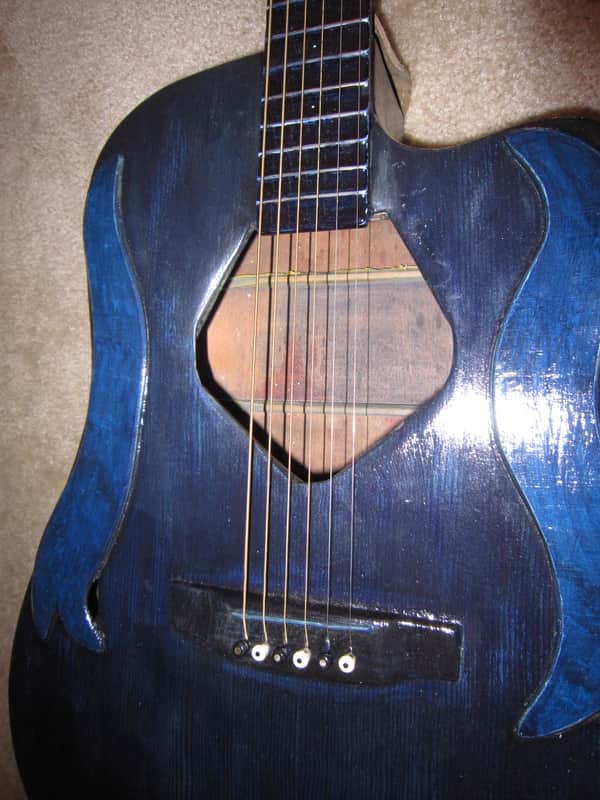
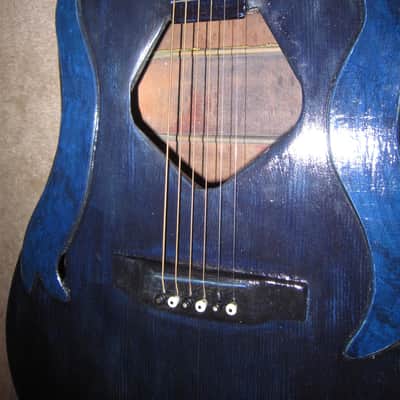
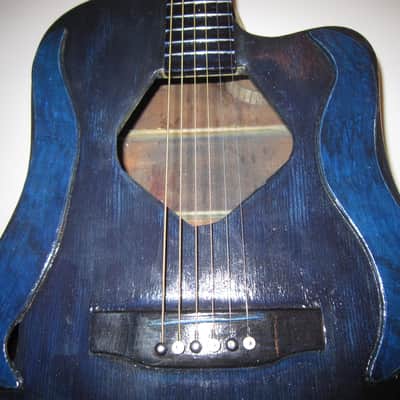
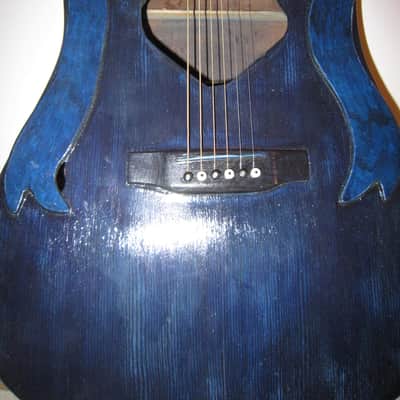
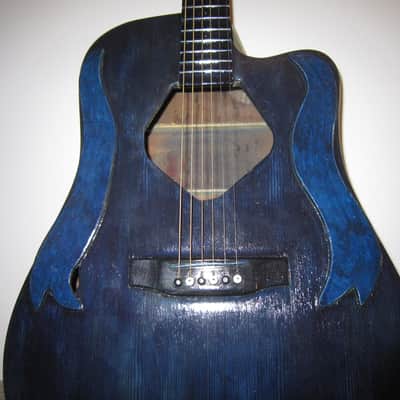
Of course the drawback with thinning the top is that you usually lose volume while gaining sensitivity. To compensate for this, I opened up the sound hole as much as I possibly could giving a more open bigger sound. There are small slits under the wavy side panels on the top which are not just decoration but to add a bit of wood body from what was taken away. Basically I took out a bit of wood under them and that added the slightly thicker wavy pieces glued on the top which I felt centered the resonating point more toward the actual sound hole.
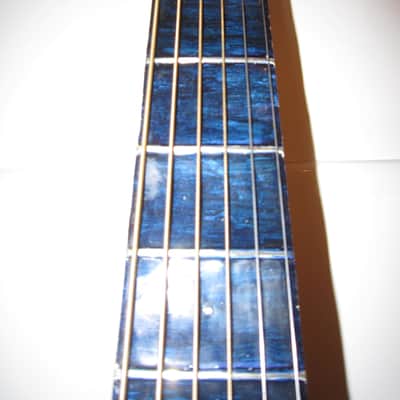
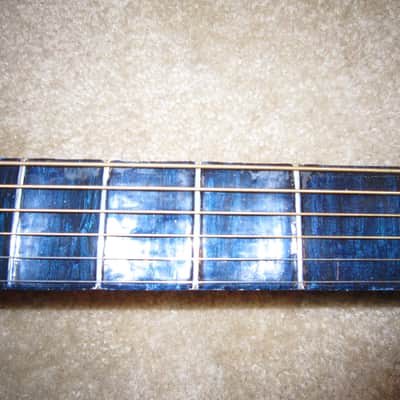
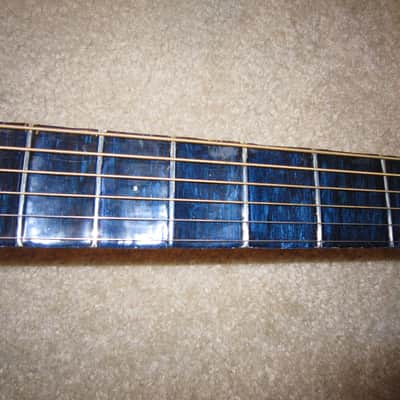
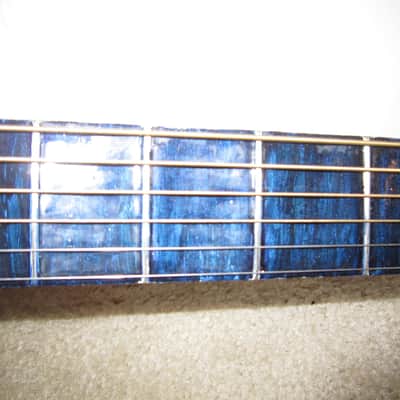
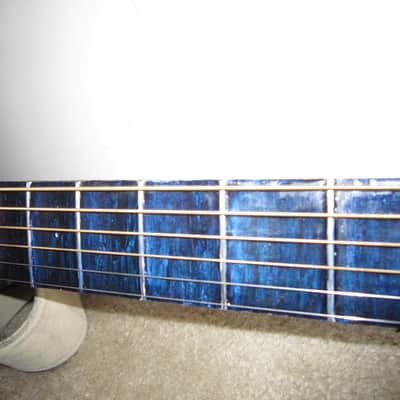
The neck was also thinned down a bit to make it more easier to play, and the fretboard slightly scalloped (not yngwie malmsteen type scallop as you can tell) giving every note more air/openness and better control over bending and vibrato. If you have not played on a scalloped board you truly don't know what you are missing in terms of note control. It took me no time whatsoever to getting used to it once I made the switch many years ago and it immediately felt more natural to begin with. I felt it just plays better and easier.
(on a side note: I read an article once about the drawbacks of scalloping, saying that you have to develop a light touch or notes can 'easily' go out of tune if you push too hard; with chords especially being a 'nightmare' to keep in tune as fretted notes being pushed too hard would sharp against the open strings. I can't tell you how absurd that article is at this point considering how unbelievably hard you really have to push down into the string to get a fretted not to go 'sharp'!! I changing absolutely nothing in my playing style and wished I had done it sooner. If anything being able to push into the string gives you a new way of doing vibrato, but honestly you really really gotta dig in even for that to happen so much so that it actually hurts your finger pads!)
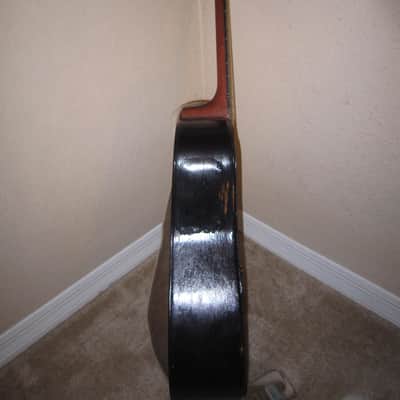
The piezo preamp was removed from the side because honestly those things sound like crap... I could never get that piezo thing to sound right...tweak tweak tweak but it still sounds like a piezy piezo. It just ruined the natural depth of the instrument in my opinion, in studio far better off close miking it, and there really are better options for live performance when it comes to pickups that make the piezo thing sound like... well that annoying piezo thing, spikey, tinny, tiny, lame! The side where the piezo preamp went has been totally filled solid so there would be no lose of sound escaping through the side, and all sound coming out the enlarged sound hole.
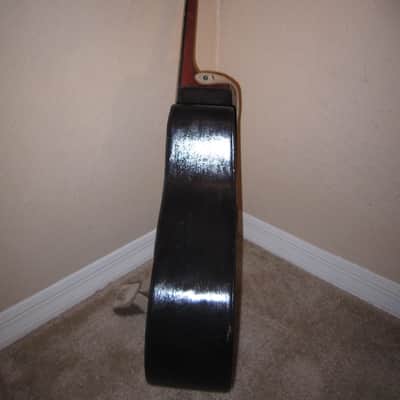
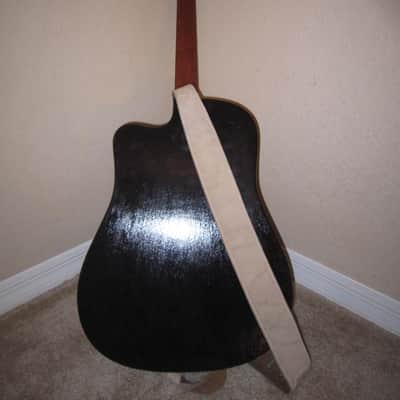
Last but surely not least the neck was tung oiled (you can always add more if you like) and the body natural indigo wood stained and many clear coats to make it shine. And yes even the fretboard was dark blued as you can see with many lacquer clear coats to look like glass, phew that was hell, but in the end I was happy with how it came out. I felt I made the already great sounding stock Martin way more comfortable, way more playable, and look way cooler, all around a custom, unique more sensitive resonant instrument.
I dare not say it 'sounds better'... i am not a luthier just a customizer... but to my ear... well, I think it does; it resonates differently now and is more fine tuned especially to delicate playing; sounding a bit more open and responsive. It already had the dark deep mellow sound that the martin glued neck bodies have over the taylor's bolt-on neck bright sound; and I preferred that over the taylor when I bought the martin instead. (the sides are mahogany by the way)
But with that depth/darkness you can be fighting a bit of muddiness in the middle; and lack of detail and clarity that the taylor's may have over the martins. But by making the modifications I made I felt I may have bridged that gap a bit... giving more detail, clarity and sensitivity to an already great guitar; while making it look pretty freakin rad in the process.
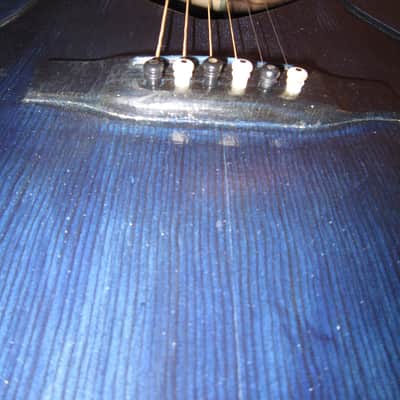
And yes there are IMPERFECTIONS EVERYWHERE!!! I just had to say that... this is no longer a 'mass produced guitar' with perfect machine finish blah blah blah... I did everything by hand... stain/paint/finish etc...and yes if you look you will see spots, smudges, tiny bubbles (God forbid I'm a total failure)... and yes the wood side hole patch is a bit bumpy, but solid as a rock and as with everything cosmetically imperfect and 'flawed'... all of it having no affect on the actual tone quality of what it is... a musical instrument and not a furniture piece.
So if you are crazy left brained perfectionistic about things please go buy yourself a stock whatever. This is made to be a folksy, unique, creative, right brained, non perfectionistic style, yet solid instrument. I did my best and the only reason I am selling it is because I never play guitar anymore and have switched my entire creative musical process to 'in the box' sample libraries via the keys many years ago. I'm just the type of person that can't stand to have things I am not using! I am not a collector type personality, and if I'm not using it or playing it, I have to get rid of it or it freaks me out.
And with that, I have been holding on to this one for a while as my one and only acoustic guitar that I customized oh so long ago; but after years of non use and me fighting to keep or sell; it's cry is to be played and not stuck in a closet or hung on a wall for 'decoration' has won out... And with that I hope someone may like to buy my long forsaken 1st and last acoustic guitar. It was a hell of a lot of work to 'ruin it's stock Martin brand value' so I'm charging double the price! But seriously I'm a poor starving artist so let best offers abound if my Martin brand destruction inspires you. (who the hell would do this to a Martin... uhh.. me...) hmm perhaps there is value in that huh
PS I made a video of me playing on it like a sloppy fool (since I never play anymore) but have no idea to get it on you tube right now (not even sure if I want to!) plus the camera mic aint so hot, and my entire studio is in massive renovation overhaul with things being sold and nothing being hooked up to record a track on a real mic, but perhaps I will put something up when that gets going, either way let me know if you are interested, peace
PPS... oh yes and I must say amidst the 'destruction' of what was a 'beautiful martin' I did take absurd care not to mess in the slightest way with the frets, ie if anything is flawless on the guitar it truly is the frets, throughout the light scalloping I made every possible effort to not in the slightest way touch the frets not wanting even a metal fragment to come off them, so yeah no metal was lost, and fret not, no frets were harmed in the making/destructing of this instrument...
Most stock acoustic guitars I've found have thicker than necessary soundboards that don't resonate as well as if it were thinner, so I thinned out the top so that the guitar could respond and resonate better with a lighter softer touch. In this, it's a more sensitive instrument, and doesn't take as much to get the top to resonate. Great all around, but especially for delicate picking and strumming softer 'pianissimo' parts; which in my opinion is the acoustic guitars 'forte' pardon the pun over say loud banging it down.
Of course the drawback with thinning the top is that you usually lose volume while gaining sensitivity. To compensate for this, I opened up the sound hole as much as I possibly could giving a more open bigger sound. There are small slits under the wavy side panels on the top which are not just decoration but to add a bit of wood body from what was taken away. Basically I took out a bit of wood under them and that added the slightly thicker wavy pieces glued on the top which I felt centered the resonating point more toward the actual sound hole.
The neck was also thinned down a bit to make it more easier to play, and the fretboard slightly scalloped (not yngwie malmsteen type scallop as you can tell) giving every note more air/openness and better control over bending and vibrato. If you have not played on a scalloped board you truly don't know what you are missing in terms of note control. It took me no time whatsoever to getting used to it once I made the switch many years ago and it immediately felt more natural to begin with. I felt it just plays better and easier.
(on a side note: I read an article once about the drawbacks of scalloping, saying that you have to develop a light touch or notes can 'easily' go out of tune if you push too hard; with chords especially being a 'nightmare' to keep in tune as fretted notes being pushed too hard would sharp against the open strings. I can't tell you how absurd that article is at this point considering how unbelievably hard you really have to push down into the string to get a fretted not to go 'sharp'!! I changing absolutely nothing in my playing style and wished I had done it sooner. If anything being able to push into the string gives you a new way of doing vibrato, but honestly you really really gotta dig in even for that to happen so much so that it actually hurts your finger pads!)
The piezo preamp was removed from the side because honestly those things sound like crap... I could never get that piezo thing to sound right...tweak tweak tweak but it still sounds like a piezy piezo. It just ruined the natural depth of the instrument in my opinion, in studio far better off close miking it, and there really are better options for live performance when it comes to pickups that make the piezo thing sound like... well that annoying piezo thing, spikey, tinny, tiny, lame! The side where the piezo preamp went has been totally filled solid so there would be no lose of sound escaping through the side, and all sound coming out the enlarged sound hole.
Last but surely not least the neck was tung oiled (you can always add more if you like) and the body natural indigo wood stained and many clear coats to make it shine. And yes even the fretboard was dark blued as you can see with many lacquer clear coats to look like glass, phew that was hell, but in the end I was happy with how it came out. I felt I made the already great sounding stock Martin way more comfortable, way more playable, and look way cooler, all around a custom, unique more sensitive resonant instrument.
I dare not say it 'sounds better'... i am not a luthier just a customizer... but to my ear... well, I think it does; it resonates differently now and is more fine tuned especially to delicate playing; sounding a bit more open and responsive. It already had the dark deep mellow sound that the martin glued neck bodies have over the taylor's bolt-on neck bright sound; and I preferred that over the taylor when I bought the martin instead. (the sides are mahogany by the way)
But with that depth/darkness you can be fighting a bit of muddiness in the middle; and lack of detail and clarity that the taylor's may have over the martins. But by making the modifications I made I felt I may have bridged that gap a bit... giving more detail, clarity and sensitivity to an already great guitar; while making it look pretty freakin rad in the process.
And yes there are IMPERFECTIONS EVERYWHERE!!! I just had to say that... this is no longer a 'mass produced guitar' with perfect machine finish blah blah blah... I did everything by hand... stain/paint/finish etc...and yes if you look you will see spots, smudges, tiny bubbles (God forbid I'm a total failure)... and yes the wood side hole patch is a bit bumpy, but solid as a rock and as with everything cosmetically imperfect and 'flawed'... all of it having no affect on the actual tone quality of what it is... a musical instrument and not a furniture piece.
So if you are crazy left brained perfectionistic about things please go buy yourself a stock whatever. This is made to be a folksy, unique, creative, right brained, non perfectionistic style, yet solid instrument. I did my best and the only reason I am selling it is because I never play guitar anymore and have switched my entire creative musical process to 'in the box' sample libraries via the keys many years ago. I'm just the type of person that can't stand to have things I am not using! I am not a collector type personality, and if I'm not using it or playing it, I have to get rid of it or it freaks me out.
And with that, I have been holding on to this one for a while as my one and only acoustic guitar that I customized oh so long ago; but after years of non use and me fighting to keep or sell; it's cry is to be played and not stuck in a closet or hung on a wall for 'decoration' has won out... And with that I hope someone may like to buy my long forsaken 1st and last acoustic guitar. It was a hell of a lot of work to 'ruin it's stock Martin brand value' so I'm charging double the price! But seriously I'm a poor starving artist so let best offers abound if my Martin brand destruction inspires you. (who the hell would do this to a Martin... uhh.. me...) hmm perhaps there is value in that huh
PS I made a video of me playing on it like a sloppy fool (since I never play anymore) but have no idea to get it on you tube right now (not even sure if I want to!) plus the camera mic aint so hot, and my entire studio is in massive renovation overhaul with things being sold and nothing being hooked up to record a track on a real mic, but perhaps I will put something up when that gets going, either way let me know if you are interested, peace
PPS... oh yes and I must say amidst the 'destruction' of what was a 'beautiful martin' I did take absurd care not to mess in the slightest way with the frets, ie if anything is flawless on the guitar it truly is the frets, throughout the light scalloping I made every possible effort to not in the slightest way touch the frets not wanting even a metal fragment to come off them, so yeah no metal was lost, and fret not, no frets were harmed in the making/destructing of this instrument...
Reverb Buyer Protection
Reverb has your back if your item is lost, damaged, or doesn't match its description. Simply report any issues within 7 days and we'll help you get a full refund.Learn more about Reverb Buyer Protection.
| Listed | 11 years ago |
|---|---|
| Condition | Excellent (Used) Excellent items are almost entirely free from blemishes and other visual defects and have been played or used with the utmost care.Learn more |
| Brand | |
| Model |
|
| Finish |
|
Product safety information may be available here.