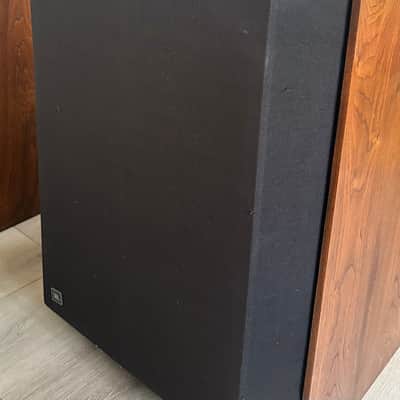
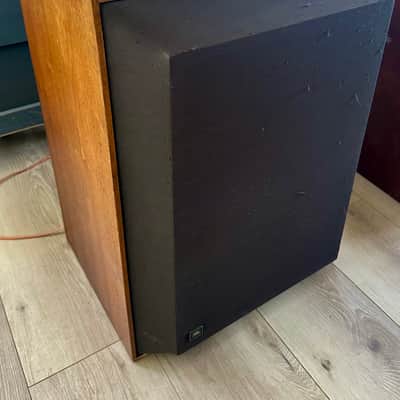
JBL L45 Flair S4 1974 - Walnut
This seller is currently away
See similar gear from other Reverb sellers

Our users rate Reverb
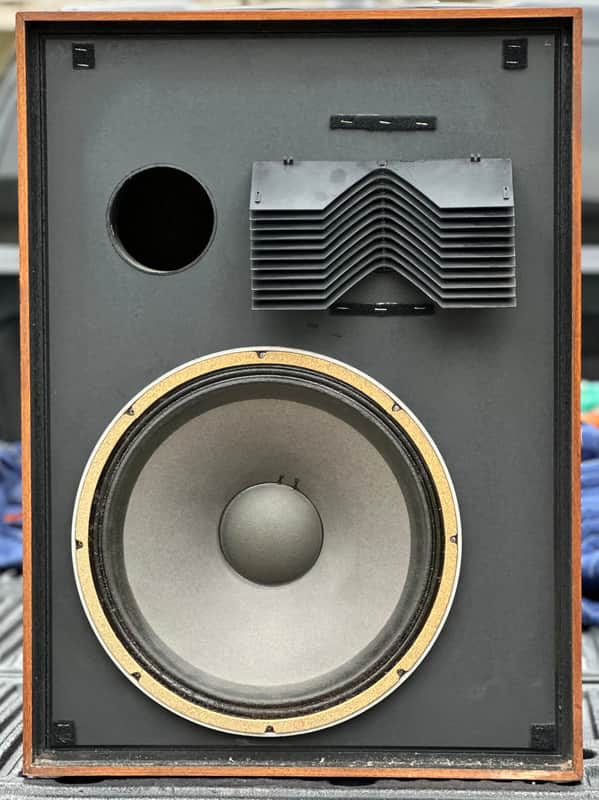
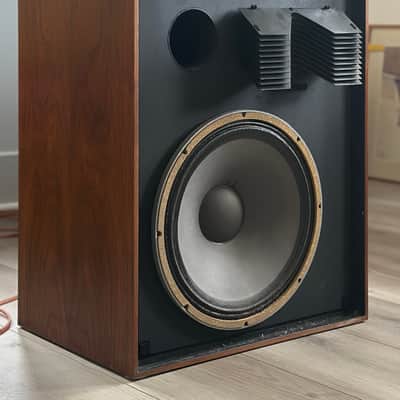
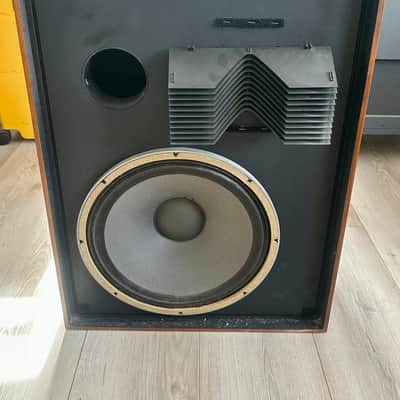
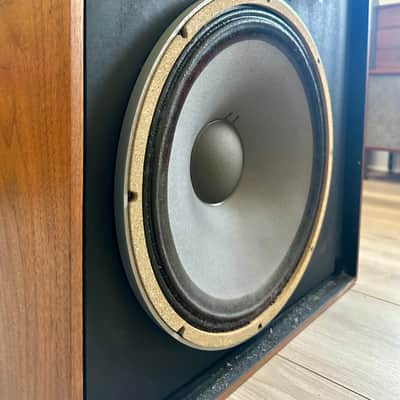
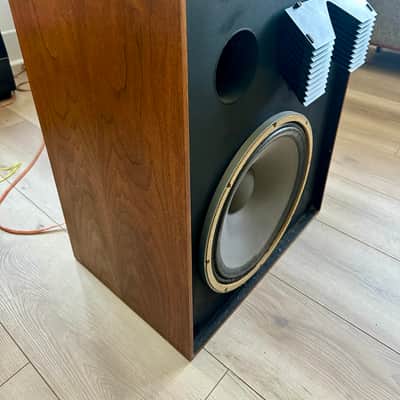
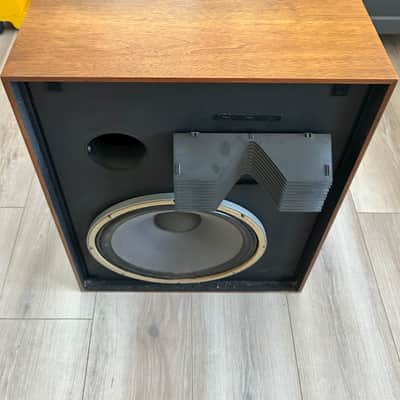
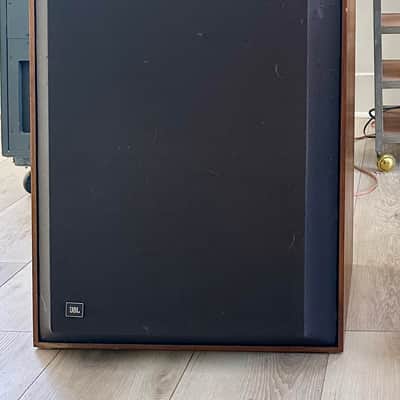
JBL L45B-S4 Flair – a rare and unusual configuration from the second generation of the L45 series, representing one of the most overlooked experiments in JBL’s 1970s history.
Originally promoted as a Super L100, the L45 was JBL’s bold attempt to bridge professional and home audio design. But it quickly evolved into something else — a modular enclosure into which the company installed nearly every available driver combination at the time, including pairings that had never been officially sold together before.
In many ways, the L45 Flair also marked a shift in JBL’s visual language. It referenced earlier models like the C36 with the 030 system, which had already introduced asymmetrically placed woofers — a subtle break from the brand’s strict design symmetry. At the same time, the Flair’s layout anticipated the functional asymmetry seen in later studio monitors like the 4315 and 4333, where visual balance gave way to acoustic logic.
This approach resulted in unmatched variety but also internal competition between component sets, all packed into a high-end enclosure. The result? A marketing failure — not because of sound or build quality, but because the product line was too complex and expensive to position clearly.
The L45B-S4 is one of five configurations from the second generation (L45B). It features:
• Woofer: JBL 130A — a refined descendant of the legendary D130, offering improved linearity for hi-fi use.
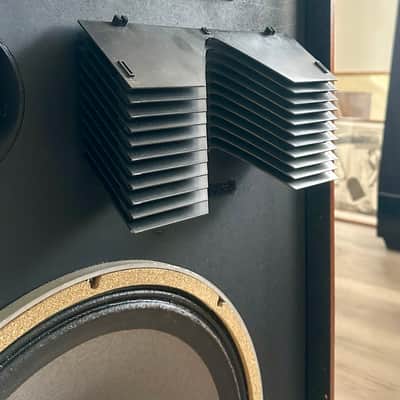
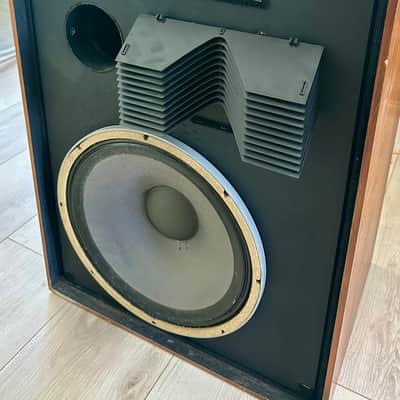
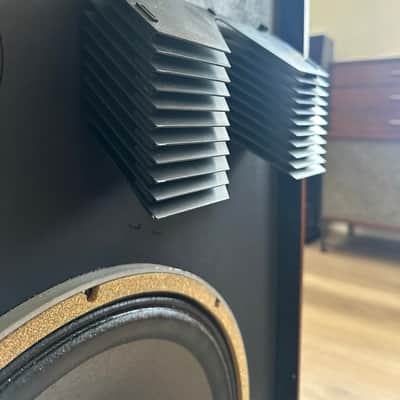
• Compression driver: LE175, here matched with an HL91 acoustic lens instead of the typical 1217‑1290 horn and HL87 lens — a nod to the evolving design language of JBL’s studio series.
• Crossover: N1200.
These speakers deliver the kind of open, detailed sound typically associated with classic horn-loaded systems from the 1960s. The presentation is both intimate and involving, with a striking clarity that holds up even at low volumes — making them not only collectible, but genuinely enjoyable to listen to in everyday use.
This system has a natural roll-off above 12kHz, due to the physical limitations of using a compression driver and horn in a two-way configuration. However, it still reproduces the upper frequencies with clarity and detail, without sounding veiled or incomplete. In fact, some listeners may prefer the sonic character of a two-way system — especially those who aren’t constantly chasing upgrades.
I say this based on personal experience using supertweeters in classic three-way JBL systems with compression drivers like the 375 and LE85. Over time, I’ve come to appreciate the coherence and tonal balance of simpler two-way designs.
It’s also worth noting that, despite the modular nature of the L45 enclosure, JBL engineers effectively locked the design — there’s no internal provision for adding extra drivers or crossover components. This strongly suggests that they considered the system complete as it was, not intended for further expansion.
I acquired this pair directly from the original owner. They come with a personal backstory that adds another layer of character — a reminder that vintage audio is not just about components, but about lived experience.
Despite the variety of configurations, L45 Flair remains one of the rarest JBL speaker series from the 1970s, and the S4 version is particularly difficult to find today — especially in complete and working condition.
The L45B-S4 were the main speakers at one of the oldest jazz kissa cafés in Tokyo — Modern Jazz Charmant. For those to whom this may be relevant.
These speakers are physically massive — no question about it. But in my opinion, they look far more elegant and interesting in person than most photos can capture.
| Listed | a year ago |
|---|---|
| Condition | Very Good (Used) Very Good items may show a few slight marks or scratches but are fully functional and in overall great shape.Learn more |
| Brand | |
| Model |
|
| Finish |
|
| Year |
|
| Made In |
|
Product safety information may be available here.