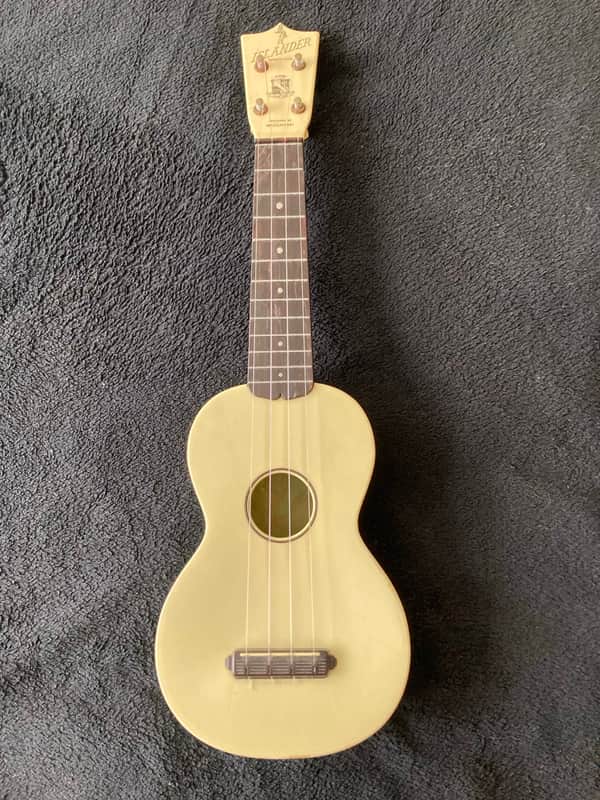
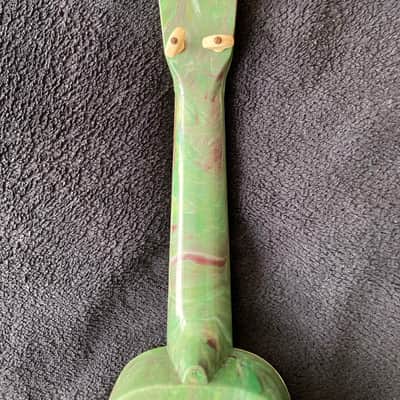
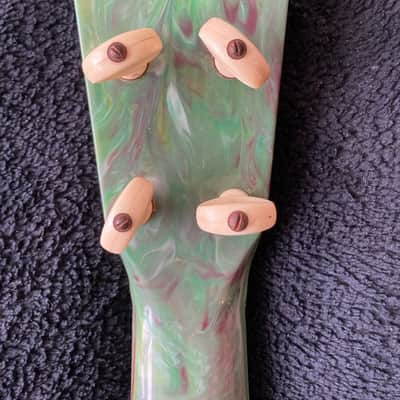
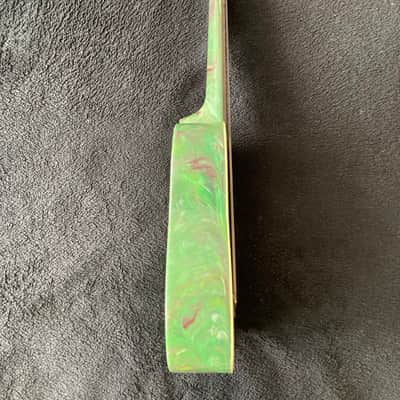
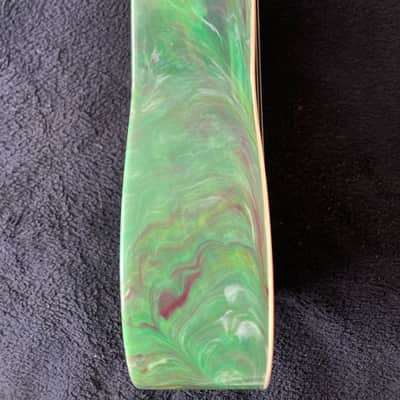
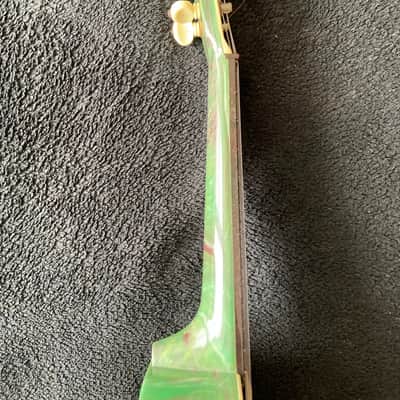
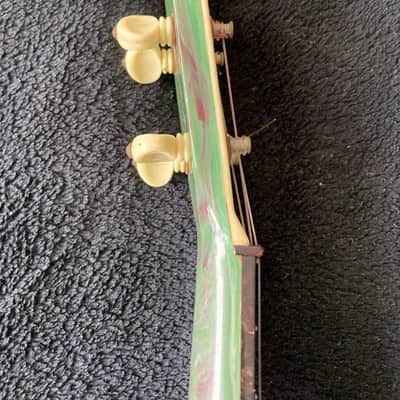
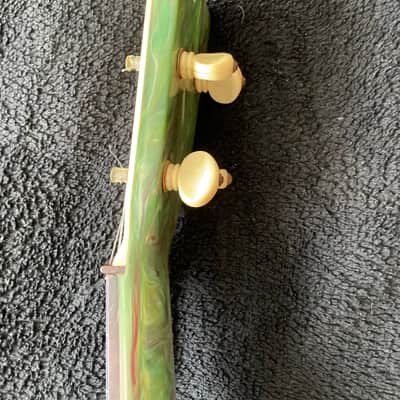
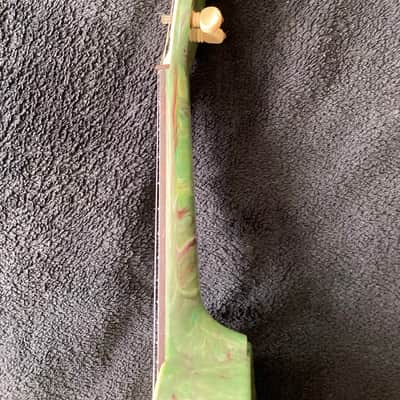

Green Maccaferri Islander Soprano Ukulele 1950s
This listing has ended
See similar gear from other Reverb sellers
Vintage Green Maccaferri Islander Plastic (Dow Styron) Soprano Ukulele
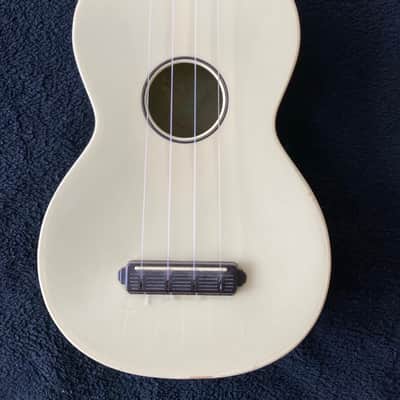
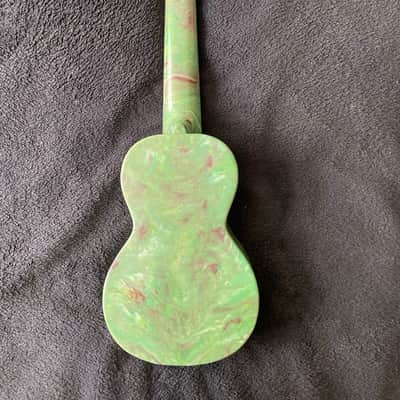
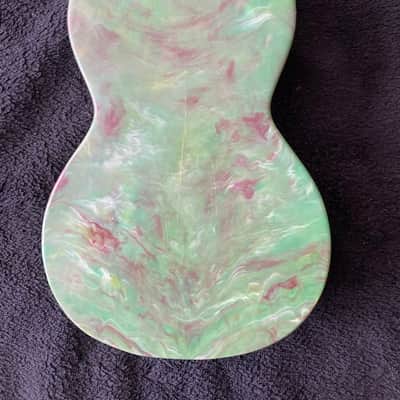
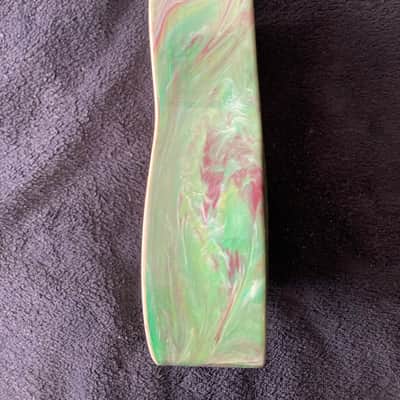
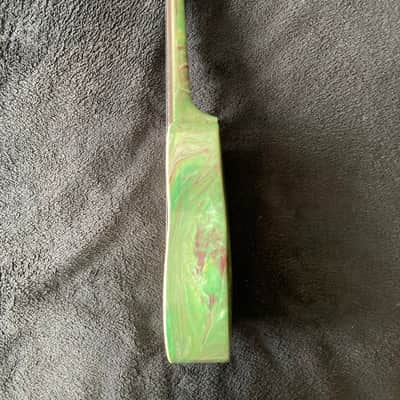
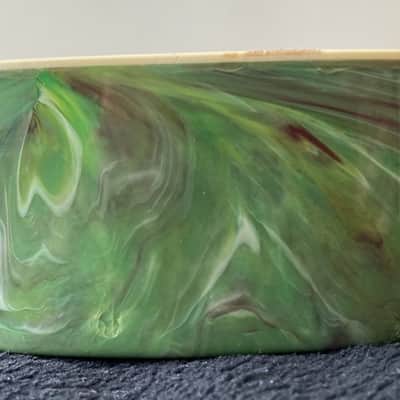
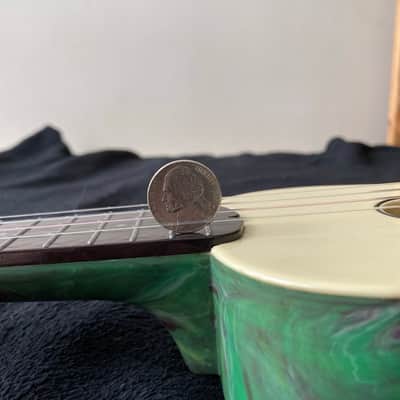
I am selling a beautiful green vintage Maccaferri Islander plastic (Dow Styron) soprano ukulele that dates back to the 1950s.
There are still Islander ukuleles around since they were so well made and sounded so good. You can get plenty of information about the history of the Islander line of plastic ukuleles by simply googling “Maccaferri,” but I think most people who know ukuleles are already familiar with this instrument.
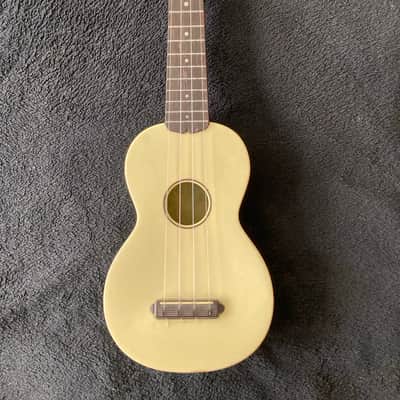
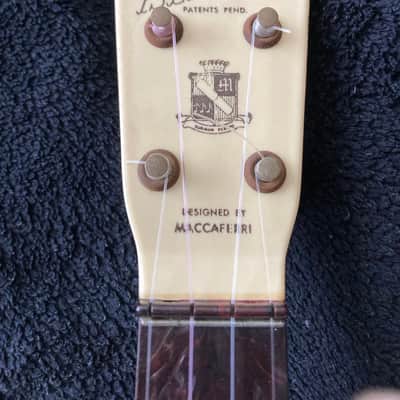
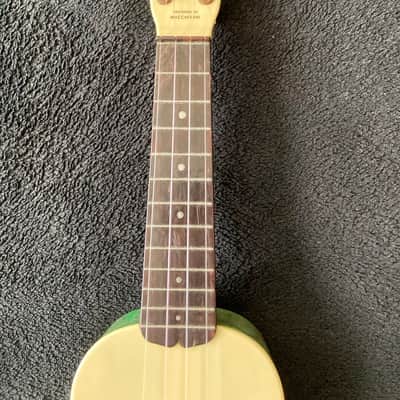
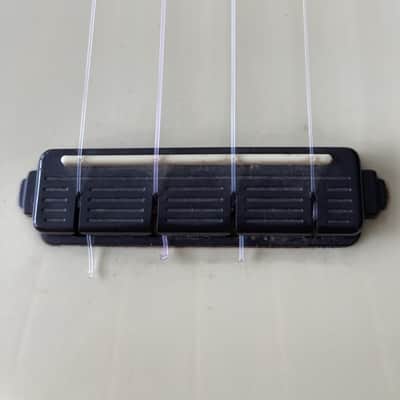
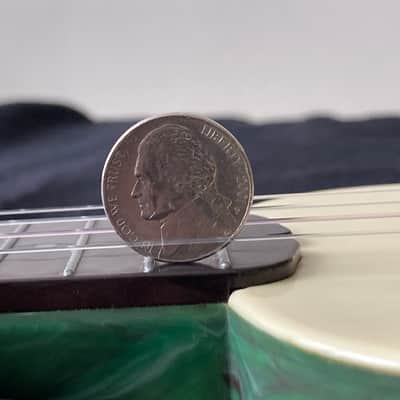
This Islander is in good condition considering that it must be at least sixty years old, likely older. There appears to be a stable crack in the back that is hard to see, amd you can barely feel it with your fingernail. It has no effect whatsoever on the instrument’s playability. There are a few trivial scuffs and scratches too that I have tried to show in the photos. The tuning pegs work fine.
Please make note of the condition, study the photos, and research the instrument before buying.
*******************
Even if you’re not interested in buying this instrument, the late John King’s wonderful article on plastic ukuleles is worth reading. Here is an excerpt:
Ukuleles Go Plastic
But what about the all-plastic ukuleles first manufactured in the 1950s? There were many brands, and several patents, all for injection-molded polystyrene instruments of varying quality. The Strad of plastic ukes was Mario Maccaferri’s Islander, made by Maccaferri’s Mastro Plastics Corp. in the Cremona of the West: Bronx, New York. Highly collectible today, the original plastic Maccaferri ukuleles were made of Dow Styron polystyrene and had Du Pont nylon strings supplied by the National Musical String Co. of New Brunswick, New Jersey. In March, 1950, according to a report in Newsweek Maccaferri was turning out 2,500 ukuleles a day—almost one every thirty seconds—with a backlog of 100,000 orders on hand. Plans for the rest of 1950 included projected sales of half-a-million ukuleles.
That same month an article in the Wall Street Journal credited a TV personality—and plastic—with popularizing the ukulele anew:
Arthur Godfrey, Styron Spark Ukulele Comeback
The ukulele business is coming back with a loud twang, thanks to Arthur Godfrey and Dow Chemical’s plastic, Styron. The ukulele was popular shortly after World War I when Hawaiian music first came in. After that it pretty well passed out of the picture.
The boom got under way last Summer, when Mr. Godfrey appeared on television with a uke. Seeing it apparently started up public demand again. The difficulty was to get an instrument cheap enough for popular sale. Mario Maccaferri, head of Mastro Plastics, who got his start making plastic reeds for wind instruments, worked with Dow engineers to design the all-plastic uke. The ukes have nylon strings and can be played under water if any one wants to try it.
Maccaferri had originally planned to invest $10,000 and turn out a five-dollar toy, but reconsidered. “I know how to make the best,” he reasoned. “Why shouldn’t I use all my experience and make a real ukulele?” Why, indeed. When he finally had a product he was satisfied with, Maccaferri had gambled $75,000 on the success of the Islander but “had a much better instrument” than he expected. The major expense was for the four large molding presses that turned out the eight major parts of the ukulele: body, neck, and head (in one molded unit); the soundboard; the fingerboard, with molded-in frets; the bridge, the soundboard ring; the head cover; the inside sound bar; and the nut. Maccaferri’s five U.S. patents covered everything separately from the nut, soundboard, and bridge to the fingerboard and the method of making it. Compared to the simple patents of George Finder and David Rosenheim, Maccaferri’s ukulele patents look like rocket science, and in a way they really are blueprints for making space-age ukes.
According to one early report, the Islander came “in all colors, and one model is flourescent.” The official line was “simulated rosewood, with the head cover and soundboard in ivory.” Over the years, countless variants were made (if there is an official tally of the different colors I have not seen it). Like Magnus and his plastic harmonica before him, Maccaferri reduced the number of parts needed to assemble an ukulele from about twenty-one for a wooden instrument, to eight for the Islander—excluding the strings and tuning pegs.
An article in Modern Plastics outlined the difficulties Maccaferri overcame with his design:
One of the largest problems encountered during the pre-production days of the Islander was the selection of a maerial formulation that would have all the properties and characteristics necessary for the particular application. Four months were spent on the choice of a material—one that would withstand the tension of the strings, one that would not distort or shrink during the life of the instrument, and one that would produce the correct pitch, resonance, and tonal quality. The final polystyrene formulation chosen combined the above requirements with resistance to the effects of dryness, moisture, heat, or cold.
Another production problem that had to be solved was the proper selection of an adhesive. The wrong adhesive would result in either shrinkage of the polystyrene or a marked deadening of sound in the completed instrument. According to the manufacturer, the selected adhesive further strengthens the polystyrene parts against the effects of dryness, moisture, heat, or cold.
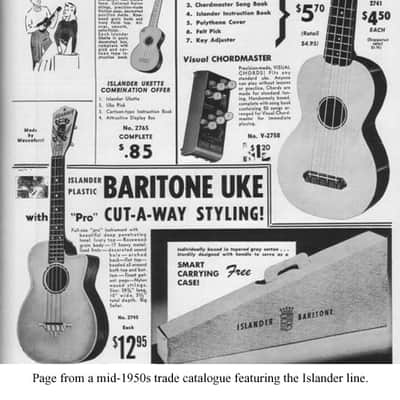
For a finishing touch, Islanders were surface treated and waxed and packaged in re-usable polyethylene bags secured at the top with rubber bands! They retailed for $5.95 (later reduced to $3.95), and cost about $1.50 to make. Maccaferri said he made 25 cents on each instrument and the rest went to middlemen. The Islander line eventually featured several other products including an extended fingerboard model, a baritone ukulele, a child’s-sized Ukette, and a patented chording device called the Visual Chordmaster. Mastro Plastics Corp. continued making ukuleles well into the 1960s.
Applied music
n 1952, an American educator addressed the shortage of string players in schools by introducing experimental pre-string training classes for fourth-graders using ukuleles. William Mihalyi was inspired by a talk he heard at the first annual conference of ASTA (American String Teachers Association) in 1951 extolling the use of ukuleles to teach both vocal and instrumental music at the same time. Mihalyi wrote:
Upon my return home, I immediately contacted my supervisor, who agreed to try ukuleles for a pre-string training program. After considerable investigation we chose plastic ukuleles with nylon strings as the instrument to use in this experiment. The tone was fine, the construction showed attention to detail, and the possibility of “long life” seemed to be present.
The instrument Mihalyi chose was the Islander Ukette. And it opened his eyes. “Without a doubt there are those who will turn up their noses at the thought of using ukuleles in schools. It is not the accepted thing! I, myself, felt that way at one time. I had been taught to look down on certain instruments as being of a lower form than others. Such thoughts are now disappearing from my mind.” It’s not clear if the program ever progressed beyond the experimental stage (unlike the Canadian program introduced by Chalmers Doane), but results were apparently beyond expectations. Students interested in the violin made the change from ukette to fiddle easily. And Mihalyi noted another possible benefit from including the ukulele in a larger music curriculum: “Even in later life playing the ukulele could be a source of enjoyment in the home.” Was he predicting the Third Wave?
References from Modern Plastics, the Wall Street Journal, Newsweek, Music Educators Journal, and Fortune were used in this article.
Text and images © 2007 by John King
Reverb Buyer Protection
Reverb has your back if your item is lost, damaged, or doesn't match its description. Simply report any issues within 7 days and we'll help you get a full refund.Learn more about Reverb Buyer Protection.
| Listed | a year ago |
|---|---|
| Condition | Good (Used) Good condition items function properly but may exhibit some wear and tear.Learn more |
| Brand | |
| Model |
|
| Categories | |
| Year |
|
| Made In |
|
Product safety information may be available here.