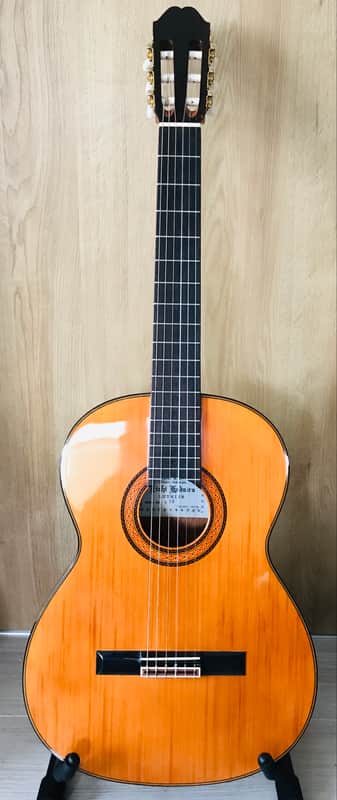
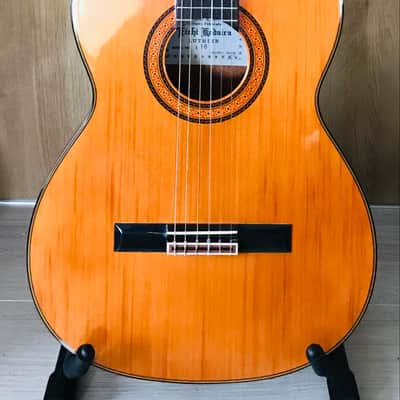
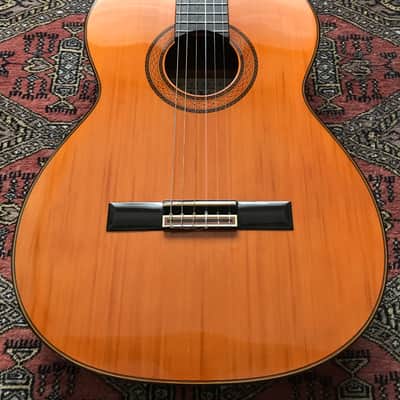
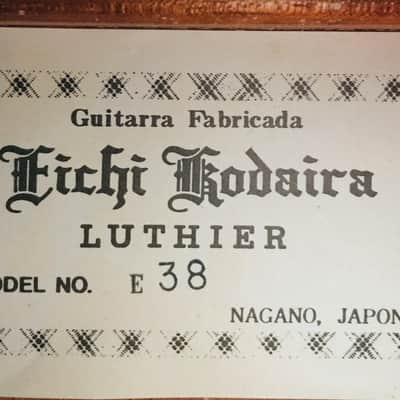
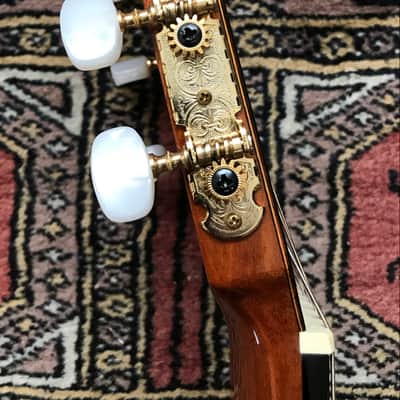
Eichi Kodaira E 38 1970s
This gear has sold
See similar gear from other Reverb sellers
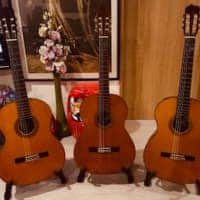
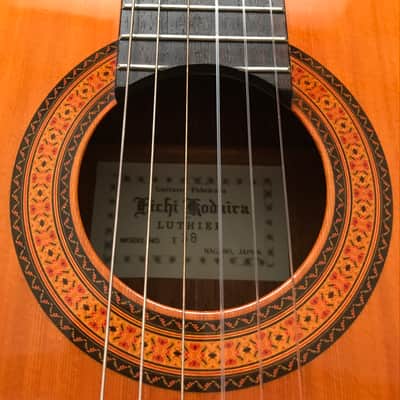
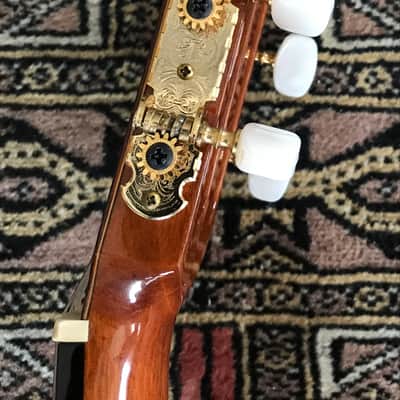
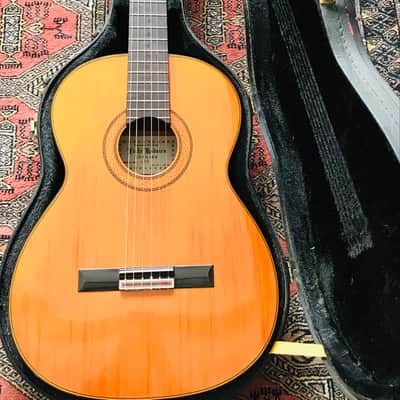
To the best of my knowledge, this guitar was made in mid-1970s by Eichi Kodaira. Eichi Kodaira was highly skilled luthier and highly regarded in Japan at the time. His aim was to produce high grade classical guitars that would be accessible to Japanese players at an affordable price. During 1970s Eichi was making guitars with his own label as well as more luxurious looking Ecole guitars, destined mostly for foreign markets. Kodaira was also a member of the famed Asturias guitar workshop, along with Masuru Matano and Hiromi Yamaguchi, maker of the Cervantes label guitars.
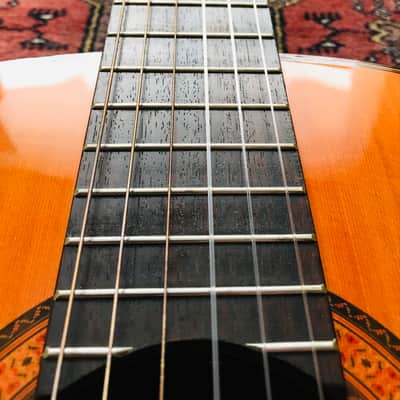
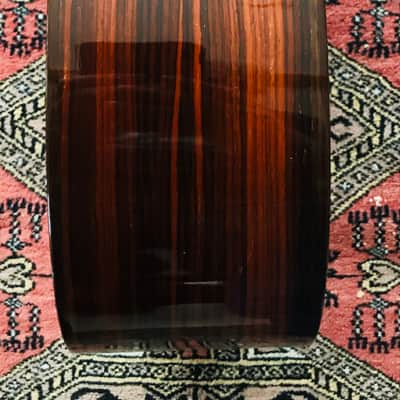
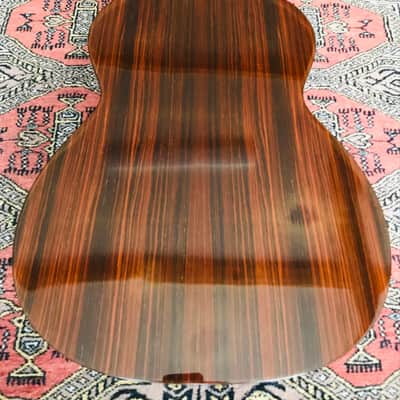
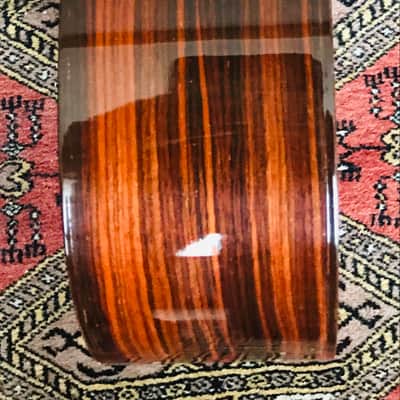
Eichi Kodaira’s instruments are highly regarded in Japan and a lot of players consider them as the great mid-price range classical guitar. Structurally, there are zero issues but there is a bit of cloudiness on the back of the guitar, picture 9. I did my best to capture it. It in no way affect playability of tone, which is very good on this guitar.
Specifications
Top: Solid Spruce
Back & Sides: Rosewood Double plate
Calling this construction "laminate" would actually be inaccurate. In the 1970s, the Japanese developed a process of gluing two solid pieces of wood together, thus reinforcing the back and sides to prevent cracking of the wood due to temperature and climate changes. These guitars perform no different from all solid wood guitars. This innovation in Japanese luthiery has allowed for these gems to survive intact over the decades.
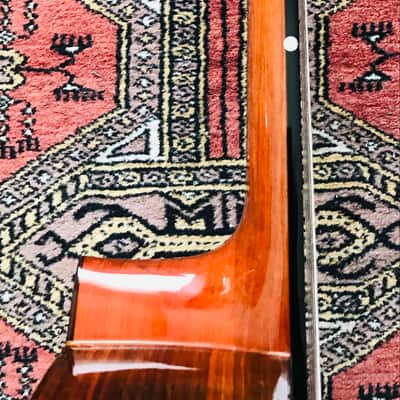
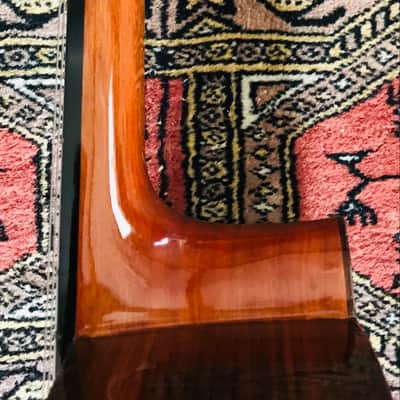
Neck: Mahogany
Fingerboard: Rosewood
Scale: 650 mm
Nut width 52 mm
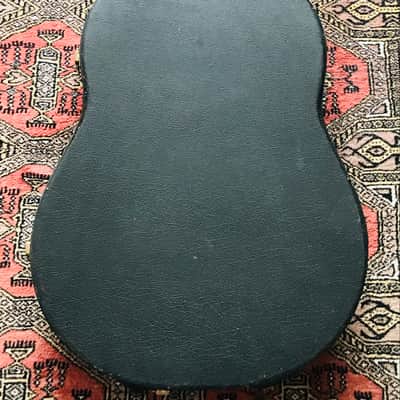
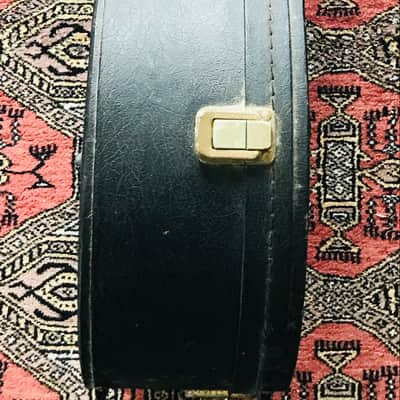
This guitar will be shipped in a case that's in useable condition. I pack all of my guitars extremely well to ensure there are no issues during shipping.
Guitars from this era are superior in quality in almost all respects to the guitars being produced today.
Japanese luthier built guitars from the late 1960s to the mid 1980s were of exceptional quality. Many of these luthiers operated small shops with anywhere from one or two master builders to perhaps 15-20 master craftsmen. Bans on certain types of wood were not yet in place, thus allowing these craftsmen to source incredibly high quality wood to build their creations. Additionally, many of the top names in Japanese guitar building were trained either in Spain or under Spanish master builders in Japan. There is no doubt that these guitars are a bargain in today's market, but locating top quality Japanese classical guitars from this era is not always easy. I do my best to make some of these guitars available at a reasonable price. Guitars built using similar materials in today's market will cost you far more than what you pay for a guitar from the golden era of Japanese classical guitars due to the scarcity or complete bans on certain types of wood. Please have a look at what I have to offer and feel free to contact me if you would like additional information about any of these guitars.
This item is sold As-Described
This item is sold As-Described and cannot be returned unless it arrives in a condition different from how it was described or photographed. Items must be returned in original, as-shipped condition with all original packaging.Learn More.
| Listed | 6 years ago |
|---|---|
| Condition | Very Good (Used) Very Good items may show a few slight marks or scratches but are fully functional and in overall great shape.Learn more |
| Brand | |
| Model |
|
| Categories | |
| Year |
|
| Made In |
|
| Body Shape |
|
Product safety information may be available here.