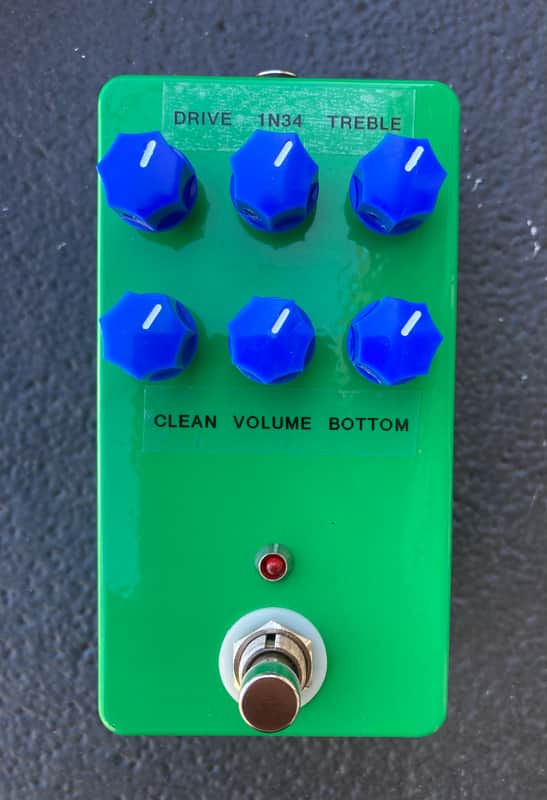
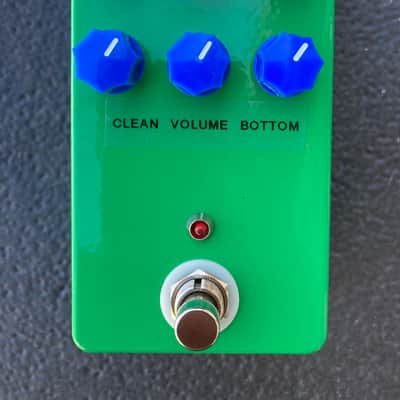
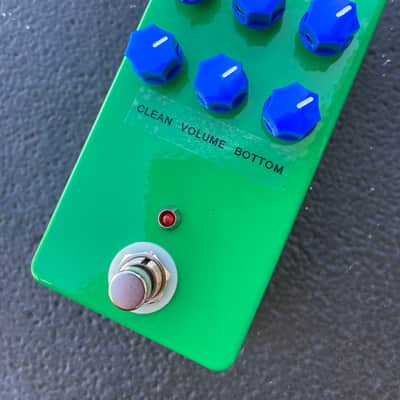
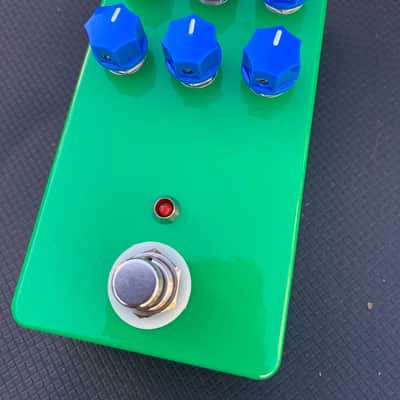
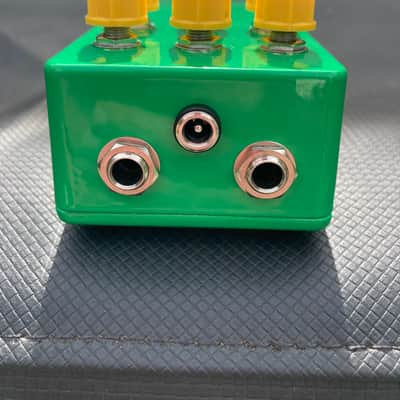
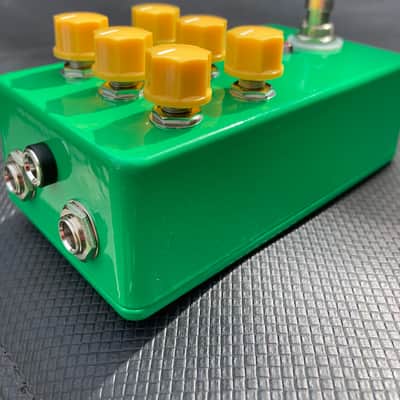
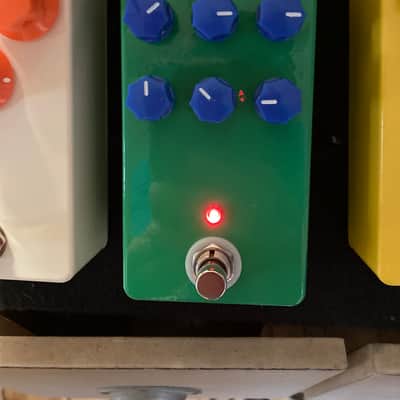
VFE Merman clone
Price€274.36
+ Shipping
This gear has sold
See similar gear from other Reverb sellers
Listed:over a month ago
Views:142
Saves:3
Offers:2

Los Angeles, CA, United States
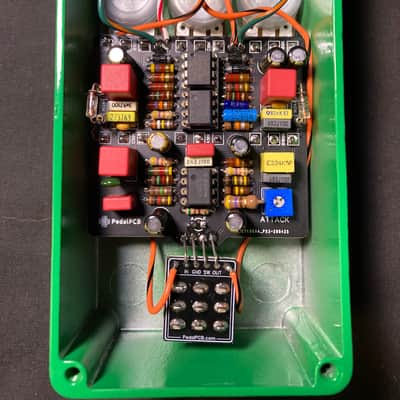
Up for sale is a VFE Merman clone. All I can say is wow wow wow. It’s on my board and I’m building more. This pedal is made my hand, by me using only the best components available. To begin with, I use 95% or better carbon composition resistors from the 60’s and 70’s, otherwise I use NOS military grade resistors, NOS and/or audio grade electrolytic and film caps, Alpha pots and Lumberg jacks.
Some people might scoff at the extra expense of all these hard to find or expensive parts because they perhaps believe they don’t make a difference, I disagree.
I believe these components were made better, by people living in better conditions and I feel that translates into tones you cannot get with cheap made in China components.
I’m not here to mass produce an “OK” version of something to make a buck. I have a good job, that’s not what I’m doing here.
I started doing this 20 years ago because I was tired of spending money on pedal after pedal, only to be underwhelmed. I want to make a pedal that stays on my board. Now that I am selling a few, I want to make a pedal that stays on your board. Even if the improvement over a mass produced pedal is .5%, it’s still there. This pedal features either the very hard to find Telefunken AA132 Germanium diodes OR If you so choose, I can switch them out for the original Klon diodes, just message me. I’ve been playing this over the last 24 hours and I must say, I’m impressed. The way you can dial the germanium diodes in/out of the signal or mix anywhere in between is pure genius, I’ve noticed that this circuit reacts really well to many different diodes, the best being the germanium types. Also being able to add or cut bass along with the two gain pots (clean/dirty signal) is not only a well thought-out design, it takes the Klon circuit into a new territory.
From the designers:
The MERMAN VFE-ifies the original Klon overdrive circuit (and yes, we just used VFE as a verb). The original circuit uses three signal paths to achieve its unique, yet transparent tone. The MERMAN gives you control over the mix of these 3 pathways in the DRIVE, WARM, and BOTTOM controls. The COMP control fine tunes the compression in the drive section, giving you control over the precise amount of harmonics and dynamics of the germanium clipping diodes.
After the buffer, one of the 3 signal pathways goes through the drive section. The DRIVE knob sets the gain of this section, from completely off (as in zero signal) when counterclockwise, up to roughly 30dB of gain when clockwise. The EQ of this section varies in unique ways as the gain increases, which is what makes this drive section so hard to define (and is a big part of the love-or-hate reaction to Klon-style pedals).
The second pathway after the buffer also includes multiple, very specific filters. The overall effect is a clean, warm signal that can be added to the drive. Because there is much less gain available in this pathway, it is not heard as a distinct clean signal (unless the DRIVE knob is set very low). Instead, it interacts with the drive section in ways that affect both its tonal balance and dynamic response.
In the original Klon, this knob is tied to the DRIVE knob. To set the WARM knob to stock Klon specs, simply match it to the setting you use for the DRIVE knob.
The third and final pathway that comes out of the buffer stage contains a fixed low pass filter with a corner frequency around 100Hz. What this means is that the signal going through here is down about 6dB @ 100Hz, 12dB @ 200Hz, 18dB @ 400Hz, 24dB @ 800Hz, and so on.
Set the BOTTOM knob around 1:00-1:30 for stock Klon specs.
The result is a clean, punchy bottom end - and in the Merman, the BOTTOM knob sets precisely how much of the clean bass is injected back into the drive section. Because our goal was to stay true to the original while augmenting what it could do, the only available parts required that this knob be configured in reverse - turning it clockwise reduces bottom end, while turning counterclockwise increases it.
Please feel free to ask me any questions you might have. My work is guaranteed for life.
Some people might scoff at the extra expense of all these hard to find or expensive parts because they perhaps believe they don’t make a difference, I disagree.
I believe these components were made better, by people living in better conditions and I feel that translates into tones you cannot get with cheap made in China components.
I’m not here to mass produce an “OK” version of something to make a buck. I have a good job, that’s not what I’m doing here.
I started doing this 20 years ago because I was tired of spending money on pedal after pedal, only to be underwhelmed. I want to make a pedal that stays on my board. Now that I am selling a few, I want to make a pedal that stays on your board. Even if the improvement over a mass produced pedal is .5%, it’s still there. This pedal features either the very hard to find Telefunken AA132 Germanium diodes OR If you so choose, I can switch them out for the original Klon diodes, just message me. I’ve been playing this over the last 24 hours and I must say, I’m impressed. The way you can dial the germanium diodes in/out of the signal or mix anywhere in between is pure genius, I’ve noticed that this circuit reacts really well to many different diodes, the best being the germanium types. Also being able to add or cut bass along with the two gain pots (clean/dirty signal) is not only a well thought-out design, it takes the Klon circuit into a new territory.
From the designers:
The MERMAN VFE-ifies the original Klon overdrive circuit (and yes, we just used VFE as a verb). The original circuit uses three signal paths to achieve its unique, yet transparent tone. The MERMAN gives you control over the mix of these 3 pathways in the DRIVE, WARM, and BOTTOM controls. The COMP control fine tunes the compression in the drive section, giving you control over the precise amount of harmonics and dynamics of the germanium clipping diodes.
After the buffer, one of the 3 signal pathways goes through the drive section. The DRIVE knob sets the gain of this section, from completely off (as in zero signal) when counterclockwise, up to roughly 30dB of gain when clockwise. The EQ of this section varies in unique ways as the gain increases, which is what makes this drive section so hard to define (and is a big part of the love-or-hate reaction to Klon-style pedals).
The second pathway after the buffer also includes multiple, very specific filters. The overall effect is a clean, warm signal that can be added to the drive. Because there is much less gain available in this pathway, it is not heard as a distinct clean signal (unless the DRIVE knob is set very low). Instead, it interacts with the drive section in ways that affect both its tonal balance and dynamic response.
In the original Klon, this knob is tied to the DRIVE knob. To set the WARM knob to stock Klon specs, simply match it to the setting you use for the DRIVE knob.
The third and final pathway that comes out of the buffer stage contains a fixed low pass filter with a corner frequency around 100Hz. What this means is that the signal going through here is down about 6dB @ 100Hz, 12dB @ 200Hz, 18dB @ 400Hz, 24dB @ 800Hz, and so on.
Set the BOTTOM knob around 1:00-1:30 for stock Klon specs.
The result is a clean, punchy bottom end - and in the Merman, the BOTTOM knob sets precisely how much of the clean bass is injected back into the drive section. Because our goal was to stay true to the original while augmenting what it could do, the only available parts required that this knob be configured in reverse - turning it clockwise reduces bottom end, while turning counterclockwise increases it.
Please feel free to ask me any questions you might have. My work is guaranteed for life.
This item is sold As-Described
This item is sold As-Described and cannot be returned unless it arrives in a condition different from how it was described or photographed. Items must be returned in original, as-shipped condition with all original packaging.Learn More.
| Condition | Brand New (New) Brand New items are sold by an authorized dealer or original builder and include all original packaging.Learn more |
|---|---|
| Brand | |
| Model |
|
| Finish |
|
| Categories | |
| Year |
|
| Made In |
|
Product safety information may be available here.