Vintage Votrax PSS 200 - Personal Speech System (Voice Synthesizer)
This gear has sold
See similar gear from other Reverb sellers
Listed:6 years ago
Views:208
Saves:9
Offers:2

Seattle, WA, United States
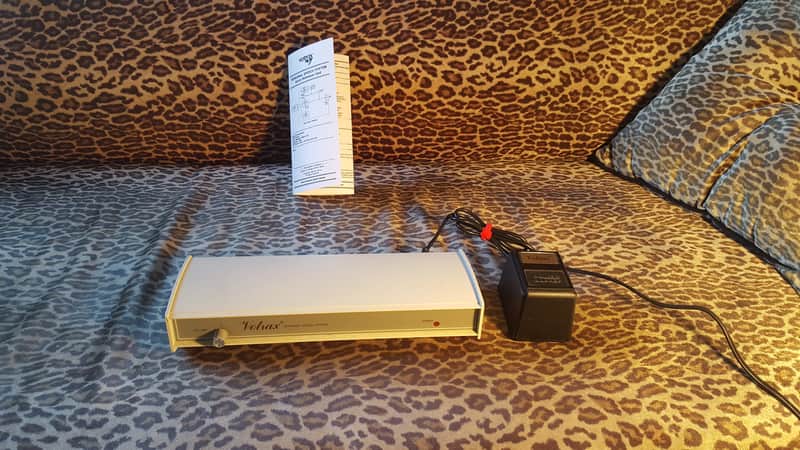
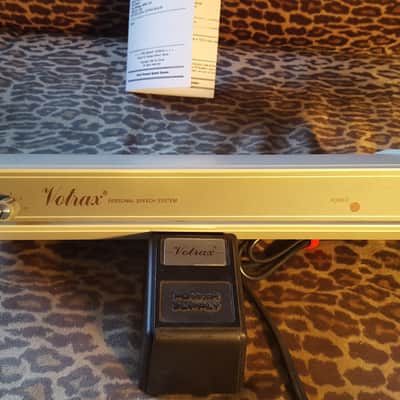
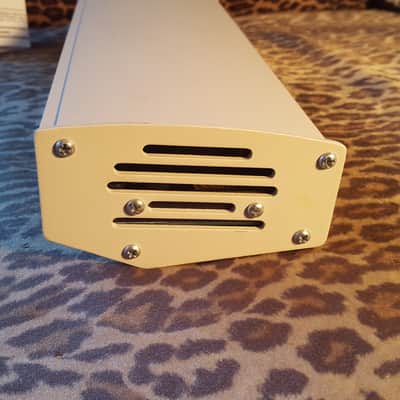
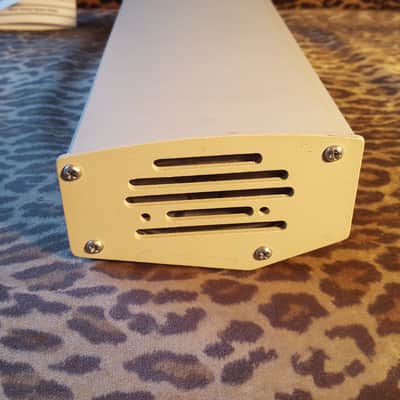
This is one of the original speech synthesizers designed and made in the 1980s. You have heard its voice in video games and movies, and probably elsewhere. I bought this unit in 1982, used it in the lab, and since 1990 or so it has been in a cool, dry closet with a lot of other equipment. I just hooked it up and tried it; it works great. This voice synth can read text, sing lyrics, hum, groan, ... it's the true robot voice!
I can't find the pile of manuals and ring binder that came with it, but I did find copies of all the manuals online at this (https) address:
//archive.org/details/VotraxPersonalSpeechSystemQuickReferenceCard/mode/1up
There are 71-pages of original documentation, including the Quick Reference Card, Phoneme chart, list of phonetic programs, and the complete Operator's Manual (installation, operating instructions, controls, data, etc.) at that location.
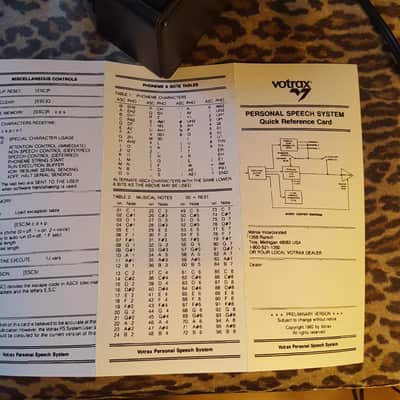
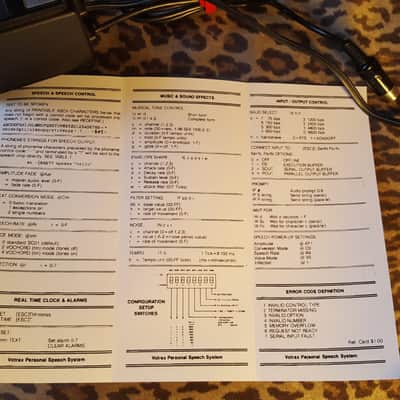
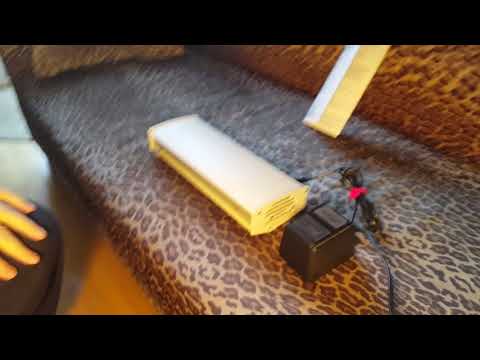
I'm including a copy of the Votrax Quick Reference Card to help you set it up. For instance, it tells you that dip switch #8 turns on the self-test mode. I made a little video of the self test mode so you can hear a sample of the things the Personal Speech System can do. I also left switch #8 turned on, so you'll want to know how to turn the self test mode off! Check the card and use a toothpick to turn switch #8 off.
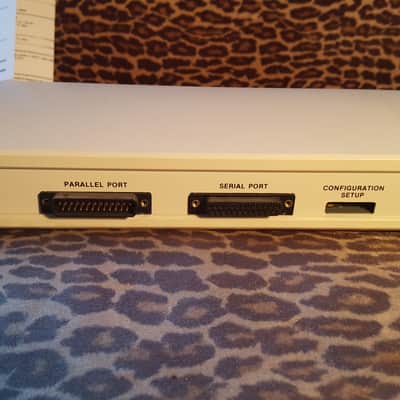
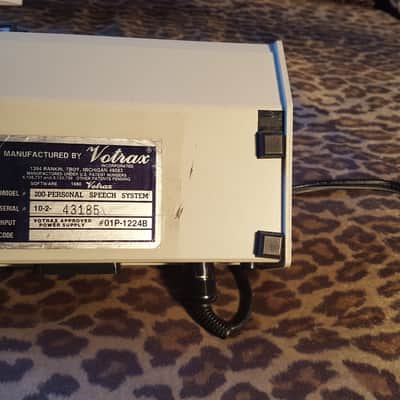
The PSS is driven by text input from either its serial (RS-232) or Parallel interface (see photo of the back of the unit) as described in the Operator's Manual. Typically the text is provided by a computer.
Here's a bit of description of the company that made it...
Votrax International, Inc. (originally the Vocal division of Federal Screw Works), or just Votrax, was a speech synthesis company located in the Detroit, Michigan area from 1971 to about 1996.[citation needed] It began as a division of Federal Screw Works from 1971 to 1973. In 1974, it was given the Votrax name (taken from the name of its first commercial product, the model VS4 "Votrax") and moved to Troy, Michigan and, in 1980, split off of its parent company entirely and became Votrax International, Inc., which produced speech products up until 1984.[1][2]
Votrax was responsible for designing and manufacturing several important early speech synthesizer back-ends, and several widely used integrated circuit phoneme synthesizers. Votrax produced speech backend modules and cards for various personal computers, and worked with the United States Naval Research Laboratory (NRL) to create an extensible speech frontend system. Votrax's speech technology was also used by 3rd parties in several arcade games, Gottlieb System 80 pinball machines, and talking terminals.[12]
During the 1970s, Votrax produced a series of discrete speech synthesizers, with epoxy-coated boards to thwart people copying their designs. In 1980, they designed and manufactured an integrated circuit speech synthesizer called the SC-01. This IC proved very popular in the third party market, and was produced until at least 1984. It was succeeded by the somewhat more dynamic SC-02, also known as the SSI-263P. From the beginning of SC-02 production, Silicon Systems Inc. (now part of Texas Instruments)[12] manufactured the SC-02 chip under the product number SSI-263P, and this was apparently later adopted as the official name of the IC. Votrax continued to intermittently sell SC-01-A and SC-02 synthesis chips, and Personal Speech System text to speech units until at least October, 1990.[13]
Since early in its life, Votrax specialized in making phoneme-based speech synthesizers and text-to-speech algorithms. The popular United States Naval Research Laboratory, or "NRL" text-to-phoneme algorithm was developed by a collaboration between Votrax and the NRL in 1973. This algorithm and variants of it were used on a number of text-to-speech devices, such as the votrax type-n-talk, the votrax personal speech system, and the General Instruments CTS256A-AL2 text-to-allophone chip.[5] A good rundown of the NRL algorithm can be found under reference.[14]
I can't find the pile of manuals and ring binder that came with it, but I did find copies of all the manuals online at this (https) address:
//archive.org/details/VotraxPersonalSpeechSystemQuickReferenceCard/mode/1up
There are 71-pages of original documentation, including the Quick Reference Card, Phoneme chart, list of phonetic programs, and the complete Operator's Manual (installation, operating instructions, controls, data, etc.) at that location.
I'm including a copy of the Votrax Quick Reference Card to help you set it up. For instance, it tells you that dip switch #8 turns on the self-test mode. I made a little video of the self test mode so you can hear a sample of the things the Personal Speech System can do. I also left switch #8 turned on, so you'll want to know how to turn the self test mode off! Check the card and use a toothpick to turn switch #8 off.
The PSS is driven by text input from either its serial (RS-232) or Parallel interface (see photo of the back of the unit) as described in the Operator's Manual. Typically the text is provided by a computer.
Here's a bit of description of the company that made it...
Votrax International, Inc. (originally the Vocal division of Federal Screw Works), or just Votrax, was a speech synthesis company located in the Detroit, Michigan area from 1971 to about 1996.[citation needed] It began as a division of Federal Screw Works from 1971 to 1973. In 1974, it was given the Votrax name (taken from the name of its first commercial product, the model VS4 "Votrax") and moved to Troy, Michigan and, in 1980, split off of its parent company entirely and became Votrax International, Inc., which produced speech products up until 1984.[1][2]
Votrax was responsible for designing and manufacturing several important early speech synthesizer back-ends, and several widely used integrated circuit phoneme synthesizers. Votrax produced speech backend modules and cards for various personal computers, and worked with the United States Naval Research Laboratory (NRL) to create an extensible speech frontend system. Votrax's speech technology was also used by 3rd parties in several arcade games, Gottlieb System 80 pinball machines, and talking terminals.[12]
During the 1970s, Votrax produced a series of discrete speech synthesizers, with epoxy-coated boards to thwart people copying their designs. In 1980, they designed and manufactured an integrated circuit speech synthesizer called the SC-01. This IC proved very popular in the third party market, and was produced until at least 1984. It was succeeded by the somewhat more dynamic SC-02, also known as the SSI-263P. From the beginning of SC-02 production, Silicon Systems Inc. (now part of Texas Instruments)[12] manufactured the SC-02 chip under the product number SSI-263P, and this was apparently later adopted as the official name of the IC. Votrax continued to intermittently sell SC-01-A and SC-02 synthesis chips, and Personal Speech System text to speech units until at least October, 1990.[13]
Since early in its life, Votrax specialized in making phoneme-based speech synthesizers and text-to-speech algorithms. The popular United States Naval Research Laboratory, or "NRL" text-to-phoneme algorithm was developed by a collaboration between Votrax and the NRL in 1973. This algorithm and variants of it were used on a number of text-to-speech devices, such as the votrax type-n-talk, the votrax personal speech system, and the General Instruments CTS256A-AL2 text-to-allophone chip.[5] A good rundown of the NRL algorithm can be found under reference.[14]
Reverb Buyer Protection
Reverb has your back if your item is lost, damaged, or doesn't match its description. Simply report any issues within 7 days and we'll help you get a full refund.Learn more about Reverb Buyer Protection.
| Listed | 6 years ago |
|---|---|
| Condition | Excellent (Used) Excellent items are almost entirely free from blemishes and other visual defects and have been played or used with the utmost care.Learn more |
| Brand | |
| Model |
|
| Finish |
|
| Categories | |
| Year |
|
| Made In |
|
Product safety information may be available here.