Event EMP-1 Mic Pre-Amplifier (Neve, API, Purple, Burl, Chandler)
This gear has sold
See similar gear from other Reverb sellers

Our users rate Reverb
Event EMP-1 Mic Pre (Neve, API, Purple, Burl, Chandler)
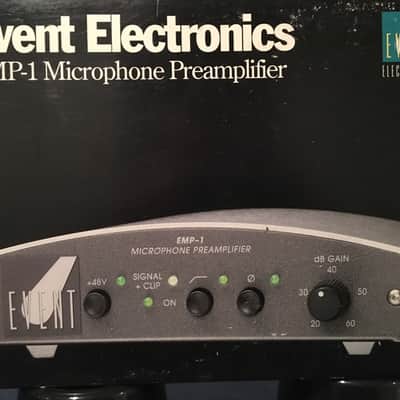
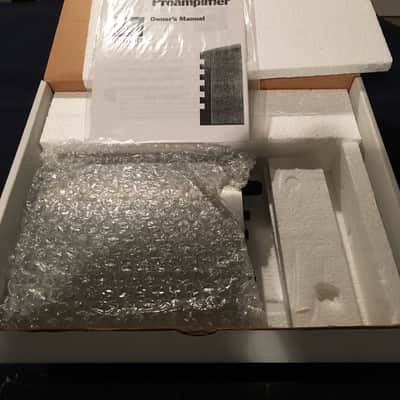
I am the original owner of this very cool and retro looking mic pre. It comes with the original box and manual as well.
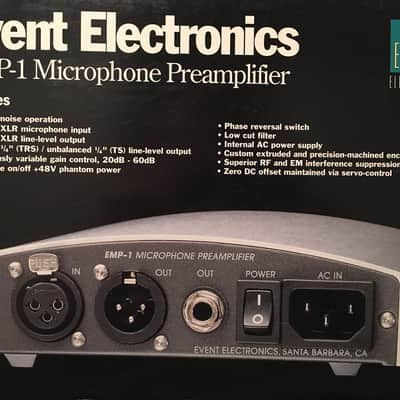
For sale is a Event Electronics EMP-1 Microphone Preamplifier w/power cord. This was an original unit designed and built by Peter Madnick (Audio Alchemy designs) exclusively for Event Electronics. It's in excellent condition with some minor scratches on the housing. It's a super-quiet, transformerless preamp. Great for instrumental recording. Kind of similar to the Grace preamps of the day.
The EMP-1 single-channel preamp offers pro features in a
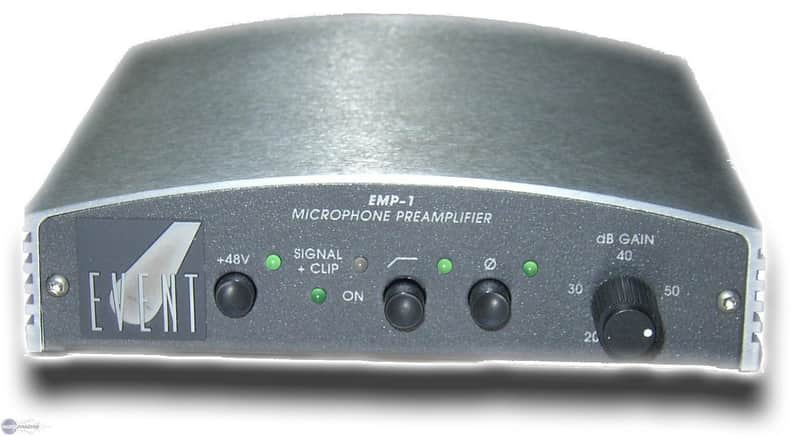
compact chassis. This direct box-sized unit includes switchable phantom power,
a 2-color LED indicating signal presence/clipping conditions, switchable
low-cut filter, phase reverse switch, internal (no wall wart) AC supply and
both 11/44-inch TRS balanced/unbalanced and balanced XLR outputs.
The EMP1 is housed in a distinctively arched, brushed metal case. There is no provision for rack mounting and although the sides feature what appear to be heat-sink fins, these are merely a design feature. The lid is secured with anti-tamper fastenings (making it hard to peek inside) and the unit measures roughly 160 x 155 x 30mm (wdh), rising to 42mm high in the middle.
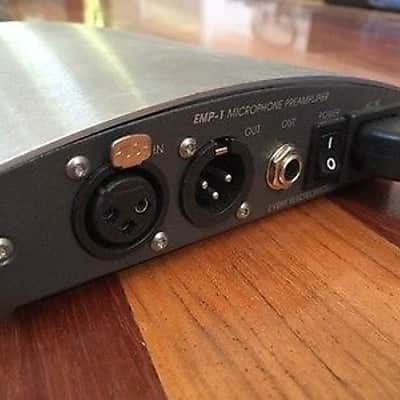
The front and rear panels are formed from the folded ends of the base and carry all the controls and connectors. The rear panel has an (inverted) IEC mains socket and associated On/Off rocker switch, and although the power supply is fused, this is not accessible externally. There are also three Switchcraft audio connectors: an XLR microphone input, and two line-level outputs; one on an XLR and the other on a quarter-inch TRS jack socket. All connectors are electronically balanced, but the output jack socket will also accept a tip-sleeve jack for use in an unbalanced system.
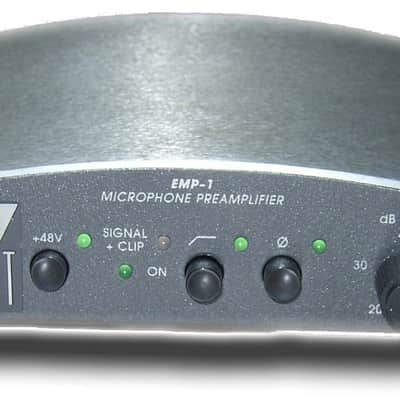
The front panel carries a mere four controls and five LEDs. Push buttons provide for phantom power, a high-pass filter, and polarity inversion (each with a green status LED), and a rotary knob adjusts gain in a continuous sweep from +20 to +60dB. The two remaining LEDs indicate when the unit is powered (green) and the presence of signal and overloads. This last LED shows green for signals above -2.5dBu and red when they exceed the clipping point at +23dBu.
The circuitry employed in the EMP1 is entirely solid-state and has been designed to maximize audio quality whilst keeping costs in check. The unit has a frequency response which remains flat to within 0.1dB between 20Hz and 20kHz and is only 3dB down at 122kHz (this falls to 90kHz with phantom power switched on, presumably because of the need for DC blocking capacitors on the input). Apparently, the response of the amplifier stages, excluding the input and output filtering, extends to around 1MHz which allows a very fast slew rate of around 15V/µS to help preserve delicate transient information. However, the input and output filtering has apparently been designed to reduce the likelihood of RF and electro-magnetic interference.
Another interesting design feature is that a DC servo is employed to eliminate any DC offset at the output instead of series blocking capacitors (which are often cited as introducing distortion in lesser designs). The output stage uses a discrete high-current topology capable of driving long cables and further discrete circuitry is used in the power supply regulation stages.
The high-pass filter is unusually gentle at only 6dB/octave and starts rolling off at an extraordinarily low 24Hz (-3dB point). In my experience, if a microphone is creating problematic rumbles the high-pass filter needs to be rather more vigorous than this design, although it will be of some use where modest levels of sub-bass noise exist.
On careful listening tests, the EMP1 seemed able to preserve the detail and clarity of microphones costing many times more than the EMP1 itself. For example, it coped admirably with the intricate and complex harmonics of 12-string guitar (a pretty severe test for mic preamps) and this is undoubtedly due in part to the wide bandwidth circuitry employed. The EMP1 has ample headroom and although the noise performance is perhaps not quite as startling as the marketing hype suggests, it is perfectly respectable for the vast majority of applications.
Overall then, this is a mic preamp which offers an impressive quality/price balance and which would be a worthwhile upgrade for anyone who is squandering the quality of a decent mic by using run-of-the-mill mixer mic amps.
This item is sold As-Described
This item is sold As-Described and cannot be returned unless it arrives in a condition different from how it was described or photographed. Items must be returned in original, as-shipped condition with all original packaging.Learn More.
| Listed | 10 years ago |
|---|---|
| Condition | Excellent (Used) Excellent items are almost entirely free from blemishes and other visual defects and have been played or used with the utmost care.Learn more |
| Brand | |
| Model |
|
| Finish |
|
| Year |
|
| Made In |
|
Product safety information may be available here.