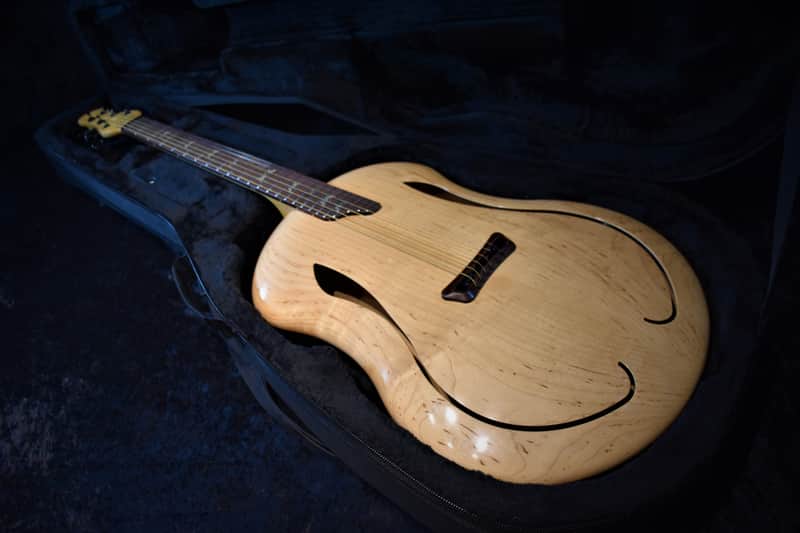
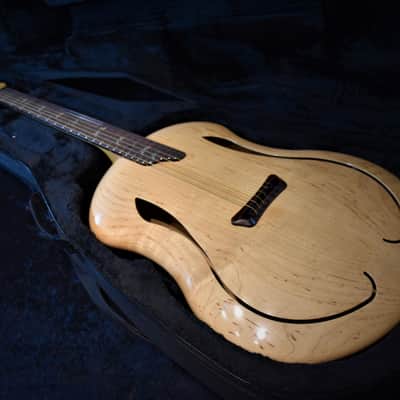
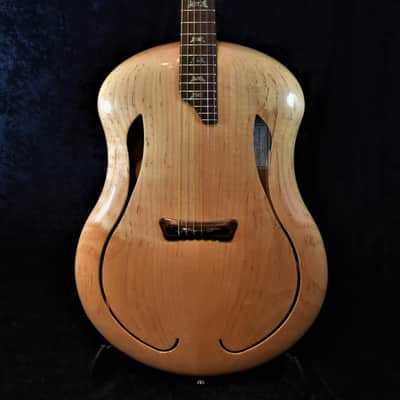
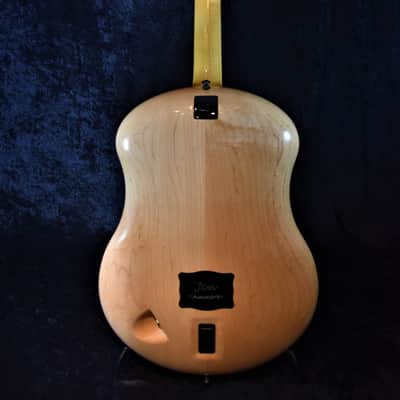
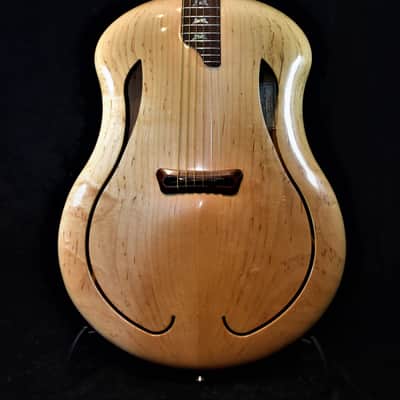
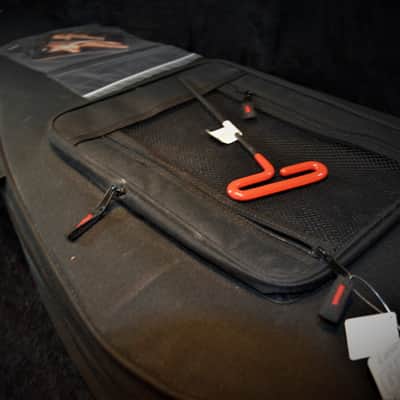

Jon Kammerer: Model 21 (Pegasus full body) Maple, LR Baggs Element
This gear has sold
See similar gear from other Reverb sellers
Listed:7 years ago
Views:430
Saves:13
Offers:2

Wayne, NJ, United States
Our users rate Reverb
{relisted: buyer misunderstood design for amplified acoustic performance.} {price reduced as we boxed it but never shipped... to lazy to unbox... grab it.}
“There are those that look at things the way they are, and ask why? I dream of things that never were, and ask why not?”
― George Bernard Shaw
Jon Kammerer is a Shaw kinda guy. Most folks looked at the CNC and said, how can I cut costs. The Robot sucking the Anima out of all things beautifully musical. But one, Jon, said, how can I make beautiful music like no one's ever done before.
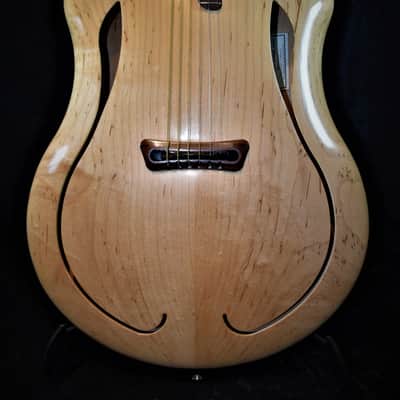
Note that this guitar is not meant to be purely acoustic. Unplugged it has a moderately available parlor sound good for practice, but you'd want your other guitar for acoustic only performing. It is specifically designed to be plugged in, like a Godin A6. And that's where it shines. No more struggling over microphones, plugged soundholes, feedback, cutting off sustain. With a good acoustic amp, this sounds like genius and is practically plug and play. No worries about limiting your mobility if you like to get up and walk around doing an amplified acoustic show.
This guitar came in from a collector who focuses innovation, hardly played, mint condition.
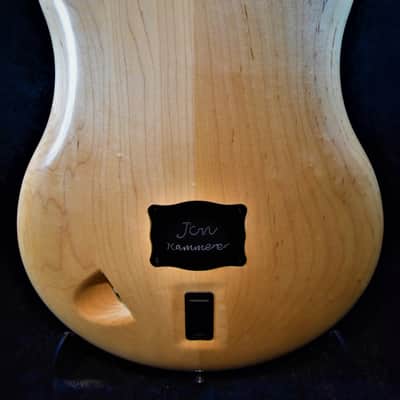
Innovative it is. From parabolic curves, to lighter variable carving to reduce bracing interference, to engineered soundholes that reduce or eliminate feedback, to multi-wood combos that most makers add "custom shop" up charges. In general these are some of the lightest, punchiest guitars you can find that are made from wood. It's light in weight, and extremely comfortable to play for long periods. The sinuous curves make it feel like a professional dance partner.
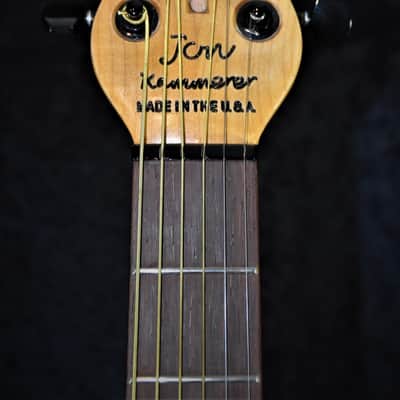
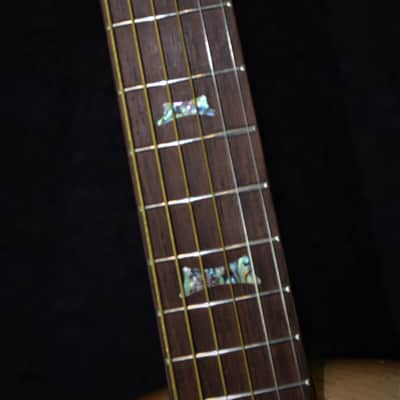
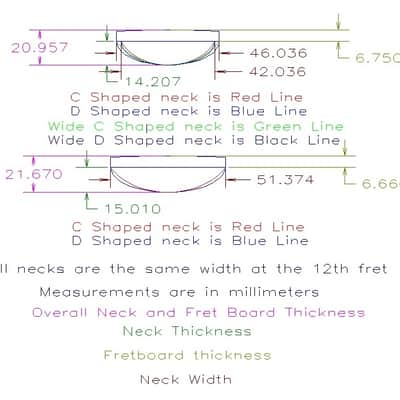
Maple body, maple C neck, rosewood fretboard. At the nut, height: 21mm to strings, 14mm to frets; width: 42mm. At the 12th fret, height: 21.5mm to the frets, 15mm to frets; width: 51mm.
We put it through an SWR Strawberry Blonde and compared it to a few other high end acoustics in the shop, and yeah, it's all Jon says it is.
::::: From the Maker :::::
What you get with the Pegasus concept is an acoustic guitar that is highly resistant to feed back and sounds huge when plugged in. The top plate of the guitar does vibrate more freely which allows the pickup (mounted on the top plate) to pick up all of the natural vibrations and overtones of the wood. As a bonus, you can even control the feed back because when you do get it to feed back, it is just string feed back, not body feed back.
My original thesis project was using alternative materials and shapes to refine how a guitar body transmits sound waves. After months of research, I came across the fact that in a traditional acoustic guitar, up to 2/3rds of the sound waves can bounce into a corner, bounce back upon themselves and cancel out. This is known as standing wave theory. Even worse, it's not an even cancellation. You can lose different amounts of different frequencies, wasting the energy produced by the strings vibrating the wood to give you your tone.
This is where the entire process started with me, acoustic guitars. In 1995, I was in my senior year of design school and we had to do a senior thesis project. You were to pick an area of industry, and redesign a product in it. You were also to make a prototype of this project.
I decided to start looking into different ways to move and channel waves of all types, sound, water, light. After much study, I decided that by utilizing a parabolic curve, I could focus where I wanted the sound waves to go in the body. By using opposing parabolic curves, I also eliminated all the corners and 90 degree angles that were causing standing wave cancellation.
As much as I'd like to, I can't build every component on these guitars. I do four primary things:
1st, I design, draft and build all bodies and necks.
2nd, I fret the fret boards, It's not the most exciting, but it's probably the most important aspect of a great guitar.
3rd. I do all the detailing and painting of your new guitar, it will be done to my standards or it doesn't come out of the paint booth.
4th. I do all assembly and set up work. I want this guitar to play like a dream. If you ordered it built, you've had the opportunity at every step along the way to put your input into the design, it's my job to make sure that makes it into the guitar you get.
Since I do buy hardware from other manufacturers, I have taken great care over the years to make sure that I am only using the best quality of components.
My standard fret boards have compound radius. What this means is that they are rounder at the nut and get flatter as you move towards the body. The reason for this is you can get the string action lower, which makes the guitar easier to play. The compound radius prevents the string from contacting the fret below it when you are bending notes. I offer fret boards in 3 standard compound radius: 6-8 inch, which mimics the 7 inch radius of the early Strats (TM), 8-12 inch, and 12-16 inch which mimics most modern guitars which have around a 12 or 14 inch radius. Most manufacturers don't do compound radius as it's more work. I have the mill cut it for me, so other than a drafting change, it's not much more work for me. If you want something different, let me know, it's no problem. It might cost a little extra, but at the end of the day, it's important you have the guitar you want. Generally, if you do a lot of chord style playing, you would probably like the 6-8 inch radius. If you are more of a lead player, the 12-16 inch radius. The 12-16 inch radius is my most popular option by far.
“There are those that look at things the way they are, and ask why? I dream of things that never were, and ask why not?”
― George Bernard Shaw
Jon Kammerer is a Shaw kinda guy. Most folks looked at the CNC and said, how can I cut costs. The Robot sucking the Anima out of all things beautifully musical. But one, Jon, said, how can I make beautiful music like no one's ever done before.
Note that this guitar is not meant to be purely acoustic. Unplugged it has a moderately available parlor sound good for practice, but you'd want your other guitar for acoustic only performing. It is specifically designed to be plugged in, like a Godin A6. And that's where it shines. No more struggling over microphones, plugged soundholes, feedback, cutting off sustain. With a good acoustic amp, this sounds like genius and is practically plug and play. No worries about limiting your mobility if you like to get up and walk around doing an amplified acoustic show.
This guitar came in from a collector who focuses innovation, hardly played, mint condition.
Innovative it is. From parabolic curves, to lighter variable carving to reduce bracing interference, to engineered soundholes that reduce or eliminate feedback, to multi-wood combos that most makers add "custom shop" up charges. In general these are some of the lightest, punchiest guitars you can find that are made from wood. It's light in weight, and extremely comfortable to play for long periods. The sinuous curves make it feel like a professional dance partner.
Maple body, maple C neck, rosewood fretboard. At the nut, height: 21mm to strings, 14mm to frets; width: 42mm. At the 12th fret, height: 21.5mm to the frets, 15mm to frets; width: 51mm.
We put it through an SWR Strawberry Blonde and compared it to a few other high end acoustics in the shop, and yeah, it's all Jon says it is.
::::: From the Maker :::::
What you get with the Pegasus concept is an acoustic guitar that is highly resistant to feed back and sounds huge when plugged in. The top plate of the guitar does vibrate more freely which allows the pickup (mounted on the top plate) to pick up all of the natural vibrations and overtones of the wood. As a bonus, you can even control the feed back because when you do get it to feed back, it is just string feed back, not body feed back.
My original thesis project was using alternative materials and shapes to refine how a guitar body transmits sound waves. After months of research, I came across the fact that in a traditional acoustic guitar, up to 2/3rds of the sound waves can bounce into a corner, bounce back upon themselves and cancel out. This is known as standing wave theory. Even worse, it's not an even cancellation. You can lose different amounts of different frequencies, wasting the energy produced by the strings vibrating the wood to give you your tone.
This is where the entire process started with me, acoustic guitars. In 1995, I was in my senior year of design school and we had to do a senior thesis project. You were to pick an area of industry, and redesign a product in it. You were also to make a prototype of this project.
I decided to start looking into different ways to move and channel waves of all types, sound, water, light. After much study, I decided that by utilizing a parabolic curve, I could focus where I wanted the sound waves to go in the body. By using opposing parabolic curves, I also eliminated all the corners and 90 degree angles that were causing standing wave cancellation.
As much as I'd like to, I can't build every component on these guitars. I do four primary things:
1st, I design, draft and build all bodies and necks.
2nd, I fret the fret boards, It's not the most exciting, but it's probably the most important aspect of a great guitar.
3rd. I do all the detailing and painting of your new guitar, it will be done to my standards or it doesn't come out of the paint booth.
4th. I do all assembly and set up work. I want this guitar to play like a dream. If you ordered it built, you've had the opportunity at every step along the way to put your input into the design, it's my job to make sure that makes it into the guitar you get.
Since I do buy hardware from other manufacturers, I have taken great care over the years to make sure that I am only using the best quality of components.
My standard fret boards have compound radius. What this means is that they are rounder at the nut and get flatter as you move towards the body. The reason for this is you can get the string action lower, which makes the guitar easier to play. The compound radius prevents the string from contacting the fret below it when you are bending notes. I offer fret boards in 3 standard compound radius: 6-8 inch, which mimics the 7 inch radius of the early Strats (TM), 8-12 inch, and 12-16 inch which mimics most modern guitars which have around a 12 or 14 inch radius. Most manufacturers don't do compound radius as it's more work. I have the mill cut it for me, so other than a drafting change, it's not much more work for me. If you want something different, let me know, it's no problem. It might cost a little extra, but at the end of the day, it's important you have the guitar you want. Generally, if you do a lot of chord style playing, you would probably like the 6-8 inch radius. If you are more of a lead player, the 12-16 inch radius. The 12-16 inch radius is my most popular option by far.
| Listed | 7 years ago |
|---|---|
| Condition | Mint (Used) Mint items are in essentially new original condition but have been opened or played.Learn more |
| Brand | |
| Model |
|
| Finish |
|
| Categories | |
| Year |
|
| Made In |
|
Product safety information may be available here.