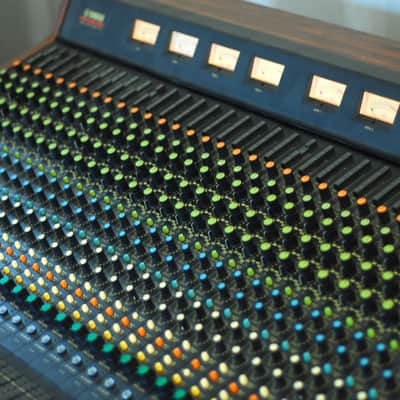
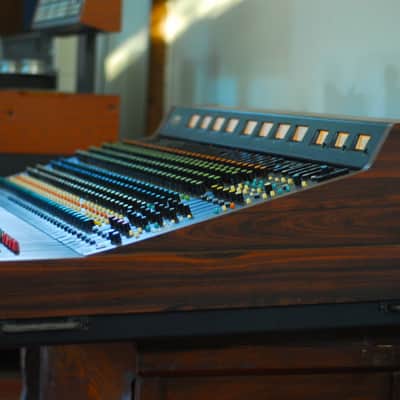
Yamaha M1532 / PM2000 Recording Console Discrete Preamps/Output Amps Transformers
This gear has sold
See similar gear from other Reverb sellers
Listed:11 years ago
Views:4,080
Watchers:81

N/A, MA, United States
Our users rate Reverb
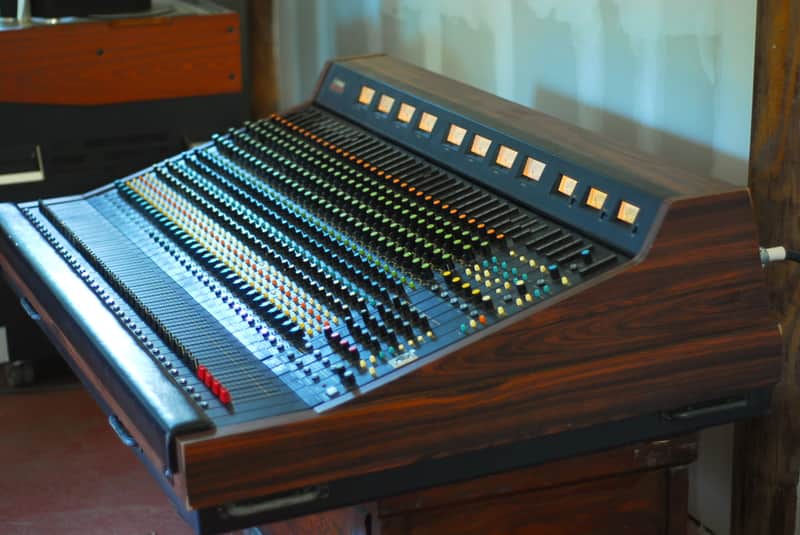
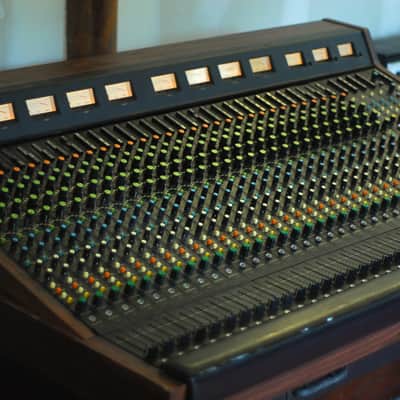
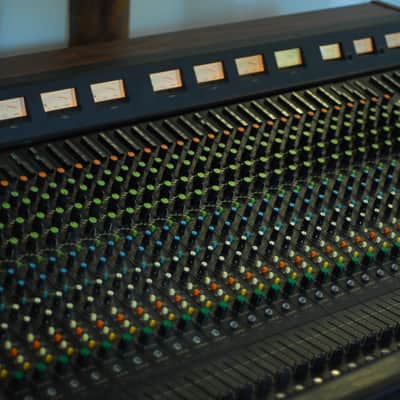
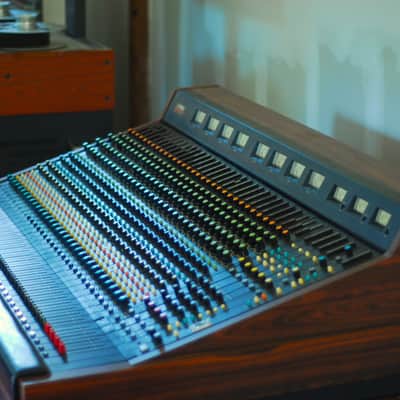
Up for sale is an absolutely mint 32 channel Yamaha M1532 console with discrete preamps based around API 2520 / Jensen 990 style opamps, Tamura input transformers and four discrete output amps into transformers on each buss. This console is in stunning, like new condition, and has less than 30 hours use on the desk total. All the faders/switches/pots are literally new, perfectly clean and noise free. This is by far the nicest M1532 / PM2000 console I've ever seen or used. Because of the near perfect condition of the desk we gave it a full service including:
-Rebuilt Power Supply
-All electrolytic capacitors replaced with new high quality Nichicon 105 degree capacitors
-14 channels of passive inductor based EQ:
--8 channels of JML audio low-mid/high-mid inductor based EQ
--2 channels of Quad Eight 712 passive inductor based EQ (low/low-mid/high-mid EQ)
--4 channels of Quad Eight 712 passive inductor based EQ (low EQ only)
-Upgraded the original summing amplifiers to use modern low noise/high headroom OPA2604AP opamps
The M1532 runs off a +/-24V DC power supply which gives the console superior headroom to an API desk which runs off of +/-15V DC. The M1532 uses the same discrete opamps found in the excellent PM2000 console and with the exception of a few minor differences the M1532 is essentially a scaled down version of the PM2000. The only important difference between the two consoles is less routing options (4 aux sends/4 busses on the M1532 instead of 6 sends/8 busses on the PM2000) and a switchable high frequency EQ on the PM2000. To add switchable high frequency on the M1532 all you need to do is add a toggle switch and a couple capacitors. The high frequency EQ on the M1532 and the PM2000 use identical passive RC networks. I've restored a PM2000 and I'd have to say the M1532 is a cleaner design - the 1532 has no tantalum capacitors in the audio path and no complex EQ switch assemblies like the PM2000 which are all filled with bad sounding/aged tantalum capacitors that all should be replaced. All in all, the transformers, opamps, and (most importantly) the sound of the two desks (once restored) are more or less identical. One nice feature of the M1532 not found on the PM2000 is the M1532 has two mic/line inputs per channel - which means you can have your D/A outputs and tape deck outputs running into the same console input channels and you can quickly switch between the two without the need for an external patchbay.
Very few people know that John Windt, who worked at Motown and later Quad Eight went on to work at Yamaha and influenced the design of the professional Yamaha desks at the time (PM1000, PM2000, M1516, M1524, M1532). If you look at the schematic of a 1970's Quad Eight console you'll find the overall design is extremely similar to the the PM2000/M1516/M1532 series desks.
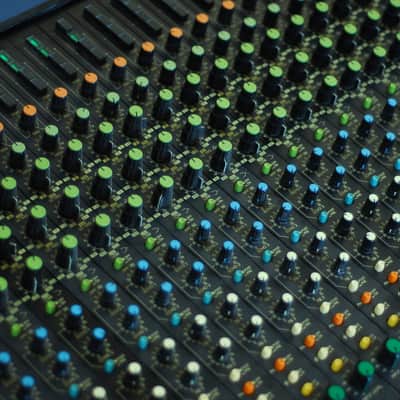
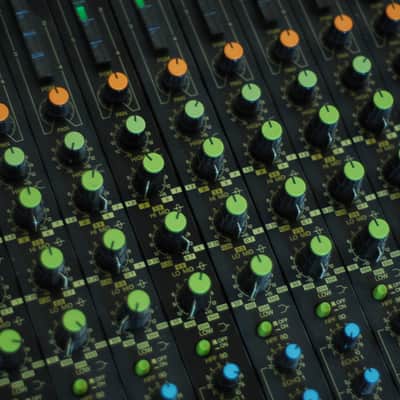
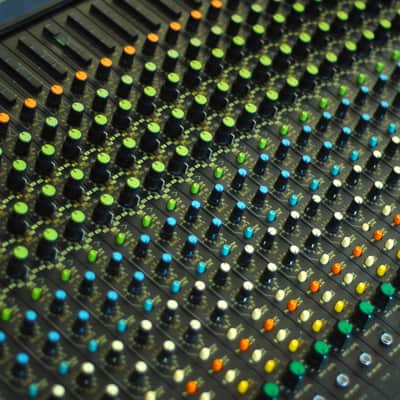
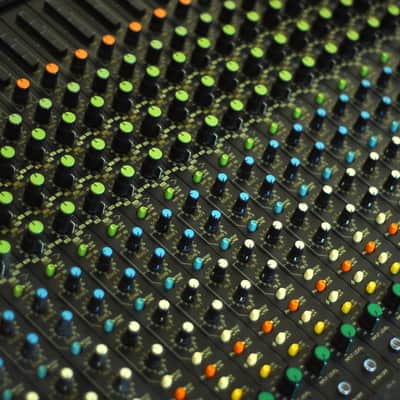
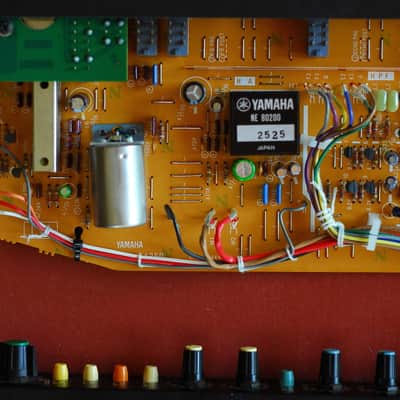
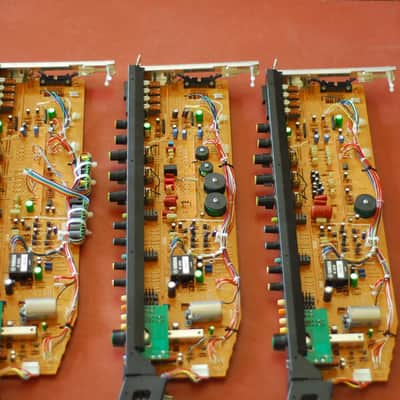
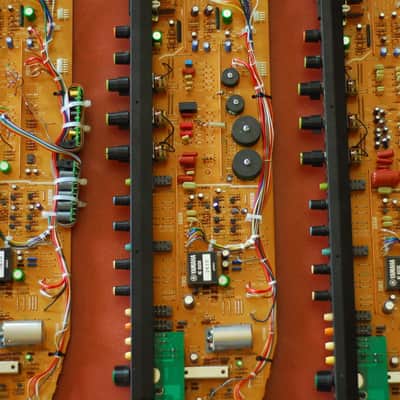
Pictured are a few of the modules modified with JML inductor based EQ and Quad Eight 712 type graphic inductor EQ with vintage toroidal inductors. The 712 EQ modification sounds fantastic and almost identical to the QE 712 graphic EQ I used to own. By removing the gyrators and installing a passive inductor based EQ the modified modules have more headroom than stock M1532/PM2000 modules. This is because the gyrators run at +/-16V, whereas the rest of the console runs off of +/-24V. Inductors saturate in a musical way and do not distort the way an integrated circuit/gyrator will when presented with peaks. The stock modules tend have a Yamaha CS80/synthesizer style EQ section (for lack of a better description) which works on some material, but I felt lacked the attack and definition that discrete/inductor based designs usually have. By removing the gyrators and completing the inductor based EQ modifications the low end tightens up and the attack on the mids/highs sound fast and aggressive.
The Yamaha opamps in the preamp section can easily be replaced with Jensen 990's, although the discrete Yamaha opamps have an excellent sound and were very well designed (again very similar to a Quad Eight AM4 opamp).
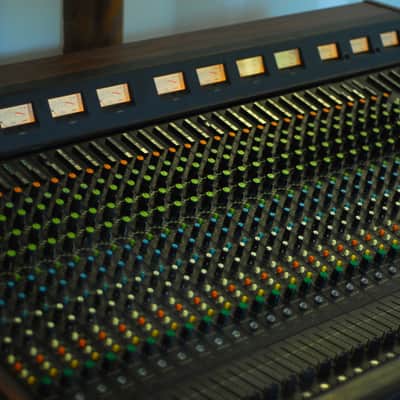
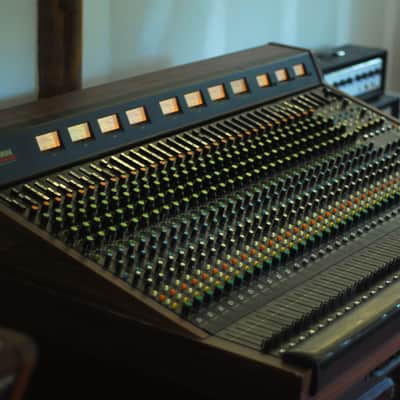
We purchased this desk and a M1516 from a rental company that had kept both desks stored in road cases for the last 20 years. Both desks were in remarkable like new condition with perfectly smooth faders/pots, not a spot of dust inside the console, or oxidation on any of the input/output connectors. If anything this desk was used a handful of times in the 1980's and then put in storage for the next 20 years. There are some minor scuffs on the console frame, but overall the console is in near mint functional and cosmetic condition. All the channels/busses have been tested and everything, and I mean everything, works perfectly. For a complete home recording setup that won't cost you a fortune this M1532 is a great value and is in the same class as all the other transformer balanced/discrete desks I've owned (API, Neve, Quad Eight, Langevin, Spectra Sonics, etc). The Yamaha NE80200 opamp, used in all the 32 preamps, sounds great with a fast attack and a very punchy overall response, similar to the 1960's Langevin desks I've restored.
32 input channels (2 inputs per channel/64 selectable inputs, discrete preamps, 4 band EQ, Tamura input transformers)
4 aux sends/returns (discrete output amp w/Tamura output transformers)
4 output busses (discrete output amp w/Tamura output transformers)
4 matrix outputs (discrete output amp w/Tamura output transformers)
1 headphone output
For a little perspective - in equivalent new parts this console has at least $2.5k worth of installed transformers (36 input transformers + 12 output transformers), $1.6K worth of discrete opamps (32), $4K in inductor EQ's, $3.2K in conductive plastic faders, and that doesn't include the external power supply, expensive stepped switches/pots, VU meters and the cost of parts and labor that go into fully refurbishing a console. These Yamaha professional recording consoles were built in the era of the Yamaha CS80 series synthesizer - where market dominance through well built products was more important than huge profit margins.
Please, serious inquiries only, although I'm open to reasonable offers, the price is where it is because this console is in perfect, like new condition, has been just fully serviced and is essentially plug and play. If you are looking at cheaper consoles it's likely they need significant repairs, recapping work or are in generally poor condition. I sell high-quality items and rigorously test everything that is being sold - this is not an "AS-IS" sale of an untested item that's straight out of storage.
Although I'm happy to provide advice and/or technical assistance - due to the nature of vintage electronics no warranty is implied or expressed. Shipping will be via freight due to the size/weight of this desk. Local pickup is welcome. Please ask any questions prior to purchase. Thank you!
For frequent updates follow us on instagram: @folieaudio
-Rebuilt Power Supply
-All electrolytic capacitors replaced with new high quality Nichicon 105 degree capacitors
-14 channels of passive inductor based EQ:
--8 channels of JML audio low-mid/high-mid inductor based EQ
--2 channels of Quad Eight 712 passive inductor based EQ (low/low-mid/high-mid EQ)
--4 channels of Quad Eight 712 passive inductor based EQ (low EQ only)
-Upgraded the original summing amplifiers to use modern low noise/high headroom OPA2604AP opamps
The M1532 runs off a +/-24V DC power supply which gives the console superior headroom to an API desk which runs off of +/-15V DC. The M1532 uses the same discrete opamps found in the excellent PM2000 console and with the exception of a few minor differences the M1532 is essentially a scaled down version of the PM2000. The only important difference between the two consoles is less routing options (4 aux sends/4 busses on the M1532 instead of 6 sends/8 busses on the PM2000) and a switchable high frequency EQ on the PM2000. To add switchable high frequency on the M1532 all you need to do is add a toggle switch and a couple capacitors. The high frequency EQ on the M1532 and the PM2000 use identical passive RC networks. I've restored a PM2000 and I'd have to say the M1532 is a cleaner design - the 1532 has no tantalum capacitors in the audio path and no complex EQ switch assemblies like the PM2000 which are all filled with bad sounding/aged tantalum capacitors that all should be replaced. All in all, the transformers, opamps, and (most importantly) the sound of the two desks (once restored) are more or less identical. One nice feature of the M1532 not found on the PM2000 is the M1532 has two mic/line inputs per channel - which means you can have your D/A outputs and tape deck outputs running into the same console input channels and you can quickly switch between the two without the need for an external patchbay.
Very few people know that John Windt, who worked at Motown and later Quad Eight went on to work at Yamaha and influenced the design of the professional Yamaha desks at the time (PM1000, PM2000, M1516, M1524, M1532). If you look at the schematic of a 1970's Quad Eight console you'll find the overall design is extremely similar to the the PM2000/M1516/M1532 series desks.
Pictured are a few of the modules modified with JML inductor based EQ and Quad Eight 712 type graphic inductor EQ with vintage toroidal inductors. The 712 EQ modification sounds fantastic and almost identical to the QE 712 graphic EQ I used to own. By removing the gyrators and installing a passive inductor based EQ the modified modules have more headroom than stock M1532/PM2000 modules. This is because the gyrators run at +/-16V, whereas the rest of the console runs off of +/-24V. Inductors saturate in a musical way and do not distort the way an integrated circuit/gyrator will when presented with peaks. The stock modules tend have a Yamaha CS80/synthesizer style EQ section (for lack of a better description) which works on some material, but I felt lacked the attack and definition that discrete/inductor based designs usually have. By removing the gyrators and completing the inductor based EQ modifications the low end tightens up and the attack on the mids/highs sound fast and aggressive.
The Yamaha opamps in the preamp section can easily be replaced with Jensen 990's, although the discrete Yamaha opamps have an excellent sound and were very well designed (again very similar to a Quad Eight AM4 opamp).
We purchased this desk and a M1516 from a rental company that had kept both desks stored in road cases for the last 20 years. Both desks were in remarkable like new condition with perfectly smooth faders/pots, not a spot of dust inside the console, or oxidation on any of the input/output connectors. If anything this desk was used a handful of times in the 1980's and then put in storage for the next 20 years. There are some minor scuffs on the console frame, but overall the console is in near mint functional and cosmetic condition. All the channels/busses have been tested and everything, and I mean everything, works perfectly. For a complete home recording setup that won't cost you a fortune this M1532 is a great value and is in the same class as all the other transformer balanced/discrete desks I've owned (API, Neve, Quad Eight, Langevin, Spectra Sonics, etc). The Yamaha NE80200 opamp, used in all the 32 preamps, sounds great with a fast attack and a very punchy overall response, similar to the 1960's Langevin desks I've restored.
32 input channels (2 inputs per channel/64 selectable inputs, discrete preamps, 4 band EQ, Tamura input transformers)
4 aux sends/returns (discrete output amp w/Tamura output transformers)
4 output busses (discrete output amp w/Tamura output transformers)
4 matrix outputs (discrete output amp w/Tamura output transformers)
1 headphone output
For a little perspective - in equivalent new parts this console has at least $2.5k worth of installed transformers (36 input transformers + 12 output transformers), $1.6K worth of discrete opamps (32), $4K in inductor EQ's, $3.2K in conductive plastic faders, and that doesn't include the external power supply, expensive stepped switches/pots, VU meters and the cost of parts and labor that go into fully refurbishing a console. These Yamaha professional recording consoles were built in the era of the Yamaha CS80 series synthesizer - where market dominance through well built products was more important than huge profit margins.
Please, serious inquiries only, although I'm open to reasonable offers, the price is where it is because this console is in perfect, like new condition, has been just fully serviced and is essentially plug and play. If you are looking at cheaper consoles it's likely they need significant repairs, recapping work or are in generally poor condition. I sell high-quality items and rigorously test everything that is being sold - this is not an "AS-IS" sale of an untested item that's straight out of storage.
Although I'm happy to provide advice and/or technical assistance - due to the nature of vintage electronics no warranty is implied or expressed. Shipping will be via freight due to the size/weight of this desk. Local pickup is welcome. Please ask any questions prior to purchase. Thank you!
For frequent updates follow us on instagram: @folieaudio
This item is sold As-Described
This item is sold As-Described and cannot be returned unless it arrives in a condition different from how it was described or photographed. Items must be returned in original, as-shipped condition with all original packaging.Learn More.
| Listed | 11 years ago |
|---|---|
| Condition | Mint (Used) Mint items are in essentially new original condition but have been opened or played.Learn more |
| Brand | |
| Model |
|
| Finish |
|
| Categories | |
| Year |
|
| Made In |
|
Product safety information may be available here.