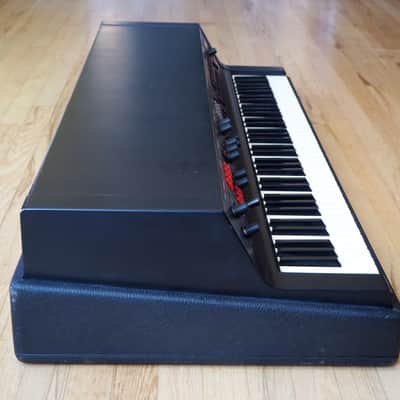
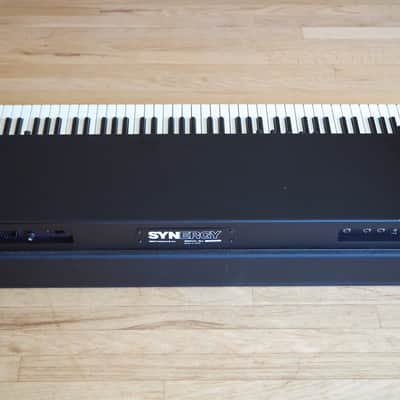
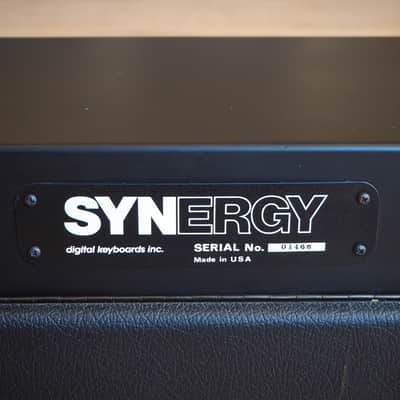
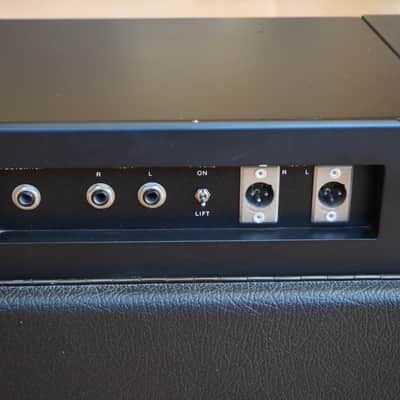
Digital Keyboards Synergy Vintage Polyphonic Synthesizer Crumar Near Mint
This gear has sold
See similar gear from other Reverb sellers
Listed:10 years ago
Views:384
Watchers:8
Seattle, WA, United States
Our users rate Reverb
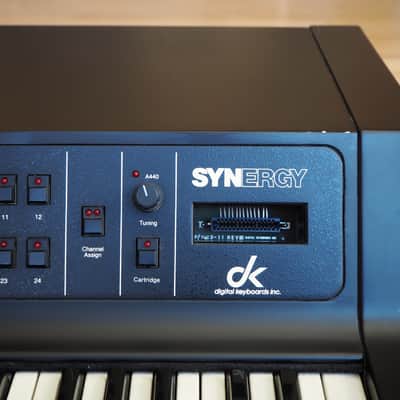
Up for sale, a Digital Keyboards Synergy model polyphonic synthesizer in exceptional, near mint condition and in perfect working order. Of the estimated 700-800 Synergy keyboards originally produced, it's estimated that less than 100 are still in existence, and this example is easily one of the cleanest and most complete, with the original pedal, manual, and paperwork. This synthesizer was produced from 1982-85, and Digital Keyboards was a high-end US-based division of the Italian company Crumar. Using a high speed additive oscillator system developed by Bell Laboratories, Digital Keyboards created a sophisticated additive synthesizer known as the Crumar General Development System (GDS). While the GDS originally had a price tag of a whopping $27,500, the Synergy was a moderately stripped down version that sold for a mere $5,300 (roughly $13,000 when adjusted for inflation). A favorite of pioneering electronic music composer Wendy Carlos and a synth that has inspired a fervent following, the Synergy was state of the art in its time and is an enduring classic today.
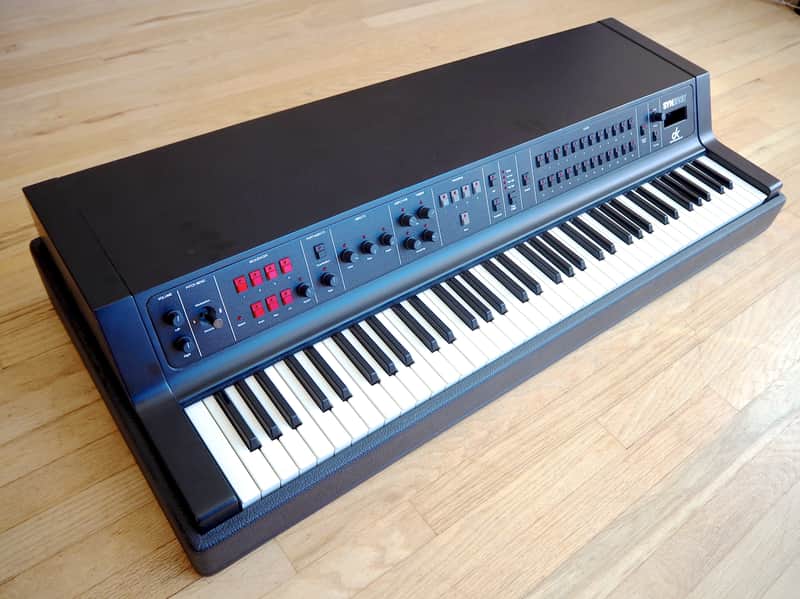
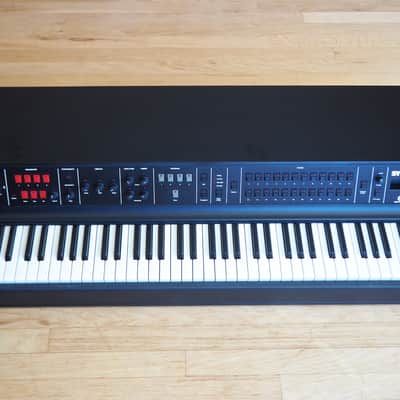
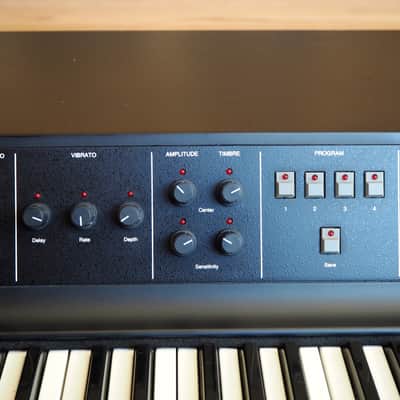
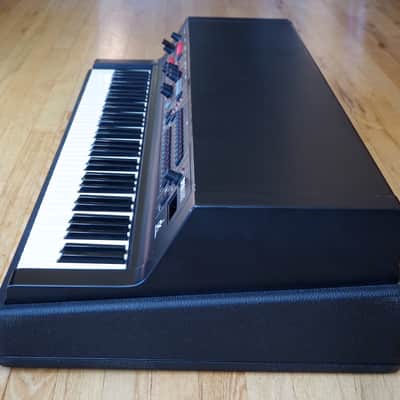
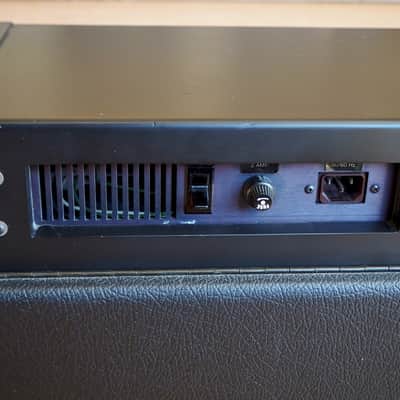
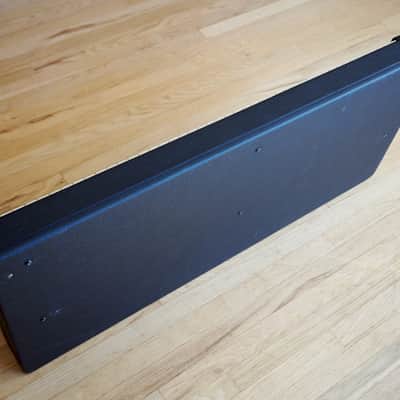
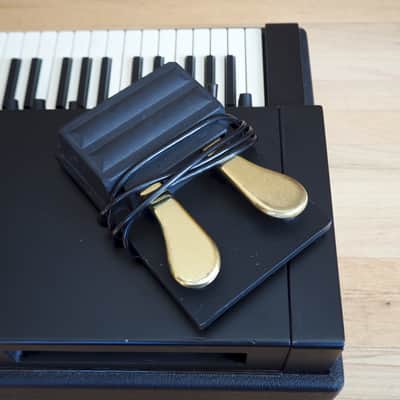
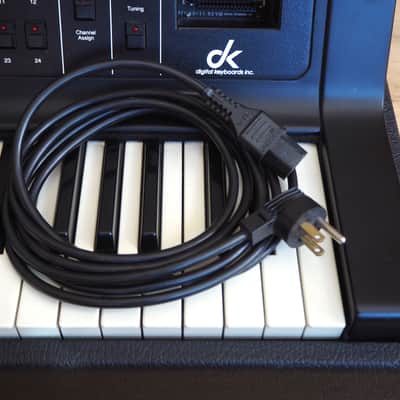
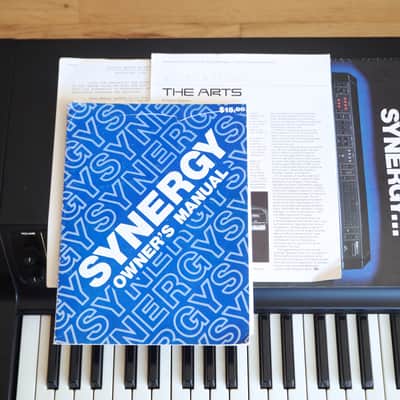
The cosmetic condition of this Synergy is exceptional, as evidenced by the photos, with only a couple light scuffs on the plastic top and tolexed exterior. The original dual foot pedal is included, along with an IEC power cable, the manual, and other original paperwork.
Below is a rundown of the various features and benefits of the Synergy, as helpfully outlined by Vintage Synth Explorer:
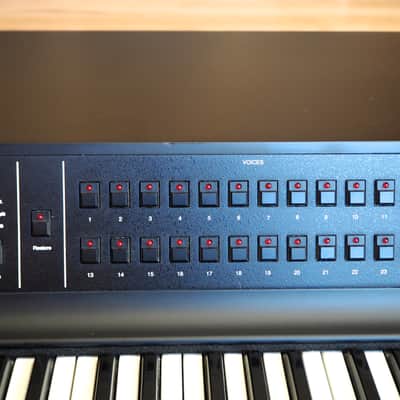
Although the Synergy is not programmable, it does feature 24 tone presets (with many more available via 24-tone cartridges). The sounds are generated by additive synthesis and phase modulation using 32 digital oscillators, computer controlled, and allocated dynamically. Polyphony is variable, depending on the selected tone preset. Typically the Synergy is eight-voice polyphonic with four oscillators being used per voice. However, some tones may use only two oscillators per voice, allowing up to 16-voice polyphony.
The Synergy can also play up to four different tone presets simultaneously, a very unique feature for its time. These tones could be assigned to the keys of the keyboard in a number of different ways, such as in unison, rotating (each new note triggers the next tone), first-available, fixed-split, and a unique floating-split mode in which a tone tracks the movement of a hand, thereby not limiting the player to the confines of traditional fixed-split keyboard conventions.
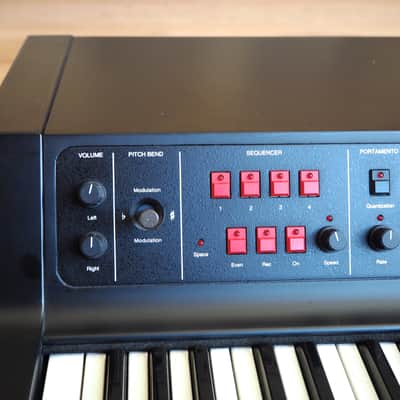
The Synergy also features a four-track sequencer. The sequencer can record in real-time, allows for overdubbing, as well as the ability to play free on top of your recorded sequence. Up to 1,860 notes can be recorded. The Synergy has very flexible envelopes as well. The envelopes have up to 16 stages per oscillator for both amplitude and frequency, with multiple rates and breakpoints, and they are loop-able.
The keyboard is a large 74-note affair with velocity sensitivity. The keyboard velocity controls both the amplitude and timbre of the tone via a pair of sensitivity controls that can be used to dial in the amount of amplitude or timbre you want affected. The timbre control affects the filter/brightness or the effect of a sound (ie: delay), depending on the tone preset. A joystick is used to control the programmable pitch-bend and vibrato modulation. An intelligent portamento effect is on-board as well, that can produce portamento glides polyphonically, allowing for multiple sliding notes at the same time.
The Synergy has eight user-memory slots for storing the setup of the keyboard playing state. The depth, rate and amount of vibrato available to the joystick can be stored, as well as the speed and type of portamento selected, transposition of the keyboard, velocity sensitivity settings, and mono/polyphonic modes.
Even without the ability to program the sounds of the Synergy, its responsive keyboard and flexible envelope features make for a very expressive instrument. The preset tones can reproduce acoustic instruments such as pianos and strings with great realism and clarity. But FM-type sounds and other digital synth timbres are also on tap. The looping envelopes and sequencer can also be used to create eerie textures, and swirling, morphing drones and pads with plenty of complexity.
The cosmetic condition of this Synergy is exceptional, as evidenced by the photos, with only a couple light scuffs on the plastic top and tolexed exterior. The original dual foot pedal is included, along with an IEC power cable, the manual, and other original paperwork.
Below is a rundown of the various features and benefits of the Synergy, as helpfully outlined by Vintage Synth Explorer:
Although the Synergy is not programmable, it does feature 24 tone presets (with many more available via 24-tone cartridges). The sounds are generated by additive synthesis and phase modulation using 32 digital oscillators, computer controlled, and allocated dynamically. Polyphony is variable, depending on the selected tone preset. Typically the Synergy is eight-voice polyphonic with four oscillators being used per voice. However, some tones may use only two oscillators per voice, allowing up to 16-voice polyphony.
The Synergy can also play up to four different tone presets simultaneously, a very unique feature for its time. These tones could be assigned to the keys of the keyboard in a number of different ways, such as in unison, rotating (each new note triggers the next tone), first-available, fixed-split, and a unique floating-split mode in which a tone tracks the movement of a hand, thereby not limiting the player to the confines of traditional fixed-split keyboard conventions.
The Synergy also features a four-track sequencer. The sequencer can record in real-time, allows for overdubbing, as well as the ability to play free on top of your recorded sequence. Up to 1,860 notes can be recorded. The Synergy has very flexible envelopes as well. The envelopes have up to 16 stages per oscillator for both amplitude and frequency, with multiple rates and breakpoints, and they are loop-able.
The keyboard is a large 74-note affair with velocity sensitivity. The keyboard velocity controls both the amplitude and timbre of the tone via a pair of sensitivity controls that can be used to dial in the amount of amplitude or timbre you want affected. The timbre control affects the filter/brightness or the effect of a sound (ie: delay), depending on the tone preset. A joystick is used to control the programmable pitch-bend and vibrato modulation. An intelligent portamento effect is on-board as well, that can produce portamento glides polyphonically, allowing for multiple sliding notes at the same time.
The Synergy has eight user-memory slots for storing the setup of the keyboard playing state. The depth, rate and amount of vibrato available to the joystick can be stored, as well as the speed and type of portamento selected, transposition of the keyboard, velocity sensitivity settings, and mono/polyphonic modes.
Even without the ability to program the sounds of the Synergy, its responsive keyboard and flexible envelope features make for a very expressive instrument. The preset tones can reproduce acoustic instruments such as pianos and strings with great realism and clarity. But FM-type sounds and other digital synth timbres are also on tap. The looping envelopes and sequencer can also be used to create eerie textures, and swirling, morphing drones and pads with plenty of complexity.
This item is sold As-Described
This item is sold As-Described and cannot be returned unless it arrives in a condition different from how it was described or photographed. Items must be returned in original, as-shipped condition with all original packaging.Learn More.
| Listed | 10 years ago |
|---|---|
| Condition | Excellent (Used) Excellent items are almost entirely free from blemishes and other visual defects and have been played or used with the utmost care.Learn more |
| Brand | |
| Model |
|
| Finish |
|
| Categories | |
| Year |
|
| Made In |
|
Product safety information may be available here.