Houston, TX, United States
About this listing
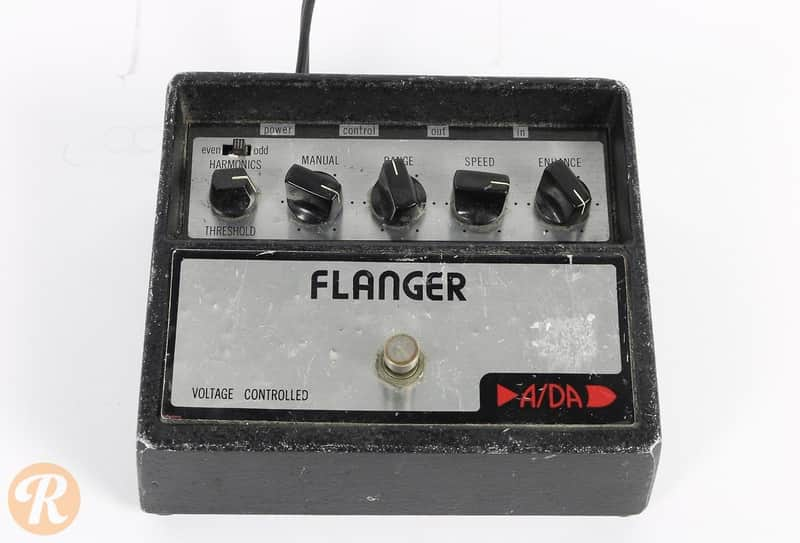
I loved the sound of the flanger from the first time I heard it used on recordings. I thought the jet-sweeping flanging sound used on recorded drums was simply awesome. Then I listened to Eddie Van Halenās guitar on āUnchainedā and thought it was cool having the up and down sweeps of the flanger move along in time with the dropped D pedal tone riff. After hearing that, I just had to have one for myself.Being a young kid at the time, money (or lack of) was more of the primary decision-making factor than a boxās tone or quality. The only flanger I could afford that my local store sold was the DOD FX-75. I bought it, took it home and was then disappointed to say the least. It just didnāt produce that cool sweeping sound that I had heard on the albums. It sounded more like an exaggerated chorus that couldnāt sweep properly and sounded more like a de-tuning effect. I sold it pretty quickly and eventually picked up a Boss BF-2 Flanger when I could finally afford one (I also learned the valuable lesson to at least always try a box out in the store before purchasing it ā there was no return policy with the DOD). At least with the Boss unit, I was thrilled to discover it sounded like a real Flanger and did a pretty decent job too. I used that Boss Flanger for many years to add special effects to my guitar sound.Later still, I read about the A/DA company in a magazine article. The article stated that the A/DA flanger was the first one produced commercially and was also THE standard by which all other flangers should be judged. I found that interesting ā I just had to try one, but didnāt expect that the A/DA could do a better job than my Boss, especially since the A/DA was āold 70ās technologyā, right?When searching for an A/DA, I had extra difficulty because these flangers were no longer in production. I eventually found one used but the dealer was asking $250 for it. Quite honestly, I thought he was out of his mind asking so much for a beat up old black box, but I decided to try it out anyway.As soon as I played through the A/DA Flanger, I knew immediately why it commanded such a price. Sweeps were dramatic and lush. The unit itself was also quiet and didnāt produce any of the background sweeping noise that you can hear with other commercially made flangers. I was literally blown away by the sound of this unit. The A/DA Flangerās sound is very full and delivers tones and special effects that other units just canāt. I was sold and fortunately was at a point where I could afford to buy the unit for myself (the dealer would not haggle on the price ā Believe me, I tried).The A/DA has some extra controls that interestingly arenāt found on todayās designs. The flangerās controls include Threshold (similar to a gating effect), Manual (sets the tonal center of the sweep frequency), Range (alters the frequency spectrum of the flange), Speed (obvious right?), and Enhance (a resonance control; adds depth and intensity). The flanger also includes a switch to flange either even or odd-ordered harmonics. All together, some very unusual sounds can be produced with this unit.The mystique and popularity of the A/DA flanger prompted the company to re-issue it several years ago. While I havenāt personally tried the reissue, Iāve read that it sounds virtually identical to the original. The reissue also features an improvement in that it uses a built-in power transformer and power cord versus the A/C adapter (a.k.a. āwallwartā) design of the original.Even with todayās modern digital rack effects and new designs, Iāve yet to hear a flanger effect that sounds as good as the A/DA. Perhaps there is some truth that certain time-delay effects such as choruses and flangers do truly sound better analog. Listen to the sound files and then decide for yourself.
Price$799
+ $75 Shipping