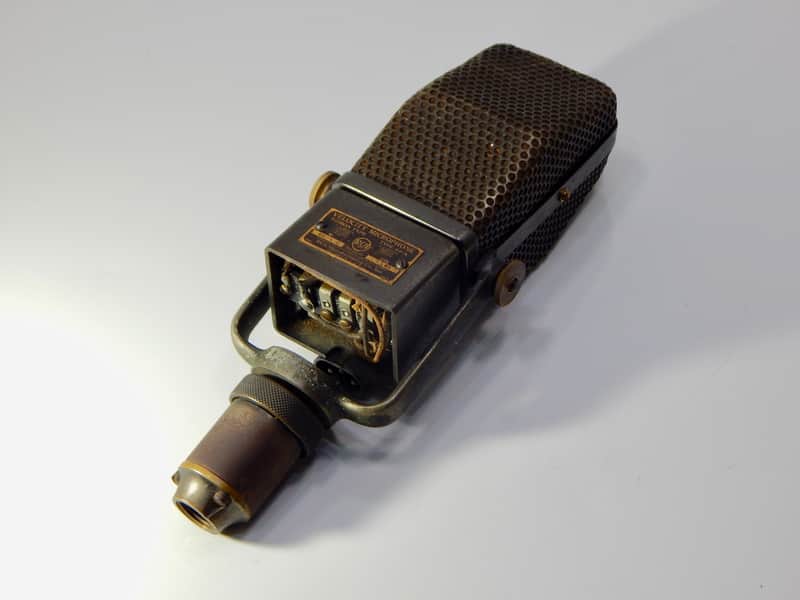
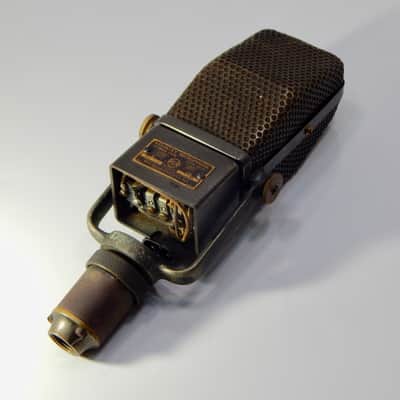
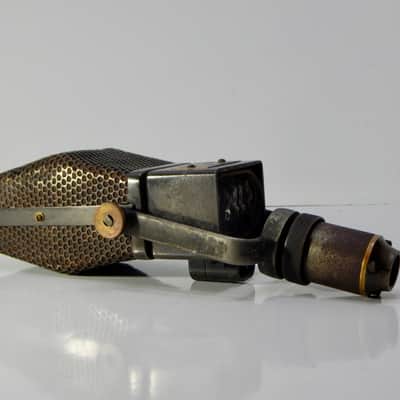
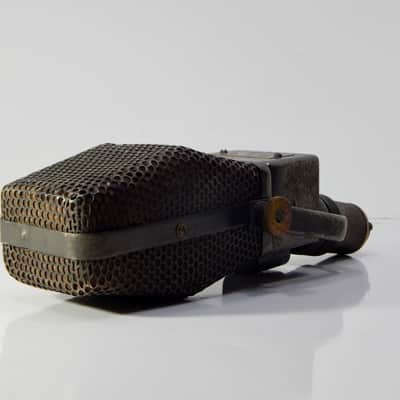
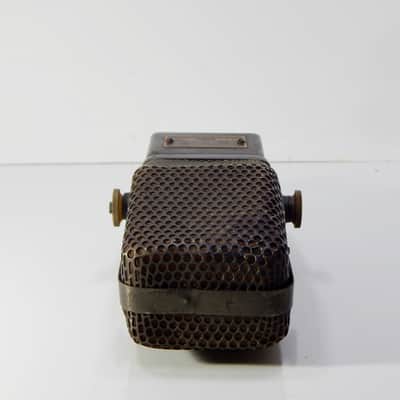
RCA 44A Ribbon Microphone, Fully Tested
This gear has sold
See similar gear from other Reverb sellers
Listed:7 years ago
Views:384
Watchers:12
Offers:2

Oberlin, OH, United States
Our users rate Reverb
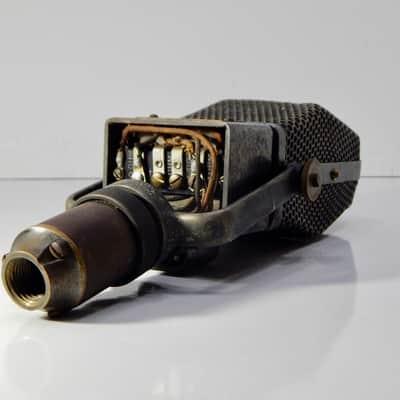
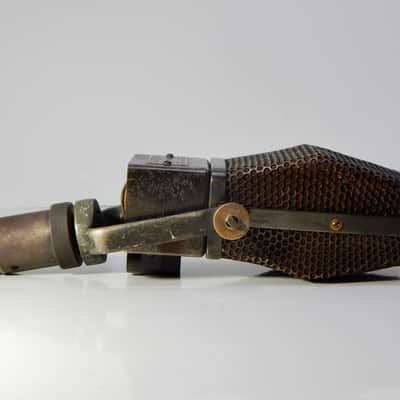
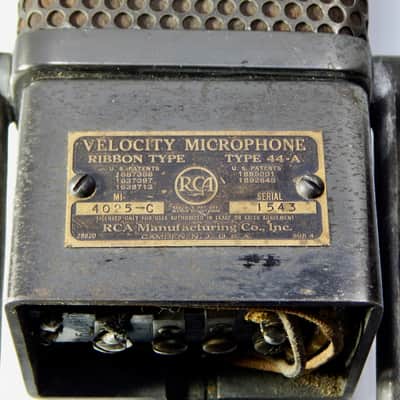
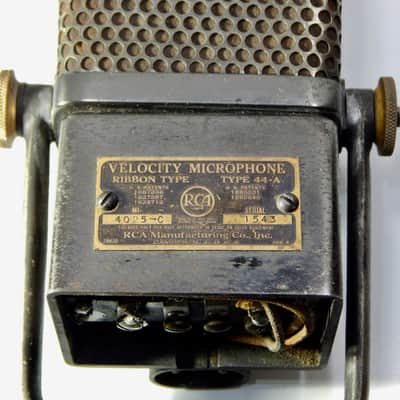
Fully tested, fully functional, fully original RCA 44A ribbon microphone. Serial number 1543. Sounds excellent.
The RCA 44 is considered by many to be THE classic ribbon microphone. It's perfect for mono drums, old school vocals, and traditional recording technics. Rich lows, silky smooth mids and highs. A must for every mic collection - from RCA, the inventors of the ribbon mic.
History
A ribbon mic works by suspending a thin piece of corrugated aluminum, (the 'ribbon'), between two poles of a strong magnet. The compression and rarefaction of air vibrates this ribbon in the magnetic field, which creates voltage changes that are run through an output transformer to the external amplifier of your choice. Like a dynamic mic, a ribbon requires no tubes, batteries or power supply of any kind. In the case of the RCA 44, the chassis is built to absorb mechanical shocks, the output transformer is shielded against magnetic fields, and the capsule is resistant to changes in humidity, temperature and barometric pressure.
The RCA 44 is a high-fidelity ribbon (or "velocity") type mic that was originally designed for broadcast studio use. The 44 Series consisted of three models, the 44A, 44B, and 44BX. All of the mics in this series were bi-directional, i.e., figure-of-eight polar pattern. The 44A was introduced in 1933 and had a bronze finish. The 44B was introduced in 1936; it featured a stronger magnet for higher output and came in a black and chrome finish. The 44BX was introduced in 1938, featuring the same magnet and an umber colored finish that was non-reflective for stage use. The only significant difference between the 44B and 44BX is the position of the output cable.
The 44 Series mics have a frequency response from 50 Hz to 15 kHz. It is also possible to attenuate the low-frequencies by switching a circuit jumper inside the mic body. This offers three positions marked M (for music), V1, and V2 (for voice). The M setting allowed full frequency response, while the V1 and V2 settings attenuated the bass frequencies to eliminate the ‘proximity effect’ that results from talking too close to the mic. Some of these mics were later modded to have an external switch to select the ‘M‘ and ‘V‘ settings.
The RCA 44 series was an instant success upon its initial release in the 1930s, and continued to dominate recording and broadcast for many years. The successor was the RCA 77, which offered multiple polar patterns and a lighter, smaller body. The increasing popularity of the 77 Series, as well as the greatly improved condenser mics of the early 50s led to the demise of the 44BX and it was finally discontinued in 1955. But the RCA 44 Series remains highly revered to this day, and can be found in the best professional studios around the world. The unique tone of the RCA 44 has lent a certain magic to countless recordings for the last eight decades.
The RCA 44 is considered by many to be THE classic ribbon microphone. It's perfect for mono drums, old school vocals, and traditional recording technics. Rich lows, silky smooth mids and highs. A must for every mic collection - from RCA, the inventors of the ribbon mic.
History
A ribbon mic works by suspending a thin piece of corrugated aluminum, (the 'ribbon'), between two poles of a strong magnet. The compression and rarefaction of air vibrates this ribbon in the magnetic field, which creates voltage changes that are run through an output transformer to the external amplifier of your choice. Like a dynamic mic, a ribbon requires no tubes, batteries or power supply of any kind. In the case of the RCA 44, the chassis is built to absorb mechanical shocks, the output transformer is shielded against magnetic fields, and the capsule is resistant to changes in humidity, temperature and barometric pressure.
The RCA 44 is a high-fidelity ribbon (or "velocity") type mic that was originally designed for broadcast studio use. The 44 Series consisted of three models, the 44A, 44B, and 44BX. All of the mics in this series were bi-directional, i.e., figure-of-eight polar pattern. The 44A was introduced in 1933 and had a bronze finish. The 44B was introduced in 1936; it featured a stronger magnet for higher output and came in a black and chrome finish. The 44BX was introduced in 1938, featuring the same magnet and an umber colored finish that was non-reflective for stage use. The only significant difference between the 44B and 44BX is the position of the output cable.
The 44 Series mics have a frequency response from 50 Hz to 15 kHz. It is also possible to attenuate the low-frequencies by switching a circuit jumper inside the mic body. This offers three positions marked M (for music), V1, and V2 (for voice). The M setting allowed full frequency response, while the V1 and V2 settings attenuated the bass frequencies to eliminate the ‘proximity effect’ that results from talking too close to the mic. Some of these mics were later modded to have an external switch to select the ‘M‘ and ‘V‘ settings.
The RCA 44 series was an instant success upon its initial release in the 1930s, and continued to dominate recording and broadcast for many years. The successor was the RCA 77, which offered multiple polar patterns and a lighter, smaller body. The increasing popularity of the 77 Series, as well as the greatly improved condenser mics of the early 50s led to the demise of the 44BX and it was finally discontinued in 1955. But the RCA 44 Series remains highly revered to this day, and can be found in the best professional studios around the world. The unique tone of the RCA 44 has lent a certain magic to countless recordings for the last eight decades.
| Listed | 7 years ago |
|---|---|
| Condition | Good (Used) Good condition items function properly but may exhibit some wear and tear.Learn more |
| Brand | |
| Model |
|
| Categories | |
| Year |
|
| Made In |
|
Product safety information may be available here.